Benefits of Topic-wise Previous Year Questions for UPSC
Studying topic-wise previous year questions allows UPSC aspirants to identify yield subjects, understand repeating question patterns, and improve syllabus coverage efficiency. By using structured UPSC previous year papers, candidates can streamline their General Studies preparation, refine time management skills, and boost overall exam confidence effectively.
Importance of UPSC Previous Year Papers
UPSC Previous Year Papers are one of the most reliable resources for understanding the Civil Services Examination pattern and improving preparation. They help aspirants identify frequently tested topics, understand the examiner's approach, and develop the analytical thinking required for Prelims.
By solving authentic past questions, candidates strengthen conceptual clarity, improve accuracy, and learn effective time management. Regular practice with Previous Year Papers also highlights important syllabus areas, builds exam confidence, and enables aspirants to create a focused preparation strategy aligned with actual UPSC trends.
Features of UPSC Previous Year Papers
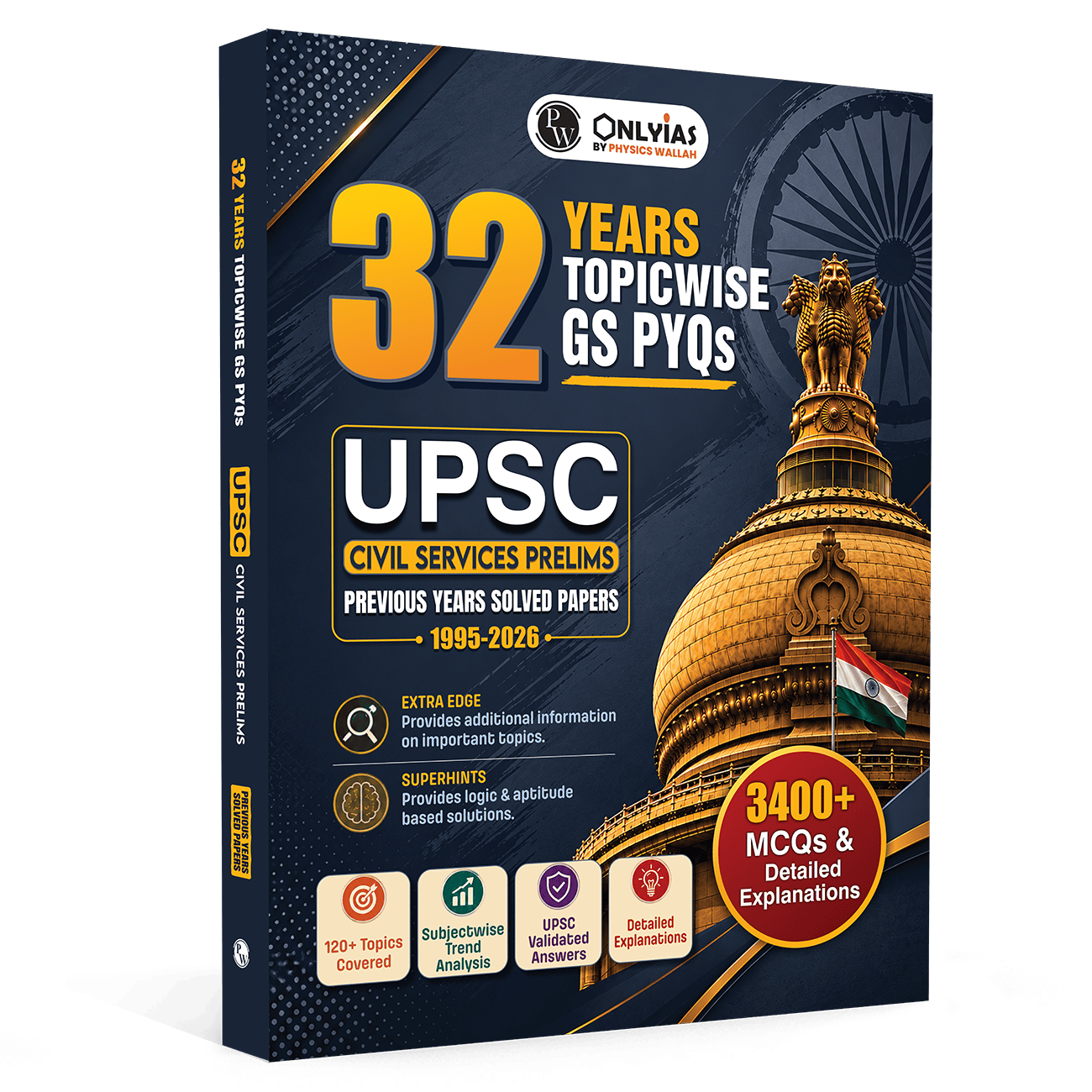
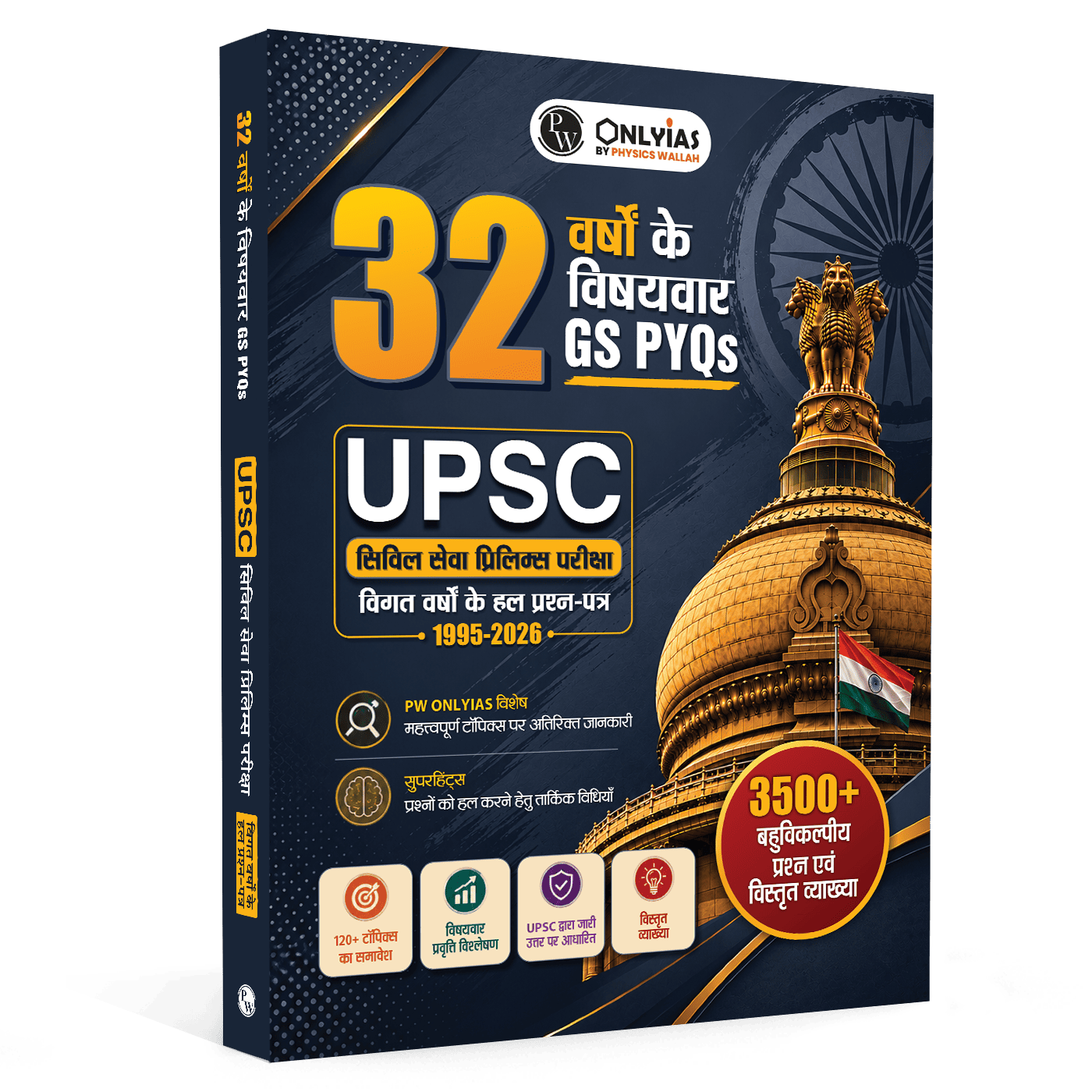
Preparing with previous year questions is one of the smartest ways to understand the UPSC exam pattern and improve your preparation. This book brings together years of authentic questions, detailed explanations, and expert guidance to help you prepare with confidence for the UPSC Civil Services Examination.
-
32 Years of UPSC Prelims Papers (1995–2026): Covers both General Studies Paper 1 and CSAT Paper 2, giving you complete access to three decades of authentic UPSC questions.
-
3400+ Solved MCQs: Practice with a large collection of original UPSC questions to improve accuracy, speed, and confidence.
-
Topicwise Segregation: Questions are organised across 120+ topics, including Polity, Economy, History, Geography, Environment, Science & Technology, Current Affairs, and more.
-
Detailed Option-Wise Solutions: Learn why the correct answer is right and understand why the other options are incorrect for better conceptual clarity.
-
Trend & Pattern Analysis: Identify frequently asked themes, high-weightage topics, and changing question patterns over the years.
-
Extra Edge: Get expert insights, proven preparation strategies, and exclusive Superhints to improve answer selection and intelligent guessing.
-
Updated for UPSC 2027: Fully aligned with the latest UPSC Prelims pattern, syllabus, and exam expectations.
-
Visual Learning Support: Enhance understanding with maps, diagrams, infographics, and other visual aids that simplify complex concepts.
-
Prelims + Mains Integration: Build a strong conceptual foundation that supports preparation for both the Prelims and Mains examinations.
-
Strategic Preparation Framework: Prioritise your study plan using trend-based categorisation and in-depth question analysis for more focused preparation.
Why Solve Topic-Wise UPSC Previous Year Papers for Prelims?
The Union Public Service Commission (UPSC) Civil Services Examination tests both conceptual clarity and analytical thinking. Attempting year-wise question papers can feel overwhelming, especially for beginners who have not yet completed the full syllabus. Topic-wise organisation solves this problem by aligning revision directly with your daily study schedule.
Micro-Level Syllabus Understanding
Standard yearly papers bundle questions from History, Polity, Economy, and Geography together. This mixed format makes it difficult to assess your grasp of individual subjects.
When you practice topic-wise UPSC PYQ book, you focus on one micro-topic at a time.
For example, after reading about the Indian National Movement or Parliament, you can immediately test your understanding against past questions. This micro-alignment reinforces memory retention and reveals subtle conceptual gaps early in your preparation cycle.
Early Identification of High-Yield Topics
Not all chapters in the UPSC syllabus carry equal weight. Certain areas consistently yield a higher volume of questions year after year.
-
Polity: Fundamental Rights, Preamble, Judiciary, and Constitutional Bodies.
-
Economy: Monetary Policy, Inflation, Balance of Payments, and Agriculture.
-
Environment: Biodiversity Conservation, International Conventions, and Climate Change.
-
Modern History: Freedom Movement (1857–1947), Socio-Religious Reform Movements, and Colonial Legislation.
Using structured UPSC prelims questions arranged by chapter helps you isolate these recurring areas. You can allocate more study hours to topics that carry higher marks instead of spending equal time on low-yield subjects.
What are the Advantages of Topic-Wise UPSC Previous Year Papers?
Switching from random question practice to a structured, topic-wise strategy provides several distinct competitive benefits.
|
Feature |
Standard Year-Wise Papers |
Topic-Wise Solved Papers |
|
Syllabus Coverage |
Random across all subjects |
Sequential and chapter-aligned |
|
Revision Utility |
Best for final mock exams |
Ideal for daily subject revision |
|
Trend Identification |
Difficult to track across years |
Easy to spot changing question patterns |
|
Targeted Remediation |
Hard to isolate specific weaknesses |
Quickly pinpoints topic-specific gaps |
Eliminates Exam Anxiety for Beginners
Aspirants often feel unprepared when attempting full-length past papers early in their journey. Encountering questions from unstudied topics lowers confidence and creates unnecessary stress.
Solving questions topic by topic removes this barrier. You only attempt questions related to the specific chapter you finished reading. This step-by-step validation builds genuine confidence and encourages consistent daily practice.
Enhances Question Decoding Skills
UPSC frequently modifies how options are framed, using specific keywords to test precision. Regular exposure to authentic previous year questions teaches candidates how to read statements critically.
-
Spotting extreme words like "only," "always," or "drastically."
-
Differentiating between direct factual claims and analytical statements.
-
Understanding how UPSC turns standard textbook facts into complex multiple-choice questions.
How to Analyse UPSC Previous Year Papers?
Simply solving UPSC books and checking the answer key is insufficient. True mastery comes from thorough analysis of every question option.
| Step | PYQ Analysis Method | What to Do |
| Step 1 | Solve Questions Without Looking at Answers | Attempt the PYQ independently to test your understanding and identify knowledge gaps. |
| Step 2 | Analyse All 4 Options | Carefully analyse both correct and incorrect options to understand concepts and eliminate mistakes. |
| Step 3 | Map Back to Standard Textbooks | Connect the question and concepts to standard sources such as NCERT and Laxmikanth. |
| Step 4 | Update Personal Revision Notes | Add important concepts, facts, mistakes, and new insights to your personal revision notes. |
Deconstruct Every Option
In a typical multiple-choice question, the three incorrect options are as valuable as the correct one. UPSC often transforms incorrect options from past exams into full-fledged questions in subsequent years.
-
Identify the core concept: Determine which policy, act, or scientific phenomenon the question addresses.
-
Research incorrect options: Briefly look up terms mentioned in the incorrect options that you do not recognize.
-
Note repeated themes: Document core concepts that appear frequently across a 10-to-30-year span.
Integrate PYQs with Standard Reference Books
Never treat question practice as an isolated task. Keep your standard textbooks alongside your UPSC practice book while revising.
When you solve a question on the Preamble, open the relevant chapter in your Polity reference book immediately. Highlight the specific sentence or clause from which the question was derived. This habit trains your brain to read textbooks from an examiner's point of view.
How to do Syllabus Mapping Using UPSC Previous Year Papers?
Integrating UPSC GS PYQ collections into your routine study plan ensures balanced coverage of both static and dynamic portions of the syllabus.
Static Subject Mastery
Static subjects form the backbone of your Prelims score. Their core principles remain constant, making past questions extremely reliable indicators of future papers.
-
Indian History & Culture: Focus on Art and Architecture terms, Indus Valley sites, and Gandhian movements.
-
Indian Polity: Focus on Constitutional Amendments, Fundamental Duties, and Parliamentary procedures.
-
Geography: Focus on river systems, mountain passes, and climate classification patterns.
Bridging Static Concepts with Current Affairs
Modern UPSC questions often blur the line between static knowledge and current affairs. A recent environmental summit may prompt UPSC to ask a static question about an older international convention.
Categorised previous year papers show you how current events trigger static questions. By understanding these connections, you can read daily newspapers with much greater purpose and focus.
How to Choose the Best Book for UPSC Previous Year Papers?
Choosing the right study resource determines how smoothly you can implement a topic-wise strategy. A reliable UPSC question bank should feature clean categorisation, accurate solutions, and clear explanations.
-
Comprehensive Year Coverage: Look for collections spanning at least 25 to 30 years to capture long-term trends.
-
Sub-Topic Categorisation: Questions should be sorted not just by subject, but by specific chapter and sub-topic.
-
Detailed Explanations: Explanations must clarify why an option is correct while explaining the context of alternative options.
-
Official Key Alignment: Answers must match official UPSC keys to prevent misguidance.
Common Mistakes to Avoid When Solving UPSC Previous Year Papers
While past papers are essential tools, using them incorrectly can waste valuable study time.
Memorising Answers Without Understanding Concepts
Rote memorisation of answers is a major pitfall. UPSC rarely repeats questions word for word. Instead, the underlying concepts and themes are rephrased or combined with new scenarios.
Always focus on the underlying principle behind an answer. Ask yourself why a particular statement is correct and how the question could be altered in a future exam.
Postponing PYQ Practice Until the End
Many candidates wait until the final two months before Prelims to open past papers. This delay deprives them of early feedback and prevents them from directing their initial reading effectively.
Start solving relevant topic-wise questions from the very first week of your preparation. This integration ensures that your reading style aligns with exam expectations right from the start.
Relying on Unverified Answer Keys
Incorrect answer keys can create long-lasting conceptual errors. Always verify your solutions against official UPSC answer keys or trusted educational resources.
Read more: UPSC Prelims Subject-wise Weightage Syllabus and Strategy
UPSC Previous Year Papers FAQs
How many years of UPSC previous year papers should I solve for Prelims?
Solving at least 25 to 30 years of past papers is recommended. This range covers diverse questioning styles, helps identify core repeating themes, and provides sufficient practice across all static General Studies topics.
Are UPSC prelims questions repeated in recent exams?
Direct questions are rarely repeated word-for-word. However, core concepts, themes, and options are frequently reused. Studying past options helps predict potential questions for upcoming attempts.
Should I use a topic-wise UPSC practice book or yearly test papers first?
Beginners should start with a topic-wise practice book alongside textbook preparation. Yearly test papers are best reserved for full-length mock exams during the final two to three months before the actual test.
How does solving UPSC GS PYQ help in time management?
Regular practice familiarises you with the length and complexity of UPSC statements. This familiarity speeds up reading comprehension during the actual exam, allowing you to manage the two-hour limit efficiently.
Is an authentic UPSC question bank sufficient for Prelims revision?
While past question banks are vital for trend analysis and practice, they must be combined with standard reference textbooks, NCERTs, and regular current affairs updates for complete preparation.