Complete UPSC Prelims Syllabus with Prelims Question Bank
The journey to becoming an IAS officer starts with a clear understanding of the vast syllabus and the right practice tools. Many students feel overwhelmed by the sheer volume of subjects, from History to Science and Technology. This is where a UPSC prelims question bank becomes a game-changer. It transforms passive reading into active learning, helping you identify which areas need more focus.
By solving structured questions, you bridge the gap between knowing a concept and applying it correctly under exam pressure, which is the key to clearing the first hurdle of the Civil Services.
Check out: UPSC CSE Books
UPSC Prelims Syllabus
The main paper on the basis of which you are evaluated for selection to the Mains is the General Studies (GS) Paper I. It covers various subjects like Geography, Indian Polity, Economy, etc. Including an UPSC prelims question bank in your daily schedule helps you to not only cover the syllabus but also learn the art of choosing the right option.
Subjects like History and Polity are static in nature and need multiple revisions. With the help of a question bank for UPSC Prelims, you can test your retention after every chapter. It is a good method to identify your weak spots early, so there are no surprises at the last minute, during the real exam.
Important topics for General Studies I:
-
History of India: Ancient, Medieval and Indian National Movement.
-
Indian and World Geography: It deals with physical, social and economic geography.
-
Indian Political and Governance: It covers the Indian Constitution, Panchayati Raj and Public Policy.
-
Economic and Social Development: Poverty, Population and Sustainable Development.
-
General Science: Basic concepts of Physics, Chemistry and Biology.
Importance of UPSC Prelims Question Bank
The Civil Services Aptitude Test (CSAT) is a qualifying exam, but it has recently become a major stumbling block for many. Using a dedicated question bank for IAS that includes CSAT-specific modules is essential. These modules cover logical reasoning, reading comprehension, and basic numeracy.
Since you only need 33% to pass, many ignore this paper until the very end. However, practising with a UPSC IAS prelims question bank early on ensures you develop the speed required to solve tricky math and reasoning problems. It builds the mental stamina needed for the second session on exam day.
Components of the CSAT syllabus -
-
Comprehension: Testing your ability to extract meaning from complex passages.
-
Logical Reasoning: Assessing analytical ability and decision-making skills.
-
Basic Numeracy: Math up to Class 10 level, including data interpretation and ratios.
Features of UPSC Prelims Question Bank
Not all subjects carry the same weight every year, but having a UPSC prelims topic-wise question bank helps you stay prepared for any shift in trends. When you practice questions organised by topic, you can see how the depth of questions has evolved over the years.
For instance, Indian Economy questions have become more conceptual, while Environment questions often link to current international treaties. A UPSC IAS prelims question bank designed with topic-specific segments allows you to focus on these nuances. It makes your study sessions more efficient because you can immediately practice MCQs related to the specific chapter you just finished reading.
Topic-wise practice helps -
-
Targeted Improvement: Focus on your weakest subjects without wasting time on your strengths.
-
Trend Identification: See which sub-topics within Geography or History are frequently targeted by examiners.
-
Structured Revision: Use the questions as a checklist to ensure every part of the syllabus is covered.
Benefits of UPSC Prelims Question Bank
While books provide the theory, your UPSC Prelims study material must include a variety of practice tools. Digital resources and physical booklets often offer a UPSC prelims question bank PDF for students who prefer studying on the go. Having access to these resources means you can practice a quick set of 10-20 questions during a commute or break.
The right study material should act as a roadmap. It should simplify complex topics like the 'Due Process of Law' in Polity or 'Monetary Policy' in Economy into understandable chunks, followed immediately by practice questions to solidify that knowledge.
Check Out: UPSC Question Banks
How to Use UPSC Prelims Question Bank
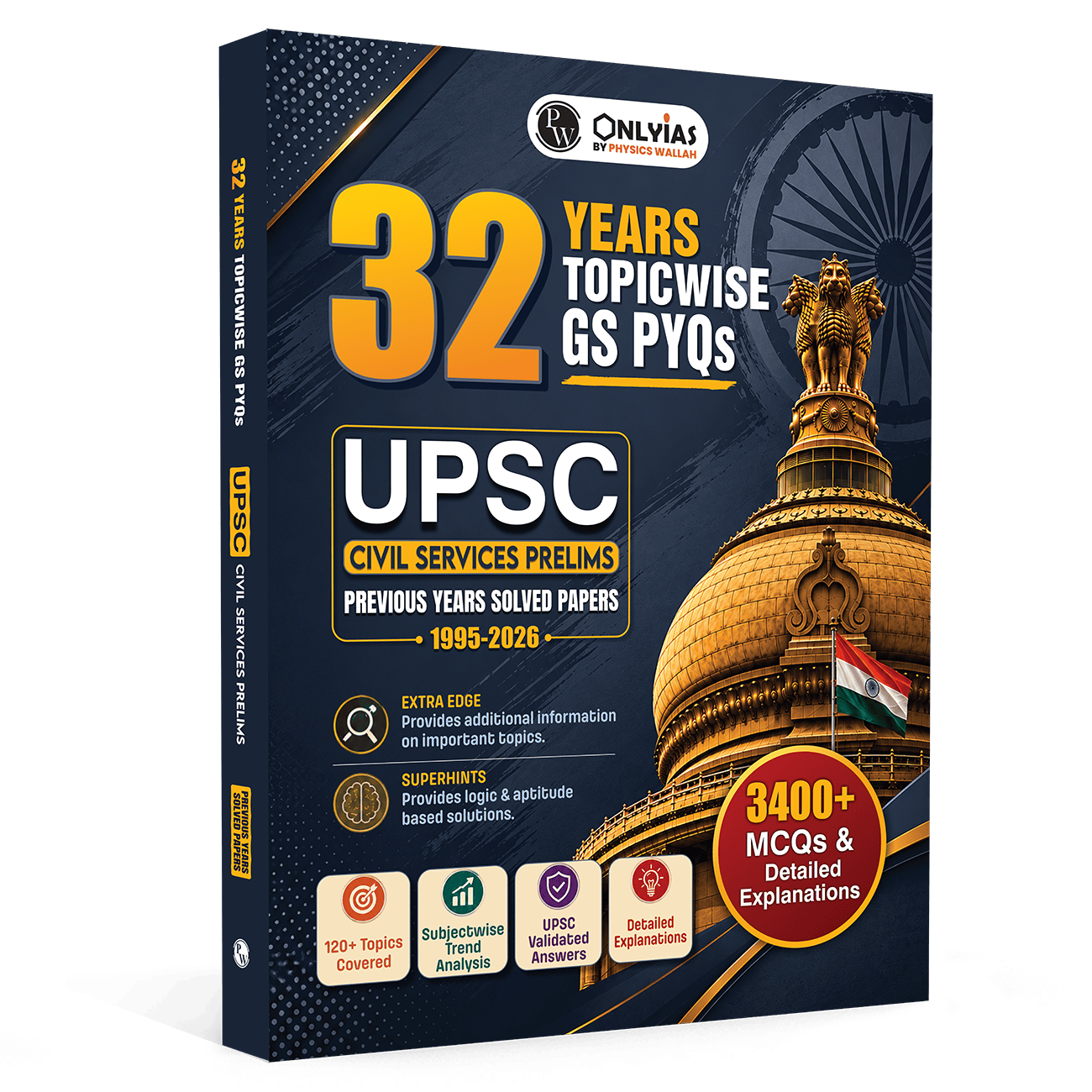
The first step is to download a question bank PDF for UPSC prelims. The real deal is what you do with it. Instead of just looking at the right answer, go through the explanations provided for each of the four options. This ‘reverse-engineering’ of questions is a secret trick of toppers to widen their knowledge base.
Try to time yourself if you are using an UPSC IAS Prelims question bank. Now the skill of solving 100 questions in 120 minutes is developed through regular practice. The more you practise the exam environment, the less anxious you will be when you finally sit in the exam hall.
How to Practice Questions Effectively
-
Analyse Errors: Review the questions you got wrong and the theory behind them.
-
Elimination Technique: Teach your brain to eliminate those options that are obviously wrong to increase your chances of guessing right.
-
Solutions Review: For more context, check out the “extra edge” tips in professional question banks.
Check out: UPSC Previous Year Papers
Revision Strategy with UPSC Prelims Question Bank
Revision is where most aspirants fail. To combat this, combine your UPSC prelims study material with short notes. After solving a set from your UPSC prelims question bank, note down the facts you missed in a small diary. These "volatile facts" are the ones you should revise 24 hours before the exam.
A UPSC prelims topic-wise question bank serves as a perfect revision tool because it allows for "active recall." Instead of re-reading a 50-page chapter on Modern History, you can solve 50 high-quality questions. If you get 45 right, you know that chapter is well-prepared, saving you hours of unnecessary reading.
Read More: Hacks and Tricks for UPSC Prelims
UPSC Prelims Question bank FAQs
Q1. Is it better to solve UPSC questions subject-wise or as full-length mocks?
Initially, you should use a UPSC prelims topic-wise question bank to build conceptual clarity. Once you have covered 70% of the syllabus, shift to full-length mocks to practice time management and subject-switching.
Q2. How many years of UPSC previous questions should be in a question bank for IAS?
A good question bank for IAS should ideally cover at least the last 10 to 15 years. However, pay closer attention to questions from the last 5 years as they reflect the most recent and difficult exam trends.
Q3. Can a UPSC prelims question bank replace standard textbooks?
No, a question bank for UPSC prelims PDF is a supplementary tool. Textbooks build your foundation, while the question bank trains you to apply that knowledge under the specific constraints of the UPSC pattern.
Q4. Does the question bank include explanations for current affairs?
Most professional UPSC question bank sets include detailed explanations that link static concepts with current events, helping you understand how a news item might be turned into a Prelims question.
Q5. How often should I practice from the UPSC Prelims question bank?
Ideally, you should solve at least 20–30 questions daily. This consistency keeps your "objective-solving brain" active and ensures that you are constantly reviewing different parts of the syllabus throughout the year.