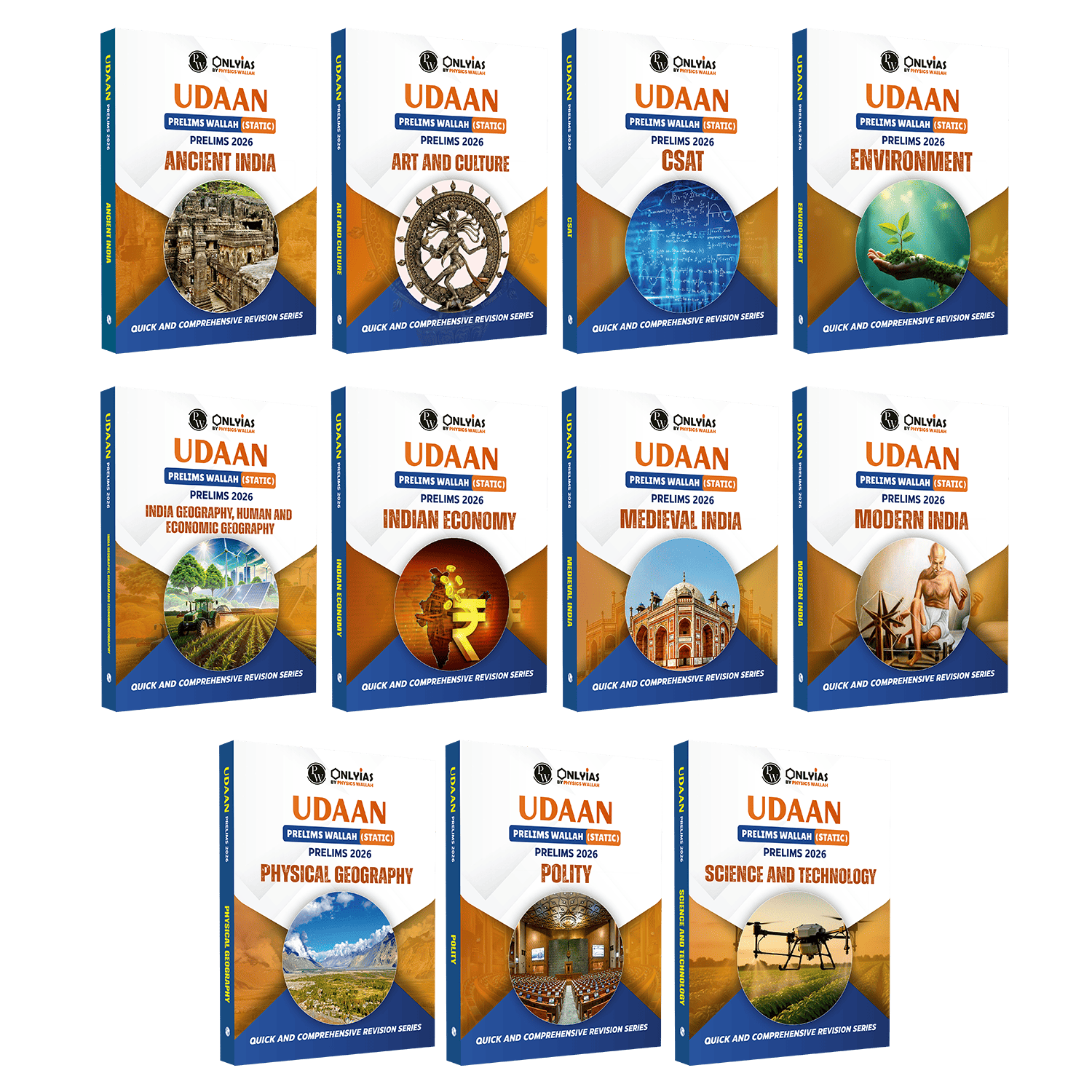
When to Cover the UDAAN 500 Full-Year Current Affairs Before UPSC Prelims

A better approach is to use a structured and exam-focused resource that brings all important updates together in one place. The UDAAN current affairs series is designed for this purpose. It covers more than 500 days of important events and presents them in a simple, organized, and subject-wise format. Instead of spending hours collecting information, students can focus directly on revision and practice.
Overview of UDAAN Current Affairs
Before creating a study plan, it is important to understand what the current affairs series includes. The series is prepared by subject experts and covers more than 500 days of important current affairs relevant to the UPSC Civil Services Examination. Instead of presenting information month by month, the content is arranged subject-wise for better understanding and faster revision.
Features of the UDAAN Current Affairs Book
Below are some of the key features of the book that every aspirant should know:
-
Comprehensive Coverage for UPSC Prelims: This UPSC book covers all important UPSC Prelims current affairs topics in a single resource. It includes government schemes, important reports, indices, environment-related developments, economy updates, science and technology news, and international relations topics. The content is prepared according to the latest UPSC syllabus to help aspirants focus on exam-relevant areas.
-
Subject-Wise Current Affairs Arrangement: The content is organized subject-wise, including Polity, Economy, Environment, Science & Technology, Geography, and International Relations. This systematic arrangement makes learning easier and helps aspirants revise important topics in a structured manner.
-
Knowledge Nugget for Quick Learning: Special Knowledge Nugget sections provide important facts, key government schemes, reports, summits, rankings, indices, and static-current affairs linkages in a concise format. These sections are useful for quick revision and help students remember important information before the examination.
-
Easy-to-Navigate Structure: The book uses clear headings, subheadings, bullet points, tables, and topic-wise sections to improve readability. This organized format helps aspirants find information quickly, revise efficiently, and retain important concepts for a longer period.
-
Practice MCQs for Self-Assessment: The book includes UPSC Prelims-style multiple-choice questions, PYQ-linked questions, and concept-based practice exercises. These questions help students test their preparation, identify weak areas, improve accuracy, and gain confidence for the actual examination.
-
Better Revision and Retention: The concise presentation of current affairs makes revision faster and more effective. Aspirants can quickly revise important facts, schemes, reports, and events without spending time on lengthy study material.
-
Helps Build Exam Confidence: Regular practice, quick revision tools, and exam-focused content help students strengthen their preparation and approach the UPSC Prelims examination with greater confidence.
Why Timeline Matters for UDAAN Current Affairs?
Many UPSC aspirants make the mistake of starting current affairs revision either too early or too late. Proper timing is important because current affairs preparation requires regular revision and a clear study plan.
If students start revising too early, they may forget important facts, schemes, reports, and events before the actual examination. On the other hand, starting too late can create unnecessary pressure and leave very little time for revision and practice.
Using the current affairs series at the right stage of preparation helps aspirants manage their studies more effectively and improve their overall performance in the examination.
When to Start Studying with UDAAN Current Affairs?
Most successful UPSC aspirants and toppers suggest starting serious revision of the UPSC current affairs section around five months before the Prelims examination. This time period is usually enough to complete current affairs preparation in a planned and stress-free manner.
Starting at the right time helps students cover important topics properly without rushing during the final months. It also provides enough opportunities for revision, practice, and concept building.
A five-month preparation window allows aspirants to focus on:
-
Subject-wise reading and understanding of current affairs topics.
-
Multiple rounds of revision for better retention.
-
Regular MCQ practice to improve accuracy and speed.
-
Linking current affairs with static subjects such as Polity, Economy, Geography, Environment, and Science & Technology.
-
Final consolidation of important facts, schemes, reports, indices, and international events before the exam.
To make preparation more effective, the study plan can be divided into three simple phases:
-
Phase 1: Complete Subject-Wise Reading
Start by covering all current affairs topics subject-wise. Focus on understanding important concepts, government schemes, reports, international relations, environment updates, and economic developments. -
Phase 2: Revision and Practice
After completing the first reading, begin revising each subject regularly. Solve MCQs, PYQ-based questions, and practice tests to strengthen your understanding and identify weak areas. -
Phase 3: Final Revision and Consolidation
In the last few weeks before the examination, focus on quick revision of important notes, Knowledge Nuggets, schemes, reports, indices, and frequently asked topics. This phase helps improve retention and boosts confidence before the exam.
UDAAN Current Affairs Study Plan
Phase 1: Foundation Linkage Phase (5 Months Before Exam)
This phase should begin around five months before UPSC Prelims.
The objective is to connect current affairs with static subjects.
For example:
-
Study Economy current affairs while revising Economy textbooks.
-
Study Polity current affairs while revising constitutional topics.
-
Study Environment current affairs along with Ecology concepts.
During this phase:
-
Read one booklet at a time.
-
Focus on understanding concepts.
-
Highlight important information.
-
Make short notes if necessary.
The current affairs for UPSC prelims become easier to remember when linked with static subjects.
Phase 2: Deep Revision Phase (3 Months Before Exam)
Three months before the exam, current affairs should become a major part of your daily study routine.
At this stage, focus on:
-
Government schemes
-
Reports
-
Indices
-
International organizations
-
Environment updates
-
Economic developments
-
Space missions
The UPSC current affairs books are highly useful during this phase because they present information in concise and revision-friendly formats.
Spend time revising:
-
Knowledge Nuggets
-
Tables
-
Flowcharts
-
Important facts
This is also the ideal time to solve topic-wise MCQs.
Phase 3: Final Revision Phase (1 Month Before Exam)
The final month before the exam should focus only on revision and practice.
Avoid collecting new material.
Use the highlighted sections in your current affairs books for quick revision.
Daily activities should include:
-
Revising Knowledge Nuggets
-
Solving MCQs
-
Reviewing important schemes
-
Revising reports and indices
-
Going through the highlighted facts
Many successful aspirants dedicate two to three hours every day to revising UPSC prelims current affairs during this period. Along with current affairs preparation, they also regularly practice UPSC PYQ to understand the pattern of questions, identify recurring themes, and improve their ability to connect static concepts with current events. This balanced approach helps strengthen revision, increase accuracy, and build confidence before the exam.
Why Early Preparation Helps in UDAAN Current Affairs?
Many students postpone current affairs preparation until the last few weeks. This usually creates unnecessary pressure.
Starting early offers several benefits.
Reduces Information Overload
The current affairs series covers a large amount of information. Studying it over several months makes learning easier.
Improves Conceptual Clarity
The books explain why events happened and how they connect to the syllabus.
This improves understanding instead of simple memorization.
Better Subject Coverage
The subject-wise structure ensures balanced preparation.
Students can cover:
-
Polity
-
Economy
-
Environment
-
Science and Technology
-
Geography
-
International Relations
without missing important areas.
Helps Hindi Medium Aspirants
The UPSC Hindi current affairs books allow Hindi medium students to prepare effectively without spending time translating difficult terms.
How to Prepare with UDAAN Current Affairs?
Following the right strategy can improve your results significantly.
Complete One Subject at a Time
Avoid jumping between multiple topics.
Finish one booklet before moving to another.
This improves continuity and understanding.
Revise Knowledge Nuggets Regularly
Knowledge Nuggets contain:
-
Government schemes
-
Reports
-
Organizations
-
Summits
-
Indices
These sections are extremely important for UPSC revision.
Solve MCQs After Every Topic
Practice questions help:
-
Improve retention
-
Increase accuracy
-
Build confidence
The integrated MCQs in the UPSC current affairs books are designed according to UPSC trends.
Link Current Affairs with Static Subjects
Always connect current events with static concepts.
Examples include:
-
Budget announcements with the Economy.
-
Court judgments with Polity.
-
Climate conferences with the Environment.
This approach strengthens conceptual understanding.
Check Out: UPSC Test Series
How to Maximize Results with UDAAN Current Affairs?
Simply owning study material is not enough. Students must use it properly.
Use Practice Questions
Every book contains practice questions linked to the chapters.
Attempt them immediately after reading a topic.
Focus on Knowledge Nuggets
Knowledge Nuggets provide:
-
Quick facts
-
Important comparisons
-
Exam-oriented information
Regular revision of these sections improves recall during the exam.
Create a Backward-Linkage System
Whenever you read a current event, revise the related static topic.
For example:
-
A constitutional amendment should be linked to Polity notes.
-
A climate agreement should be linked to environmental concepts.
This method helps students handle modern UPSC questions that combine static and current affairs.
Benefits of Using UDAAN Current Affairs
Using the current affairs series provides several advantages.
Saves Time
Students do not need to collect information from multiple sources.
Improves Revision
The subject-wise structure makes revision faster.
Better Retention
Visual aids improve memory and recall.
Strong Prelims Preparation
The content is designed specifically for current affairs for UPSC prelims.
Supports Multiple Revisions
The concise format allows repeated revision before the exam.
Reduces Stress
A planned approach helps avoid last-minute panic.
Mistakes to Avoid While Studying UDAAN Current Affairs
Many aspirants make avoidable mistakes. Below are some of them:
Starting Too Late
Current affairs should not be left for the final month.
Collecting Too Many Sources
Avoid using multiple compilations at the same time.
Ignoring Static Subjects
Current affairs should always be linked with static concepts.
Skipping MCQ Practice
Practice is necessary for improving accuracy.
Not Revising Enough
Current affairs require multiple revisions for long-term retention.
Read More: Most Important Topics for UPSC Prelims and Mains Exam
UPSC UDAAN Current Affairs Series FAQs
How Many Days of Coverage Does the UDAAN Current Affairs Series Include?
The UPSC current affairs series covers more than 500 days of important national and international developments, government schemes, reports, indices, and major events relevant to UPSC preparation.
Are the UPSC Hindi Current Affairs Books Different from the English Edition?
No. The UPSC Hindi current affairs books contain the same content, tables, maps, practice questions, and subject coverage as the English edition. Only the language differs.
Should I Read Newspapers Along with the UDAAN Current Affairs Series?
Newspapers help build analytical understanding. However, the UPSC UDAAN current affairs series can serve as a primary revision resource, especially during the final months before the exam.
Do These UPSC Current Affairs Books Include Practice Questions?
Yes. The UPSC current affairs books include topic-wise MCQs, previous year question-based practice, and self-assessment exercises.
What Is the Right Way to Revise UPSC Prelims Current Affairs?
The right method is to study the subject-wise books alongside static subjects, highlight important sections, revise Knowledge Nuggets regularly, and solve MCQs multiple times before the examination.