How to Cover UPSC Current Affairs in a Short Time
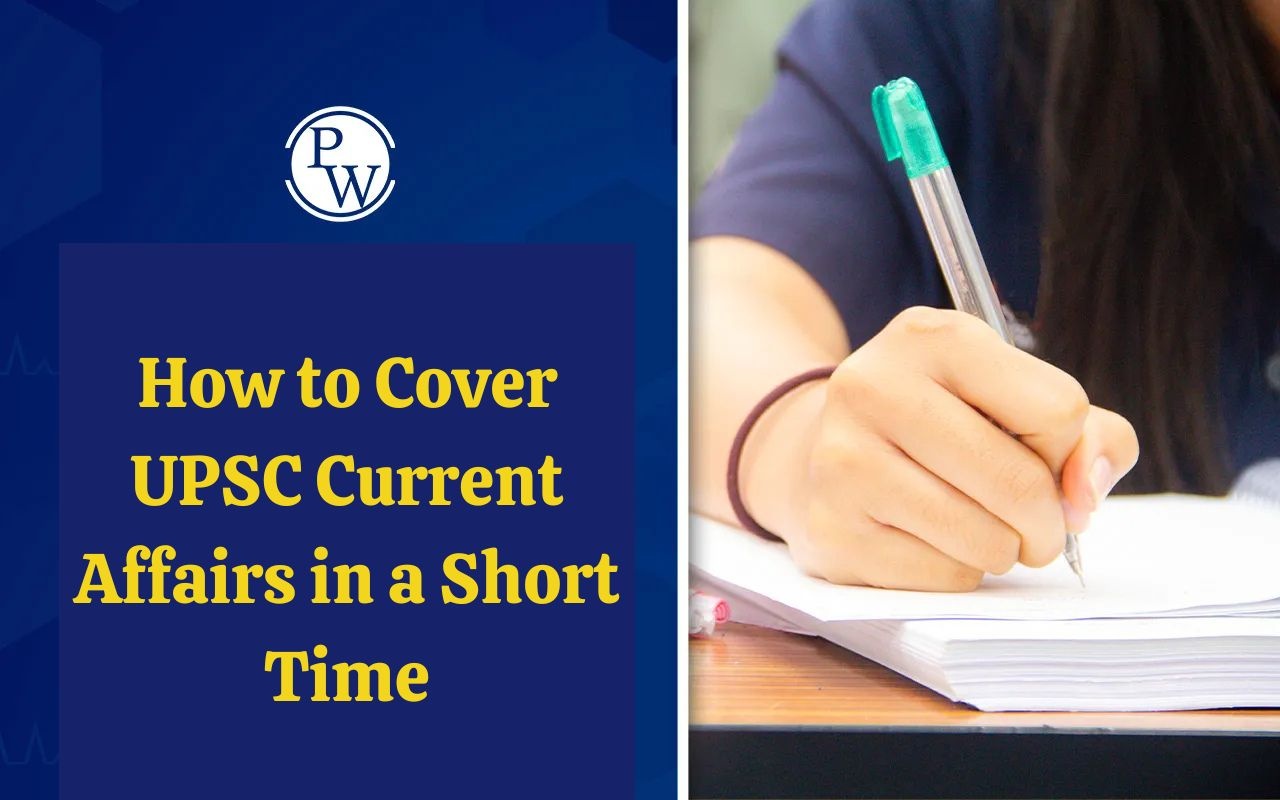
Succeeding in the Civil Services Examination requires a strong hold over daily events, but managing the massive syllabus often leaves students with limited time. If you are struggling to balance newspaper reading with static core subjects, learning how to cover UPSC current affairs efficiently is the ultimate key to boosting your final score.
Importance of Time Management for UPSC Current Affairs?
The Civil Services Examination tests an aspirant's awareness of national and international developments. However, many students spend three to four hours daily reading newspapers, which cuts into the time needed for core static subjects like History, Geography, and Polity. Managing your hours properly ensures you remain updated without compromising your foundational studies.
-
Balancing Static and Dynamic Portions: A major portion of the question paper links core concepts to recent news. Efficient coverage allows you to bridge these gaps without burning out.
-
Preventing Information Overload: Thousands of news events occur daily, but only a fraction matters for the exam. Smart filtering keeps your preparation focused and relevant.
-
Enhancing Revision Cycles: When you spend less time gathering news, you gain more time to revise. Multiple revisions build the retention necessary to tackle tricky multiple-choice questions and descriptive essays.
How to Short the UPSC Current Affairs Syllabus
To cover the dynamic section rapidly, you must master the art of filtration. You can separate exam-relevant information from general news by keeping a copy of the official syllabus on your study desk.
-
Check the Syllabus Alignment: Before reading any article, ask yourself which General Studies paper it fits into. If a news item does not directly relate to GS Papers I, II, III, or IV, skip it immediately.
-
Focus on Issues, Not News: Avoid tracking political arguments or individual crime reports. Instead, focus on the underlying socio-economic and structural issues, such as judicial reforms, agricultural challenges, or global trade shifts.
-
Isolate High-Yield Topics: The Civil Services Examination heavily rewards specific operational areas. Prioritise major legislative acts, landmark Supreme Court judgements, international treaties involving India, and breakthroughs in science and technology.
UPSC Current Affairs Newspaper Reading Tips
You do not need to read every single page of the newspaper to master UPSC current affairs book for ias. Experienced aspirants limit their daily reading to 45–60 minutes by targeting specific sections.
-
The Front Page: Read this strictly to identify major national events and official policies. Avoid regional political disputes.
-
Editorial and Op-Ed Pages: This is the heart of your preparation. Focus on editorials that analyze deep-rooted economic, environmental, or administrative challenges. These pages provide structural arguments and multi-dimensional viewpoints that are crucial for your Mains answer writing.
-
The Economy and International Sections: Pay close attention to global bilateral agreements, multilateral summits like the G20 or BRICS, and major fiscal policy updates by the Reserve Bank of India.
Why Choose a UPSC Current Affairs Book Over Loose Notes?
Making detailed personal notes from the newspaper every single day is an exhausting process that eats up precious study hours. Transitioning to a structured resource or an official UPSC current affairs book keeps your preparation crisp and highly organised.
-
Syllabus-Mapped Categorisation: A dedicated guidebook compiles scattered information into clear, subject-wise sections like Polity, Economy, and Science & Tech. This saves you the trouble of sorting loose papers.
-
Expert Analytical Insights: Standard magazines go beyond raw headlines. They provide the historical background, current context, pros, cons, and future forward paths for every major issue, giving you ready-made content for descriptive answers.
-
Integrated Prelims and Mains Approach: High-quality publications separate factual pointers for the preliminary exam from analytical case studies meant for the main exam, giving you a streamlined revision process.
How Can a Monthly UPSC Current Affairs PDF Save Prep Time?
When time is running short, digital documents provide unmatched speed and flexibility. Utilising a consolidated UPSC current affairs pdf allows you to access summaries of multiple newspapers, government journals like Yojana and Kurukshetra, and press releases in a single digital folder.
-
Keyword Search Functionality: Digital documents allow you to locate specific topics instantly. If you need to revise a particular government scheme or environmental summit, you can find it in seconds using the search function.
-
Portability and Quick Revision: You can store digital booklets on your tablet or smartphone, enabling you to revise important topics during commutes or short breaks.
-
Visual Learning Tools: Modern digital compilations incorporate visual aids like mind maps, data charts, and comparative tables. These elements break down complex policy decisions, making them easy to memorise quickly.
Features of UPSC Current Affairs?
Selecting the right study material prevents you from getting lost in a sea of irrelevant facts. The ideal UPSC books for ias should simplify your study routine while maintaining strict exam relevance.
-
Credible Source Curation: The text must synthesize updates from highly reliable sources, including the Press Information Bureau (PIB), premier national dailies, and global think tanks.
-
Crisp and Concise Content: Look for books that present news in short, bulleted summaries. This eliminates fluff and helps you grasp key points without wading through long blocks of text.
-
Mock Questions for Practice: A top-tier preparation guide includes practice multiple-choice questions and sample mains questions at the end of each topic to help you test your understanding immediately.
UPSC Current Affairs Book 2026 Benefits
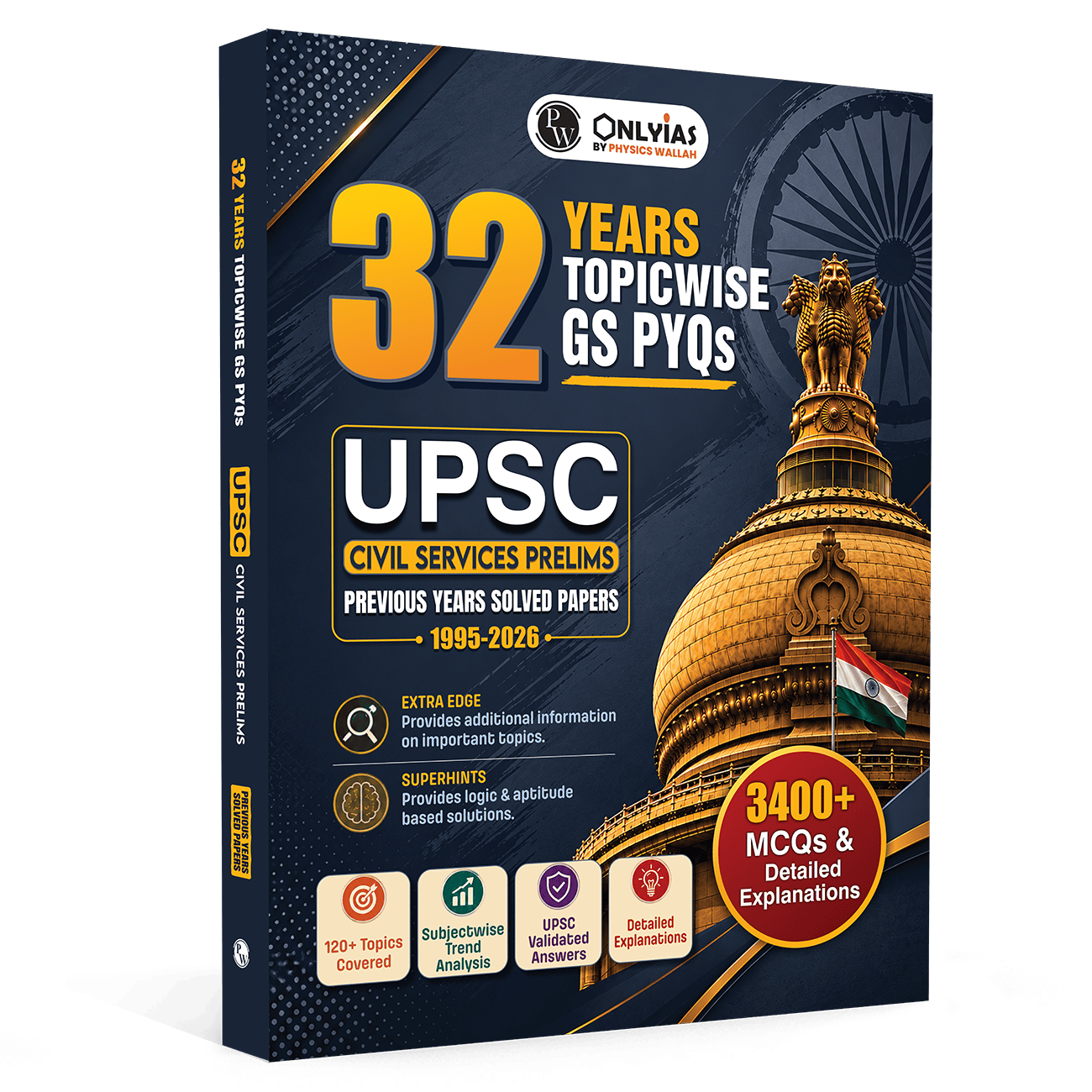
A good upsc current affairs book 2026 can help aspirants save time and study in a more organised way. These books are made to cover important events, government policies, international updates, and exam-focused topics for both Prelims and Mains preparation.
Complete GS Coverage
Most current affairs books cover topics from GS I, GS II, and GS III together. This helps students connect static subjects with current events in an easy way.
Timeline-Based Learning
Many books arrange events month-wise or timeline-wise. This makes revision easier and helps students quickly remember important developments.
Quick Revision Tools
Good current affairs books often include summary sections, key highlights, and “quick revision” pages for fast last-minute preparation.
Better Mains Answer Writing
These books also include important essay topics, government schemes, and policy explanations that help improve answer-writing skills for the UPSC Mains exam.
Focus on Important Subjects
Most books give special focus to important UPSC areas like:
-
Economy
-
Science and Technology
-
Environment
-
International Relations
-
Government Policies
Practice Questions for Preparation
Many current affairs books also include practice MCQs and mains-based questions to help students test their preparation regularly.
UPSC Current Affairs Revision Strategy
Consuming current events is meaningless if you cannot recall them in the examination hall. Building a strict, short-term revision system is vital for long-term memory.
|
Revision Phase |
Recommended Timeline |
Core Objective |
|
Weekly Review |
Every Sunday (2–3 Hours) |
Revisit your highlighted points from the weekly readings to reinforce core concepts. |
|
Monthly Consolidation |
End of each month (1 Day) |
Read a monthly compilation or digital booklet to fill in any gaps left by daily newspaper reading. |
|
Quarterly Overhaul |
Every 3 months (2 Days) |
Use a quarterly magazine to review broad trends, evaluate comparative data, and practice mock tests. |
Read More: Importance of Solving Previous Year Papers for UPSC Exam
UPSC Current Affairs Book FAQs
Q1: How many months of current affairs in UPSC should I cover for the exam?
Ans: Aspirants should thoroughly cover at least 12 to 15 months of consecutive current events leading up to the date of the examination to ensure they can answer both direct and semi-static questions.
Q2: Can I clear the exam using a monthly UPSC current affairs PDF instead of daily newspapers?
Ans: Yes, if you are short on time, you can rely on a comprehensive monthly digital summary. However, ensure you read it actively and practice answer writing regularly to build your analytical skills.
Q3: How much time should I dedicate daily to current affairs for ias preparation?
Ans: You should ideally spend no more than 1.5 hours daily on current events. This timeframe should include reading the newspaper and reviewing your weekly or monthly study compilations.
Q4: What makes the UPSC current affairs book 2026 unique for aspirants?
Ans: The UPSC current affairs book 2026 offer integrated GS coverage, regular timeline-based event tracking, simplified breakdowns of policy bills, and custom essay writing themes designed for rapid revision.
Q5: Should I buy a monthly guide or a quarterly current affairs book for ias?
Ans: Monthly booklets are excellent for consistent, regular updates. However, a quarterly current affairs book for ias is highly effective for rapid revision, as it connects events over a longer three-month window and eliminates short-term noise.