How Hindi-medium UPSC aspirants can use Modern History Mind Maps for Prelims and Mains
Many candidates face difficulties when organizing large amounts of text. For those studying in regional mediums, finding concise, well-structured, and high-quality revision resources presents a significant hurdle.
This resource directly resolves that problem. By utilising UPSC modern history mindmaps Hindi, you can transform lengthy book chapters into structured visual layouts. This method improves revision and helps candidates link historical events logically, ensuring facts remain clear during the exam.
What Are UPSC Modern History Mindmaps Hindi?
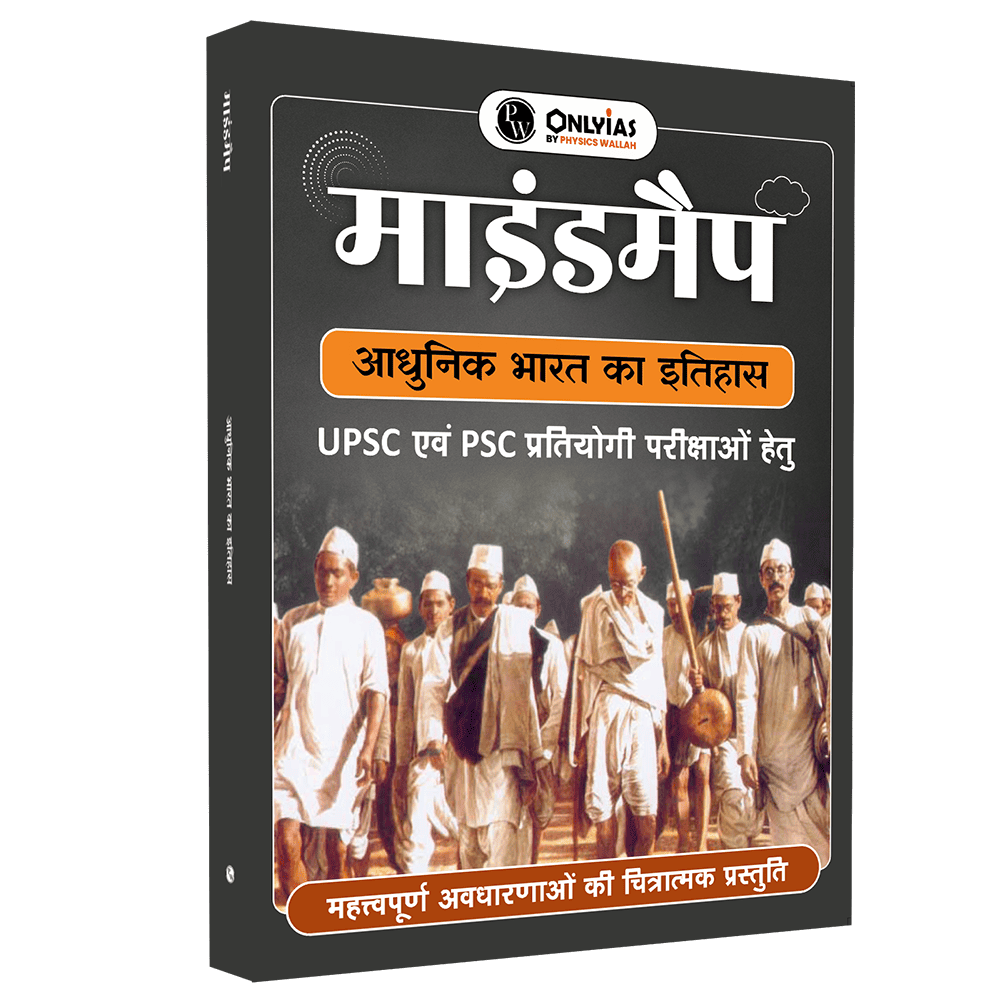
The UPSC modern history mindmaps Hindi resource is a specially developed visual book designed for Civil Services candidates. It presents complex historical events, movements, and policies in a highly structured, visual format. Instead of reading endless paragraphs, candidates get a concise layout of information.
-
Visually engaging layouts that display relationships between events.
-
Detailed timelines that track chronological developments.
-
Flowcharts that simplify complicated administrative and political policies.
-
Infographics that help candidates retain facts easily.
This visual resource acts as a comprehensive UPSC modern history book alternative for final revisions, allowing candidates to view an entire topic on a single page. It aims to build the conceptual clarity needed to handle both objective and subjective questions.
How UPSC Modern History Mindmaps Hindi Help in Prelims Preparation?
The preliminary exam tests your factual accuracy and analytical quickness. Retaining precise dates, names, and acts can become overwhelming when relying solely on standard textbooks. This is where a mind map for history provides a massive advantage.
Using these visual summaries helps your Prelims preparation in multiple ways:
-
Rapid Fact Retrieval: The structured format allows you to quickly locate facts without flipping through hundreds of pages.
-
Chronological Clarity: Flowcharts clear up confusion regarding the exact order of historical occurrences.
-
Elimination Skills: Clear mental visuals help you confidently eliminate wrong choices in multiple-choice questions.
By providing a clear overview of complicated historical topics, these summaries help visual learners grasp the broader context and revise effectively right before entering the exam hall. When combined with concise UPSC Revision Books, aspirants can revise important events, timelines, and historical connections more efficiently while strengthening long-term retention for both Prelims and Mains.
Topics Covered in UPSC Modern History Mindmaps Hindi
To ensure complete readiness, this resource delivers comprehensive topic coverage across the entire Civil Services history syllabus. It is not limited to simple summaries but provides an exhaustive visual layout of crucial eras.
|
Syllabus Section |
Key Historical Themes Included |
|
Early Colonial Rule |
Expansion of British power, major battles, and administrative setups. |
|
Socio-Religious Movements |
Key reformers, societies, and impact on traditional Indian customs. |
|
Freedom Struggle |
The 1857 revolt, early political associations, and moderate-extremist phases. |
|
Gandhian Era |
Non-Cooperation, Civil Disobedience, and Quit India movements. |
|
Constitutional Milestones |
Evolution of British acts, charters, and administrative changes. |
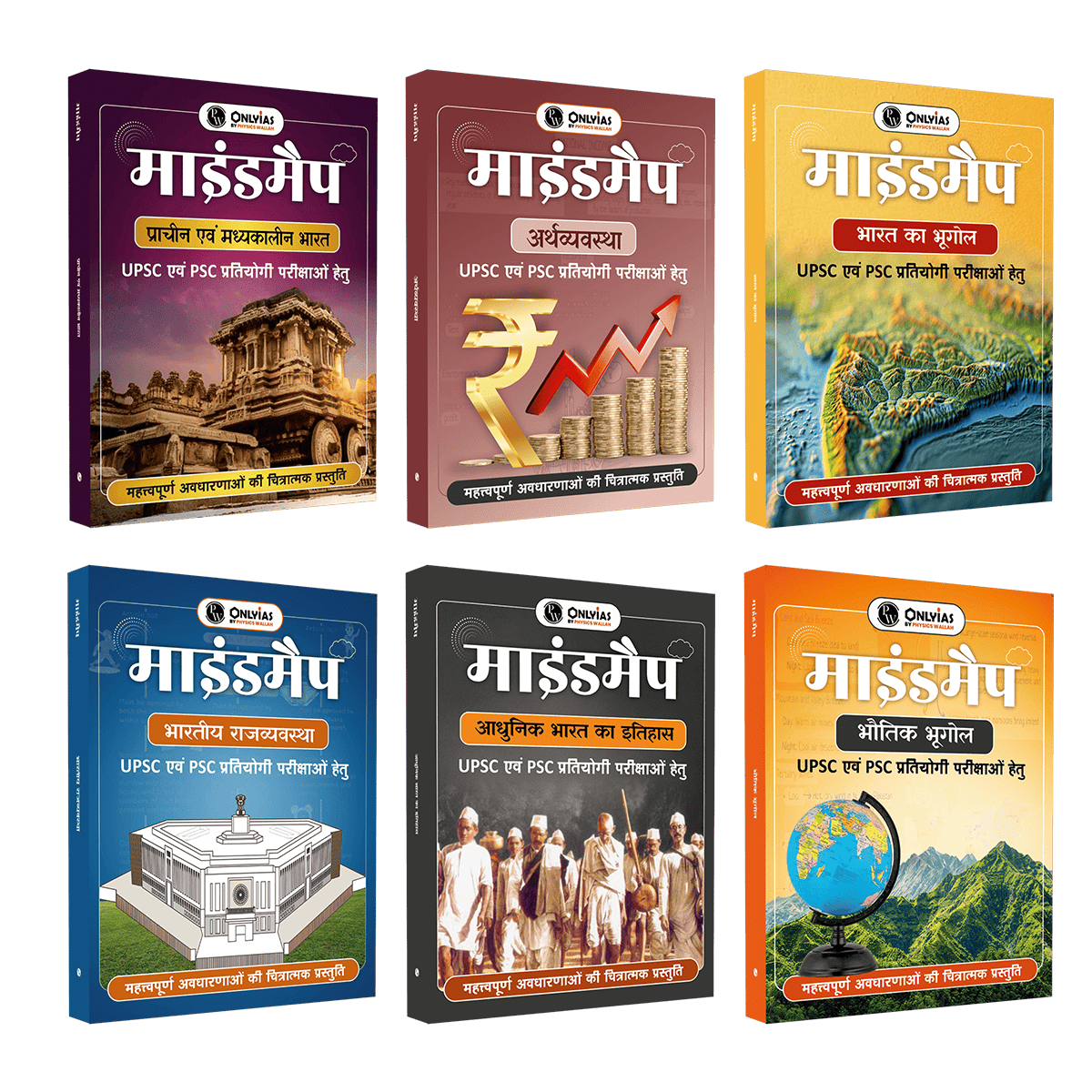
The UPSC book also covers essential areas of modern indian history for UPSC, alongside Art & Culture, ancient, and medieval eras, ensuring holistic syllabus coverage.
Why UPSC Modern History Mindmaps Hindi Are Useful for Hindi-Medium Aspirants
Finding premium, well-structured revision material translated accurately into Hindi has always been a major obstacle for aspirants. Many standard books lose their original meaning during poor translations, causing further confusion.
This specialized resource solves this issue by offering:
-
Natural Language Flow: Standard Hindi terminology used in Civil Services exams is maintained.
-
No Rough Translations: Every concept is explained directly in clear, accessible Hindi prose.
-
Time-Saving Format: Saves candidates from manually translating complex English summaries.
Instead of spending hours rewriting notes into regional scripts, students can focus directly on absorbing the facts. This brings Hindi-medium candidates onto a level playing field with others.
Benefits of UPSC Modern History Mindmaps Hindi
Switching from traditional text-heavy notes to visual layouts transforms how you store information. Human brains process visuals much faster than plain text, which makes this book highly beneficial for long-term retention.
Key advantages include:
-
Better Conceptual Interlinking: Easily connect economic policies with the political revolutions they caused.
-
Structured Format: Simplifies complex historical concepts, events, and dynasties.
-
High Engagement: Keeps your study sessions interactive, reducing the fatigue caused by dense books.
-
Holistic Revision: Provides a quick overview of difficult topics, helping candidates understand the broader picture.
How to Use UPSC Modern History Mindmaps Hindi
To gain the maximum advantage from this visual resource, you must integrate it systematically into your daily study routine. Simply flipping pages passively will not yield optimal results.
Follow this effective method to utilize the book:
-
First Reading: Read your standard textbooks first to build a foundational understanding.
-
Visual Mapping: Open the UPSC history mind maps to see how that topic is broken down visually.
-
Active Recall: Cover parts of the visual layout and try to recall the sub-branches from memory.
-
Mains Answer Practice: Use the structured branches to plan points for your descriptive answers.
This systematic approach transforms your preparation from passive reading into active learning, ensuring you remember the details when writing your answers. Pairing this method with regular practice of UPSC PYQs further strengthens conceptual understanding, improves answer application skills, and helps aspirants recognise the patterns and depth of questions asked in previous examinations.
When to Use UPSC Modern History Mindmaps Hindi
Timing plays an essential role in Civil Services preparation. Using the right tool at the wrong time reduces its overall effectiveness. Knowing exactly when to open this book ensures better retention.
The most suitable times to use these visual tools include:
-
Immediate Review: Right after finishing a lengthy textbook chapter to consolidate information.
-
Weekly Revision Blocks: During weekends to refresh older topics without spending too much time.
-
Pre-Exam Weeks: In the final month before Prelims when reading full books is impossible.
-
Between Exam Sessions: In the short gap between Prelims and Mains to quickly revise key points.
By utilizing these tools during these critical windows, you ensure your memory remains sharp and free of confusion.
Study Strategy with UPSC Modern History Mindmaps Hindi
Integrating visual tools into a broader plan ensures consistent progress. A structured schedule helps you cover the vast syllabus systematically while keeping revisions smooth.
-
Phase 1 (Foundation): Spend 70% of your time on core books and 30% on visualizing the structures.
-
Phase 2 (Consolidation): Shift to a 50-50 balance, practicing answer writing using the map structures.
-
Phase 3 (Peak Revision): Dedicate 90% of your history study time to these visual frameworks for rapid recall.
This balanced strategy ensures you build deep knowledge early on while maintaining the speed required during the final days of the exam. For those seeking these resources, a modern history mind map in Hindi PDF or physical edition serves as an excellent companion throughout these phases.
Read More: UPSC Geography Previous Year Papers with Downloaded PDF
UPSC Modern History Mindmaps Hindi FAQs
Can I rely entirely on these visual maps for my history preparation?
No, you should use them alongside standard textbooks to maximize your understanding. They are designed to simplify complex historical concepts, events, and timelines for easier understanding and revision, making them perfect revision tools rather than complete textbook replacements.
Are these visual summaries beneficial for the descriptive Mains exam?
Yes, they help significantly. The structured branches show you how to organize points logically, which teaches you how to present clean, interconnected answers in the GS Mains paper.
Does this resource cover ancient and medieval topics too?
Yes, it offers holistic coverage of important Ancient, Medieval, and Modern Indian History topics, ensuring you have a complete visual aid for the entire history syllabus.
How do these visual maps save time during preparation?
They compress massive chapters into single-page visual summaries. This allows you to revise complex historical movements in minutes instead of spending hours reading text.
Is the language used in this book suitable for Hindi-medium exams?
Yes, the text is specifically designed in natural, exam-standard Hindi to ensure clarity and accurate conceptual understanding for regional medium aspirants.