How PW 32 Years UPSC PYQ Book Helps Identify Repeating UPSC Trends

Many candidates spend hours reading textbooks cover to cover, only to struggle during the actual exam because they fail to understand how the commission frames its questions. Without a clear strategy, navigating the massive syllabus becomes incredibly difficult.
By studying past patterns, you can convert an overwhelming amount of information into a structured study plan. Using a reliable UPSC PYQ book helps you see through the complexity, allowing you to anticipate what might be asked next and focus your energy on the areas that yield the highest marks.
What is the UPSC PYQ Book?
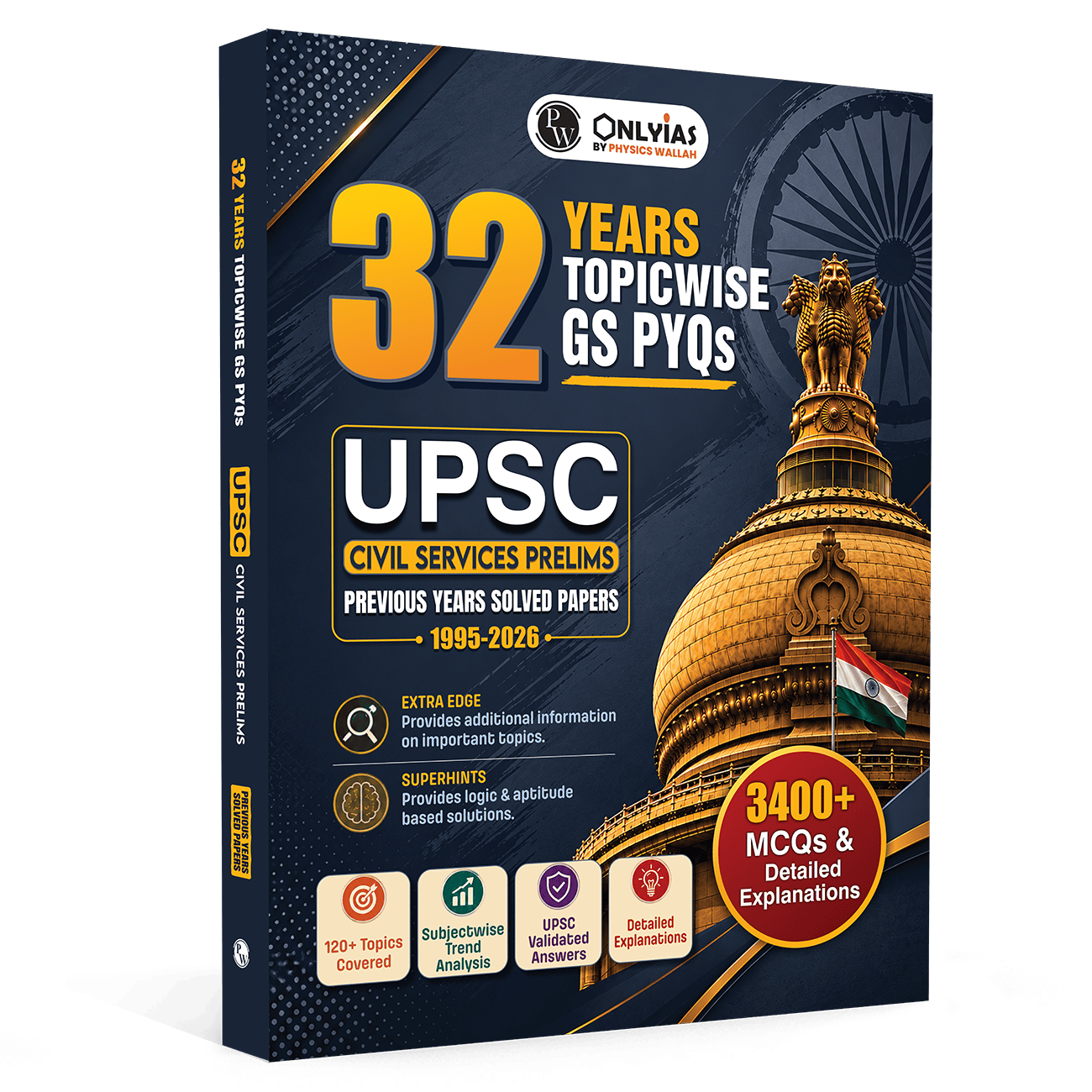
An authentic UPSC PYQ book serves as a specialized preparation resource designed to help aspirants demystify the Civil Services Preliminary Examination. Rather than presenting past questions as a chaotic, chronological list, a well-structured book compiles 32 years of solved papers spanning from 1995 to 2026.
This comprehensive timeframe delivers more than 3400+ solved MCQs, giving you an exhaustive bank of high-quality questions to practice with.
The ultimate value of this resource lies in its structural organization. It covers both General Studies Paper 1 and the CSAT Aptitude Paper 2, making it a comprehensive solution for the entire Prelims stage. Every question is backed by detailed, option-wise solutions.
This means you do not just learn the correct answer; you also understand the exact logic required to eliminate the remaining incorrect choices, which is a vital skill for clearing the modern Prelims cutoff.
Why the UPSC PYQ Book Is Essential for Trend Analysis?
Succeeding in the Civil Services Exam requires deep insights into evolving examination patterns. Relying solely on standard textbooks makes it easy to lose sight of how questions are actually constructed.
A quality UPSC question bank acts as a diagnostic tool, offering a clear UPSC trend analysis that reveals exactly how the commission alters its testing focus over different eras.
-
Spotting Core Themes: It reveals which traditional areas remain vital and which peripheral topics are gaining new traction.
-
Tracking Evolving Difficulty: You can observe how straightforward factual questions have progressively transformed into complex, conceptual, and statement-based questions.
-
Understanding Weightage Shifts: It provides clear visual markers showing when the exam shifted focus, such as prioritizing environmental ecology or conceptual macroeconomics over other areas.
-
Refining Exam Strategy: Seeing the historical trajectory of questions lets you align your daily preparation with actual current testing expectations.
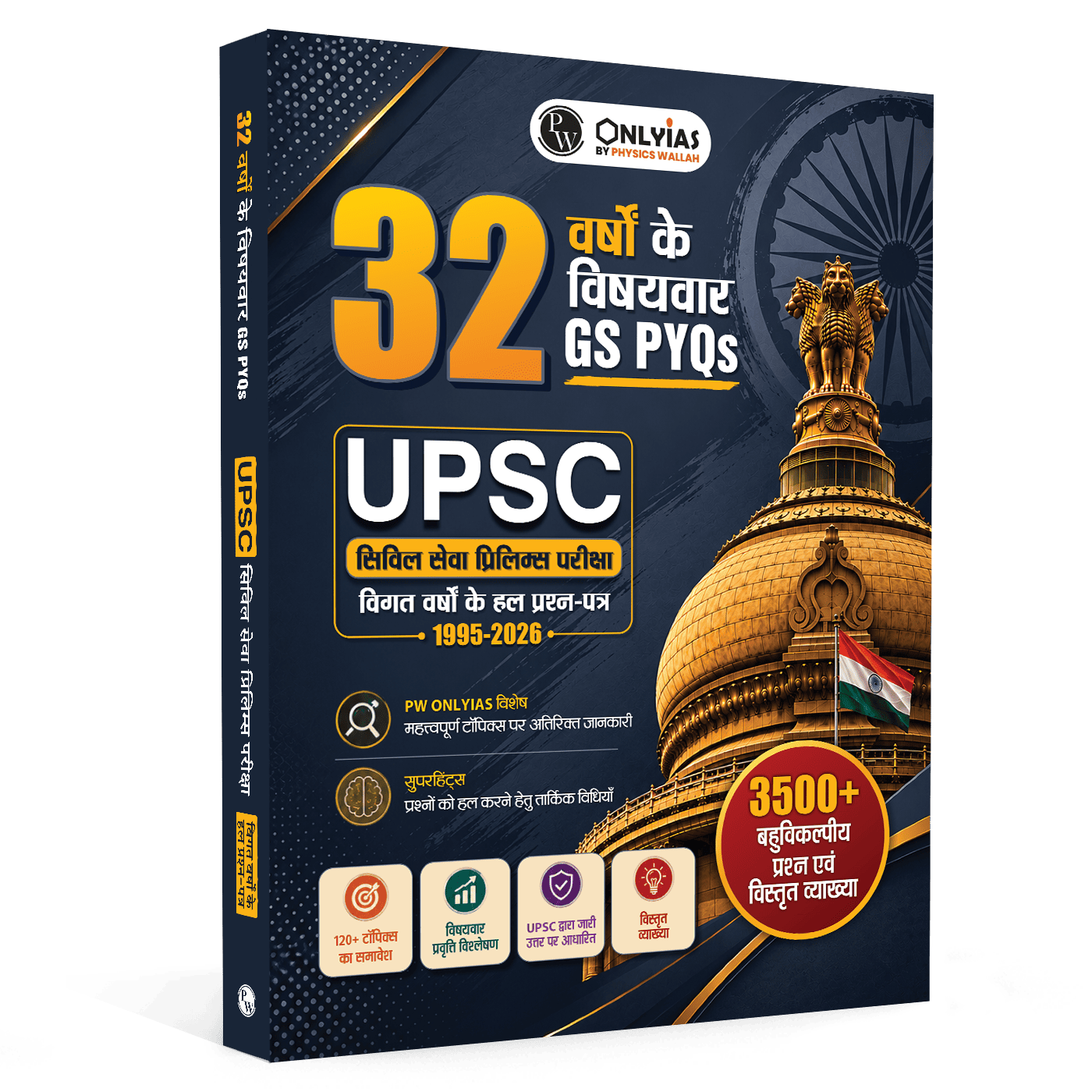
UPSC Prelims PYQ Book in Hindi covers 32 years of topic-wise GS questions from 1995–2026, featuring 3500+ MCQs with detailed explanations for effective Civil Services Exam 2027 preparation.
How the UPSC PYQ Book Reveals Repeating UPSC Question Patterns?
A widespread misconception about the Civil Services Exam is that questions are never repeated. While verbatim question repetitions are rare, the underlying concepts, core logic, and specific themes experience significant recurrence. Utilizing a premium book allows you to systematically spot these repeating UPSC questions and use them to your advantage.
The book incorporates special analytical hints and expert insights designed to highlight recurring themes. For example, specific clauses of the Indian Constitution, particular geographical features, or recurring economic indicators appear in the exam papers year after year.
By tracking these patterns across a 32-year window, you can map out exactly how a single core concept is twisted into four or five different question formats over a decade. This insight helps remove the element of surprise on exam day.
How the UPSC PYQ Book Helps Identify High-Weightage Topics?
Trying to study every single topic in the syllabus with equal intensity is a recipe for exhaustion. True efficiency comes from knowing where to focus your energy. The question bank addresses this by providing clear chapterwise UPSC PYQs segregated across more than 120 distinct topics.
The structural breakdown categorizes questions into core subject streams such as Polity, Economy, History, Geography, Environment, Science & Technology, and Current Affairs.
By reviewing these organized segments, you can instantly tell which chapters yield twenty questions over the years and which ones yield only two. This clear distribution allows you to optimize your revision schedule effortlessly.
How to Analyse Questions Effectively Using the UPSC PYQ Book?
Simply reading through past questions and checking the answers is not enough to give you a competitive edge. True analysis requires an active, inquisitive approach that dissects every component of a question.
-
Read the Stem with Care: Carefully examine the phrasing of the question to identify key qualifiers like "not correct," "all," "only," or "chronological order."
-
Evaluate Every Single Option: Do not stop reading once you find the correct option. Use the detailed option-wise solutions to learn why the other three choices are incorrect.
-
Trace the Source Material: Try to identify whether the question stems from a basic NCERT text, a standard reference book, or a specific current affairs news event.
-
Reverse Engineer the Distractors: Look at the incorrect options to understand how exam setters create plausible traps to confuse unprepared candidates.
-
Document Structural Insights: Keep a running note of recurring conceptual traps so you can avoid falling into them during the actual exam.
Tips for Using the UPSC PYQ Book
To get the absolute most out of your question bank and ensure an effective UPSC prelims revision, try incorporating these practical study habits into your daily routine:
-
Align with Daily Readings: Whenever you finish a chapter in a textbook, immediately open the corresponding chapter-wise section in your question bank to test your understanding.
-
Apply Intelligent Guessing: Use the embedded expert hints and structural clues to practice your elimination techniques on tough questions.
-
Utilise Integrated Visual Aids: Pay close attention to the maps, charts, and diagrams included in the solutions to build strong visual memory for geographic and scientific topics.
-
Simulate Real Exam Conditions: Block out quiet, timed windows to solve complete year-wise blocks, mimicking the pressure of the actual examination hall.
-
Bridge the Gap to Mains: Use the conceptual clarity gained from deep prelims explanations to reinforce the foundational arguments you will need for your Mains descriptive answers.
Common Mistakes to Avoid While Using the UPSC PYQ Book
Many aspirants own UPSC books but fail to see their scores improve because they use them incorrectly. Recognizing these common pitfalls will save you time and keep your UPSC preparation on the right track.
-
Memorizing Answers Blindly: Treat past papers as a tool to understand concepts and logic, not as a test of rote memory.
-
Ignoring the CSAT Paper: Skipping the CSAT sections until the final weeks can be dangerous; use the integrated Paper 2 sections to build continuous aptitude skills.
-
Neglecting the Explanations: Skipping the written solutions when your guess happens to be correct prevents you from learning the systematic elimination logic.
-
Studying Questions in Isolation: Failing to connect a past question back to your primary textbooks stops you from building integrated conceptual clarity.
-
Delaying Practice Until the End: Waiting until you finish the entire syllabus to open your question bank leaves you without a clear understanding of exam trends during your primary reading.
Read More: List of Important Articles in Indian Constitution for Competitive Exams
UPSC PYQ Book FAQs
Q1: How many years of past papers should I look at for a reliable trend analysis?
A1: Analyzing a 32-year window from 1995 to 2026 offers the most comprehensive view. It allows you to see long-term shifts in question design, foundational concepts, and evolving subject weightage.
Q2: Can practicing past questions help me prepare for both Prelims and Mains?
A2: Yes. While the formats differ, the core concepts remain the same. The detailed explanations provided in a quality question bank build deep conceptual clarity that strengthens your foundational knowledge for both exam stages.
Q3: Why is topic-wise segregation better than chronological question lists?
A3: Topic-wise segregation groups questions from the last three decades into specific subject chapters. This helps you immediately see which individual topics are highly valued by examiners and lets you practice targeted sections.
Q4: How do option-wise explanations improve my test-taking accuracy?
A4: They explain the precise logic behind why correct choices are right and why incorrect options are wrong. This trains your mind to spot exam traps and master the process of elimination.