How PW Monthly Current Wallah Keeps UPSC Aspirants Updated Every Month
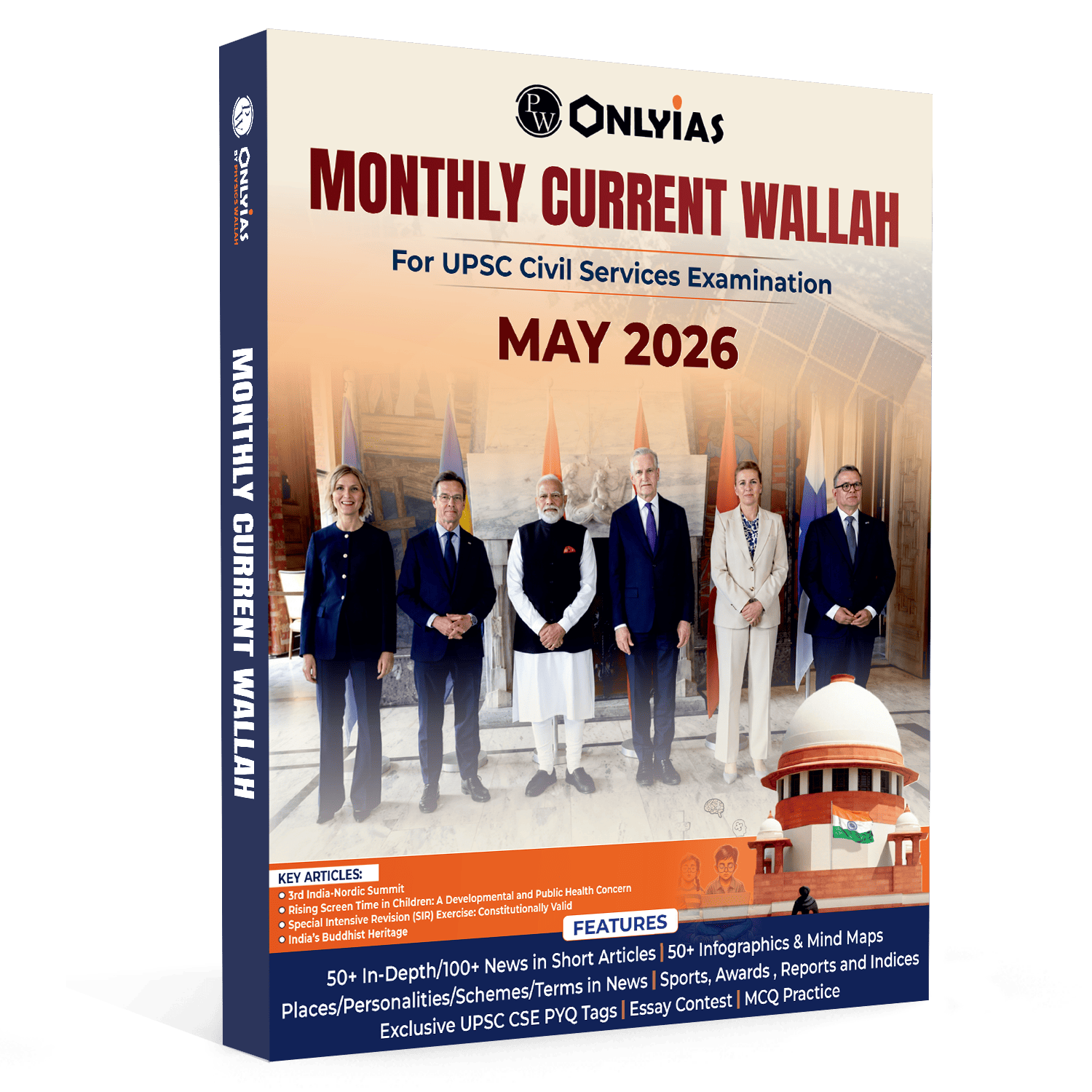
Preparation for civil services examination requires continuous effort, especially to keep oneself updated with the current happenings. To keep up with UPSC monthly current affairs, we need to sift daily dynamic news into high yield exam insights. Exhaustive tracking can result in information overload and burnout. This article explores how a structured dynamic digest streamlines your preparation journey, enhances retention, and provides highly effective strategic revision systems.
Importance of UPSC Monthly Current Affairs
Dynamic questions form the basic backbone of civil services selection process in all the three competitive stages. This dynamic segment of the syllabus serves as the bridge from the traditional basics to the modern day happenings. Evaluation is directly affected by the inability to develop a sound understanding of current global and national affairs.
-
Prelims Integration: Modern preliminary tests prioritize multi-statement objective questions linking static frameworks directly with fresh regulatory policies or international treaties.
-
Mains Enrichment: Achieving high scores in descriptive general studies papers requires justifying arguments with contextual data points, recent Supreme Court verdicts, and committee recommendations.
-
Interview Confidence: The final personality test heavily evaluates a candidate's independent perspective on ongoing socio-economic and geopolitical affairs.
The absence of a structured revision pattern often leads to gaps in knowledge application. Relying only on daily headlines just before the examination can result in information overload and poor retention. A structured monthly revision system ensures systematic learning and reinforces important concepts without the pressure of last-minute preparation.
To strengthen your revision further, practise with an UPSC PYQ Book, which contains authentic previous year questions with detailed explanations and topic-wise analysis. Solving PYQs alongside your revision schedule helps you understand how current affairs and static concepts are tested, improve conceptual clarity, and prepare more effectively for both the UPSC Prelims and Mains.
How PW Current Wallah Covers UPSC Monthly Current Affairs
It can be very overwhelming to deal with all the things from international relations to environmental regulations to domestic economic policies. This magazine, which caters to this massive inflow simplifies it by breaking events into bite-sized chunks that are direct and syllabus-oriented. This strict structural division makes random news tracking targeted and high-yield learning.
|
Syllabus Section |
Core Focus Areas Covered |
Exam Relevance Level |
|
Polity & Governance |
Constitutional developments, legislative bills, major judicial pronouncements |
Extremely High (Prelims & Mains) |
|
Economic Development |
Macroeconomic indicators, central banking policies, trade updates |
High (Mains Data Validation) |
|
International Relations |
Bilateral agreements, multilateral summits, global geopolitical flashpoints |
Medium to High (Mains Analytical) |
|
Science & Technology |
Space exploration missions, emerging artificial intelligence, public health policies |
High (Prelims Concept Check) |
|
Environment & Security |
Climate summits, conservation frameworks, internal security protocols |
High (Applied Knowledge) |
A UPSC current affairs book dedicated to civil services aspirants helps them avoid secondary digital noise. It stops tracking the irrelevant political minutiae and allows deep focus on issues of high academic weight.
Features of the UPSC Monthly Current Affairs Magazine
A quality informational digest provides more than basic factual statements. It establishes deep analytical contexts, allowing self-studying individuals to understand the underlying causes and future implications of major national decisions.
Comprehensive Mains-Focused Articles
Descriptive answer evaluation requires analytical depth rather than mere headline memorisation. Special segments analyse core issues and include operational backgrounds, systemic challenges and practical structural ways forward. This extensive analytical deconstruction naturally helps the individuals to build coherent research backed arguments for descriptive papers.
Visual Learning Aids and Infographics
For complex institutional processes or geographic changes, memorising dense paragraphs can be difficult. It is so much easier to retain information when your UPSC Current Affairs include well designed flowcharts, conceptual maps, and detailed diagrams. Visual tools decompose complex institutional chains making it much easier to recall spatial data at the intense hours of exams.
Prelims Fact Sheets and Probable Questions
To make it through the preliminary round one needs incredible factual accuracy and a razor-sharp elimination skills. Special factual sections cover key indicators, global indices and major welfare initiatives. Including high-yield mock questions helps people regularly assess their retention and catch minor factual nuances.
How to Revise UPSC Monthly Current Affairs Effectively
Possessing premium UPSC books only yields results if you follow a disciplined, planned revision routine. Integrating a monthly magazine into your daily schedule saves valuable time and improves long-term memory retention.
-
Step 1: Contextual Newspaper Reading: Spend around forty-five minutes daily scanning primary editorials to establish basic contextual awareness. Avoid taking extensive daily notes.
-
Step 2: Sectional Mapping: Use your current affairs book at the end of every month to consolidate notes into clear syllabus headings.
-
Step 3: Active Assessment: Solve chapter-wise multiple-choice questions right after studying to find any remaining knowledge gaps.
-
Step 4: Final Consolidation: Revisit highlighted terms and visual flowcharts during your weekly review blocks to ensure long-term memory retention.
Following this structured loop eliminates the need to compile massive stacks of messy handwritten daily notes. It creates a smooth, highly functional routine that keeps UPSC preparation structured, logical, and low-stress.
Key Point to Remember: Current events should never be studied in total isolation. Always connect new developments back to foundational theoretical concepts found in your core reference books.
How to Choose the Right UPSC Monthly Current Affairs Magazine
Finding a reliable compilation that balances deep analytical insights with accessible language can be difficult. The specialized resource bridges this gap perfectly, offering an early, exam-focused publication cycle.
-
Early Monthly Release: Gives candidates a strategic advantage by providing well-compiled study material ahead of standard market publication cycles.
-
Syllabus-Aligned Design: Maps every article directly to specific papers, saving hours of sorting and indexing.
-
Multidimensional Sourcing: Curates data points from over eight prominent national newspapers, government press releases, and reputable international think tanks.
-
Integrated Practical Tools: Features real-world ethics case studies and structured essay contests to refine advanced answer-writing skills.
Using this balanced approach ensures you cover essential current developments completely, giving you a strong competitive edge in your UPSC preparation journey.
Read More: How to Study Current Affairs for UPSC Exam
UPSC Monthly Current Affairs FAQs
How does PW UPSC monthly current affairs assist in writing descriptive answers?
It provides systematic event backgrounds, relevant statistical indices, and analytical viewpoints. This well-organized data helps candidates build balanced arguments and propose structured solutions in civil services descriptive papers.
Can a beginner rely entirely on a monthly current affairs book?
A beginner should couple the monthly current affairs book with standard foundational text-books. The magazine connects current events to static concepts, but building a baseline understanding of core subjects remains essential.
How much time should I dedicate to a current affairs book every month?
Allocating approximately twelve to fifteen hours over a week at the end of every month is usually ideal. This allows you to digest the material thoroughly without compromising your static syllabus schedule.
Does this resource cover preliminary exam requirements?
Yes, it includes specialized fact sheets, updates on government schemes, and practice multiple-choice questions. These components are specifically designed to build the precision needed for the preliminary stage.
Why is a monthly revision system better than preparing with annual roundups?
This routine ensures steady, incremental learning and builds stronger long-term memory retention. Annual roundups often pack too much data into a short window, making deep conceptual clarity difficult to achieve.