How to Make the Most of an Indian Polity Question Bank
Indian Polity remains one of the most vital segments of the Civil Services Examination. Aspirants frequently read standard textbooks multiple times, yet they still struggle when faced with tricky options in the Prelims paper. Memorising constitutional articles or landmark judgements is never enough on its own.
The real hurdle lies in applying abstract concepts to complex multiple-choice questions under strict time constraints. Without regular testing, silly errors and misread options cost valuable marks.
Using a structured UPSC Indian polity question bank bridges this gap, transforming standard passive reading into active, exam-oriented problem-solving.
What Is a UPSC Indian Polity Question Bank?
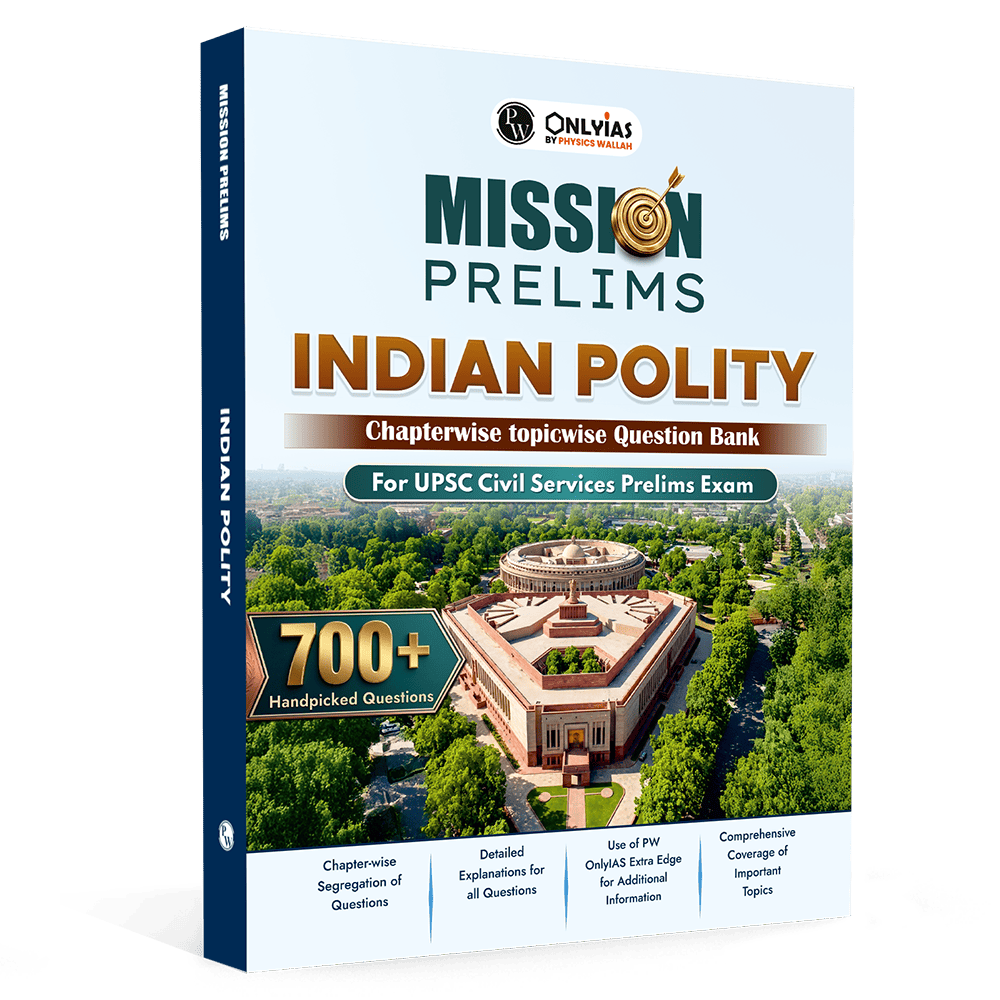
A high-quality UPSC Indian polity question bank is an exam-focused practice resource created specifically for Civil Services Prelims candidates. It compiles practice items organized by specific chapters and topics rather than presenting a random mixture of subjects.
This resource offers structured evaluation material so aspirants can assess their understanding right after completing a standard topic. Instead of relying solely on general theory books, using a UPSC polity book designed specifically for practice allows candidates to test their knowledge systematically across all key areas of the syllabus.
Features of UPSC Indian Polity Question Bank
To maximize your preparation efficiency, a dedicated practice UPSC book incorporates several functional tools designed to refine your test-taking skills.
-
Structured Segregation
Each segment aligns with standard syllabus modules. This organization allows you to move directly from reading a chapter—such as Fundamental Rights or the Union Executive—to testing yourself on that specific content immediately.
-
Handpicked Exam-Oriented Items
With more than 700 carefully chosen questions reflecting current testing patterns, aspirants focus exclusively on high-yielding areas without wasting time on outdated or irrelevant queries.
-
In-Depth Answer Explanations
Every item features comprehensive solutions. These explanations clarify the exact reasoning behind the correct response while detailing why alternative options are incorrect, helping reinforce core principles.
Why Use UPSC Indian Polity Question Bank?
Relying entirely on passive textbook reading often creates a false sense of security. Candidates frequently believe they understand a concept until they encounter framed options designed to mislead them. Incorporating systematic practice into your routine alters your approach to the entire syllabus.
Key reasons to use this practice resource include:
-
Strengthening Conceptual Clarity: Attempting UPSC polity questions forces your brain to recall constitutional provisions, key amendments, and institutional frameworks actively.
-
Improving Speed and Accuracy: Solving multiple-choice items repeatedly sharpens your elimination techniques and reduces time spent per question.
-
Building Exam Confidence: Working through targeted UPSC Indian Polity MCQs eliminates surprise elements on exam day by exposing you to varied question formats.
-
Identifying Knowledge Gaps: Regular testing highlights specific chapters where accuracy drops, allowing targeted revision rather than unguided rereadings.
When to Use UPSC Indian Polity Question Bank?
Timing your practice correctly ensures maximum retention and minimal stress during your overall preparation timeline. Using a UPSC Question Bank at different stages of preparation can help reinforce concepts, identify weak areas, and make revision and practice more structured.
-
Immediately After Chapter Completion: Solve practice items as soon as you finish reading a specific topic in your primary textbook to solidify foundational concepts.
-
During Phase-Wise Revision: Use polity practice questions UPSC modules during your scheduled revision phases to verify how many details you retain over time.
-
Before Sectional Mock Tests: Work through targeted chapters to sharpen your elimination strategies before sitting for full-length mock examinations.
-
During Final Prelims Crunch Time: Focus on solving solved examples and reading detailed explanations to quickly review high-yield constitutional provisions.
How to Use UPSC Indian Polity Question Bank?
To extract maximum value from your Indian polity question bank, avoid simply guessing answers. Adopt an active analytical approach during every practice session.
-
Read the Topic First: Complete your primary textbook chapter thoroughly before opening the practice book.
-
Attempt Questions Unassisted: Answer a set of 15 to 20 questions without checking the answer key midway.
-
Analyse Solutions Deeply: Read every detailed explanation, including those for items you answered correctly, to confirm your underlying logic was sound.
-
Review Standard Trends: Cross-reference your answers with authentic Indian polity PYQs to ensure your practice remains closely aligned with actual exam demands.
-
Maintain an Error Log: Document recurring mistakes, misread keywords, or forgotten articles in a dedicated notebook for quick weekly reviews.
How to Make a Study Plan With UPSC Indian Polity Question Bank?
Integrating practice modules into your daily routine supports consistent progress across the entire syllabus. The PW UPSC Mission Prelims Question Bank Combo Set of 9 Books can help provide structured practice, reinforce key concepts, identify weak areas, and make your UPSC Prelims preparation more systematic.
-
Daily Micro-Target Plan
Dedicate 45 to 60 minutes every evening solely to UPSC polity question practice. After completing a morning reading session on topics like the Judiciary or Emergency Provisions, solve 20 to 25 corresponding questions in the evening to lock in the information.
-
Weekly Review Schedule
Reserve Saturdays for evaluating your weekly error log. Re-attempt every question you marked incorrectly during the week to confirm that you have fully understood the underlying concepts and corrected any misinterpretations.
Common Mistakes to Avoid With UPSC Indian Polity Question Bank
Many candidates fail to gain the full benefit of their practice resources due to poor execution strategies.
-
Looking at Answers Prematurely: Checking the solution key immediately after reading a question prevents your brain from developing real problem-solving stamina.
-
Ignoring Explanations for Correct Answers: Assuming a correct guess equals true understanding often leads to mistakes on exam day when options are rephrased.
-
Neglecting Time Constraints: Solving items without a timer builds a false sense of comfort that fails to match real testing conditions.
-
Focusing Only on Quantity: Completing hundreds of questions without analyzing why errors occurred leads to repeating the same mistakes.
Tips to Practise With UPSC Indian Polity Question Bank
To consistently score higher in Polity, implement these practical testing strategies:
-
Pay Attention to Directives: Carefully underline words like “not,” “correct,” “incorrect,” or “only” before selecting your answer.
-
Utilise Process of Elimination: Systematically eliminate options that contradict basic constitutional principles to increase your odds on difficult items.
-
Highlight Key Explanations: Mark high-yield value-added notes within the solution section so you can review them easily during final revision cycles.
-
Simulate Real Test Conditions: Attempt blocks of 50 questions in one sitting without breaks to build focus and mental endurance.
Read More: Eligibility and Age Limit for UPSC
UPSC Indian Polity Question Bank FAQs
1. How many questions should I solve daily from the UPSC Indian polity question bank?
Aiming for 25 to 30 well-analysed questions daily after your study session is ideal for steady progress and deep conceptual retention.
2. Can I rely solely on a question bank without reading reference books?
No, a question bank complements standard textbooks by testing application and recall; it is not a complete replacement for foundational reading.
3. How do detailed explanations in the question bank help during revision?
Detailed explanations clarify why wrong options fail and provide concise summaries of key principles, making them excellent tools for quick revision.
4. Should I solve chapter-wise questions before attempting full-length mocks?
Yes, solving chapter-wise items builds solid topic-level accuracy, making it much easier to handle mixed full-length mock tests later.