How to Prepare Indian Polity with UPSC PYQs
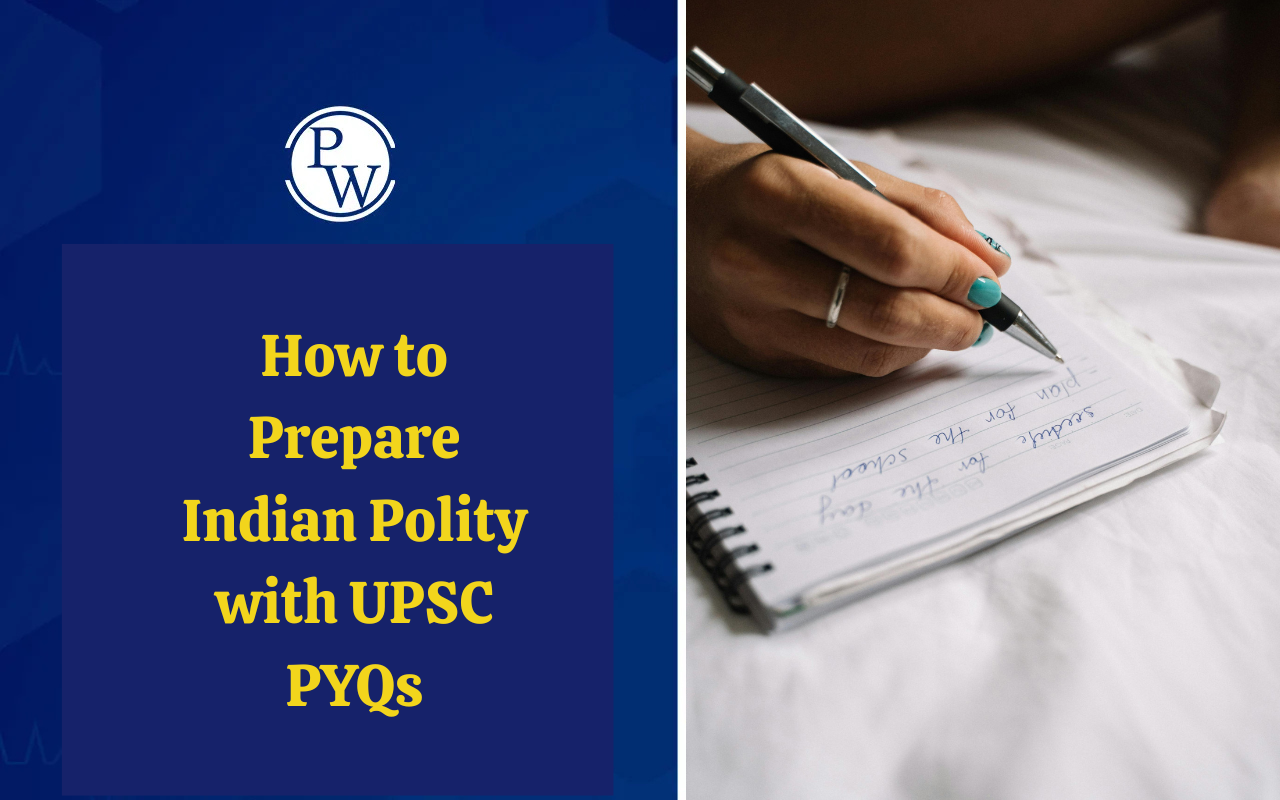
Preparing Indian Polity for the Civil Services Examination often leaves aspirants overwhelmed by vast constitutional articles, amendments, and complex legal frameworks. Many candidates read standard textbooks repeatedly but struggle to solve conceptual questions in the actual examination room. Integrating UPSC Indian Polity PYQ practice into your daily study routine bridges this critical gap between theory and execution.
Overview of UPSC Indian Polity PYQ
The PYQ is a useful resource for understanding how the Union Public Service Commission asks questions from Indian Polity in the Prelims examination. It helps aspirants move beyond textbook reading and focus on the concepts, topics, and question patterns that have appeared in previous UPSC papers.
Features of UPSC Indian Polity PYQ
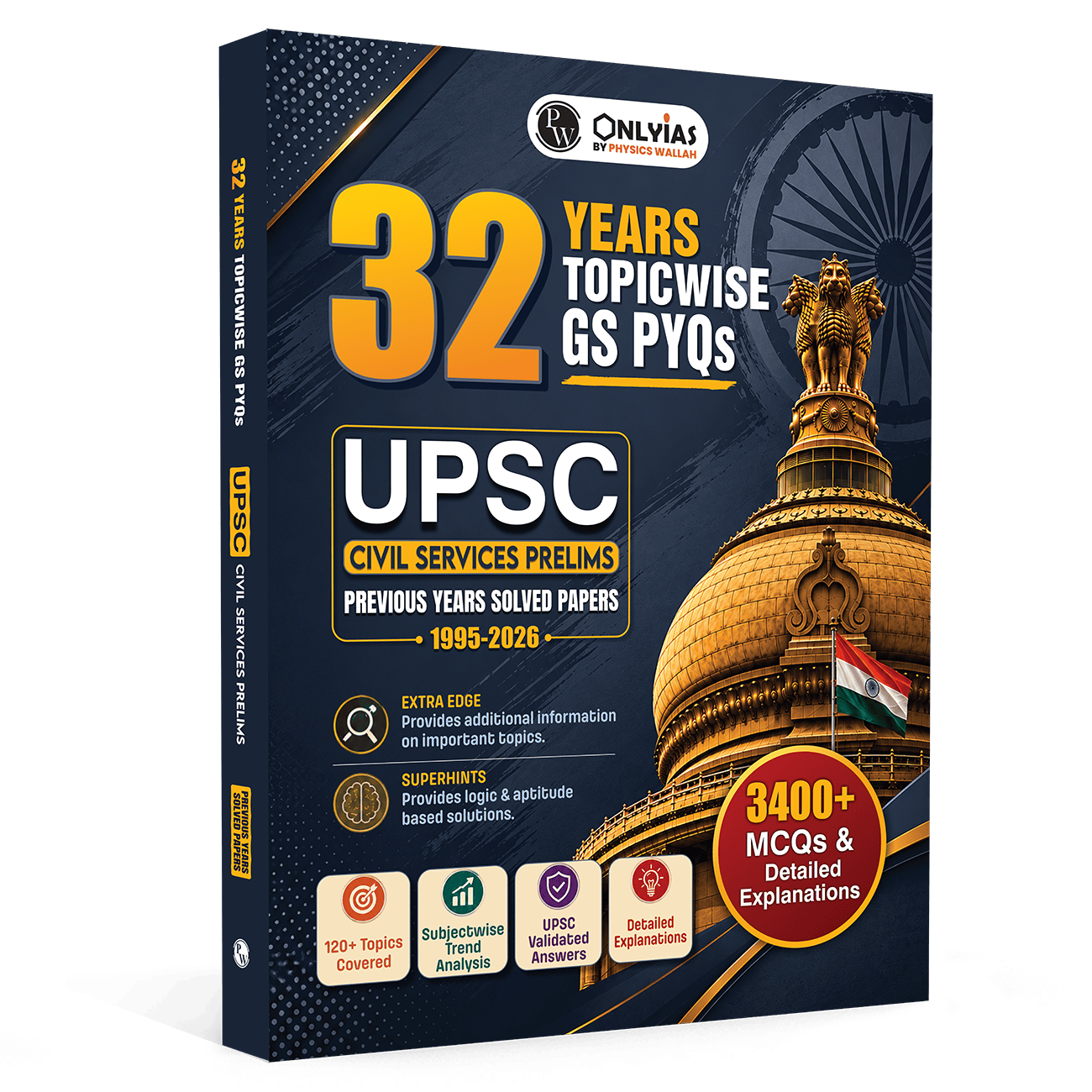
Prepare for UPSC Prelims with 32 years of previous year papers, solved MCQs, topic-wise practice, and detailed exam analysis. The book helps you understand question trends, improve accuracy, and prepare for both Prelims and Mains.
32 Years of UPSC Prelims Papers (1995–2026): Practice UPSC Prelims questions from 1995 to 2026, covering General Studies Paper 1 and CSAT Aptitude Paper 2. This wide coverage helps you understand the exam pattern and question trends over the years.
3400+ Solved MCQs: Practice more than 3400 authentic UPSC questions with detailed solutions. Regular practice helps improve your concepts, accuracy, and confidence for the Prelims exam.
Topicwise Segregation: Practice questions across 120+ topics, including Polity, Economy, History, Geography, Environment, Science & Technology, Current Affairs, and more. Topic-wise arrangement makes practice and revision easier.
Detailed Option-Wise Solutions: Understand why an answer is correct and why other options are wrong. These explanations help you improve the option-elimination method and make better choices during the exam.
Trend & Pattern Analysis: Study recurring themes, high-weightage topics, and changing UPSC question trends. This analysis helps you understand what areas need more attention during preparation.
PWOnlyIAS Extra Edge: Get expert insights, preparation strategies, and special “Superhints” to improve accuracy and make better guesses when you are unsure about an answer.
Updated for UPSC 2027: Prepare with content designed according to the latest UPSC Prelims pattern and syllabus expectations for the UPSC 2027 examination.
Visual Learning Support: Use maps, diagrams, infographics, and other visual aids to understand important concepts more easily and make revision faster.
Prelims + Mains Integration: Build strong concepts that support both Prelims and Mains preparation. The detailed explanations help you understand topics beyond just finding the correct answer.
Strategic Preparation Framework: Use question trends, topic-wise categories, and exam analysis to identify important areas and set your preparation priorities. This helps you use your study time in a more focused way.
Why Use UPSC Indian Polity PYQ for Polity Preparation?
Indian Polity carries significant weight in Prelims, typically accounting for 12 to 18 questions every year. Despite its predictable syllabus, candidates frequently commit avoidable errors due to nuanced options. Solving UPSC PYQs enables you to move past passive reading and shift towards active recall.
Decoding Exam Patterns and Traps
Past papers reveal how UPSC frames distractors in polity mcqs for UPSC. The Union Public Service Commission frequently tests subtle distinctions between statutory and constitutional bodies, absolute and qualified rights, or discretionary and administrative powers.
When you study indian polity UPSC PYQ trends, you notice distinct recurring question mechanisms:
-
Extreme Word Traps: Options containing terms like "only," "all," or "mandated by the Constitution" require careful scrutiny.
-
Constitutional vs Statutory Distinctions: Questions often ask whether a specific body or committee derives authority directly from constitutional articles or parliamentary acts.
-
Conceptual Definitions: Terms such as "Liberty," "Constitutionalism," "Rule of Law," and "Parliamentary Democracy" are tested through definition-based conceptual questions.
Identifying High-Yield Themes
Not all chapters in constitutional law demand equal time. Historical trends show that nearly 70% of questions stem from roughly 30% of the syllabus. Regular practice with polity for UPSC prelims helps you isolate high-frequency themes such as Fundamental Rights, Preamble, Parliamentary Committees, and Judicial Review.
How to Analyze UPSC Indian Polity PYQ Topic-Wise?
Randomly solving past papers year by year offers limited retention. To build a robust foundation, transition to solving a polity topic wise PYQ compilation. This methodical approach consolidates subject knowledge chapter by chapter.
|
Theme |
Key Focus Areas |
Average Questions (Last 10 Years) |
|
Preamble & Basic Structure |
Key terms (Liberty, Equality, Justice), Constitutionalism, Amendment limits |
1–2 Questions |
|
Fundamental Rights & Duties |
Articles 14–32, Enforceability, Relationship with DPSPs |
3–5 Questions |
|
Union Executive & Legislature |
Presidential powers, Parliamentary committees, Money Bills, Joint sittings |
4–6 Questions |
|
Judiciary |
Supreme Court jurisdiction, Judicial Review, Basic Structure doctrine |
2–3 Questions |
|
Federalism & Emergency |
Centre-State relations, Governor duties, Article 356 provisions |
1–3 Questions |
|
Constitutional & Non-Constitutional Bodies |
Election Commission, CAG, Finance Commission, Statutory authorities |
1–2 Questions |
Step 1: Chapter-Level Alignment
Before opening past papers, read the corresponding chapter from your primary reference text. Immediately follow your reading session by solving UPSC gs polity questions from that specific chapter. This reinforces concepts while your memory is fresh.
Step 2: Option Elimination and Reverse Learning
Do not stop at verifying the correct answer option. Investigate why the remaining three options are incorrect. Reverse learning from options uncovers secondary concepts that UPSC might expand into standalone questions in upcoming attempts.
Step 3: Maintaining Error Logs
Maintain an error log dedicated to constitutional articles, schedules, and landmark judgments. Categorize your mistakes into three groups:
-
Conceptual Blindspots: Fundamental misunderstanding of constitutional mechanics.
-
Fact Recall Errors: Misremembering numbers, schedules, or constitutional bodies.
-
Silly Mistakes: Misreading "Not Correct" as "Correct" during time-pressured practice.
What are the High-Weightage Topics in UPSC Indian Polity PYQ?
A structured UPSC Prelims Polity strategy relies on understanding how question patterns have evolved over recent years. UPSC has shifted away from straightforward factual recall towards deeper conceptual understanding and current affairs alignment. Alongside PYQ analysis, UPSC Books can help build a strong foundation, strengthen conceptual clarity, and provide structured practice for important Polity topics.
Evolution of Polity Question Dynamics
-
Phase 1 (Direct Factual Questions): Historically, questions focused heavily on article numbers, schedule lists, and direct constitutional amendments.
-
Phase 2 (Statement-Based Conceptual Testing): Modern papers present multi-statement questions evaluating application of constitutional philosophy, judicial precedents, and statutory definitions.
-
Phase 3 (Pair-Matching and Elimination Restrictions): Recent trends feature altered options formats (e.g., "Only one pair," "Only two pairs") which restrict traditional elimination techniques.
Core Constitutional Themes to Prioritise
-
Preamble Philosophy: Sovereignty, secularism, democratic republic, and liberty definitions.
-
Rights and Governance Directives: Interplay between Part III (Fundamental Rights) and Part IV (Directive Principles of State Policy).
-
Parliamentary Operations: Passages of Ordinary vs Money Bills, parliamentary privileges, motions, and speaker powers.
-
Local Self-Government: The 73rd and 74th Constitutional Amendment Acts, Panchayati Raj provisions, and 11th/12th Schedules.
-
Constitutional Governance: Judicial independence, emergency provisions, and financial devolution via the Finance Commission.
How to Solve UPSC Indian Polity PYQ for Maximum Accuracy?
Achieving high accuracy in PYQ practice demands an analytical mindset during test conditions. Developing an effective attempt strategy prevents negative marking and boosts overall paper scores.
Learn the Elimination Technique
Even with modified option formats, logical elimination remains valuable. Focus on evaluating statement accuracy independently before reviewing overall option combinations:
-
Check Constitutional Veracity: Verify if an authority or procedure is explicitly mentioned in the Indian Constitution or derived from parliamentary statutes.
-
Identify Absolutes: Words such as "shall always," "completely restricted," or "sole discretion" often signal incorrect statements in constitutional contexts.
-
Match Terminology: Ensure definitions align strictly with constitutional phrasing rather than colloquial language.
Consolidate Through Systematic Revision
Consistency is essential during UPSC polity revision. Plan a repeating cycle to revisit previously solved past papers every three weeks.
-
First Revision Cycle: Solve all past questions topic-by-topic alongside textbook reading.
-
Second Revision Cycle: Re-solve flagged questions that you previously answered incorrectly or guessed.
-
Third Revision Cycle: Execute full-length 100-question timed mocks using past papers from 2015 to 2025 to simulate exam conditions.
Selecting the best polity book for UPSC practice involves choosing resources with error-free solutions and detailed explanations. Structured study materials help streamline this revision process.
Mistakes to Avoid While Solving UPSC Indian Polity PYQ
Many candidates attempt past questions without extracting maximum learning value. Avoiding these common mistakes will refine your preparation. Alongside PYQ practice, using the UPSC Quarterly Current Affairs Magazine can help you stay updated with important current events, connect them with static concepts, and strengthen your overall UPSC preparation.
1. Rote Memorization Without Understanding
Memorizing answer keys without understanding constitutional reasoning leads to failure when UPSC rephrases a similar concept in subsequent exams. Always analyze the underlying constitutional principle.
2. Neglecting Current Affairs Links
Polity questions frequently stem from ongoing constitutional debates, Supreme Court rulings, or legislative enactments. Treat polity current affairs as an extension of static constitutional provisions.
3. Ignoring Non-Standard Statutory Bodies
Aspirants often focus exclusively on constitutional bodies while ignoring statutory authorities created by parliamentary acts (e.g., National Human Rights Commission, Central Information Commission, NITI Aayog). Ensure balanced coverage across all governance institutions.
Read More: UPSC 2026 Exam Date, Check Schedule & Important
UPSC Indian Polity PYQ FAQs
How many years of UPSC Indian Polity PYQ should I solve for Prelims?
Solving past questions from the last 15 to 25 years provides comprehensive coverage of recurring themes, evolving question patterns, and essential constitutional concepts.
Can I clear Polity in UPSC Prelims by relying only on PYQs?
While past questions are vital for understanding exam patterns and high-yield topics, they must be combined with a thorough reading of standard constitutional textbooks for complete conceptual clarity.
How does topic wise PYQ practice help in Polity revision?
Categorizing questions by topic allows you to identify personal weak areas, test subject mastery immediately after reading a chapter, and systematically revise high-weightage constitutional sections.
Are questions repeated in UPSC Indian Polity Paper?
Direct question repetition is rare, but underlying constitutional themes, concepts, and options frequently recur in modified formats across successive examination cycles.
How should I integrate current affairs with polity previous year questions?
Identify static constitutional provisions associated with recent news events, such as anti-defection law, governor powers, or parliamentary privileges, and solve past questions related to those specific themes.