How to Revise PW April 2026 Current Affairs Book for UPSC Prelims
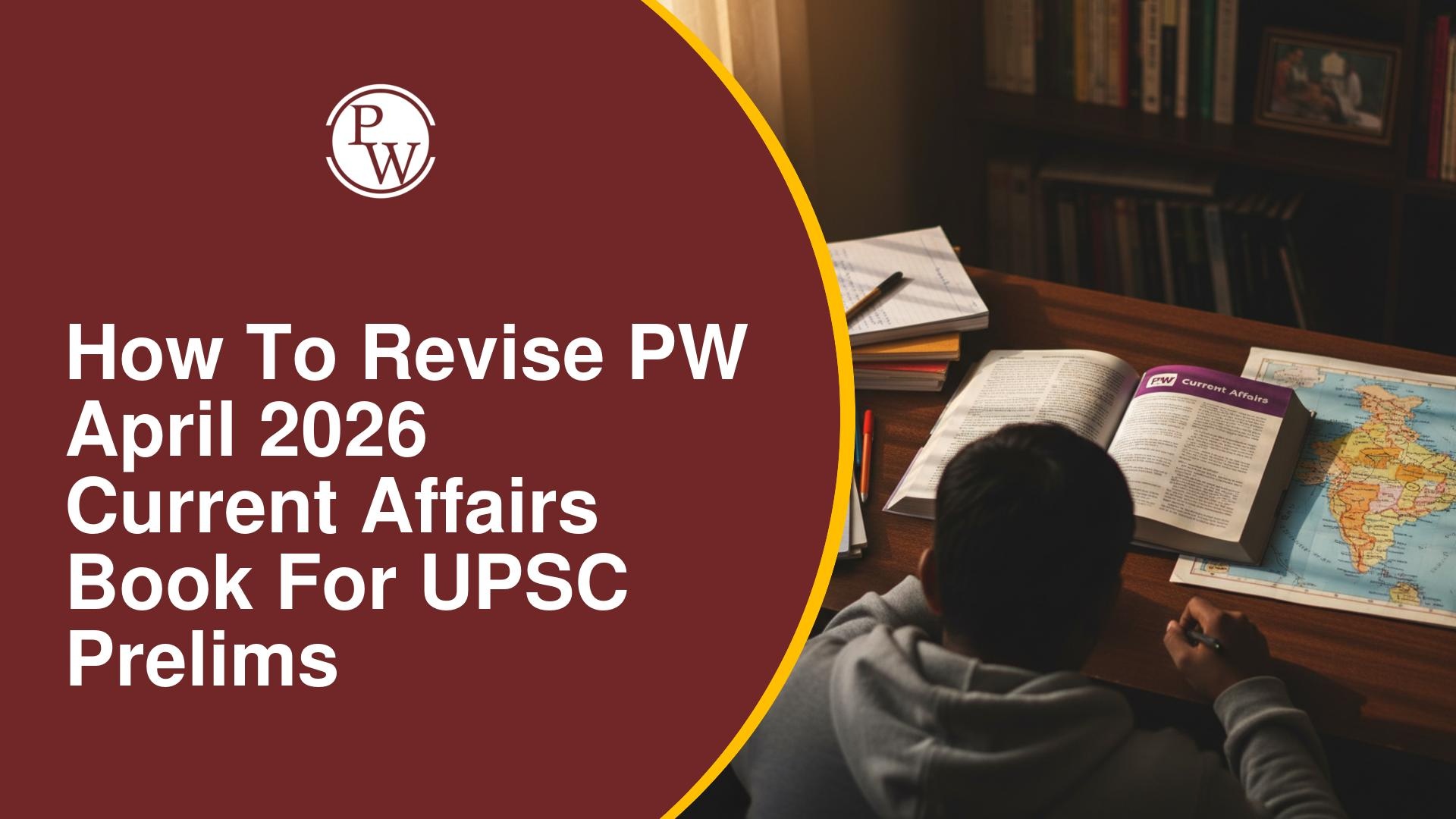
Monthly events revision for civil services exams is usually overwhelming to the candidates because of the large volume of knowledge and inadequate time management. Topics like international relations, polity and environment are not easy to learn and require structured ways of study. A thorough study of the PW April 2026 current affairs book helps candidates turn raw news into high score prelims answers. Syllabus mapping, visual aids and regular testing are all ways to coordinate your plan and build high accuracy on the day of the examination.
Why Use PW April 2026 Current Affairs Book for UPSC Prelims
For UPSC current affairs revision, study material should be created according to the test pattern. The current affairs book is a pointed book with analytical depth and quick memory tools. Candidates spend so many precious hours watching news channels but this book on current affairs consolidates all the relevant sources into one comprehensive guide.
Key Benefits of Current Affairs Book
-
Early Release Publication: The book is available to the candidates much ahead of other monthly current events publications providing them extra time for several revision cycles and extensive note keeping.
-
Credible Source Curation: Information is sourced directly from government reports, Yojana, Kurukshetra, PIB, top national dailies and reputable foreign think tanks.
-
Link for Prelims and Mains: Every topic is mapped closely against the official civil services syllabus, so that candidates study only what is relevant, without any distraction.
-
Visual Retention Features: Mind maps, illustrations, flowcharts, and infographics simplify intricate policy frameworks and geographic data for quick recall.
How to Revise PW April 2026 Current Affairs Book
A standard reading session can be turned into an effective revising method if done systematically. The current affairs book with the devoted practice rounds will help in better memory in the test sessions. Candidates must balance their study time between conceptual knowledge and objective practice assessments.
Step 1: Utilize News in Short for Rapid Skimming
The initial phase of UPSC prelims preparation demands quick coverage of key facts.
-
Read the crisp summaries featured in the News in Short section to grasp core developments rapidly.
-
Highlight essential facts including official committees, national parks, index rankings, and statutory bodies.
-
Group short facts by syllabus categories such as Polity, Economy, and Environment for neat mental organizing.
Step 2: Use Visual Learning Tools To Speed Up Learning
Trade routes, legislative processes, for example, are complex aspects that are easier to grasp visually.
-
Use maps and flow charts to memorize geographical borders and shifts in international relations.
-
Learn stepwise government scheme implementations and institutional architecture using infographics.
-
Go back to the visual pages in the last weekly reviews to enhance long-term visual recall (without having to re-read full chapters).
Step 3: Solve Integrated Practice Questions and Previous Year Questions
Testing yourself just after you read anything prevents information degradation.
-
Solve integrated Previous Year Questions (PYQs) connected to each main topic to gage the examiner’s expectations.
-
Complete the Test Yourself section, multiple-choice questions (MCQs), and self-assessment exercises included in the book.
-
Analyze incorrect answers immediately to identify weak areas in static background knowledge or current events facts.
PW April 2026 Current Affairs Book Syllabus Coverage
The high yield UPSC current affairs book covers various topics at the same time maintaining the balance between the unique requirements of the exams. The current affairs book organizes month-wise updates logically under important General Studies areas.
|
GS Subject |
Specific Content Coverage |
Revision Focus for Prelims |
|
Polity & Governance |
Constitutional amendments, landmark bills, executive policies, and statutory body updates. |
Focus on constitutional articles, judicial precedents, and legal rights. |
|
Economy & Development |
RBI notifications, fiscal indicators, trade agreements, and global financial reports. |
Prioritize economic terminology, index releases, and policy impacts. |
|
Environment & Science |
Biodiversity conservation, climate summits, species discoveries, and space missions. |
Memorize protected areas, conservation statuses, and technology uses. |
|
International Relations |
Bilateral summits, global organizations, trade blocs, and conflict zones. |
Track geographical mapping, international treaties, and grouping memberships. |
PW April 2026 Current Affairs Book Revision Techniques
Applying targeted study methods optimizes your study hours when preparing for current affairs. Strategic retention techniques make sure key information remains easily accessible during high-pressure exams.
1. Active Recall and Spaced Repetition
Do not read pages passively. After finishing a section in the current affairs book, close the text and write down core points from memory. Schedule revisions at intervals of 1 day, 7 days, and 30 days to transfer details into long-term memory.
2. Linking Current Events to Static Topics
Current events rarely appear in isolation during civil services tests. Connect recent news updates directly to static textbook fundamentals. For instance, when reading about monetary policy updates in current affairs, cross-check static concepts like inflation indicators and reserve ratios in your core economy notes.
3. Subject-Wise Flashcard Creation
Extract high-yield facts, international organizations, and environmental treaties from your UPSC current affairs book into physical or digital flashcards. Rapid flashcard reviews during short breaks strengthen factual memory effort-free.
How to Make Notes from PW April 2026 Current Affairs Book
Making concise notes from the April current affairs book can make repeated revision faster during UPSC preparation. Instead of rewriting complete topics, focus on important facts, government schemes, reports, organisations, places, and key terms that are likely to be useful for Prelims.
A simple note making approach can include:
-
Polity: Note important articles, bills, amendments, and constitutional bodies
-
Economy: Record key terms, reports, indices, and policy updates
-
Environment: Focus on species, national parks, conventions, and climate initiatives
-
International Relations: Note important organisations, agreements, locations, and country specific developments
-
Science and Technology: Record new technologies, missions, discoveries, and their applications
Use keywords, tables, short points, and simple flowcharts instead of lengthy paragraphs. You can also mark topics that require another revision and return to them during your weekly review.
The goal is to create notes that can be revised in a few minutes. When combined with MCQs and PYQs from the current affairs book, these short notes can help strengthen recall and make monthly current affairs revision more manageable.
Common Mistakes While Using PW April 2026 Current Affairs Book
-
Avoiding Over-Annotation: Do not highlight entire paragraphs. Mark only key terms, dates, statutory powers, and core definitions to keep future passes quick.
-
Ignoring Practice Exercises: Reading without testing leads to false confidence. Always attempt the built-in MCQs and self-assessment tests right after completing a chapter.
-
Delaying Revision Sessions: Waiting until the end of the month causes massive backlogs. Allocate 45 to 60 minutes daily specifically for reviewing current events updates.
-
Skipping Integrated PYQs: Neglecting previous year questions attached to topics prevents you from understanding how current events transform into objective exam questions.
FAQs
What makes the current affairs book unique for UPSC prelims?
The book offers early release for longer preparation, syllabus-mapped content, crisp News in Short sections, integrated PYQs, and visual aids like maps and infographics for fast revision.
How often should I revise the current affairs book?
Revise the material at least three times. Perform an initial reading with quick note-marking, a second review after seven days using practice MCQs, and a final review before monthly mock exams.
Does the current affairs book cover both prelims and mains requirements?
Yes, it balances prelims-focused features like short news summaries, MCQs, and PYQs with mains-focused analytical articles, research perspectives, ethics case studies, and essay exercises.
How do visual aids in the PW April 2026 current affairs book help in revision?
Infographics, flowcharts, and geographical maps convert lengthy text into clear visual formats, making complex topics easier to understand and recall during the exam.
Can I rely solely on the current affairs book for monthly updates?
Yes, the book curates updates comprehensively from reliable national newspapers, PIB, Yojana, Kurukshetra, and government reports, making additional current affairs compilations unnecessary.