How to Turn UPSC Ancient India Question Practice Into Revision
Struggling to remember intricate details like Harappan trade sites, Vedic terms, or Mauryan administration? Ancient history often feels overwhelming because of dense factual details and obscure terminology.
Reading textbooks repeatedly creates a false sense of familiarity without ensuring memory retrieval under exam pressure. Integrating UPSC ancient history PYQs and topic-wise practice directly into your study routine helps convert static facts into usable exam knowledge.
By treating practice sessions as active revision tools, you retain factual information faster and improve problem-solving accuracy for the Prelims exam.
What Is a UPSC Ancient India Question Bank?
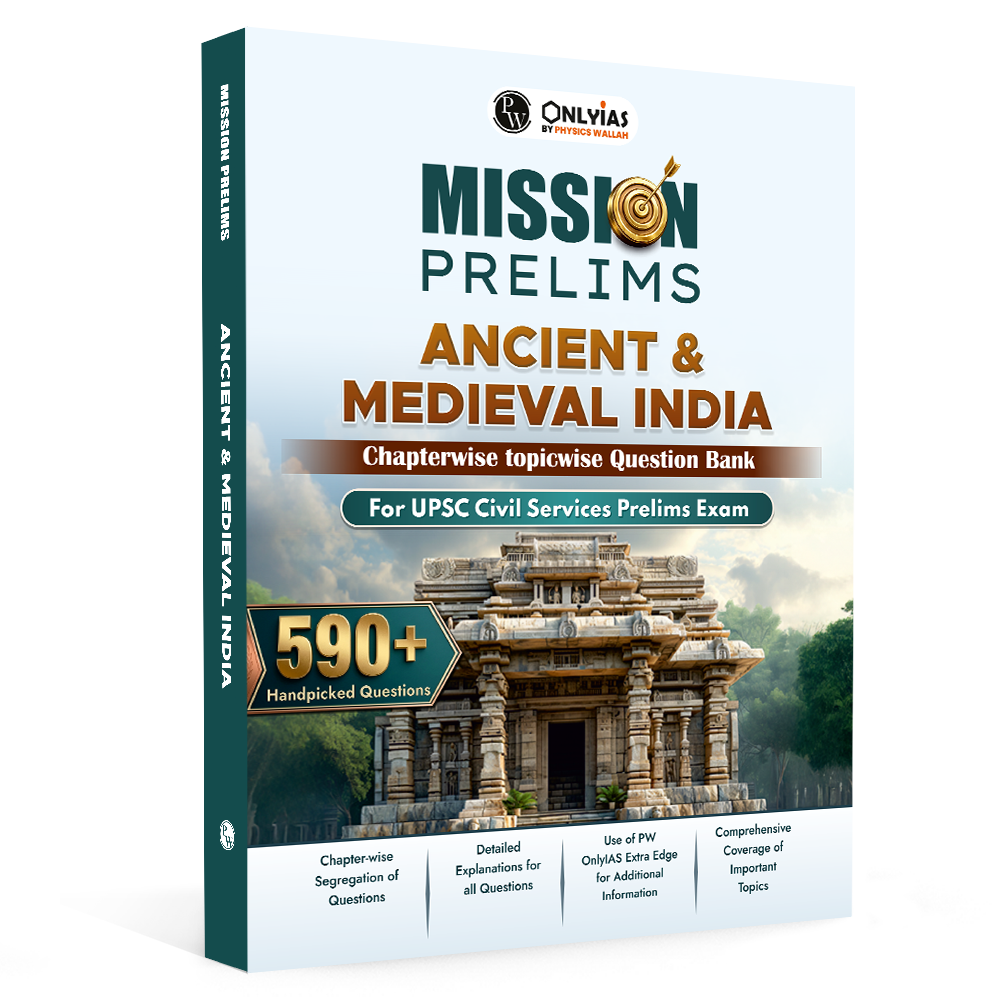
A UPSC ancient India question bank is a dedicated collection of practice items organized by topic and chapter to support targeted Prelims preparation. Instead of presenting mixed topics randomly, a dedicated resource categorizes historical periods so you can practice right after completing a textbook section.
A quality resource includes:
-
Chapter-wise Segregation: Structured arrangement allowing focused practice right after completing a specific chapter.
-
Handpicked Questions: Over 500+ carefully selected questions designed to match current UPSC Prelims standards.
-
Detailed Explanations: In-depth solutions provided for every item to clarify underlying concepts and address common doubts.
-
Value-Added Support: Additional insights and Extra Edge hints that offer extra context for complex historical developments.
-
Broad Topic Coverage: Complete alignment with major ancient and medieval history themes to cover the entire Prelims syllabus thoroughly.
Using an organized ancient India question bank ensures you spend less time searching for standard practice items and more time identifying your memory gaps.
Why Use a UPSC Ancient India Question Bank for Revision?
Revising history through passive reading often leads to poor recall during the actual exam. Solved UPSC ancient history questions force your brain to retrieve stored facts actively, which strengthens memory retention over time.
|
Revision Method |
Passive Textbook Reading |
Active Question Bank Practice |
|
Primary Mechanism |
Re-reading notes repeatedly |
Active recall and memory retrieval |
|
Pattern Recognition |
Low awareness of question trends |
High exposure to trap choices and patterns |
|
Error Identification |
Hard to spot actual memory gaps |
Immediate identification of weak topics |
|
Confidence Level |
Promotes overconfidence |
Builds real accuracy and exam speed |
Working with Ancient India MCQs regularly trains your mind to identify the correct options and eliminate distractors in multiple-choice questions. Detailed explanations alongside each question further help reinforce foundational concepts. Using UPSC Books alongside MCQ practice can provide structured coverage of Ancient India, strengthen conceptual understanding, and support effective revision.
Topics Covered in a UPSC Ancient India Question Bank
Complete syllabus coverage ensures no critical historical era is left unpractised. A comprehensive resource maps directly to the standard UPSC syllabus, dividing broad historical ages into smaller manageable modules.
Prehistoric Period and Indus Valley Civilisation
Focus on Palaeolithic, Mesolithic, and Neolithic site locations. Practice items cover Harappan town planning, trade networks, seals, craft production, and theories regarding the decline of the civilisation.
Vedic Age and Religious Movements
Solve questions detailing Early and Later Vedic society, economy, and political structures. This section covers the rise of Buddhism and Jainism, including key doctrines, councils, royal patrons, and philosophical terminology.
Mauryan and Post-Mauryan Era
Test your knowledge on Ashokan edicts, Mauryan central and provincial administration, tax terminology, and art architecture. Practice includes Post-Mauryan dynasties like the Sungas, Kushanas, and Satavahanas alongside trade routes like the Silk Road.
Gupta and Post-Gupta Empire
Covers the golden age of classical literature, science, temple architecture, land grants, and administrative setups. It also incorporates southern dynasties including the Pallavas, Chalukyas, and early Cholas.
Using focused ancient India practice questions across these sections guarantees structured coverage of both major historical developments and minor factual details.
When to Use a UPSC Ancient India Question Bank?
Timing your practice sessions properly ensures maximum retention. Attempting practice questions at different stages of your study schedule offers distinct learning benefits. Using a UPSC Question Bank throughout your preparation can provide structured practice, help reinforce concepts, identify weak areas, and improve accuracy through regular question-solving.
-
Immediate Post-Reading Phase: Solve chapter-wise questions right after finishing a topic to lock in newly read facts.
-
Weekly Revision Days: Dedicate specific days to solve mixed topics from completed modules to test retention across multiple historical periods.
-
Pre-Test Series Phase: Work through focused question sets before attempting full-length mock exams to sharpen accuracy and speed.
-
Final Month Before Prelims: Use solved questions and explanations as fast revision notes to review high-yield facts quickly.
How to Use a UPSC Ancient India Question Bank for Revision?
To turn raw practice into an effective revision engine, follow a systematic approach rather than solving questions aimlessly.
-
Read the Chapter First: Complete your primary textbook reading for a specific topic, such as the Gupta Empire.
-
Attempt Questions Without Prompting: Solve the corresponding chapter items in your UPSC Ancient India question bank without looking at the answer keys.
-
Analyze Every Detailed Explanation: Read the provided solutions for both correct and incorrect attempts. Explanations often contain value-added insights that serve as concise notes.
-
Maintain an Error Log: Record facts you missed, confusing terminology, or misread questions in a dedicated notebook.
-
Revisit Marked Items: Bookmark tricky questions and review them during your monthly revision cycles.
Integrating ancient India revision questions into your daily schedule turns passive study hours into objective, outcome-driven testing.
Study Strategy Plan With a UPSC Ancient India Question Bank
A structured timetable keeps your preparation on track and ensures equal emphasis on learning and testing.
-
Phase 1 (Days 1–10: Foundation Building)
-
Study the Indus Valley Civilisation and the Vedic Age.
-
Solve 30 chapter-specific questions daily.
-
Review detailed explanations to clarify basic concepts.
-
Phase 2 (Days 11–20: Core Expansion)
-
Cover Mahajanapadas, Mauryan Empire, and Post-Mauryan Period.
-
Solve 40 daily questions combining current and previous topics.
-
Log recurring mistakes in your error tracker.
-
Phase 3 (Days 21–30: Consolidation & Speed)
-
Study Gupta Era, Post-Gupta, and South Indian Kingdoms.
-
Solve 50 questions daily in timed settings to build speed and confidence.
-
Revise all bookmarked questions and error log entries.
Common Mistakes to Avoid With a UPSC Ancient India Question Bank
Avoiding standard traps helps you extract maximum value from your practice sessions. Using the UPSC Mission Prelims Combo Set 9 English 2026 can provide structured practice, help identify weak areas, reinforce important concepts, and improve accuracy and exam readiness through consistent question-solving.
-
Looking at Answers Prematurely: Checking answer keys mid-way eliminates the benefit of active recall. Always complete a test set before checking solutions.
-
Ignoring Explanations for Correct Guesses: Guessing an answer correctly does not mean you understand the concept fully. Always read the detailed explanations provided.
-
Treating Practice as a Score Card Only: Focusing solely on test scores rather than learning from your mistakes defeats the purpose of practice-led revision.
-
Skipping Revision of Flagged Items: Failing to re-solve marked difficult questions leads to repeating the same errors in the actual exam.
Tips to Revise With a UPSC Ancient India Question Bank
Maximize your study outcomes with these practical strategies:
-
Focus on Key Terms: Pay close attention to administrative titles, tax names, and agricultural terms featured in solved explanations.
-
Use Explanations as Micro-Notes: Extract unique points from the extra edge support notes to supplement your main history notes.
-
Simulate Real Exam Conditions: Solve questions under time constraints to improve speed and decision-making capabilities.
-
Cross-Reference with Past Papers: Ensure your practice matches authentic UPSC ancient history PYQs to align your preparation with UPSC standards.
UPSC Ancient India Question Bank FAQs
How does a UPSC ancient India question bank help in revision?
A UPSC ancient India question bank provides structured chapter-wise practice, allowing you to test recall, identify weak topics, and revise concepts through detailed explanations.
Can I rely on ancient India MCQs for Prelims preparation?
Solving ancient India MCQs builds test-taking accuracy and speed, but it works best when combined with thorough textbook reading and past paper analysis.
How often should I practice ancient India practice questions?
You should solve ancient India practice questions immediately after finishing a topic, followed by weekly mixed revision sessions to keep facts fresh in your memory.
Why are detailed explanations important in a question bank?
Detailed explanations clarify underlying concepts, correct misconceptions, and offer value-added insights that serve as quick revision notes.
What is the best way to revise UPSC ancient history questions before the exam?
The best approach is to re-attempt bookmarked tricky questions, review your error log, and read solution summaries to cover major topics rapidly.