How to Use PW Physical Geography Mindmaps Along With NCERT
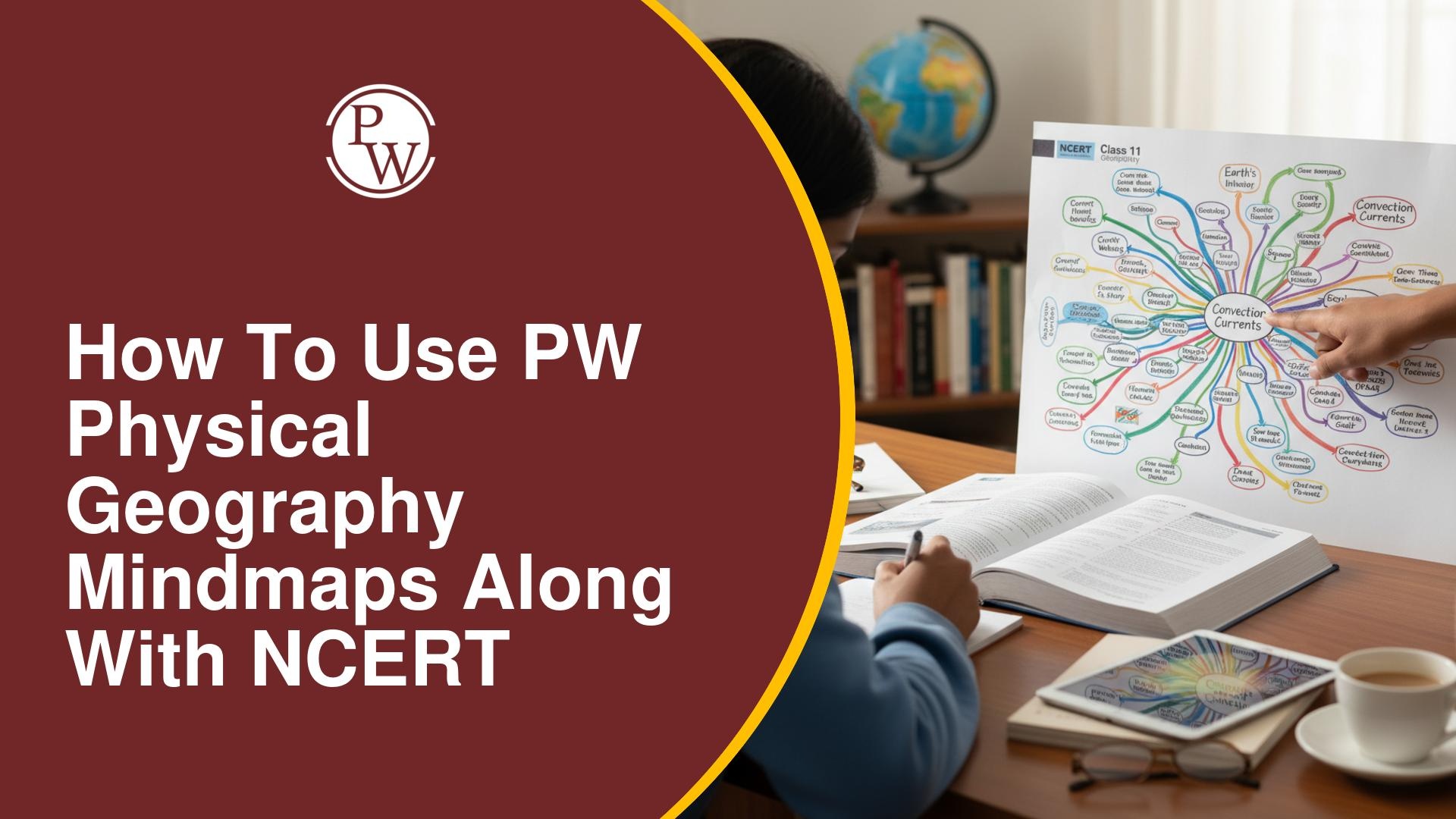
UPSC & State PSC aspirants are sometimes overwhelmed by knowledge when covering extensive geography syllabus. Long textbooks might make it hard to remember the important concepts and processes. UPSC Physical geography mindmaps along with the NCERT books help in simplifying complicated concepts into interlinked visual summaries leading to faster revision, more conceptual clarity and better preparation for both Prelims and Mains.
Why Pair NCERT Books with Physical Geography Mindmaps?
The standard NCERT textbooks describe geographical processes, theories and terminology in detail which builds up your basic knowledge. But there are obvious problems with depending entirely on text-heavy books for exam preparation. Continuously revising multi-page chapters is time-consuming and usually leads to low retention rates just before competitive tests. The problems are addressed by the combination of textbook readings and visual mindmaps, which transform linear paragraphs into interactive, organized networks.
-
Visual Learning Made Easy: Mind maps, flowcharts, and infographics lay out complicated physical geography ideas in a clear, easy-to-follow way, perfect for visual learners.
-
Logical connections: Visual diagrams allow you to visualize the linkages of cause and effect clearly, therefore enabling you to connect specific facts with larger geographical processes.
-
Fast Memory Retention: Snapshot-style summaries facilitate short mental reviews, helping with the retention of key terminology and landform stages in long-term memory.
-
Streamlined Answer Writing: Visualized processes help you construct concise, well-structured responses and draw correct diagrams for UPSC Mains.
Using a dedicated revision book alongside your primary textbooks ensures that you retain foundational knowledge while gaining the quick-recall advantage necessary for exam success.
How to Use Physical Geography Mindmaps with NCERT?
Don’t just flip back and forth between the textbook and something graphic at random to improve your productivity. This systematic step-by-step approach helps you develop a strong concept framework before condensing the information graphically. Using UPSC Revision Books alongside this approach can help organise important topics, strengthen conceptual clarity, and make revision more focused and efficient.
1.Complete the Primary NCERT Reading:Foundation Phase.
Begin by reading the assigned chapter in your NCERT physical geography textbook from start to finish. Focus on understanding core mechanisms, definitions, and broad spatial patterns without worrying about memorising every minor detail on the first pass.
2.Cross-Reference with Mindmaps:Visual Consolidation.
Immediately after reading the textbook chapter, open the corresponding topic in your mindmaps. Examine how the dense textual information has been organized into central nodes, sub-branches, flowcharts, and visual summaries.
3.Annotate and Personalise Nodes:Information Integration.
Add specific facts, important textbook definitions, or unique landform examples directly onto your mind map layout. Customising your geography mind maps UPSC material creates a unified revision tool that combines textbook detail with visual structure.
4.Execute Active Recall Sessions:Self-Assessment.
Cover specific branches or sub-nodes of the mind map with a sheet of paper. Attempt to recall the underlying processes, atmospheric layers, or geomorphic stages aloud before revealing the visual branch to check your accuracy.
This systematic process turns passive reading into active involvement, making sure that each study session provides tangible learning benefits.
How to Use Physical Geography Mindmaps for UPSC Revision?
As test dates near, heavy reading material should be avoided for UPSC geography revision. Including NCERT geography at different times in your preparation timetable keeps you on schedule and also ensures that review sessions are short and to the point.
Preparation Phases and Study Focus
-
Initial Learning Phase: Give most of your attention to reading the NCERT textbooks thoroughly to understand the concepts well. At the end of each study session, make mind maps to fix the main ideas in your mind.
-
Mid-Preparation Phase: Study time should include both textbooks and mental maps. Generate visual flowcharts that follow the steps of complex mechanisms, including atmospheric circulation patterns or cycles of plate movement.
-
Final Pre-Exam Phase: Only create mindmaps from the last 30 to 40 days. This will allow you to do fast reviews on a daily basis without the need to read long chapters in textbooks.
|
Physical Geography Domain |
Primary NCERT Focus |
How Mindmaps Streamline Revision |
|
Geomorphology |
Earth's interior, plate tectonics, weathering, landform evolution |
Maps landform development stages, fault line dynamics, and rock cycle processes into clear flowcharts. |
|
Climatology |
Atmospheric layers, heat budget, pressure belts, wind systems |
Simplifies complex air mass movements, jet stream paths, and cyclone formation mechanisms. |
|
Oceanography |
Ocean floor relief, salinity, temperature, tides, currents |
Displays global ocean current networks, salinity variations, and tidal cycles using clean diagrams. |
|
Biogeography & Soils |
Soil formation factors, biome characteristics, ecosystem balance |
Groups soil horizons, climatic parameters, and vegetation features into structured snapshot layouts. |
What Are the Key Features of Physical Geography Mindmaps?
The UPSC Physical Geography Mindmaps collection is crafted to resolve common study bottlenecks faced by UPSC and State PSC aspirants. Designed as a high-yield physical geography revision resource, it replaces scattered study notes with a structured, visual-first format. Using UPSC Books alongside these mindmaps can further strengthen conceptual understanding, provide comprehensive topic coverage, and support focused revision.
-
Snapshot-Style Summaries: Each topic is presented as a clean visual snapshot, allowing for rapid review right before test series or actual examination days.
-
High-Yield Infographics and Flowcharts: Abstract processes like plate subduction or monsoon formation are broken down into easy-to-follow visual steps.
-
Comprehensive Topic-Wise Coverage: Complete alignment with physical geography syllabi ensures all core topics, from earth movements to global biomes, are systematically covered.
-
Interconnected Node Layouts: Visual links connect physical causes with environmental outcomes, fostering the holistic understanding needed for analytical exam questions.
-
Exam-Focused Design: Built to help aspirants organize study sessions efficiently, improve visual recall, and maintain revision momentum throughout their preparation.
How to Use Physical Geography Mindmaps for Active Recall?
Using mind maps passively by simply scanning them with your eyes limits their effectiveness. To build strong memory retention, integrate active recall techniques into your study routine using your visual physical geography notes.
The Masking Technique
Cover sub-branches of a mind map node with a card or sticky note. Look at the primary topic heading—such as "Factors Influencing Ocean Currents"—and try to list all sub-factors from memory before uncovering the answers.
Diagram Reconstruction
Physical geography exam questions often demand neat, accurate diagrams. Use your mind maps as visual blueprints and practice re-drawing key landform stages or atmospheric cycles on blank sheets of paper without looking.
Mental Mapping
Before opening your NCERT geography and mindmaps resource, close your eyes and mentally trace a full chapter's layout. Reconstruct the main branches, sub-topics, and critical details in your mind, then check your mental map against the actual page.
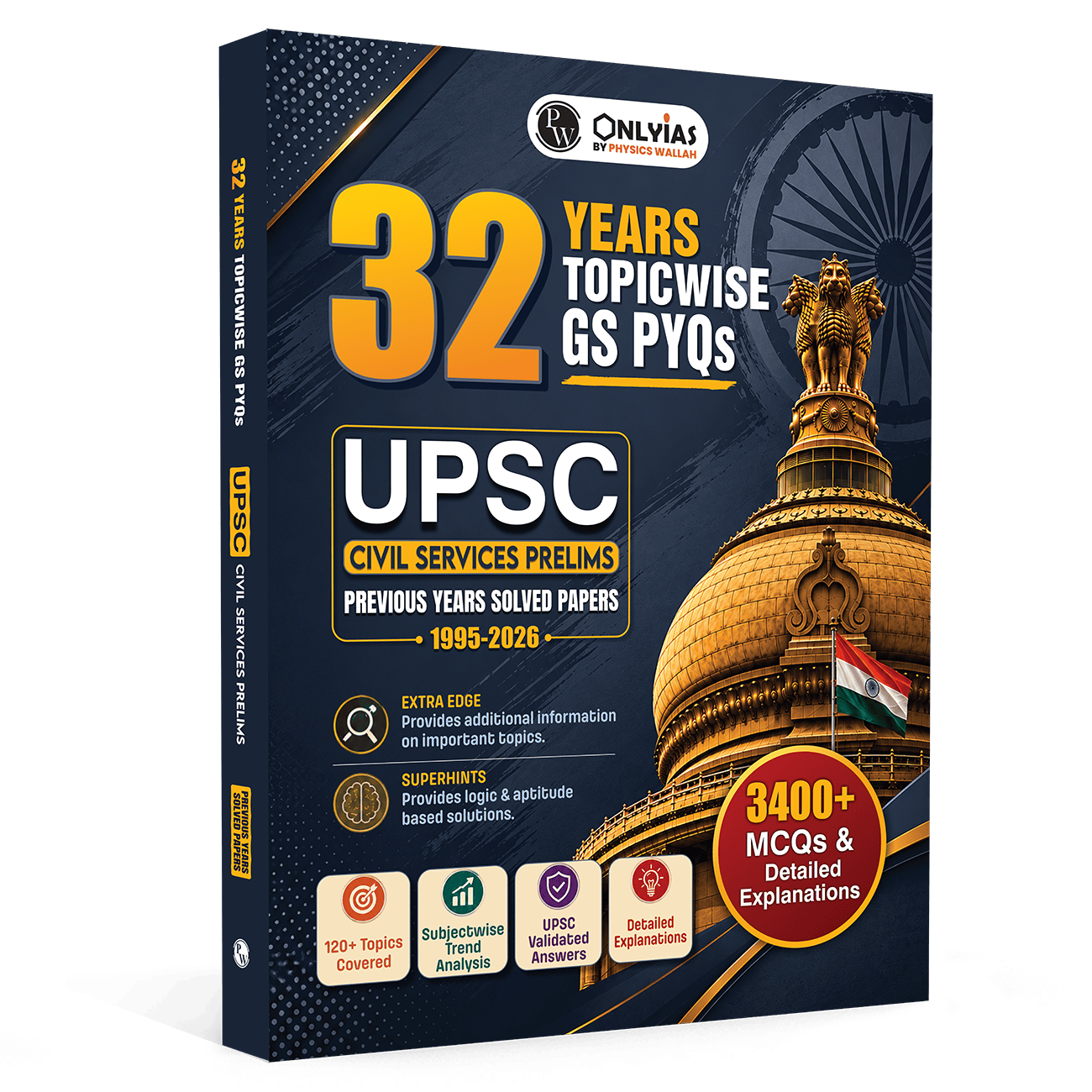
Strengthen your UPSC Prelims preparation with the PW UPSC Prelims PYQ Book, covering 32 Years previous year questions, 3,400+ MCQs, and detailed explanations. Its topic-wise approach helps aspirants understand recurring trends, identify important areas, and improve accuracy through focused PYQ practice.
How to Use Physical Geography Mindmaps for UPSC Mains?
While pre-made visual maps offer immediate study structure, customising them with additional exam-focused insights turns them into powerful Mains preparation tools. Personalising your visual materials bridges the gap between basic facts and high-scoring Mains answers.
Adding Case Studies and Examples
Directly annotate your mind map branches with real-world examples, recent natural disaster events, or specific geographic locations. For instance, link volcanic landform nodes to recent eruption locations or soil erosion branches to specific regional conservation efforts.
Inserting Answer-Writing Keywords
Incorporate core geographical vocabulary—such as isostatic adjustment, orographic lifting, or coriolis force—onto key mind map nodes. Highlighting these terms ensures you use precise vocabulary when writing essay-type answers during Mains examinations.
Linking Physical and Human Geography
Extend physical geography branches to connect with human geography impacts. For example, link a climatology branch detailing monsoon variations directly to sub-nodes explaining agricultural patterns and economic outcomes in affected regions.
Read More: UPSC Geography Previous Year Papers with Downloaded PDF
UPSC Physical Geography Mindmaps FAQs
What are physical geography visual notes?
They are visual study resources that organize complex physical geography topics into structured diagrams, flowcharts, and snapshot summaries to improve comprehension and revision speed.
Can I replace NCERT textbooks entirely with mindmaps?
No, mind maps are designed to complement textbooks. You should read standard NCERT chapters first to build conceptual clarity and use mind maps for visual consolidation and rapid revision.
How do UPSC mindmaps assist in Mains answer writing?
They present logical process flows and cause-and-effect relationships clearly, helping you structure well-organized written answers and re-draw accurate diagrams under exam conditions.
When is the best time to use a physical geography revision book?
It is most effective right after finishing a textbook chapter to lock in key concepts, as well as during the final 30 to 40 days before your exam for quick, high-yield reviews.
Do NCERT geography and mindmaps cover both Prelims and Mains syllabi?
Yes, combining standard textbook reading with structured mind maps ensures broad coverage of objective facts required for Prelims alongside the analytical depth needed for Mains.