How to Use Topic-Wise Questions to Find Your UPSC Weak Areas

Preparation for Civil Services is a strategy and not mere hard work without direction. By addressing your preparedness issue by topic, you can tackle problem areas before undertaking full-scale exam simulations. Get hold of an organized UPSC question bank and you can spot subject weaknesses, boost your pace and perfect your elimination tactics. This post discusses how to use UPSC topic-wise questions systematically to find weak areas and improve your prelims preparation.
Why Use a UPSC Question Bank to Find Your Weak Areas?
A full-length standard test is an overall endurance and speed test of the syllabus. But it rarely isolates the particular error cause. A diagnostic tool in the form of a specific question bank per chapter and part. Subject blocks assist you to differentiate between basic revision errors and more basic conceptual gaps.
-
Targeted Feedback: Gives you instant feedback on certain topics such as Modern History, Indian Polity or CSAT, rather than total score.
-
Pattern Recognition: Includes repetitive question formats in sub-topics such as statement-based, match-the-following, and assertion-reasoning types.
-
Difficulty Calibration: Features practice sets with varying difficulty levels (easy, moderate, and complex) to test basic recall alongside deep analytical application.
-
Factual vs. Analytical Isolation: Highlights whether errors stem from misremembering specific dates and figures or misinterpreting core core concepts.
How to Use a UPSC Question Bank to Find Weak Areas?
Isolating your UPSC weak areas requires structured practice rather than random question solving. Jumping between unrelated subjects makes it difficult to track performance trends over time. Using the UPSC Prelims Combo Set 9 English 2026 can help organise subject-wise practice, identify weak areas, analyse performance, and make your preparation more focused and systematic.
-
Complete a Subject Module: Finish reading a specific topic from standard reference materials, such as Indian Polity or Environment.
-
Solve Topic-Specific Sets: Attempt a block of 30 to 50 targeted UPSC practice questions exclusively on that sub-topic without referring to notes.
-
Categorize Mistakes: Audit every incorrect and skipped attempt by classifying the root cause into one of three distinct categories:
-
Conceptual Clarity Deficit: You did not understand the underlying principle.
-
Information Memory Lapse: You forgot a specific data point, act, or term.
-
Silly/Reading Error: You misread the prompt (e.g., missing words like "Not Correct").
-
Log Error Frequencies: Maintain an error log tracking which specific sections yield consistent accuracy drops below 60%.
-
Targeted Re-study: Revisit standard texts specifically for the identified sub-topics before proceeding to the next chapter.
What Are the Benefits of a UPSC Question Bank for Topic-Wise Practice?
Focusing on topic-wise practice early in your preparation offers distinct advantages over jump-starting full-length mocks prematurely:
|
Evaluation Aspect |
Mixed Full-Length Mocks |
Chapter & Topic-Wise Practice Sets |
|
Primary Objective |
Tests overall time management, exam stamina, and mixed recall. |
Isolates specific subject gaps, unit-level retention, and topic mastery. |
|
Feedback Loop |
Delayed; broad subject scores obscure specific chapter weaknesses. |
Immediate; directly pinpoints sub-topic failure points. |
|
Syllabus Integration |
Requires 100% syllabus completion to yield accurate results. |
Can be started alongside day-one chapter preparation. |
|
Error Diagnosis |
High risk of attributing errors to general test anxiety. |
Clearly separates conceptual gaps from factual recall failures. |
What Features Should You Look for in a UPSC Question Bank?
Selecting appropriate practice tools directly influences your UPSC Prelims preparation. An optimal resource must align with changing examination trends and provide comprehensive explanatory support. Using UPSC Books alongside PYQs and mock tests can help strengthen conceptual understanding, support focused revision, and provide structured practice across important subjects.
Topic-Wise and Chapter-Wise Organization
A quality practice resource organizes content logically matching standard textbooks. For instance, questions on Indian Polity should be categorized clearly into distinct modules such as Preamble, Fundamental Rights, Judiciary, and Constitutional Bodies. This granularity lets you pinpoint exactly where accuracy drops.
Handpicked High-Yield Questions
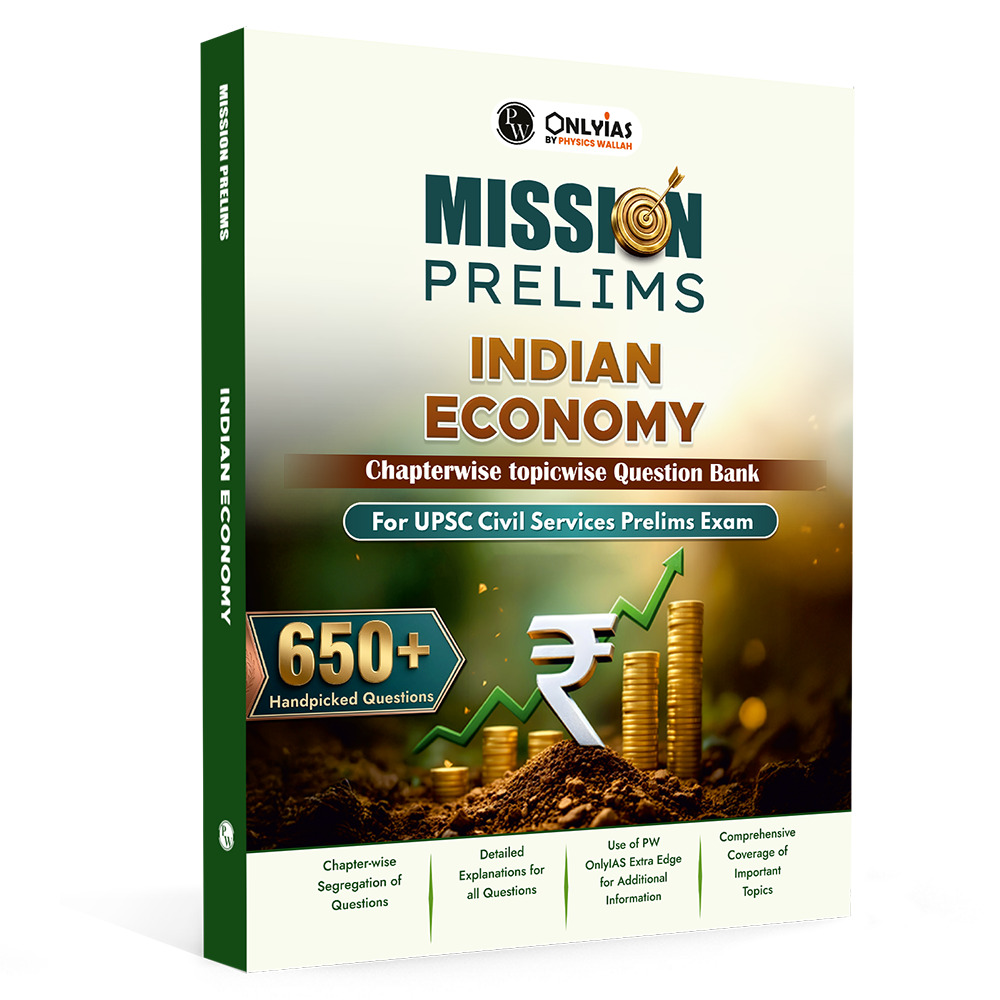
Quality practice materials focus on relevant, highly probable questions rather than sheer volume. Resources like the UPSC Mission Prelims Question Bank Series feature over 5,000 handpicked chapterwise and topicwise questions across core subjects—including Modern India, Science & Technology, and Art & Culture.
Detailed Explanations for Deep Learning
An effective question bank offers thorough explanations for every option, detailing why incorrect choices are wrong alongside why the correct answer is right. These explanations help turn every practice set into a active learning session, filling content gaps in real time.
How to Analyse UPSC Question Bank Practice Results?
Solving questions is only half the process; evaluating your performance yields the actionable insights needed to improve.
-
Track Accuracy Ratios: Calculate accuracy percentage per sub-topic ($\frac{\text{Correct Answers}}{\text{Total Attempted}} \times 100$). Any sub-topic falling below 65% accuracy requires immediate intervention.
-
Analyze Elimination Success: Track how often you choose the correct option when down to a 50/50 choice. Consistent failure here indicates weak secondary details.
-
Assess Time Spent per Question: Monitor the time spent per question type. Taking excessive time on basic factual questions indicates poor retention, which can create time pressure on complex analytical items later.
-
Review Correct Guesses: Treat correct guesses as unearned points. Analyze why you were uncertain to prevent similar gaps from recurring in the actual exam.
Strengthen your UPSC Prelims preparation with the UPSC 32 Years GS PYQ Book, featuring previous year questions to help you understand recurring topics, analyse exam trends, and practise questions based on the actual UPSC pattern. Regular PYQ practice can improve accuracy, time management, and overall exam readiness.
How to Use UPSC Question Bank Results to Plan Revision?
Once you identify weak topics through a question bank, the next step is to convert your performance data into a practical revision schedule. Instead of revising the entire syllabus equally, divide topics based on accuracy and error frequency.
-
Below 50% accuracy: Relearn the topic from your standard source and solve another topic-wise set.
-
50–70% accuracy: Revise key concepts and immediately practise more questions.
-
70–85% accuracy: Focus on tricky statements, elimination techniques, and previous year questions.
-
Above 85% accuracy: Maintain the topic through periodic revision and mixed practice.
This approach ensures that your revision time goes towards areas that can deliver the greatest improvement in your prelims preparation.
How to Combine UPSC Question Bank Practice With PYQs?
A question bank is useful for building topic-level accuracy, while previous year questions help you understand how UPSC frames questions in the actual examination. Combining both gives you a stronger understanding of concepts and question patterns.
After completing a topic-wise practice set, solve relevant UPSC PYQs from the same topic. Compare the question framing, difficulty, options, and recurring concepts. Maintain a separate list of frequently tested areas and revisit them during weekly revision. This creates a structured cycle of practice, analysis, revision, and re-testing.
Read More: Most Important Topics for UPSC Prelims and Mains Exam
UPSC Question Bank FAQs
Q1. How do UPSC topic-wise questions help in identifying weak areas early?
Topic-wise questions segregate certain sub-topics so that you can test your knowledge right after a chapter is completed. This targeted technique identifies specific areas of conceptual weakness or memory failures before taking full-length mock tests.
Q2. When should I start using a UPSC question bank during my preparation?
You should begin using a question bank from day one of your static preparation. After completing a specific chapter from standard textbooks, solve the corresponding topic-wise practice set to validate your understanding.
Q3. How many questions should I solve per topic to assess weak areas?
To achieve a solid sample size to judge your accuracy, speed and conceptual clarity, try to do 30 to 50 targeted questions per sub-topic.
Q4. What features should I look for in a quality question bank?
Attempt to get extensive explanatory answers for all the alternatives, chapter-wise and topic-wise with segregation, clear demarcation of difficulty, and coverage of core static subjects like Polity, History, Science & Technology, and CSAT.
Q5. How does chapter-wise practice improve overall UPSC prelims preparation?
Practice by chapters provides continuous accuracy, helps develop the option-elimination abilities, promotes long-term memory and helps you repair the subject-level shortcomings early leading to higher confidence levels while you are taking the full-length tests.