How to Use UPSC Books for Prelims Revision
In preparing for the Civil Services Examination, it is important to have an organized plan, particularly in the last phases of your study program. The trick to crack the exam is not reading fresh stuff just before the exam, but revising the major basic sources well. Knowing how to use UPSC books for prelims revision enables you to turn huge subjects like Polity, Economy, History and Geography into usable information.
How to Select UPSC Books for Prelims for Better Revision
The study resources you choose will impact how smoothly the preparation runs. Revising from many thick textbooks just before the examination leads to confusion and wastes time. Select sources that are simplified and aligned to the syllabus, and that provide clear explanations and structured summaries.
-
Concentrate on Basic NCERT Books: Before moving on to more complex manuals use typical NCERT materials to establish fundamental conceptual clarity on subjects.
-
Select Subject Specific Modules: Choose single exhaustive books for static topics like Indian Polity, Modern History, Economy etc to keep your notes in an organized manner.
-
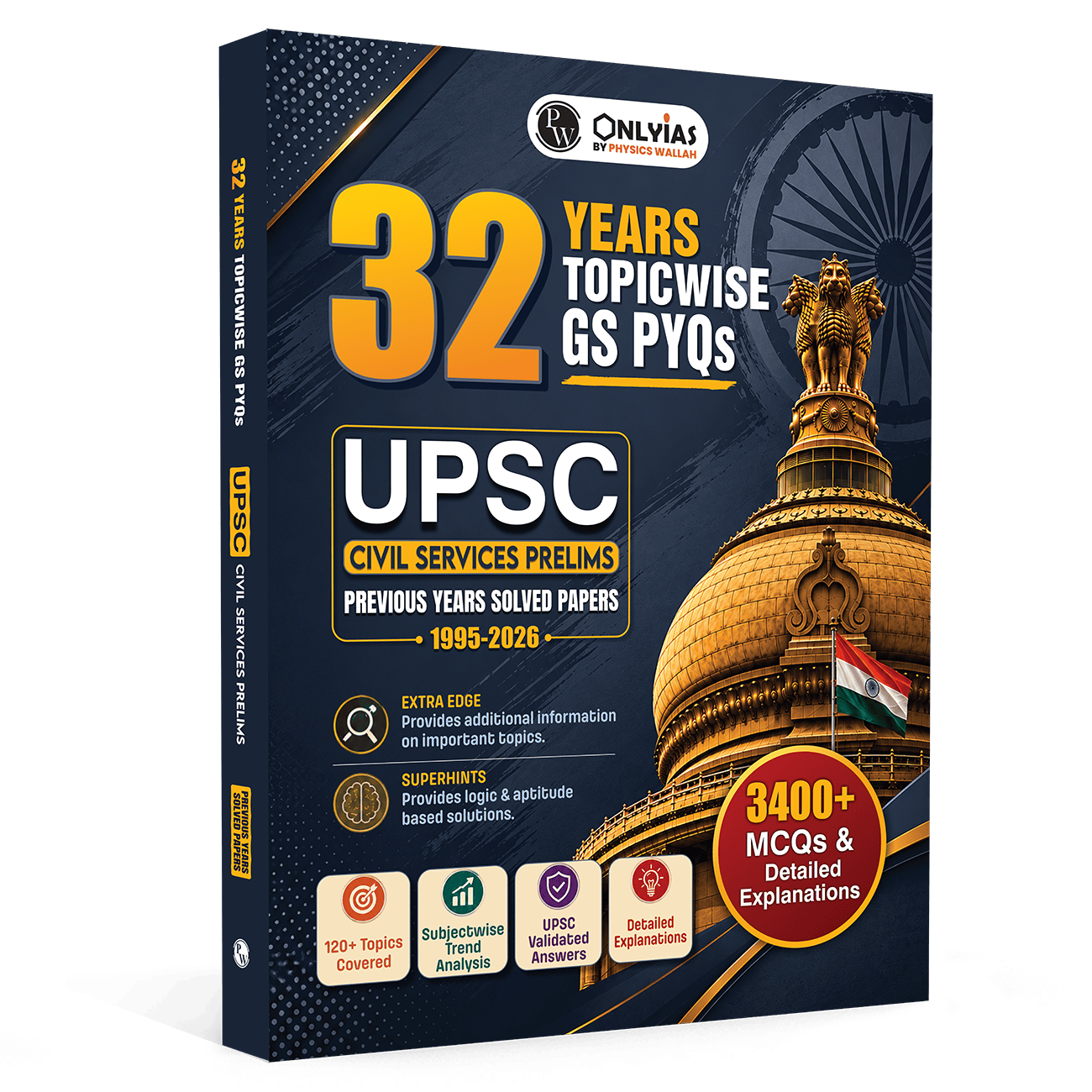
Incorporate Dedicated Question Banks: Utilize dedicated practice set to test your knowledge through topic-wise questions.
-
Use Specialized Mindmaps: Leverage visual aids for Indian Polity to speed up visual memory recall during rapid review cycles.
To help you organize your study desk, the table below outlines essential study categories and their primary role in your preparation framework:
|
Resource Category |
Recommended Material / Book Set |
Primary Exam Purpose |
|
Comprehensive Coverage |
Complete GS and CSAT Study Material |
Complete syllabus integration for General Studies and CSAT. |
|
Prelims Revision Practice |
Prelims Question Bank |
Practice-oriented question bank for subject-wise revision. |
|
Targeted Sectional Practice |
Subject-Wise Practice Books |
Sectional problem-solving for dynamic Prelims topics. |
|
Previous Years Questions |
Topic-Wise PYQ Book |
Deep analysis of exam trends, question patterns, and recurring topics. |
|
Visual Revision Aids |
Mindmaps and Quick Revision Notes |
Quick visual summaries for fast memory retention before the exam. |
How to Organise UPSC Books for Prelims for Quick Revision
It’s no good having loads of notes if you can’t revise them again before the exam day. Consolidating your UPSC study material entails converting bulky paragraphs into easily digestible concise highlights.
-
Highlight Important Sentences: In your first pass, use different highlighter colors to emphasize important constitutional articles, economic formulas, and historical dates.
-
Margin Notes: Instead of reading through whole paragraphs, write brief summary phrases in the margins of your textbooks when you do a second revision pass.
-
Integrate Visual Tools: Place flowcharts and mindmaps inside your primary textbooks to synthesize multi-page topics into single-page diagrams.
-
Compile Fact Sheets: Maintain a separate notebook for quick-to-forget data like environmental treaties, wildlife sanctuaries, and international bodies.
Proper UPSC Prelims preparation means each chapter you finish should be in a manner that can be easily revised. If a resource takes you longer than 30 minutes to review in your last week, it needs additional consolidation.
How to Build a Revision Strategy With UPSC Books for Prelims
A structured time-bound plan ensures that you cover every subject systematically without missing critical dynamic topics. Following a multi-stage UPSC prelims revision strategy helps you transition smoothly from fundamental conceptual understanding to high-speed test solving.
Stage 1: Fundamental Conceptual Revision
Revisit important textbooks and NCERTs to make sure your fundamental concepts are intact. Very heavy focus on static themes like Indian Polity, Basic Economics and Modern Indian History. At this time, don't begin reading new reference manuals. Use only sources you've already read.
Stage 2: Applied Topic-Wise Practice
After you complete the main chapters of a subject, start solving practice questions topic-wise right away. With the help of the materials you can test yourself to see if you can remember the details under exam pressure.
Stage 3: Current Affairs and Static Integration
Merge your static subject revision with annual current affairs updates. Connect dynamic news topics, such as recent Supreme Court rulings or environmental summits, back to the core chapters in your static textbooks.
Stage 4: Full-Length Mocks and Final Rapid Review
Dedicate the last four weeks solely to solving full-length test papers and running rapid visual passes through mindmaps. Use this stage to refine your elimination techniques, manage exam time, and curb negative marking.
How to Solve PYQs Using UPSC Books for Prelims
Previous year questions act as an exact guide to how the Union Public Service Commission frames questions. Simply reading UPSC previous year papers is insufficient; you must analyze them in coordination with your standard UPSC prelims books.
-
Identify High-Yield Topics: Trace historical trends using topic-wise collections. Note which topics recur frequently, such as Buddhist architecture, Preamble values, or monetary policy tools.
-
Analyze Option Patterns: Examine incorrect options alongside correct answers. Search your reference textbooks to understand why incorrect statements were added.
-
Assess Question Phrasing: Pay close attention to subtle terms such as "only," "all," "drastic increase," or "consistently." Learning how these keywords function helps you avoid trap options on test day.
-
Cross-Reference Textbooks: Whenever you mark a PYQ incorrectly, return to the matching chapter in your core textbook immediately to patch that knowledge gap.
How to Balance GS and CSAT With UPSC Books for Prelims
Candidates often spend all their revision hours on General Studies Paper I while neglecting Paper II (CSAT). However, qualifying CSAT is mandatory, and poor strategy here can derail your overall effort.
-
Allocate Dedicated Daily Slots: Set aside at least 1 to 1.5 hours daily specifically for CSAT practice throughout your revision phase.
-
Understand Basic Quant and Reasoning Principles: Use structured resources to review core formulas, percentage shortcuts, and logical deduction rules.
-
Practice Comprehension Passages Daily: Work through past CSAT passages to build speed and accurately identify the underlying assumptions or logical inferences of authors.
-
Simulate Timed Environments: Solve CSAT practice sets under strict two-hour constraints to build comfort with the speed required during the real exam.
Maintaining a balanced focus between both papers ensures your hard work in General Studies pays off on your official scorecard.
Read More: Most Important Topics for UPSC Prelims and Mains Exam
UPSC Books FAQs
Which UPSC books for prelims are best for visual revision?
Visual aids like the UPSC Mindmaps series work exceptionally well for rapid revision. They condense vast subjects like Indian Polity and Modern History into clear diagrams, allowing quick visual memory checks right before test day.
How many times should I revise my UPSC study material before the exam?
Aspirants should aim for at least three to four complete passes of their primary study material. The first pass focuses on understanding concepts, the second on highlighting key facts, and subsequent passes on rapid recall via visual summaries and practice questions.
Are previous year question books essential for UPSC prelims preparation?
Yes, topic-wise PYQ books are crucial. They reveal repeating syllabus trends, clarify exam difficulty levels, and teach you how to analyze option patterns effectively.
How can I avoid information overload while using UPSC prelims books?
Limit your study desk to one primary textbook per subject along with one standard practice bank. Avoid buying multiple reference manuals for the same topic; instead, learn and repeatedly review your single chosen source.
Should I start practicing CSAT books alongside my static UPSC revision strategy?
Yes, integrating CSAT practice into your weekly plan is vital. Dedicating daily time to quantitative aptitude, logical reasoning, and reading comprehension prevents last-minute stress and ensures you comfortably pass the qualifying mark.