Modern India UPSC Questions with PW Question Bank

Reading standard textbooks over and over rarely guarantees top scores because passive reading does not train the mind to solve actual exam problems. Solving targeted Modern India UPSC question bank bridges the gap between studying theory and mastering exam-level application.
By practicing handpicked questions organized by topics, candidates can test their retention, sharpen problem-solving skills, and approach the preliminary examination with real confidence.
What Are Modern India UPSC Questions?
Practising targeted history items requires a clear understanding of exam expectations and analytical demands. Modern history UPSC questions test a candidate's ability to evaluate
Working regularly with UPSC Modern India questions helps candidates adapt to the specific phrasing and logical traps used in the Civil Services Examination. The modern era of Indian history features intricate policy shifts, institutional changes, and socio-political movements.
Consequently, prelims questions in this domain are crafted to test both depth and breadth. Candidates must recognize how local grievances fueled national movements and how colonial legislative changes impacted various strata of society.
Which Modern India UPSC Questions Should You Practise from a Question Bank
Selecting appropriate practice material determines how effectively candidates build exam readiness. Using a curated Modern India question bank along with a UPSC Question Bank ensures focused learning tailored specifically to preliminary requirements.
|
Question Category |
Key Focus Areas |
Learning Outcome |
|
Socio-Religious Movements |
Reformers, institutions, and publications |
Strengthens factual recall of 19th-century developments |
|
British Administrative Acts |
Constitutional evolution, charters, and commissions |
Improves structural understanding of colonial governance |
|
Freedom Struggle Phases |
Moderate, Extremist, and Gandhian eras |
Builds clarity on tactical shifts in national movements |
|
Peasant & Tribal Uprisings |
Local revolts, leaders, and grievances |
Enhances accuracy on sub-national historical events |
Essential Coverage Areas
-
Chapter-Wise and Topic-Wise Segregation: Organizing questions by specific topics allows targeted practice on weaker areas.
-
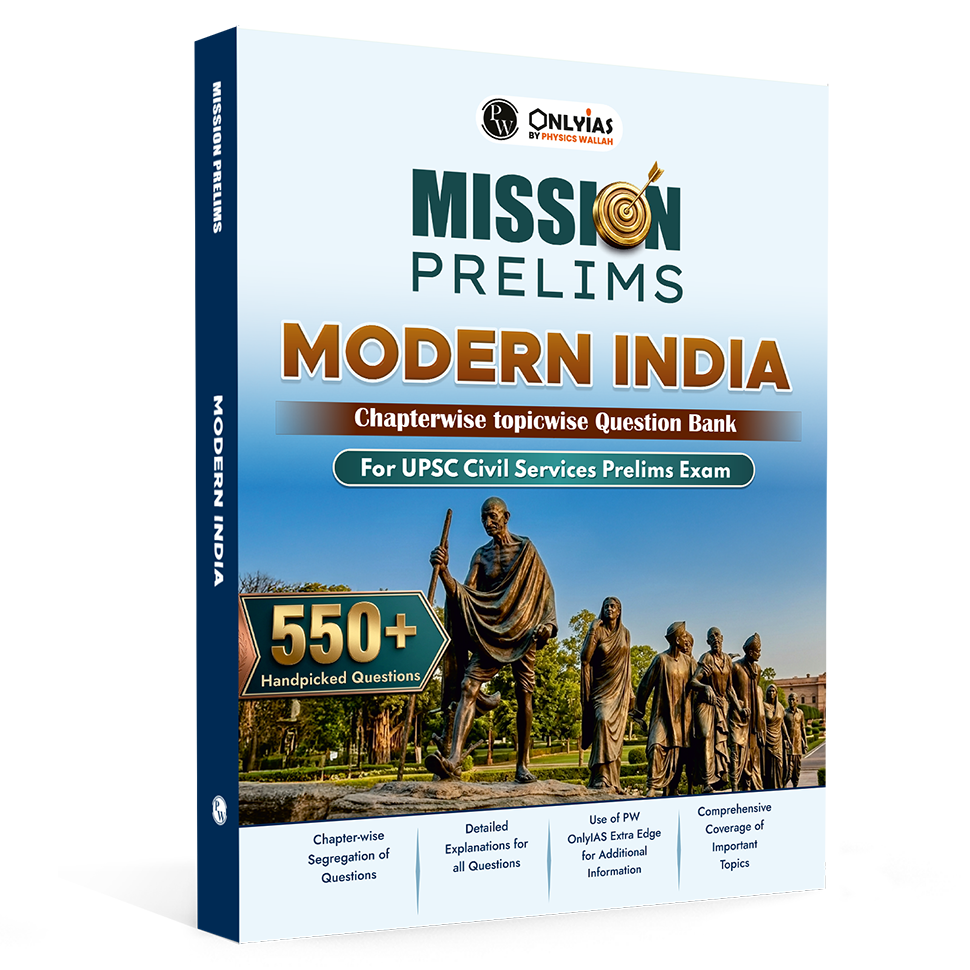
550+ Handpicked Questions: Practising a high volume of curated questions based on the exam pattern develops speed and accuracy.
-
Detailed Explanations: Reviewing comprehensive solutions for Modern India questions for UPSC establishes strong conceptual logic behind every answer choice.
Systematic exposure to varied question types prevents surprise on exam day. When your practice encompasses every minor and major topic, you develop an intuitive grasp of how questions are framed.
Quality practice banks focus on highlighting the precise details that differentiate correct statements from incorrect ones. This rigorous training builds a reliable safety net for your prelims preparation.
How to Use Modern India UPSC Questions
Integrating targeted practice with UPSC Books into daily study routines maximises retention and efficiency.
-
Complete Topic Readings First: Review standard notes or textbook chapters before attempting corresponding items.
-
Attempt Items in Timed Segments: Solve questions in batches to build speed alongside accuracy under exam-like conditions.
-
Analyze Solution Rationale: Read detailed solutions carefully, even for correctly answered items, to verify your logic.
-
Utilise Extra Insights: Take note of value-added information and supplementary context provided in solutions to gain an extra edge.
-
Revisit Incorrect Attempts: Mark challenging UPSC modern history practice questions to re-test your understanding during scheduled revisions.
To get the most out of your practice sets, treat every practice session as a diagnostic exercise. Avoid guessing blindly when unsure about a question. Instead, make a calculated choice based on elimination and mark the item for post-test analysis.
Reading the detailed solutions immediately after finishing a set fixes correct facts in your long-term memory while the context is fresh.
How Can Modern India UPSC Questions Help You Check Your Preparation
Evaluating progress through systematic practice highlights personal strengths and knowledge gaps.
-
Measures Real Accuracy: Solving unseen Modern India UPSC questions reveals whether concepts are fully retained or merely recognized.
-
Highlights Blind Spots: Identifying topics with high error rates directs attention to areas requiring immediate re-reading.
-
Builds Exam Confidence: Consistent exposure to exam-oriented questions reduces anxiety and improves decision-making during tests.
-
Sharpens Problem-Solving Skills: Regular practice helps candidates eliminate incorrect options faster in multi-statement formats.
Self-assessment is most powerful when done consistently throughout your preparation cycle. Rather than waiting until you finish the entire syllabus, checking your knowledge chapter by chapter ensures that errors are corrected early.
This continuous feedback loop, supported by UPSC Prelims PYQ practice, keeps your study plan adaptable and responsive to your actual learning needs.
Study Strategy Plan for Modern India UPSC Questions
A disciplined study plan ensures systematic coverage of historical events across every study session.
-
Phase 1: Foundation Building
-
Focus on chapter-wise questions immediately after finishing a topic.
-
Pay close attention to underlying principles behind administrative acts and social reforms.
-
Phase 2: Speed and Accuracy Development
-
Solve mixed topic sets to simulate the real prelims environment.
-
Track time taken per question to ensure smooth pacing during actual examinations.
-
Phase 3: Final Consolidation
-
Review solutions containing value-added insights to reinforce core facts.
-
Focus entirely on weak areas identified during initial test cycles.
Tips to Improve Your Answers with Modern India UPSC Questions
Refining test-taking tactics significantly increases overall scores in history sections.
-
Deconstruct Question Stems: Underline key terms such as "not correct", "chronological order", or "primary cause" before choosing an option.
-
Use Elimination Techniques: Identify definitely false statements to rule out multiple incorrect choices quickly.
-
Focus on Key Personalities: Pay attention to specific roles, books, and associations linked to prominent leaders.
-
Verify Chronology: Create timeline mental maps to evaluate historical sequence questions correctly.
-
Leverage Detailed Explanations: Use comprehensive answer breakdowns to learn the exact logic required for complex items.
Developing a systematic approach to reading options saves time and prevents simple misread errors. Always evaluate each statement in a multi-statement question independently before looking at the combined option choices. This step-by-step evaluation prevents cognitive bias and ensures that your final choice rests on sound reasoning.
Common Mistakes to Avoid While Practising Modern India UPSC Questions
Avoiding frequent study errors saves valuable time and improves total retention.
-
Skipping Explanations for Correct Answers: Assuming a correct guess equals true understanding leads to mistakes on similar future items.
-
Practising Without Time Limits: Solving items too leisurely prevents candidates from building the speed required on exam day.
-
Ignoring Minor Topics: Neglecting tribal revolts, peasant movements, or educational commissions costs easy marks in prelims.
-
Focusing Solely on Rote Memorisation: Failing to understand the causes and consequences of major events leads to confusion in multi-statement questions.
-
Delaying Question Practice: Waiting until the entire syllabus is finished before attempting practice sets reduces the effectiveness of revision.
Additionally, over-relying on superficial summaries without testing your understanding on statement-based questions creates a false sense of security. Engaging directly with curated practice items forces you to confront nuances and edge cases that summaries often omit.
Read More: Indian Freedom Struggle List from 1857 to 1947
PW Question Bank FAQs
Why is topic-wise practice important for modern history?
Topic-wise practice helps candidates systematically evaluate specific historical periods, strengthening conceptual clarity and identifying weak areas early.
How many practice items should be solved for modern history prelims preparation?
Attempting over 550 handpicked questions provides adequate coverage of essential themes, administrative acts, and national movements.
How do detailed explanations improve history test scores?
Detailed explanations clarify the logic behind correct choices and offer value-added information to enhance overall conceptual understanding.
What is the best way to handle multi-statement history questions?
Read every statement carefully, check for specific timeline cues or absolute terms, and use option elimination to isolate the correct answer.
Can question banks help improve speed and accuracy in prelims?
Yes, consistent practice with exam-oriented sets trains candidates to process statements quickly, directly boosting accuracy and speed under timed conditions.