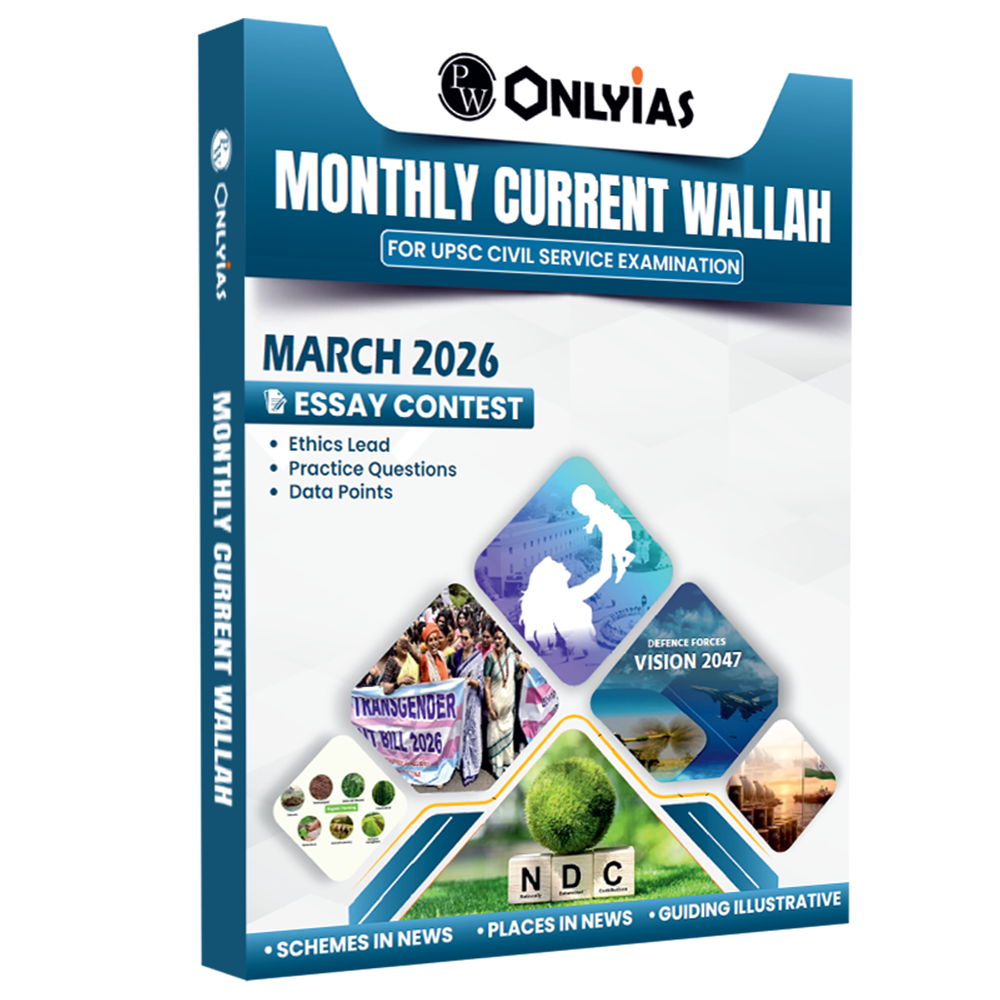
What Should You Revise First From PW UPSC Current Affairs March 2026 Book?

UPSC Civil Services Examination preparation demands a smart revision strategy, especially when covering vast monthly issues. Using the PW UPSC current affairs March 2026 book gives candidates a structured route to cover essential events systematically. This article highlights the top priority sections, high-yield topics, and practical approaches to tackle your March 2026 current affairs revision smoothly. Focusing on syllabus-aligned segments first ensures maximum retention and better accuracy during practice tests.
Why Use the PW UPSC Current Affairs March 2026 Book for Revision?
A focused current events book summarizes the month’s news into actionable study material. The book has been created keeping in mind the needs of both the Preliminary and the Main Examination, without any superfluous material.
-
Early Release Advantage: Published ahead of typical monthly issues, allowing early access for timely UPSC current affairs revision.
-
Syllabus Mapping: Every topic is directly linked to GS Papers I, II, III, and IV for clear context.
-
Curated Source Coverage: Data is collected from the best daily newspapers, PIB releases, Yojana, Kurukshetra and other credible worldwide think institutes.
-
Integrated Practice Material: Previous year questions (PYQs), likely Prelims MCQs, Mains answer-writing prompts.
-
Visual Tools: Flowcharts, graphs, maps and infographics reduce difficult multidimensional challenges.
High-Priority Topics in the PW UPSC Current Affairs March 2026 Book
Organizing your revision sequence helps you cover high-weightage topics without feeling overwhelmed. When opening your book, begin with the sections that carry the highest analytical relevance for current affairs.
|
Priority Level |
Section Name |
Key Focus Areas |
Core Value |
|
Priority 1 |
Polity, Economy, & International Relations |
Constitutional developments, economic policies, global trade, bilateral treaties |
Direct relevance for Prelims and Mains GS II & III |
|
Priority 2 |
Mains-Focused Analytical Articles |
Multidimensional perspectives, research-backed arguments |
Essential for structured answer writing |
|
Priority 3 |
Environment, Science & Technology |
Conservation rules, biodiversity, space research, new tech developments |
High question frequency in Prelims |
|
Priority 4 |
News in Short & Ethics Case Studies |
Quick summaries, real-world ethical dilemmas |
Fast revision and GS IV paper preparation |
How to Revise Prelims With the PW UPSC Current Affairs March 2026 Book
Current affairs preparation focuses on factual correctness, conceptual clarity and quick memory. This book provides specific tools to make this procedure easier.
Step 1: Start with News in Short
-
Read the crisp summary snippets to grasp major developments quickly.
-
Highlight key facts, regulatory bodies, reports, and strategic geographical locations.
-
Review these short notes every few days to embed details into your long term memory.
Step 2: Utilize Visual Learning Aids
-
See maps for geographical zones, war zones and routes of international trade discussed in the book.
-
The study flowcharts help you comprehend the governance phases, legal procedures and scientific processes.
-
Scan tables comparing government schemes to retain eligibility criteria easily.
Step 3: Solve Integrated MCQs and PYQs
-
Attempt the "Test Yourself" MCQs at the end of each section immediately after reading.
-
Cross-check wrong answers against the explanations provided in the UPSC current affairs book.
-
Solve included Previous Year Questions to analyze how standard static concepts merge with March 2026 current affairs.
How to Prepare for Mains With the PW UPSC Current Affairs March 2026 Book
Mains preparation involves significant analytical depth, clear viewpoints and structured presentation skills. This book helps you create well-rounded arguments for General Studies Papers and Essays.
-
Study Comprehensive Mains-Focused Articles: Focus on multidimensional analysis, examining background history, present impacts, and future solutions.
-
Build Answer Frameworks: Pick key arguments and research-backed data points from the articles to construct bulleted intros, body points, and conclusions.
-
Practice GS Paper IV Ethics Case Studies: Review real-life examples and scenarios provided in the magazine to refine decision-making answers.
-
Participate in Essay Writing Contests: Utilize the insights from book to craft structured essays and test your writing skills on the PWOnlyIAS platform.
How to Save Time With the PW UPSC Current Affairs March 2026 Book
Following a disciplined strategy prevents clutter and speeds up UPSC current affairs revision.
-
First Pass (Days 1–3): Skim through headings, infographics, and "News in Short" in your UPSC book to build an initial mental map.
-
Deep Dive (Days 4–8): Read the detailed Mains analytical articles, noting down critical statistics, committee recommendations, and quotes.
-
Practice & Test (Days 9–10): Solve all practice exercises, practice MCQs, and outline answers for practice Mains questions.
-
Final Review (Day 11 Onward): Revisit highlighted passages, tables, and short summaries to maintain high retention before full-length tests.
Key Features of the PW UPSC Current Affairs March 2026 Book
This book is designed to support every phase of Civil Services preparation.
-
Structured Structure: Designed with simplified language to make reading systematic and effective.
-
Analytical Insights: Focuses on underlying causes, social impacts, and strategic relevance rather than basic headlines.
-
Diverse Content Curation: Combines information from official government releases, Yojana, Kurukshetra, and reputed international institutions.
-
Self-Evaluation Tools: Features practice questions and MCQs to track accuracy and identify weak areas.
-
Flexible Learning Formats: Available in both print and digital versions for convenient study anywhere.
How to Make Notes From PW UPSC Current Affairs March 2026 Book
Making short and useful notes can make revision much faster. Instead of copying complete paragraphs from this book, focus only on facts, arguments, examples, data, and government initiatives that can be used in the exam.
-
Create Topic Wise Notes: Organise information under Polity, Economy, Environment, Science and Technology, and International Relations.
-
Mark Important Data: Note down statistics, rankings, reports, government schemes, and committee recommendations that can strengthen Mains answers.
-
Add Static Connections: Link every major current issue with the relevant NCERT or standard textbook topic.
-
Prepare Answer Points: Convert important Mains articles into short introduction, body, and conclusion points.
-
Keep Prelims Facts Separate: Maintain a separate list of important places, organisations, species, constitutional provisions, and scientific developments for quick revision.
This approach prevents your notes from becoming another lengthy study source. The goal should be to turn the book into concise revision material that you can revisit several times before the examination.
How to Prioritise Topics From PW UPSC Current Affairs March Book
Not every current affairs topic deserves the same amount of revision time. Candidates should prioritise topics based on their connection with the UPSC syllabus, previous year questions, and potential application in Prelims and Mains.
Start with topics that have both Prelims and Mains relevance. Constitutional developments, major economic policies, environmental conventions, government schemes, international relations, and important scientific developments can be revised more than once because they may be useful across different stages of the examination.
Next, focus on topics that connect directly with static subjects. For example, a current development related to Parliament can be revised alongside constitutional provisions, while an environment-related issue can be connected with ecology and biodiversity concepts. This makes your preparation more integrated.
Finally, use the practice questions in this book to identify topics that require another revision. If you repeatedly make mistakes from a particular section, move that topic higher in your revision priority instead of following the same sequence every time.
FAQs
How does the PW UPSC March notes help in Mains answer writing?
This book contains Mains-focused articles providing multidimensional perspectives, research-backed arguments, and background context needed for structured answer writing.
Can I rely on March current affairs for UPSC prelims current affairs revision?
Yes, the issue contains dedicated "News in Short" summaries, visual aids, integrated PYQs, and practice MCQs specifically designed for targeted current affairs revision.
What makes this UPSC current affairs book different from other magazines?
This book is released earlier than most alternatives, offers syllabus-mapped content from government reports and think tanks, and includes GS IV ethics case studies.
Does the PW UPSC current affairs March 2026 edition cover GS Paper IV Ethics?
Yes, it includes real-life case studies and practical ethical examples to help candidates prepare for GS Paper IV (Ethics, Integrity, and Aptitude).
Where can I get the PW current affairs book?
You can order the PW current affairs book in print or access its digital version directly from the educational platform.