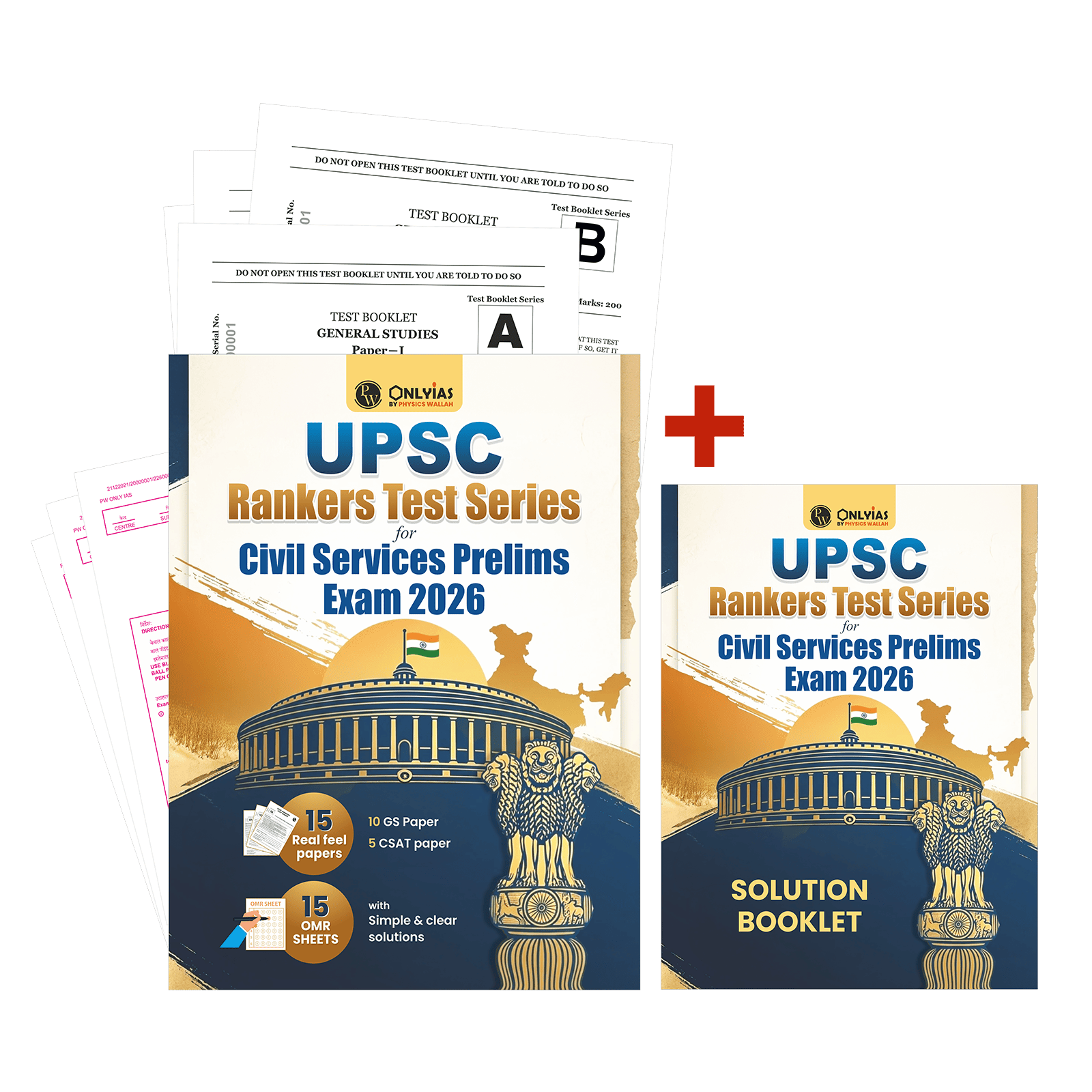
When to Start the UPSC Rankers Test Series in Your Prelims Preparation

Starting the UPSC rankers test series at the right time can make a big difference in your UPSC preparation. If you start too early, you may struggle because you have not finished the basic subjects.
If you start too late, you may not get enough time to improve your weak areas. The right timing helps you improve accuracy, speed, confidence, and exam performance. A well-planned UPSC prelims test series can help you understand your strengths and weaknesses before the actual exam.
Importance of UPSC Rankers Test Series
The UPSC Rankers Test Series is important because the UPSC Prelims requires more than just knowledge—it tests application, accuracy, elimination skills, and time management. A well-designed test series allows aspirants to practice these skills before the actual examination.
Through regular mock tests, students learn how to approach different question types, manage limited time, and avoid common mistakes. It also helps them understand their preparation level compared to exam requirements.
For serious UPSC aspirants, a test series becomes a revision tool that connects learning with practical exam performance. By analyzing each test, students can improve their strategy, strengthen weak topics, and increase their chances of performing better in Prelims.
When Should You Start with UPSC Rankers Test Series?
The right time to start UPSC test series depends on how much of the syllabus you have completed. Before taking regular mock tests, you should have a good understanding of the main subjects.
Syllabus Coverage Guide
0% to 50% Completed
-
Avoid mock tests.
-
Focus on standard books and basic concepts.
50% to 70% Completed
-
Start sectional tests.
-
Check your performance in individual subjects.
70% to 100% Completed
-
Start full-length mock tests.
-
Practice in a real exam-like environment.
Most experts suggest starting sectional tests after completing around 50% of the core syllabus. These subjects include Indian Polity, Modern History, Economy, and Geography.
Starting during this stage helps you find weak areas early. You still have enough time to improve your preparation and revise properly.
How to Use UPSC Rankers Test Series?
A good test plan should be divided into different preparation phases. This helps you improve step by step without feeling stressed.
During the Foundation Phase
-
Time: 6 to 8 months before the exam
-
Main Goal: Check your understanding of basic books and study material.
-
Practice Plan: Focus only on chapter-wise and subject-wise tests.
-
Test Frequency: One test every two weeks.
-
Benefit: Helps you know whether your basic concepts are clear before moving to advanced topics.
During the Consolidation Phase
-
Time: 3 to 5 months before the exam
-
Main Goal: Improve understanding across multiple topics and manage time better.
-
Practice Plan: Start using sectional papers from the rankers' test series along with regular study.
-
Test Frequency: One test every week.
-
Benefit: Helps you identify topics that need more revision and practice.
During the intensive phase
-
Time: Last 2 to 3 months before the exam
-
Main Goal: Build exam confidence and improve question-solving skills.
-
Practice Plan: Focus mainly on full-length papers from a quality prelims test series.
-
Test Frequency: Two to three tests every week.
-
Benefit: Trains your mind to handle different subjects within the actual exam time limit.
UPSC Rankers Test Series vs Online UPSC Mock Test
Many students are confused about whether they should use a UPSC test series book or online platforms. Both options have their own advantages.
Benefits of a UPSC Test Series Book
-
Helps you practice filling OMR sheets.
-
Creates an exam-like feeling.
-
Improves paper-handling skills.
-
Reduces the chance of OMR mistakes.
Using a UPSC test series book regularly makes you comfortable with the physical exam process. Small OMR mistakes can affect your final result, so this practice is useful.
Benefits of an Online UPSC Mock Test
-
Gives instant results.
-
Shows detailed performance reports.
-
Tracks time spent on each question.
-
Can be attempted from anywhere.
A good mock test platform helps you understand how much time you spend on correct and incorrect answers. This information can improve your exam strategy.
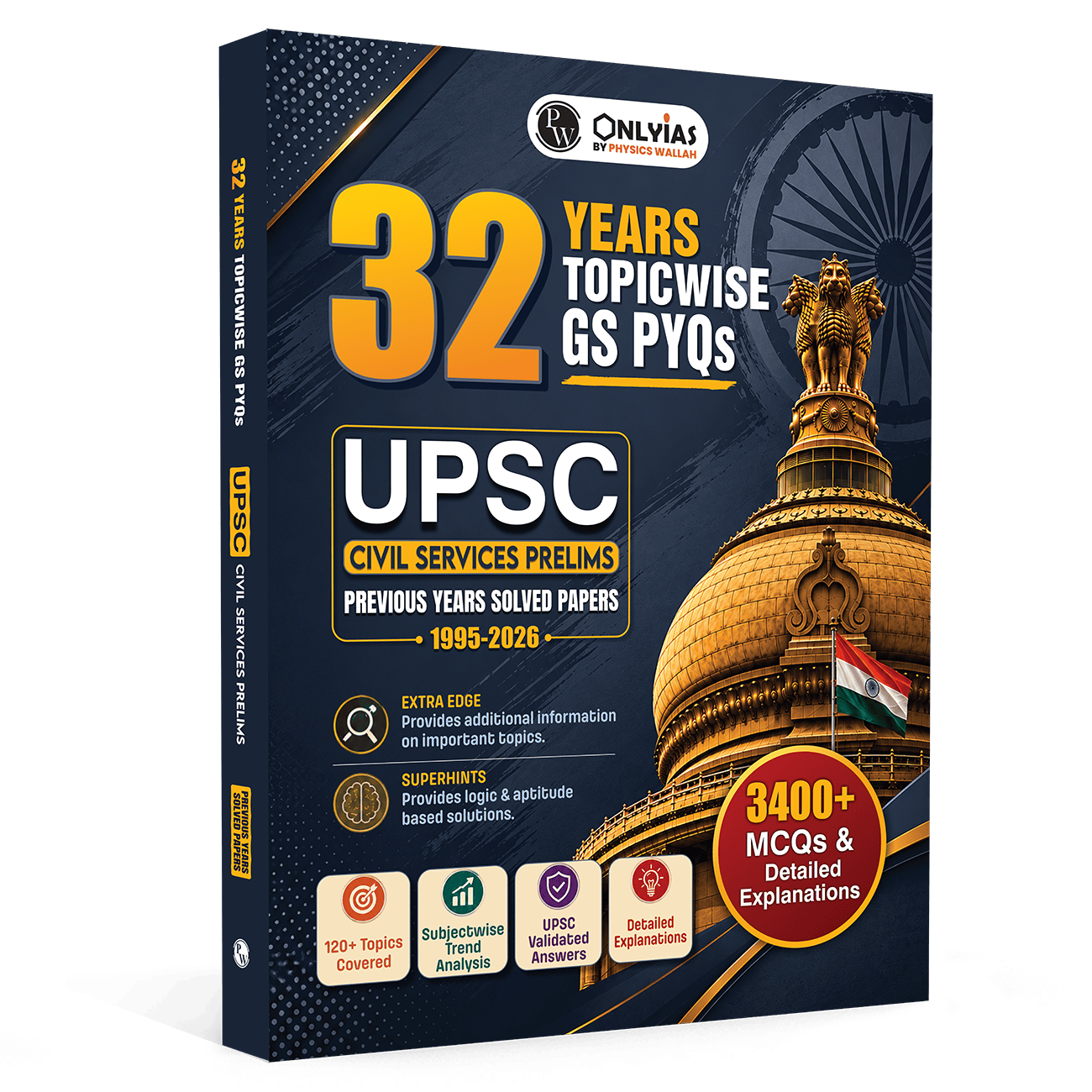
For the right results, use both a UPSC test series book and an online UPSC mock test platform. Along with this, resources like the 32 Years UPSC GS PYQ can strengthen preparation by helping you analyse previous exam trends, identify frequently asked themes, and practice questions aligned with the actual UPSC pattern.
How to Get the Best Results From UPSC Rankers Test Series?
Many students solve a large number of papers, but still do not see improvement. This happens because they focus only on solving tests and ignore analysis.
Review Every UPSC Prelims Mock Test
Spend more time reviewing the paper than solving it. For a two-hour paper, spend at least four hours analyzing the answers. Read every explanation carefully. Check both correct and incorrect answers. This helps you learn new concepts and avoid future mistakes.
Find the Type of Mistake
Every mistake usually falls into one of three categories.
Concept Mistakes
-
You did not understand the topic properly.
-
Go back and revise the basic books.
Information Gaps
-
You never studied that fact before.
-
Add it to your notes.
Reading Mistakes
-
You missed words such as "not," "only," or "incorrect."
-
Practice reading questions carefully.
Keep an Error Notebook
Write down every mistake in a separate notebook.
Before taking the next UPSC prelims mock test, review this notebook. This simple habit helps you avoid repeating the same mistakes again and again.
How Can the UPSC Rankers Test Series Help Improve Your Score?
Scores in a test series may change from one paper to another because the difficulty level is different.
Below 80 Marks
-
Major gaps in preparation.
-
Focus on basic subjects again.
-
Reduce full-length mock tests.
80 to 95 Marks
-
Average performance.
-
Improve elimination techniques.
-
Reduce random guessing.
Above 100 Marks
-
Strong preparation level.
-
Maintain consistency.
-
Give more attention to CSAT practice.
If you consistently score above 100 marks in a test series for UPSC, it usually means your basic preparation is strong.
If your score stays below 80 marks, spend more time on subjects like Polity, History, Geography, and Economy before attempting more full-length papers. Using well-structured UPSC Revision Books during this stage can help you revise core concepts quickly, strengthen weak areas, and improve retention before moving back to mock test practice.
How Much CSAT Practice Is Needed With UPSC Rankers Test Series?
Many students focus only on General Studies and forget CSAT. This can be risky because clearing CSAT is mandatory.
Weekly CSAT Practice Plan
Start regular CSAT practice at least four months before the exam.
Keep one full weekend session for CSAT papers.
Find Your Weak CSAT Area
Check whether your mistakes come from:
-
Quantitative Aptitude
-
Logical Reasoning
-
Reading Comprehension
Focus more on the section where you lose marks.
Make a Formula Sheet
Prepare a short formula sheet for topics like:
-
Permutations
-
Combinations
-
Data Interpretation
-
Percentages
-
Ratio and Proportion
Regular CSAT practice along with the rankers test series keeps your preparation balanced.
Mistakes to Avoid in UPSC Mock Test Preparation
Many students make mistakes while using a mock test. Avoiding these mistakes can help improve your score and make your preparation more effective.
Taking Too Many Tests Without Analysis
One common mistake is solving many mock papers without reviewing them. Mock tests are useful only when you analyze your performance and learn from your mistakes.
After every mock test, review the answers, check your weak areas, and understand why you got questions wrong. Without proper analysis, mock tests offer very little improvement.
Waiting Too Long to Start Mock Tests
Some students delay mock tests because they are afraid of getting low marks. However, this can hide weak areas and reduce the time available for improvement.
Starting your prelims test series at the right time helps you identify mistakes early and improve before the actual exam.
Focusing on Very Difficult Questions
Do not spend too much time on rare or highly difficult questions. Instead, focus on important topics that are commonly asked in UPSC exams.
A strong understanding of basic subjects is more important than solving a few difficult questions.
Ignoring Current Affairs
Many aspirants focus only on static subjects and ignore current affairs. UPSC often combines current events with topics like Polity, Economy, History, and Geography.
A balanced prelims test series should include both static and current affairs questions to improve your overall preparation.
Read More: Which NCERT Books are Required for UPSC Exam Preparation?
UPSC Rankers Test Series FAQs
When should I start the UPSC Rankers Test Series?
You should start the UPSC rankers test series after completing around 50% of the core syllabus. At this stage, sectional tests can help you check how well you understand important subjects like Polity, History, Economy, and Geography. Full-length mock tests should be started after covering most of the syllabus so that you can practice in a real exam-like environment.
How many papers should I solve in a UPSC Prelims Test Series?
A good target is to solve 25 to 40 full-length papers along with 15 to 20 sectional tests as part of your prelims test series. This number is usually enough to improve your speed, accuracy, time management, and question-selection skills. Regular practice also helps you become more comfortable with the exam pattern.
Should I use a test series book or online platform?
Both options are useful and should be used together whenever possible. A test series book helps you practice filling OMR sheets and gives a real exam-like experience. On the other hand, online platforms provide instant results, detailed analysis, and performance tracking. Using both methods can improve your overall preparation.
What is a good score in a Test Series for UPSC?
A score between 95 and 105 marks in a test series for UPSC is generally considered a good benchmark for many aspirants. However, you should not focus only on marks. Your accuracy rate, consistency across multiple tests, and overall rank are often more important because the difficulty level of mock tests can vary from one paper to another.
How can a UPSC Do prelims mock tests improve elimination skills?
A UPSC prelims mock test helps you understand how to remove wrong answer choices before making a final selection. Keep track of how often your elimination method leads to the correct answer. By reviewing your mistakes after each test, you can improve your decision-making skills and develop a smarter guessing strategy for the actual UPSC Prelims examination..