How to Study Indian Geography Using an Atlas Book
Many students spend hours reading descriptive paragraphs without retaining the actual spatial relationship between places. This disconnect often leads to confusion during examinations when location-based questions arise.
Mastering spatial concepts becomes significantly easier when theoretical notes are paired directly with visual references. Integrating an Indian geography atlas book into your daily study routine bridges the gap between text and visual memory, ensuring quick recall and accurate location mapping.
What Is an Indian Geography Atlas Book?
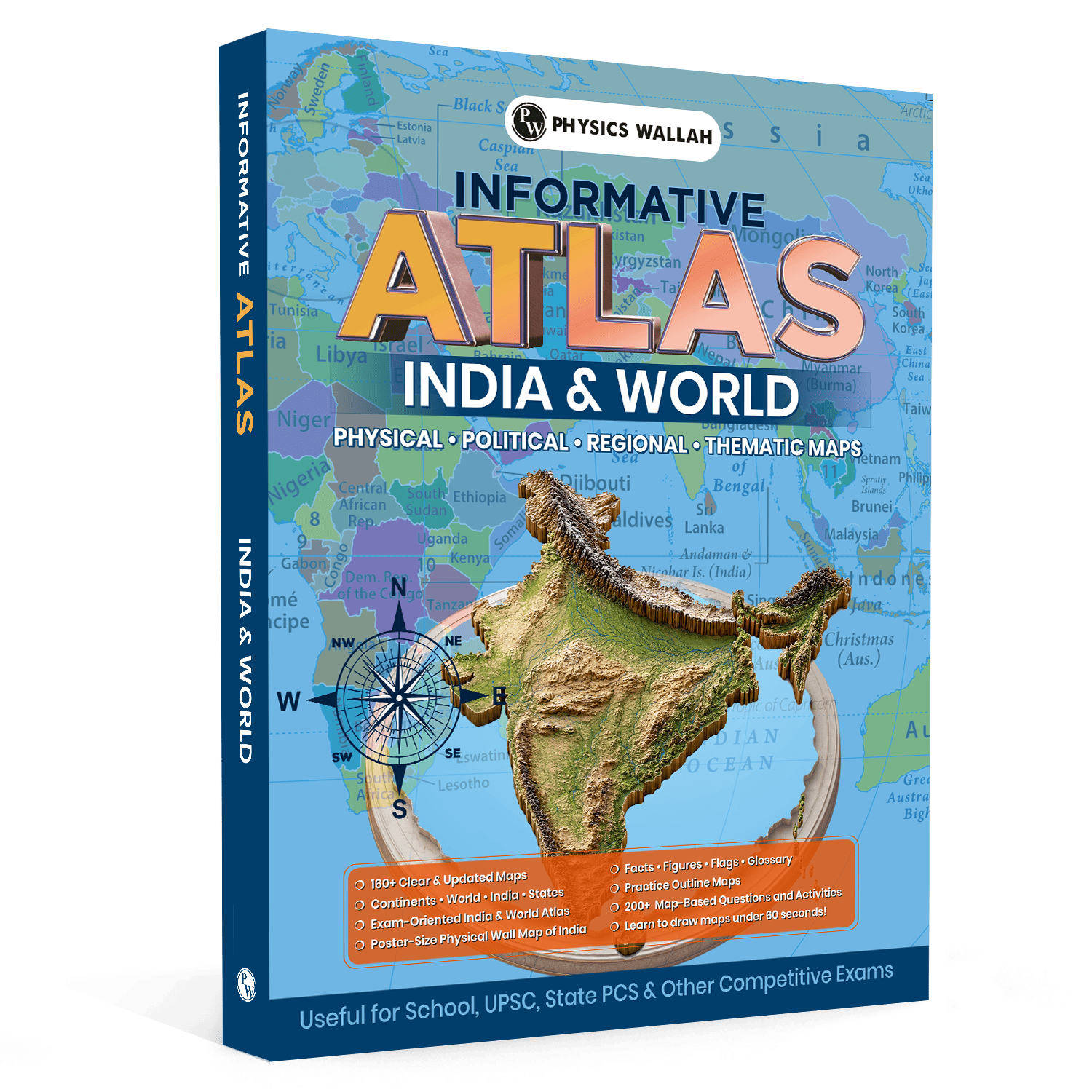
An Indian geography atlas book is a specialized visual learning resource designed to represent the physical, political, and thematic landscapes of India alongside global geography. Rather than relying solely on descriptive text, an India map book uses color-coded symbols, precise scales, and thematic overlays to present complex spatial data clearly.
These reference tools transform raw geographical facts into an interactive learning tool. A comprehensive Indian geography map book typically contains over 160 updated maps covering everything from international boundaries to local topography.
-
Physical Maps: Display landforms, mountain ranges, plateaus, plains, drainage networks, coastal features, and relief structures.
-
Political Maps: Highlight state boundaries, union territories, capital cities, and major administrative zones.
-
Thematic Maps: Present targeted data such as soil types, rainfall distribution, natural vegetation, crop zones, and mineral reserves.
-
Reference Data: Include quick-reference sections featuring geographical facts, statistics, world flags, and an essential glossary.
Why Use an Indian Geography Atlas Book for UPSC Preparation?
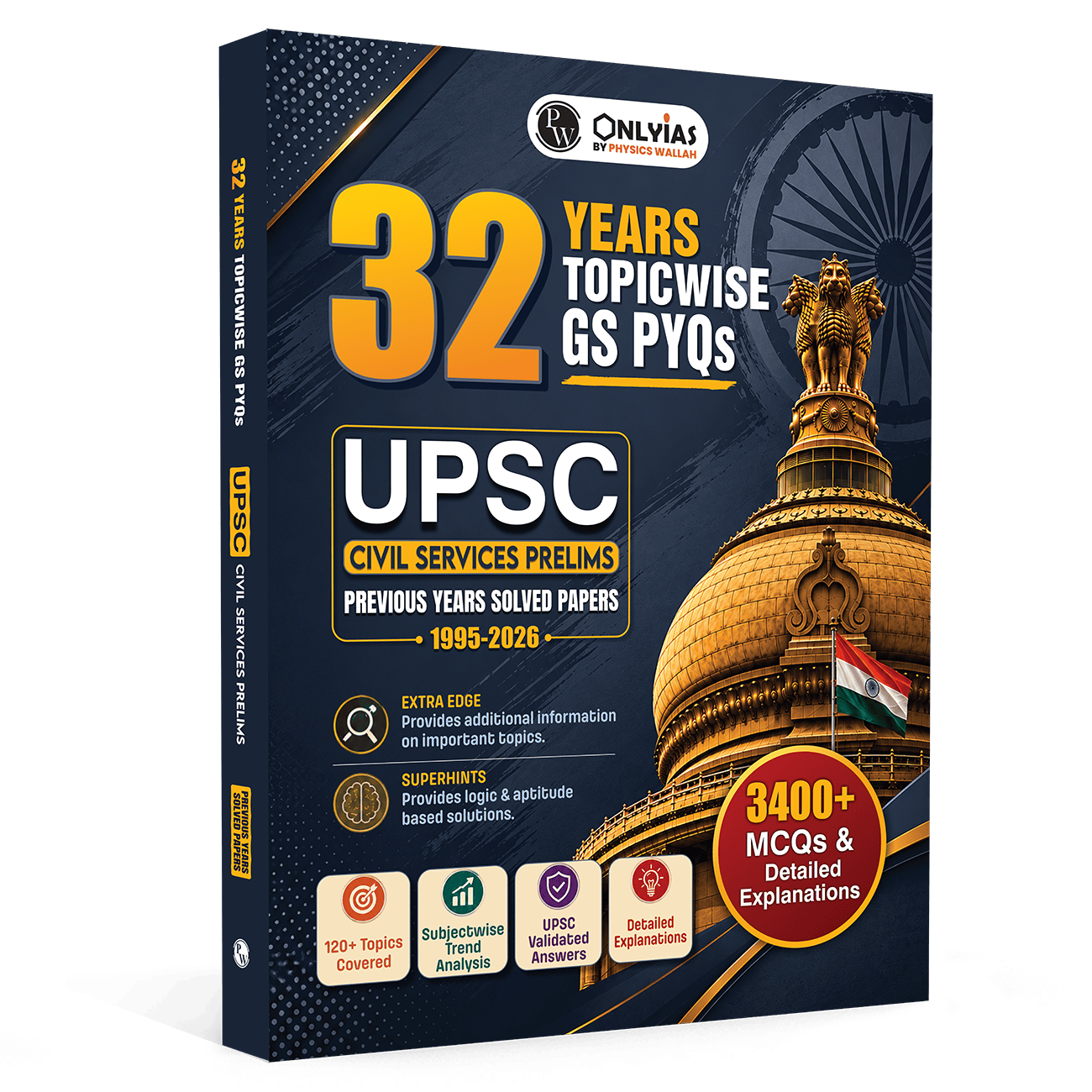
Using an Indian Geography Atlas is crucial for candidates preparing for competitive civil services examinations. Location-based questions regularly appear in both Preliminary and Mains papers, making spatial awareness a core skill. Alongside atlas-based learning, UPSC Books can help strengthen geographical concepts, provide structured coverage, and support focused revision for both Prelims and Mains.
|
Exam Stage |
Application of Geography Atlas |
|
UPSC Prelims |
Direct location identification, river tributary order, matching national parks to states, and border sequencing. |
|
UPSC Mains |
Enhancing answer writing by illustrating spatial diagrams, region-specific trade corridors, and physical landforms. |
An exam-oriented geography atlas for upsc serves multiple critical functions:
-
Improves Location-Based Accuracy: Helps candidates pinpoint delicate geographical features, national parks, biosphere reserves, and mountain passes accurately.
-
Strengthens Dual-Stage Preparation: Supports both objective Prelims questions and analytical Mains answer writing through visual learning and conceptual understanding.
-
Accelerates Revision: Visualizing colored layouts speeds up information retention compared to re-reading dense textual paragraphs.
-
Builds Mapping Speed: Developing simple map-drawing techniques allows aspirants to draw accurate regional outlines of India and the world in under 60 seconds during examinations.
Topics Covered in an Indian Geography Atlas Book
An effective India atlas for UPSC covers structural physical topics alongside economic and human geography.
Physical Geography Features
-
Physiographic Divisions: Detailed views of the Northern Mountains, Indo-Gangetic Plains, Peninsular Plateau, Coastal Plains, deserts, and Islands.
-
Drainage Systems: Comprehensive tracing of major river systems, tributaries, oceans, lakes, and water bodies across regions.
-
Geographical Concepts: Visual representation of landforms, plateaus, and global physical linkages.
Human and Economic Geography
-
Resource Distribution: Major location-based details covering mineral belts, continents, countries, and industrial zones.
-
Administrative Boundaries: Precise boundaries of Indian states, capital territories, and international border connections.
-
Quick Reference Statistics: Comprehensive geographical facts, figures, flags, and glossary items for instant revision.
When to Use an Indian Geography Atlas Book?
Integrating an Indian Geography Atlas Book into your routine works best when paired dynamically with your standard reading material rather than treated as an isolated task. Using UPSC Revision Books alongside the atlas can help reinforce key concepts, connect geographical information with important topics, and make revision more focused and effective.
-
During First-Time Concept Reading: Keep your map open alongside standard textbook chapters. When reading about physical features, locate their positions immediately across regions.
-
While Studying Geography Topics: Locating places instantly locks their spatial context and global connections into long-term memory.
-
During Dedicated Mapping Practice: Reserve specific sessions during your weekly schedule exclusively for UPSC geography map practice.
-
Prior to Exam Revision: Use large visual tools, such as a poster-size physical wall map of India, to run rapid visual sweeps over key geographic features right before test days.
How to Use an Indian Geography Atlas Book for Study?
Studying effectively with an Indian geography atlas book requires an interactive strategy rather than passive page-turning.
-
Adopt a Layered Reading Approach: Start with broad regional outlines before moving to granular details. Begin by recognizing major relief zones, then observe individual mountain ranges, and finally trace specific plateaus and rivers.
-
Understand 160+ Updated Maps: Systematically explore clear maps covering essential concepts, continents, countries, states, and natural landforms.
-
Trace Rivers and Water Systems: Follow drainage patterns across regions from their point of origin down to ocean outlets.
-
Utilize Quick Reference Sections: Memorize key geographical facts, figures, flags, and dedicated glossary items to cement factual knowledge.
-
Master 60-Second Map Drawing Techniques: Practice simple methods to sketch accurate outlines of India and world maps rapidly for descriptive answer writing.
How to Make a Study Plan With an Indian Geography Atlas Book?
Structuring your study calendar ensures complete coverage of all key regions without feeling burnt out. Here is a practical study plan that incorporates UPSC Previous Year Papers to help you understand recurring question patterns, practise important topics, track your progress, and make your Geography preparation more exam-oriented.
|
Week |
Geographical Focus |
Action Items |
|
Week 1 |
Physical Outlines & Relief |
Examine mountains, plateaus, deserts, and physical boundaries using over 160 updated maps. |
|
Week 2 |
Drainage Systems & Water |
Trace rivers, streams, lakes, and oceans across Indian states and global regions. |
|
Week 3 |
State Boundaries & Concepts |
Study Indian state boundaries, political locations, global connections, and quick reference facts. |
|
Week 4 |
Practice & Revision |
Solve over 200 map-based questions, practice outline maps, and test drawing techniques. |
Common Mistakes to Avoid With an Indian Geography Atlas Book
Even dedicated candidates often make tactical errors when using an Indian geography map book during their preparation. Avoid these frequent pitfalls:
-
Passive Visual Scanning: Simply looking at detailed maps without actively solving practice outline maps leads to weak location retention.
-
Ignoring Map-Based Questions: Skipping end-of-section practice activities prevents you from assessing your actual location-based accuracy.
-
Neglecting Speed Drawing Practice: Failing to practice 60-second map-drawing techniques makes it difficult to replicate spatial diagrams quickly during exam answer writing.
-
Overlooking Quick-Reference Material: Omitting dedicated glossary sections, flags, statistics, and geographical facts reduces your performance on quick objective questions.
Practice Sheets for Indian Geography Atlas Book
Active practice is the foundation of high retention. Using structured practice sheets directly reinforces what you learn from your Indian geography atlas book.
-
Outline Maps for Self-Testing: Use outline maps to fill in states, mountain chains, rivers, and plateaus from memory.
-
Solving Map-Based Questions: Test yourself regularly with over 200 map-based practice questions covering India and world geography.
-
Glossary and Facts Review: Use practice sheets to test recall of vital facts, statistics, location names, and geographical terms.
-
Speed Drawing Exercises: Set a timer for 60 seconds and practice drawing accurate Indian and world map outlines on blank sheets.
Read More: Which NCERT Books are Required for UPSC Exam Preparation?
Indian Geography Atlas Book FAQs
How does an Indian geography atlas book help in UPSC Prelims?
An Indian geography atlas book helps candidates accurately solve location-based objective questions by building visual memory of boundaries, rivers, physical landforms, and spatial relationships.
Can I prepare for Mains using an Indian geography atlas?
Yes, using an Indian geography atlas teaches simple techniques to draw important maps in under 60 seconds, allowing candidates to illustrate Mains answer scripts with accurate regional diagrams.
How many maps should I study in an india map book?
A comprehensive India map book includes over 160 updated maps covering physical features, political divisions, climate domains, rivers, and continental geography for balanced preparation.
Is map practice useful for exams other than UPSC?
Upsc geography map practice techniques benefit candidates preparing for State PSC, SSC, Railways, Defence, CUET, Olympiads, and school examinations by strengthening foundational spatial concepts.
What supplementary tools come with an Indian geography map book?
An Indian geography map book frequently includes poster-size physical wall maps for visual learning, along with 200+ practice questions, practice outline maps, statistics, and a geography glossary.