How Topicwise UPSC PYQs Improve Exam Preparation Strategy

Preparing for the Civil Services Examination often feels like navigating a vast, unpredictable ocean. Many aspirants struggle to identify which subjects deserve the most attention and how to apply theoretical knowledge to actual exam conditions. Integrating a quality UPSC PYQ resource into your daily routine is one of the most effective ways to bridge this gap. By focusing on topic-wise analysis, you can decode the examiner's mindset and streamline your study plan for better results.
Why TopicWise UPSC PYQ is Important
Most candidates begin their journey by reading standard textbooks cover to cover. While this builds a foundation, it does not necessarily teach you how to clear the exam. Using a PYQ book that categorises questions by subject and sub-topic allows you to see the “weightage” of different areas.
When you look at PYQs in a topic-wise format, you notice patterns. For example, in Indian Polity, questions on Fundamental Rights appear frequently in UPSC prelims. In contrast, other chapters might only appear once every five years. This clarity helps you decide where to spend your energy.
How UPSC PYQ Help You Understand the Syllabus
The syllabus is notoriously broad, but it is not infinite. A systematic review of the UPSC previous year question trends shows that the commission often returns to specific themes. Topic-wise breakdown helps in the following ways:
-
Identify Important Topics in UPSC Prelims: You learn which specific parts of a subject are "hotspots" for examiners.
-
Clarifies Language: You become familiar with the phrasing and "traps" used in the actual exam.
-
Self-Assessment: After finishing a chapter like 'Ancient History', you can immediately solve relevant questions to test your retention.
How UPSC PYQ Improve Revision for Prelims
Reading a concept once is rarely enough for long-term memory. Active recall is the key to mastering the syllabus. When you solve a PYQ of UPSC prelims, you are forcing your brain to retrieve information under pressure.
Doing this by topic ensures that your revision is structured. Instead of solving a random 100-question paper, solving 20 questions specifically on 'Climate Change' ensures that you have mastered that specific niche before moving on. This builds confidence and ensures no topic is left weak.
How UPSC PYQ Practice Improves Answer Solving Skills
The nature of the Civil Services exam has shifted towards analytical thinking. It is no longer about just knowing facts; it is about applying them. By studying the PYQ of UPSC, you begin to understand the logic behind the correct answers.
-
Learn the Elimination Technique: You learn how to rule out incorrect options even when you aren't 100% sure of the right one.
-
Improve Concept Linking Between Subjects: You see how a question on Geography can have links to Economics or International Relations.
-
Improve Time Management: Practising specific sets of questions helps you gauge how long it takes to process complex statements.
Check Out: UPSC Books
Benefits of Solving UPSC PYQs Topicwise
Using an UPSC prelims previous year paper as a diagnostic tool is a game-changer. Many aspirants and mentors recommend balancing textbook study with regular practice questions..
A topic-wise approach ensures that your preparation remains balanced. Without it, students often over-prepare for subjects they enjoy while neglecting difficult ones like Science and Technology or Economics.
|
Benefit |
Impact on Preparation |
|
Syllabus Mapping |
Helps you see exactly what the syllabus terms mean in practice. |
|
Trend Analysis |
Shows whether a topic is becoming more or less important over the years. |
|
Mistake Identification |
Highlights whether you are losing marks due to lack of knowledge or silly errors. |
How to Use UPSC PYQ in Your Daily Study Routine
Consistency is more important than intensity in this exam. You should aim to solve a small number of questions daily rather than doing a massive marathon once a month.
-
Phase 1: Read a chapter from your standard source.
-
Phase 2: Open your topic-wise resource and solve all related questions from the last 10–15 years.
-
Phase 3: Note down any new information or facts found in the solutions that were missing from your notes.
-
Phase 4: Re-visit those specific questions after a week to ensure you don't repeat the same mistakes.
This cycle ensures that your notes are constantly evolving and becoming more exam-oriented. It transforms the way you read textbooks, as you begin to read with the intention of answering a potential question.
Why Detailed PYQ Solutions are Important
Simply knowing that 'Option B' is correct isn't enough. A good preparation strategy involves reading the detailed explanation for every question. Sometimes, the explanation of a wrong option provides the answer to a future question.
-
Extra Information: Explanations often contain around two or three additional facts related to the topic.
-
Conceptual Clarity: They explain the "why" behind an answer, which helps in the Mains examination as well.
-
Contextual Learning: Seeing a fact in the context of a question makes it easier to remember than seeing it in a list.
Topicwise vs Yearwise PYQ Practice
While year-wise papers are great for full-length mock practice in the final month, they are less effective during the initial learning phase.
If you are currently studying Modern History, solving a 2022 paper will only give you about 10–12 relevant questions. The rest will be from subjects you haven't touched yet, which can lead to unnecessary frustration and a drop in confidence.
Focusing on the previous year questions in a segmented manner allows you to build brick-by-brick. It ensures that when you finally sit for a full-length mock test, you have already mastered the individual components of the paper.
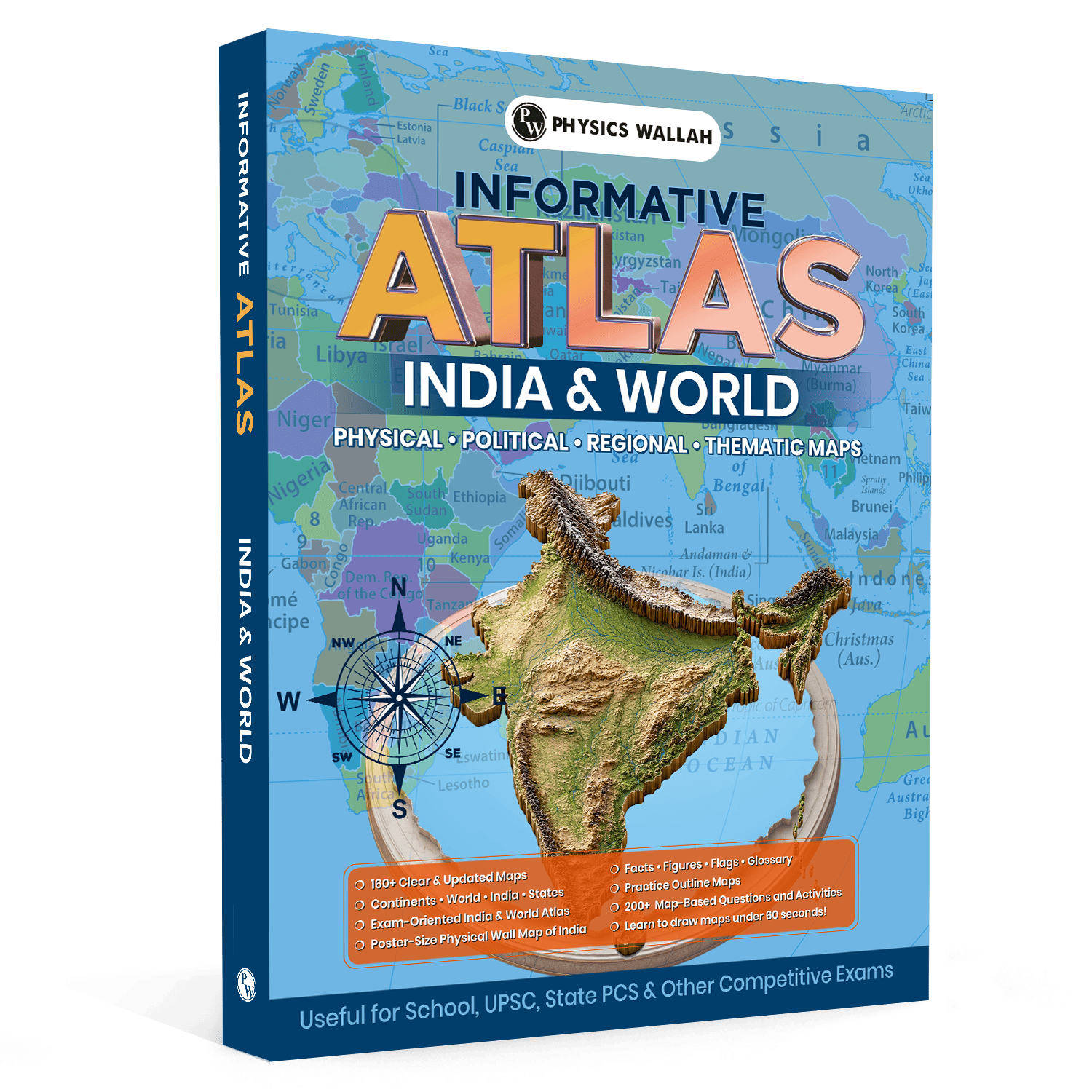
Also Check - PW UPSC Informative Atlas Book
UPSC PYQ Strategy for Beginners and Repeaters
For beginners, these papers serve as a guide to what is important. For those who have attempted the exam before, they serve as a tool for "gap analysis." You can look back at your previous attempts and see exactly which topics led to your failure to clear the cutoff.
By isolating these topics and solving every available question on them, you turn your weaknesses into strengths. This targeted approach is much more efficient than re-reading the entire syllabus from scratch every year.
How PYQ Help You Understand Exam Difficulty
Not all questions in the exam are meant to be solved. Some are "bouncers" designed to waste your time. By scanning years of questions, you develop an instinct for which questions to attempt and which to skip. This "exam sense" is one of the most underrated skills in the journey.
-
Easy Questions: Direct factual questions that you must get right to stay in the race.
-
Moderate Questions: Require logical reasoning and 50-50 elimination.
-
Difficult Questions: Highly specific or obscure facts that might be better left alone to avoid negative marking.
Read More: List of Chief Ministers and Governors of Indian States
UPSC PYQ FAQs
How many years of PYQ should I solve?
It is generally recommended to solve at least the last 10 to 15 years of questions. However, for subjects like Polity and History, going back 25 to 30 years can be very beneficial as the core concepts do not change frequently.
Is it enough to only solve the PYQs of the UPSC to clear the exam?
While they are essential, they are not a replacement for standard textbooks. They should be used alongside your primary study material to understand how to apply the information you have learned.
Should I start solving PYQs before finishing the syllabus?
Yes, you should solve them topic-wise as you complete each section. This helps you understand the depth required for each topic and prevents you from over-studying unnecessary details.
Are questions repeated in the UPSC prelims?
Direct repetitions are rare, but themes and concepts are repeated very often. Sometimes, an option from a previous year's question becomes the main question in a subsequent year.
How do I use this book for mains preparation?
The themes identified in Prelims often carry over to Mains. Analysing the trends helps you identify which issues are of long-standing importance to the commission, helping you prioritise your answer-writing practice.