UPSC 2026 Booklist for Prelims and Mains
The UPSC 2026 books refer to a curated set of academic resources, including NCERT textbooks and standard reference manuals, essential for cracking the Civil Services Examination. These UPSC books cover the vast syllabus of General Studies, CSAT, and optional subjects. They provide the conceptual depth and factual accuracy needed to clear the Prelims, Mains, and Interview stages.
Important UPSC 2026 Books for Beginners
To build a solid foundation in UPSC, you must begin with NCERTs from Class 6 to 12. These books simplify complex topics and are vital for conceptual clarity. Most toppers suggest reading them at least twice before moving to advanced resources. When you start your UPSC 2026 preparation books journey, do not rush into heavy reference books. You should treat NCERTs as the bedrock of your knowledge.
If you skip these, you might find advanced texts like M. Laxmikanth or Ramesh Singh quite confusing. It's like trying to build a skyscraper on a patch of sand. Once you finish them, you'll notice that your newspaper reading becomes much smoother because you finally understand the "why" behind the "what."
The NCERT UPSC 2026 Books
-
History: NCERT Class 6–12 (Focus on "Our Pasts" and "Themes in Indian History").
-
Geography: NCERT Class 6–12 (Class 11 "Fundamentals of Physical Geography" is a must).
-
Polity: NCERT Class 9–12 (Specifically "Indian Constitution at Work").
-
Economy: NCERT Class 11 and 12 (Focus heavily on "Macroeconomics").
-
Science: NCERT Class 6–10 (basic concepts of physics, chemistry, and biology).
-
Sociology: Class 11 and 12 NCERTs to understand social structures.
UPSC 2026 Books List for Prelims
The Prelims stage tests your factual knowledge and speed. You need specialized UPSC 2026 books list entries that focus on objective patterns. Physics Wallah offers the "UDAAN" series which is designed specifically for quick revision of static subjects. These booklets condense thousands of pages into high-yield snippets for the 2026 attempt. You have to remember that Prelims is a screening test. It isn't about how much you can write, but how much you can accurately recall under pressure.
Choosing the right UPSC prelims 2026 books requires a balance between traditional standards and modern revision notes. While the standard books give you the story, the revision modules help you memorise the facts. For example, reading the entire Spectrum book for Modern History is great for understanding the timeline, but using a PW summary sheet helps you remember the specific years and leaders during the final weeks.
Here is a Comparison of Core Prelims Resources for UPSC 2026:
|
Books |
Products Links |
Key Focus Area |
Why It Matters |
|
UPSC Prelims Modules |
- |
- |
|
|
Indian Polity |
Constitution & Judiciary |
High weightage in Prelims. |
|
|
Modern History |
Freedom Struggle |
Constant source of 8-10 questions. |
|
|
Art & Culture |
Dance, Music, Heritage |
Highly factual and tricky. |
|
|
Environment |
Ecology & Bio-diversity |
Crucial due to Forest Service link. |
|
|
Economy |
Budget & Banking |
Tests conceptual application. |
|
|
CSAT |
Aptitude & Reasoning |
Qualifying but often difficult. |
|
|
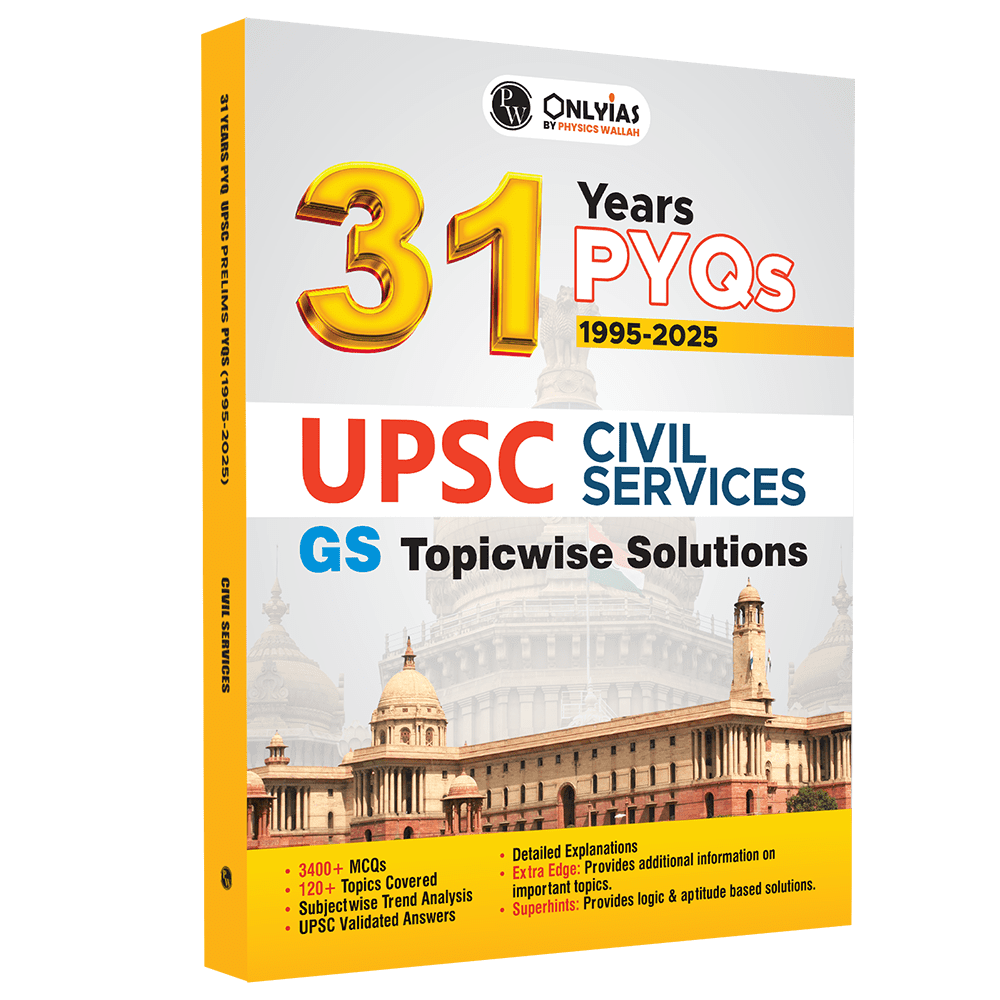
UPSC Previous Year Paper |
- |
- |
Which are the Advanced UPSC Syllabus 2026 Books for Mains?
Mains is all about depth and analytical writing. You can't rely on one-liners here. You'll need the UPSC syllabus 2026 books that provide detailed perspectives for descriptive answers. Using the "Prahaar" series from the PW Store helps in consolidating GS 1 to GS 4 content with current affairs integration. The Mains exam doesn't just ask what happened; it asks why it happened and what the future implications are.
For this, your UPSC 2026 preparation books must include resources that offer critical viewpoints. You should practice writing 150 to 250-word answers daily. This helps you translate the knowledge from the books onto the answer sheet. Many students read a lot but fail to write well. Don't fall into that trap. Combine your reading with active brainstorming. Think about every topic from political, economic, social, and legal angles.
|
Books |
Products Links |
| UPSC Prahaar Mains Wallah (Static + Current) Combo Set of 15 Books | Link |
| PW UPSC Mains Q & A Bank General Studies Papers Combo Set of 4 Books | Link |
| UPSC PYQ+ General Studies Book | Link |
How to Study The UPSC Prelims 2026 Books : Strategy
Don't just collect books like a librarian. Success comes from limited resources and maximum revision. Choose a "One Subject, One Book" policy. For example, stick to one source for Economy, like Ramesh Singh or Nitin Singhania, rather than juggling both. We recommend using the UPSC prelims 2026 books that include Previous Year Questions (PYQs). At the end of the day, your ability to eliminate wrong options is more important than knowing every single right answer.
You should aim to finish your first reading of the entire UPSC 2026 books list by late 2025. This gives you six months for pure revision and mock tests. If you are still reading new books in March 2026, you'll be in trouble. Use the "Active Recall" method. Close the book after reading a chapter and try to explain the concept to an imaginary student. If you can explain it simply, you've mastered it.
Analyze PYQs: Spend 30 minutes daily looking at the last 10 years of papers.
Current Affairs: Supplement books with newspapers like The Hindu or Indian Express.
Mock Tests: Use the UPSC Wallah Q&A Bank to practice 5,000+ MCQs.
Visual Learning: Use mind maps for Geography and History to remember timelines.
Check Out: UPSC Revision Books
Subject-Wise UPSC 2026 Preparation Books Summary
Selecting the right UPSC 2026 books is half the battle won. Below is a quick checklist of the most reliable titles to keep on your study desk. You don't need fifty different books. You need five or six great ones that you have read ten times each. Mastery over the basics will always beat a superficial understanding of advanced topics. Your preparation should be like a marathon, not a sprint. Pace yourself well so you don't burn out by the time the 2026 notification arrives.
History and Culture
-
Ancient India by R.S. Sharma.
-
Medieval India by Satish Chandra.
-
India’s Struggle for Independence by Bipan Chandra.
Geography and Environment
-
Certificate Physical and Human Geography by G.C. Leong.
-
Oxford School Atlas for mapping practice.
-
Environment by Ravi P. Agrahari for Science & Tech links.
Economy and Polity
-
Indian Economy by Ramesh Singh or Nitin Singhania.
-
Economic Survey and Union Budget (Latest Editions).
-
Bare Act for the Constitution of India.
Read More: How Many Attempts for UPSC? Total Attempts for All Category
UPSC 2026 Booklist FAQs
1. Can I clear UPSC 2026 using only NCERTs?
No, NCERTs build your base, but you need standard reference books like M. Laxmikanth for depth. NCERTs provide the story, while reference books provide the technical details required for the exam.
2. Is the PW OnlyIAS Officer's Kit enough for 2026?
Yes, it's a comprehensive set of 22 books covering GS and CSAT for both stages. It is designed to save you from the hassle of buying multiple separate books.
3. Which book is good for UPSC 2026 CSAT?
Quantitative Aptitude by R.S. Aggarwal and PW’s CSAT-specific modules are highly recommended. Since CSAT is getting tougher, daily practice is necessary.
4. Should I buy new books for 2026 or use old ones?
Use updated editions for subjects like Economy, Environment, and Polity where data changes frequently. For History and Geography, older editions are usually fine.
5. How many times should I revise the UPSC 2026 books?
Follow the 7/5/3 rule: try to revise every major topic at least seven times before the exam. Frequent revision ensures the information moves from short-term to long-term memory.