UPSC 32 Years PYQs: How to Check Your Preparation Level

Solving 32 years of UPSC PYQ papers helps candidates evaluate their current readiness, identify high-yield syllabus areas, and master trend changes from 1995 to 2026. Systematic practice with topic-wise questions builds speed, improves option-elimination accuracy, and highlights individual knowledge gaps effectively.
Why Is UPSC PYQ Important for UPSC Prelims Preparation?
Solving UPSC PYQs gives you a clear understanding of how the examiner frames questions and which topics are given more importance. Unlike some mock tests that may not fully match the actual exam level, authentic past papers show the real UPSC question pattern and difficulty.
Practicing papers from 1995 to 2026 helps you understand changing question trends, identify high-yield topics, improve speed and accuracy, and develop strong option-elimination skills. Regular PYQ practice also helps you reduce guesswork, avoid common mistakes, and lower the risk of losing marks due to negative marking in the actual exam.
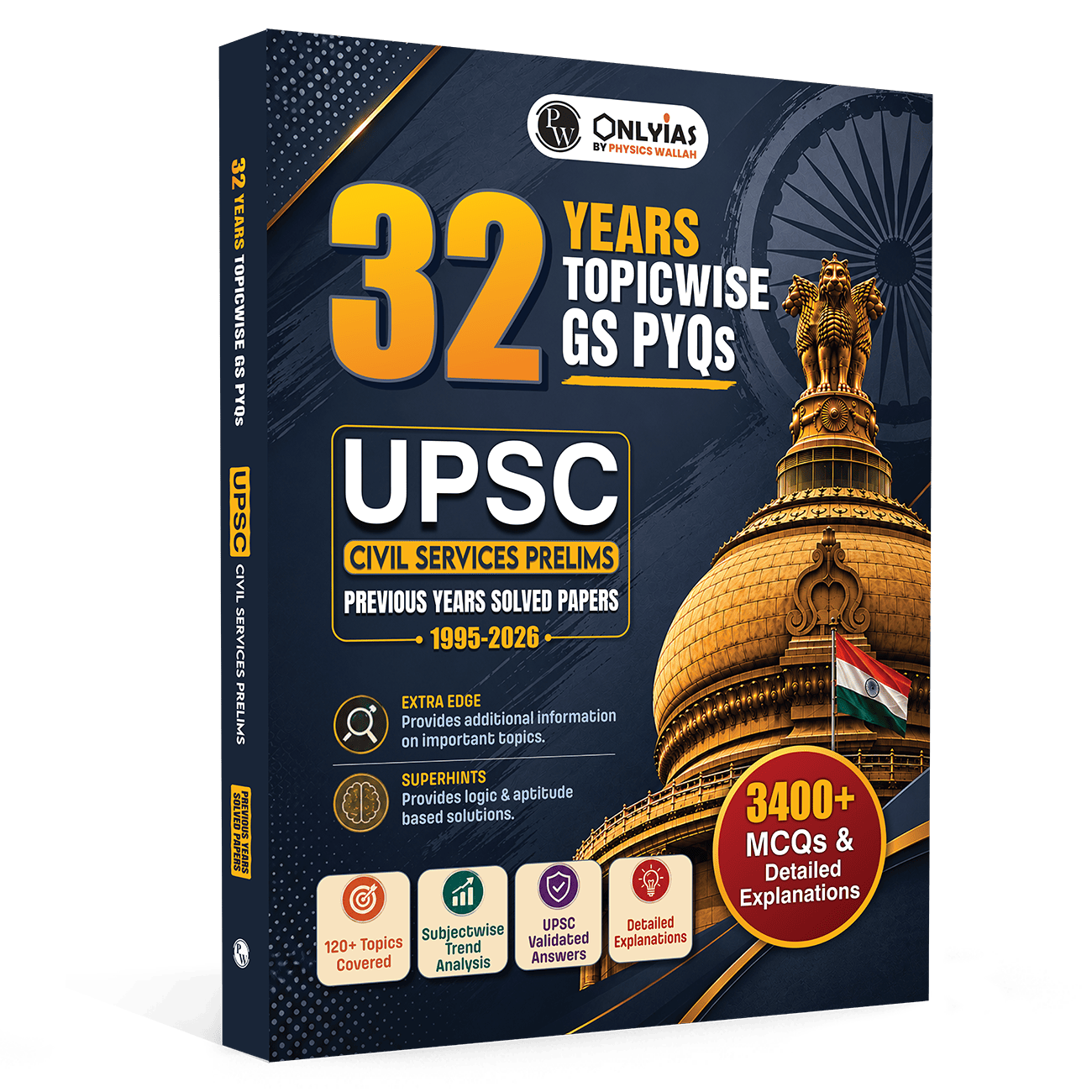
Features of UPSC PYQ Book
Use past UPSC questions to understand the exam better and improve your preparation step by step. With topic-wise questions, clear solutions, and trend analysis, this UPSC books makes practice and revision more useful.
-
32 Years of UPSC Prelims Papers (1995–2026): Study a long collection of UPSC Prelims papers from 1995 to 2026. It covers both General Studies Paper 1 and CSAT Aptitude Paper 2, giving you plenty of real exam questions to practice.
-
3400+ Authentic Solved Questions: Work through more than 3400 previous year MCQs with solutions. These questions help you test your knowledge and understand the level and style of the actual UPSC exam.
-
Questions from 120+ Topics: Find questions arranged by topic for easier preparation. Major areas such as Polity, History, Geography, Economy, Environment, Science & Technology, and Current Affairs are included.
-
Option-Wise Answer Analysis: Learn more than just the final answer. The explanations cover the options and show how wrong choices can be identified, helping you use the elimination method with greater confidence.
-
Past Paper Trend Analysis: Review previous questions to find commonly tested subjects, repeated ideas, important themes, and changes in UPSC's question pattern. This can help you make smarter study choices.
-
Special Tips and Superhints: Get additional exam tips, useful insights, and Superhints that can help you approach confusing questions, avoid common mistakes, and improve answer selection.
-
Made for UPSC 2027: The material is prepared with the latest UPSC Prelims syllabus and pattern in mind. It helps you use previous year questions as a strong base for your UPSC 2027 preparation.
-
Easy Visual Learning: Maps, diagrams, infographics, and other visual resources are included to make important concepts easier to learn. They can also make revision faster and more effective.
-
Supports Prelims and Mains: The concepts studied through PYQs can be useful beyond the Prelims exam. Strong subject understanding can also help you build a better base for UPSC Mains answer preparation.
-
Focused Study Approach: Use topic-wise data and past question trends to identify areas that need more attention. This helps you set priorities, manage study time, and follow a more focused preparation strategy.
How Does UPSC PYQ Help Track Your Preparation Progress?
Evaluating your knowledge requires a structured process rather than random question solving. A disciplined routine ensures that every practice session delivers measurable progress in your UPSC prelims preparation.
1. Attempt Questions Topic by Topic
Instead of solving complete mixed papers at the beginning, focus on one specific chapter or subject at a time. After completing a subject like Polity or Economy, solve all corresponding past questions from the last 32 years. This highlights whether your basic foundation in that subject is strong enough.
2. Track Your Unassisted Accuracy Rate
Do not check answer keys immediately after reading a question. Solve a block of 25 to 50 questions independently before verifying the answers. Record your scores systematically:
-
High Accuracy (above 75%): Strong conceptual clarity; minimum revision needed.
-
Moderate Accuracy (50%–75%): Basic understanding present; requires deeper revision of core facts.
-
Low Accuracy (below 50%): Major conceptual gaps; requires re-reading fundamental textbooks.
3. Analyze Your Errors Thoroughly
Dividing your mistakes into distinct categories prevents you from repeating them during PYQ practice:
-
Knowledge Gaps: Questions you could not answer because you had not studied the topic.
-
Silly Mistakes: Errors caused by misreading keywords such as "Incorrect", "Not", or "Only".
-
Conceptual Confusion: Questions where you eliminated two options but picked the wrong final answer.
Why Practice 32 Years of UPSC PYQ Instead of 10 Years?
Focusing only on recent UPSC previous year papers gives an incomplete picture of the examination pattern. Extending your practice back to 1995 offers significant advantages for comprehensive preparation.
|
Feature / Aspect |
10 Years Practice (2017–2026) |
32 Years Practice (1995–2026) |
|
Total Question Count |
Around 1,000 Questions |
Over 3,400+ MCQs |
|
Syllabus Coverage |
Covers recent trends only |
Covers core static themes comprehensively |
|
Trend Shift Insight |
Limited view of changing formats |
Full perspective on evolving question styles |
|
Repetition Advantage |
Misses older recurring themes |
Captures long-term recurring concepts |
|
Concept Depth |
Tests surface-level application |
Tests deep conceptual foundations |
Examining 32 years of questions provides exposure to more than 3,400 high-quality multiple-choice questions. This broader dataset ensures you encounter almost every possible variation of static General Studies concepts.
Also Check - UPSC Quarterly Current Affairs Magazine
How to Use UPSC PYQ for Effective Revision?
Adding past papers to your daily study routine turns passive reading into active practice. An authentic UPSC previous year questions compilation helps you check what you remember, find weak areas, and understand how concepts are tested in the actual exam. Use the following steps to make your revision more effective:
-
Pre-Revision Diagnostic Test: Before starting a new subject or topic, attempt around 20 past questions from that area. Check your score and note the topics where you make mistakes. This gives you a clear idea of your current level before revision.
-
Post-Reading Verification: After studying a standard chapter, solve the related previous-year questions immediately. This helps you check whether you can apply what you have learned and makes important facts and concepts easier to remember.
-
Build Personal Notes from Explanations: Read the detailed explanations after solving each question. Pick out important facts, concepts, repeated themes, and common mistakes, and add them to your short revision notes. These notes can be useful during quick revision before the exam.
-
Simulate Real Exam Timing: Set a timer for 120 minutes and attempt a complete 100-question paper in one sitting. Follow the actual exam conditions as closely as possible. This practice helps improve concentration, time management, question selection, and mental stamina.
Read More: List of National Parks in India
UPSC PYQ FAQs
How many years of UPSC PYQ should I solve for Prelims?
Aspirants should ideally solve at least 30 to 32 years of past papers (1995–2026). This range offers a repository of over 3,400 questions, ensuring complete coverage of static themes and changing exam patterns.
Can solving UPSC PYQ replace mock test series?
While past papers are essential for understanding question standards and concept depth, combining them with full-length mock tests ensures complete time management and coverage of current affairs.
Why is topic-wise UPSC PYQ practice better than year-wise practice?
Topicwise practice allows you to evaluate your preparation immediately after completing a specific subject or chapter. Year-wise practice is best used closer to the exam for full-length timing simulations.
Are questions repeated in UPSC GS PYQs?
Direct questions are rarely repeated word-for-word, but underlying concepts, themes, and options are frequently reused across different years in General Studies.
How does analyzing UPSC previous year questions help reduce negative marking?
Analyzing past papers helps you spot tricky phrasing, identify distractor options, and refine logical elimination methods, which reduces risky guesswork on exam day.