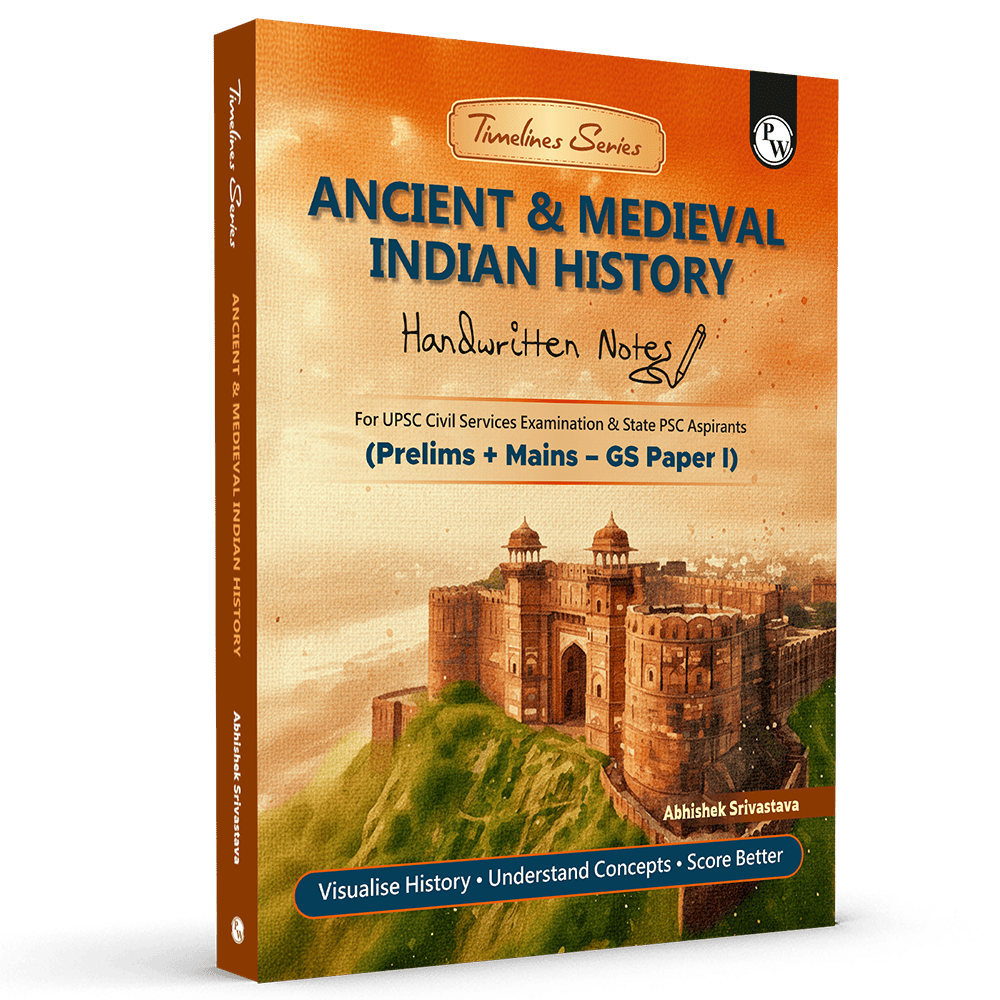
UPSC Ancient & Medieval History Handwritten Notes for UPSC Preparation

When studying for the Civil Services Examination, it can feel like you're swimming through an endless sea of knowledge, especially when you have to cope with India's diverse history. This is where UPSC ancient & medieval history handwritten notes become an essential tool. They assist you in remembering what you've read by focusing on high-yield themes and providing stories with pictures.
Check Out: UPSC CSE Books
Importance of UPSC Ancient & Medieval History Handwritten Notes
Textbooks are good for the basics, but they don't have the "concise" factor that's needed for competitive exams. UPSC ancient & medieval history handwritten notes solve this problem by converting hundreds of pages into action points. Old-fashioned books tend to have long, dense blocks of text.
In contrast, ancient and medieval history notes for UPSC are designed keeping in mind the mindset of the aspirant. This focus saves hundreds of hours in the final months of preparation. History is essentially a story of human evolution, governance, and culture. When you use UPSC history handwritten notes, you see these stories mapped out. Diagrams of the Harappan town planning or the administrative structure of the Delhi Sultanate make the data stick.
-
Flowcharts: Help in understanding the rise and fall of dynasties.
-
Maps: Crucial for identifying the extent of the Maurya or Mughal Empires.
-
Comparative Tables: Useful for distinguishing between different styles of architecture like Nagara and Dravida.
Features of UPSC History Handwritten Notes
Not all notes are created equal. The right UPSC ancient & medieval history handwritten notes are those that align perfectly with the latest UPSC syllabus. They should cover everything from the Stone Age to the decline of the Mughal Empire while maintaining a focus on "Art and Culture," a segment that has seen a surge in questions recently.
Good notes act as a bridge between advanced reference books. They should ideally include snippets from various sources, curated into a single, easy-to-read document. This ensures that you don't have to juggle five different books for a single topic.
Structured Categorisation of Periods
A major benefit of using UPSC history study material in a handwritten format is the logical division of time. The notes usually break down the syllabus into:
-
Prehistoric Era: Focus on site locations and lifestyle.
-
Vedic Age: Transition from Early to Later Vedic periods.
-
Religious Movements: Detailed insights into Buddhism and Jainism.
-
The Sultanate and Mughal Periods: Administrative and land revenue reforms.
Focus on Art and Culture
The UPSC has shifted its focus towards the cultural aspects of history. Professional UPSC history handwritten notes give extra weight to temple architecture, classical dances, and literary works from the medieval era. This specific focus ensures you are prepared for the most challenging questions in the Prelims.
Benefits of UPSC History Handwritten Notes
To get the most out of your UPSC ancient & medieval history handwritten notes, you must use them strategically. Do not replace your basic reading entirely; instead, use the notes as your primary source for active recall. After reading a chapter from a standard book, immediately refer to the handwritten notes to see how that information is condensed.
Consistency is key. Allocate specific days in your week solely for revising these notes. Because they are visual and concise, you won't feel the "burnout" that usually comes with reading heavy history texts of ancient and medieval history notes for UPSC.
Important Topics to Cover
Make sure your UPSC history study material includes these important areas:
-
Indus Valley Civilisation: Important sites and finds.
-
Gupta Empire. The Golden Age of India. Science and literature.
-
South Indian Dynasties: Cholas, Pandyas and Cheras (very important for Mains).
-
Key Saints and Philosophical Contributions of Bhakti and Sufi Movements
Check Out: UPSC Revision Books
How to Use UPSC History Notes for Revision
Revision is the backbone of UPSC success. If you cannot revise a subject at least three times, the chances of recall in the exam hall diminish. Using UPSC history short notes for revision allows you to scan through the entire ancient and medieval syllabus in just a few days.
Short notes strip away the fluff. Instead of a three-page essay, you get a bulleted list of his edicts and their locations. This brevity is the secret to staying ahead of the competition.
Handwritten notes often incorporate mnemonics to remember the order of kings or specific administrative terms like 'Iqtadari' or 'Mansabdari'. These small memory hacks are rarely found in standard textbooks but are plentiful in high-quality UPSC ancient & medieval history handwritten notes.
-
Colour Coding: Distinguishing between political history and socio-economic changes.
-
Quick Summaries: At the end of each chapter, for a 2-minute wrap-up.
-
Annotated Margins: Space for adding current affairs related to historical sites.
How to Score in GS Paper I
The General Studies Paper I in the Prelims and the Mains requires a deep yet broad understanding of history. By utilising UPSC ancient & medieval history handwritten notes, you develop the ability to write structured answers. The bullet-point format of the notes naturally trains your brain to present answers in a way that UPSC examiners prefer.
When you see a question about the impact of the Vijayanagara Empire on Indian culture, your brain will recall the structured layout from your UPSC history handwritten notes, making the actual writing process much smoother and faster.
Check Out: UPSC Previous Year Papers
Why Use UPSC History Handwritten Notes?
Even though history is about the past, the UPSC history short notes for revision tell us about the new archaeological discoveries or UNESCO world heritage listings, making it dynamic. High-quality handwritten notes leave room for these updates. They provide a solid framework where you can plug in new information easily, ensuring your UPSC ancient & medieval history handwritten notes remain relevant.
Read More: UPSC Prelims History Questions for 2026 Preparation
UPSC History Handwritten Notes FAQs
Q1. Are these notes sufficient for the UPSC Mains History optional?
While UPSC history study material in handwritten form is excellent for General Studies, Optional subjects require deeper academic analysis. However, they serve as a perfect foundation for building your optional answers.
Q2. How do handwritten notes help in solving Prelims MCQs?
The visual cues and maps in UPSC history handwritten notes help in eliminating wrong options. When you remember the exact location of a kingdom or a specific term's meaning through a flowchart, you make fewer errors.
Q3. Can I rely solely on short notes for the Art and Culture section?
Yes, UPSC history short notes for revision that include sketches of temple styles and lists of literary works are often more effective than thick books for the specific, fact-heavy questions asked in Art and Culture.
Q4. Do these notes cover the transition between the Ancient and Medieval periods?
Comprehensive ancient and medieval history notes for UPSC specifically cover the transitional phases, such as the rise of the Rajputs and the initial Arab invasions, which are often missed in brief summaries.
Q5. Why is the chronological order so important in these notes?
Chronology is the "skeleton" of history. Good UPSC ancient & medieval history handwritten notes maintain a strict timeline, helping you understand the cause-and-effect relationship between different historical events and eras.