UPSC Environment Question Bank: How to Practise Ecology & Biodiversity Questions?

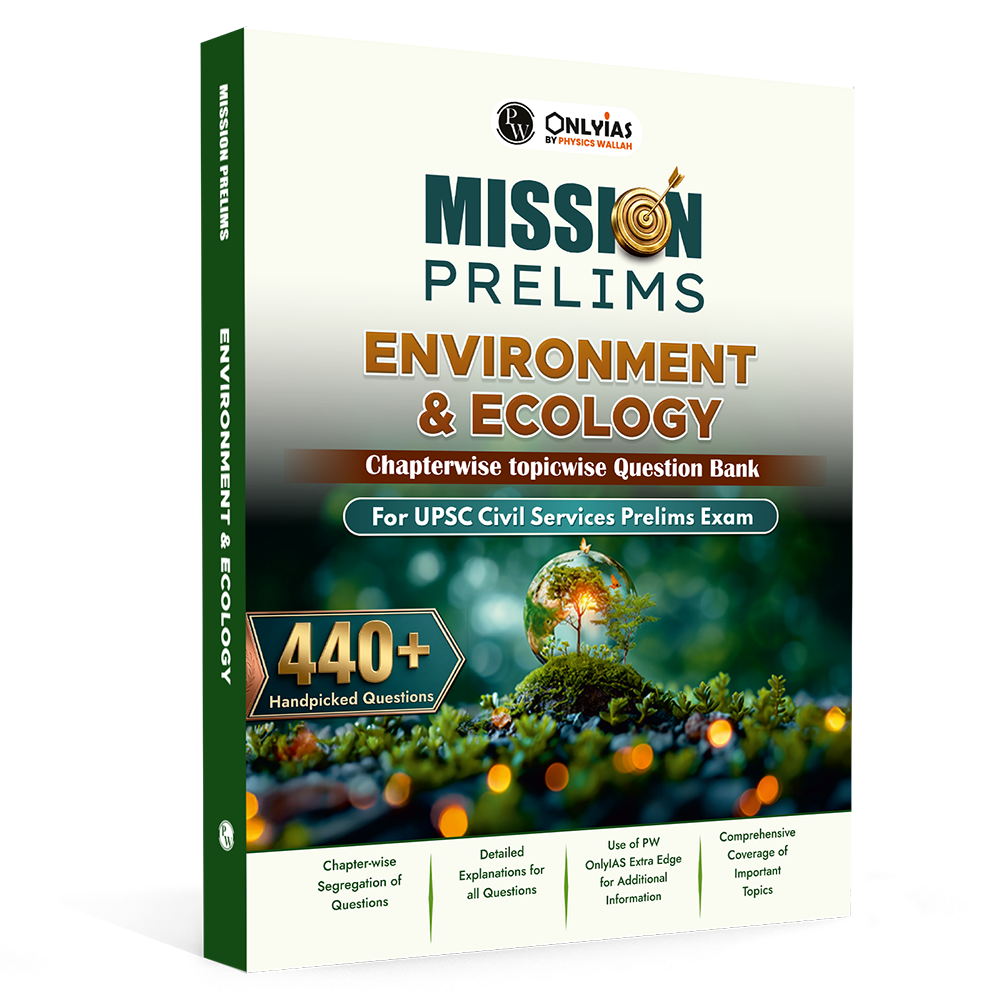
Preparing environment and ecology for the Civil Services Examination needs regular revision and question practice. A well-organised UPSC environment question bank can help candidates connect basic concepts with questions based on real environmental situations.
Environment topics include ecology, biodiversity, wildlife, pollution, conservation, climate change, and environmental laws.
Overview of UPSC Environment Question Bank
An UPSC environment question bank provides structured practice for important topics such as ecology, biodiversity, wildlife, pollution, climate change, conservation, and environmental laws. It helps aspirants test their understanding through different types of Prelims questions and identify topics that need more revision.
Chapter-wise and topic-wise questions can make preparation more organised, while detailed explanations help candidates understand why an answer is correct or incorrect. Regular practice also improves accuracy, question-solving speed, and familiarity with statement-based MCQs. An UPSC environment question bank can therefore be used along with standard books, UPSC previous year papers, and current affairs for more complete environment preparation.
Features of UPSC Environment Question Bank
Give your UPSC Prelims preparation more regular question-solving practice with a well-arranged collection of important questions. The combo supports topic-wise study, revision, and learning through detailed explanations.
-
5020+ Questions Across Key Areas: Practise 5020+ selected questions designed around the UPSC Prelims pattern and covering a wide range of important concepts.
-
Organised for Faster Revision: Chapter-wise and topic-wise questions make it easier to select one area, practise it, and return to it during revision.
-
Detailed Answer Support: Each question includes a clear explanation to help candidates understand the answer and resolve common doubts.
-
Only IAS Extra Edge: Additional exam-focused facts, useful information, and insights provide extra support during preparation.
-
Wide Topic Coverage: Covers major areas needed for UPSC Civil Services Preliminary Examination preparation.
-
Practice for Better Performance: Regular question solving gives aspirants an opportunity to work on speed, accuracy, concept clarity, and confidence.
-
One Complete Prelims Practice Set: The combo brings subject-wise questions, chapter-based revision, detailed solutions, and focused practice into one resource.
How to Utilize a UPSC Environment Question Bank for Static Concepts?
Static concepts provide the basic foundation for environment preparation. Before attempting a large number of MCQs, candidates should understand important ecological terms and processes.
-
Deconstruct Core Concepts: Understand terms such as ecological succession, ecotones, food chains, food webs, and symbiotic relationships before solving questions.
-
Analyse Previous Trends: Review previous questions to understand how basic environmental concepts can be tested through different types of statements.
-
Identify Repeated Themes: Give regular attention to nutrient cycles, ecosystems, biomes, pollution, ecological pyramids, and other core topics.
-
Revise Important Definitions: Keep short notes for terms that are often confused with each other.
Using an UPSC question bank after studying each topic makes revision more active. When a question is answered incorrectly, candidates should check the explanation and return to the related concept. This helps prevent the same mistake from being repeated.
How to do Ecology Practice in UPSC Environment Question Bank?
Ecology covers relationships between organisms and their surroundings. Candidates need to understand how populations, communities, ecosystems, and natural processes work together.
-
Focus on Functional Aspects: Practise energy flow, food chains, food webs, ecological pyramids, productivity, and nutrient cycles.
-
Understand Species Interactions: Revise predation, competition, mutualism, commensalism, and parasitism.
-
Evaluate Adaptations: Study how plants and animals adapt to different environmental conditions.
-
Practise Time-Bound Questions: Timed practice can help candidates become more comfortable with multi-statement questions.
Solving UPSC ecology questions can help candidates move beyond simple memorisation. After each practice set, they should review both correct and incorrect answers. A correct answer based on a guess can also be marked for later revision.
How to do Biodiversity Practice in UPSC Environment Question Bank?
Biodiversity preparation includes species, habitats, protected areas, conservation methods, and international agreements. Questions may require candidates to connect species with their locations and conservation status.
-
Map Protected Areas: Locate national parks, wildlife sanctuaries, conservation reserves, and biosphere reserves on a map.
-
Track IUCN Status: Understand the main IUCN categories and revise the status of important species when required.
-
Connect Conventions: Learn the basic purpose of agreements and conventions such as CITES, CMS, and CBD.
-
Study Endemic Species: Understand the difference between endemic, native, exotic, and invasive species.
-
Connect Species With Habitats: Revise the regions and ecosystems associated with important plants and animals.
Practising UPSC biodiversity questions and reviewing UPSC PYQs can help candidates improve their ability to identify important terms in statements. Map-based revision can also make species and protected-area information easier to remember.
How to do Accuracy Practice With UPSC Environment Question Bank?
Multiple-choice questions require both knowledge and careful reading. Candidates should not rush through statements, especially when a question contains several conditions or similar options.
-
Read the Question Carefully: Pay attention to words such as not correct, always, only, and except.
-
Use Elimination Carefully: Remove options that clearly conflict with the basic concept, but do not reject an option only because it contains a strong word.
-
Compare Every Statement: In multi-statement questions, check each statement separately before selecting an option.
-
Review Explanations: Read the explanation even after getting an answer correct so that you understand the reasoning.
-
Maintain a Mistake List: Record concepts that repeatedly cause confusion and revise them regularly.
Regular practice with UPSC environment mcqs can make candidates more familiar with different question formats. Reviewing mistakes after every practice session is as important as attempting the questions themselves.
Check Out: UPSC Revision Books
How to do Prelims Preparation With UPSC Environment Question Bank?
Environment preparation should include both static concepts and relevant current developments. New environmental policies, conservation programmes, reports, species discoveries, and changes in environmental rules can add current context to static topics.
-
Integrate Current Updates: Connect recent environmental developments with the basic concepts already studied.
-
Utilize Structured Compilations: Use chapter-wise study material and question sets to revise topics in an organised way.
-
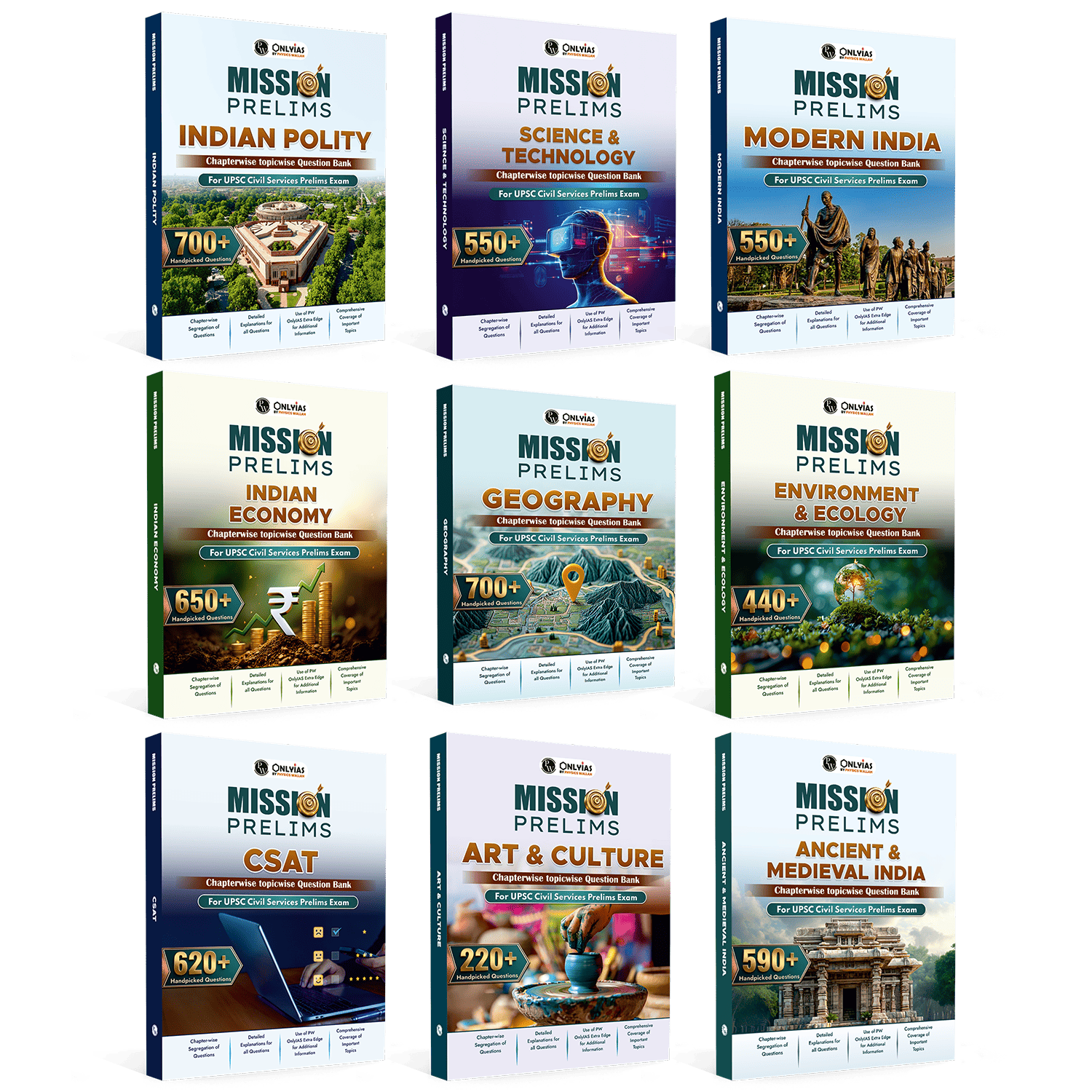
Evaluate Comprehensive Sets: Resources such as Mission Prelims combo sets can bring different subjects and practice questions together for easier revision.
-
Revise Environmental Laws: Understand the basic purpose of important environmental and wildlife protection laws.
-
Follow Reliable Sources: Use official government and international sources when checking current environmental information.
Using an UPSC prelims environment resource along with standard books and current-affairs preparation can provide a more complete practice routine. Candidates should regularly update their notes when important environmental information changes.
Tips for Using a UPSC Environment Question Bank
A question bank works best when it is used as part of a complete study plan. Candidates should avoid treating MCQs as a simple checklist.
First, study the topic from a reliable source. Next, attempt questions without looking at the answers. After completing the set, check the explanations and mark questions that were difficult or confusing. Finally, revise those concepts and attempt the questions again after some time.
This method helps candidates use a UPSC environment question bank for learning, testing, and revision instead of only counting the number of questions completed.
Read More: How to Prepare for UPSC: Subject-Wise Preparation Strategy
UPSC Environment Question Bank FAQs
What is the best way to use an UPSC environment question bank?
Start by studying a topic from standard sources and then solve related questions chapter-wise. Check the explanation for every wrong or doubtful answer. Revising these mistakes regularly can improve understanding and retention.
How many UPSC environment questions should I practise daily?
There is no fixed number for every candidate. Around 25 to 30 UPSC environment questions can be a useful daily target if you also spend enough time checking explanations and revising mistakes. Candidates can adjust the number according to their overall study schedule.
Are static topics enough to solve UPSC ecology questions?
Static concepts provide the foundation, but environment questions can also involve current developments. Candidates should connect concepts such as ecosystems, biodiversity, pollution, and conservation with relevant current affairs while practising UPSC ecology questions.
How can I memorise protected areas for UPSC biodiversity questions?
Use maps and revise protected areas in small groups instead of trying to memorise everything at once. Connect each location with important species, rivers, landscapes, or states where useful. Regular UPSC biodiversity questions practice can then help test how well the information has been remembered.
Where can I find reliable practice material for UPSC environment mcqs?
Candidates can use organised question banks, previous year papers, and reliable study materials that provide chapter-wise questions and detailed explanations. A good resource should make it easy to practise UPSC environment mcqs, review mistakes, and revise important environment and ecology concepts.