UPSC Geography Question Bank: Physical Geography Topics to Practise
Preparing for physical geography for UPSC Prelims requires regular practice along with clear concepts. A well-organized UPSC geography question bank can help aspirants revise important topics, test their understanding, and become familiar with different question patterns.
Physical geography can be difficult because it includes topics such as landforms, climate, oceans, soils, and natural processes. Practising questions after studying each topic helps turn reading into active revision.
Importance of UPSC Geography Question Bank
A geography question bank is important because it helps aspirants practise key geography topics, revise concepts, and understand how questions are asked in the UPSC Prelims. Regular practice can improve accuracy, speed, map-based understanding, and the ability to eliminate incorrect options.
It also helps students identify weak areas in physical geography, Indian geography, climatology, oceanography, and environmental topics. By solving questions and reviewing detailed explanations, aspirants can strengthen their concepts instead of depending only on reading. A well-structured geography question bank can support regular practice, quick revision, and better preparation for the Prelims examination.
Features of UPSC Geography Question Bank
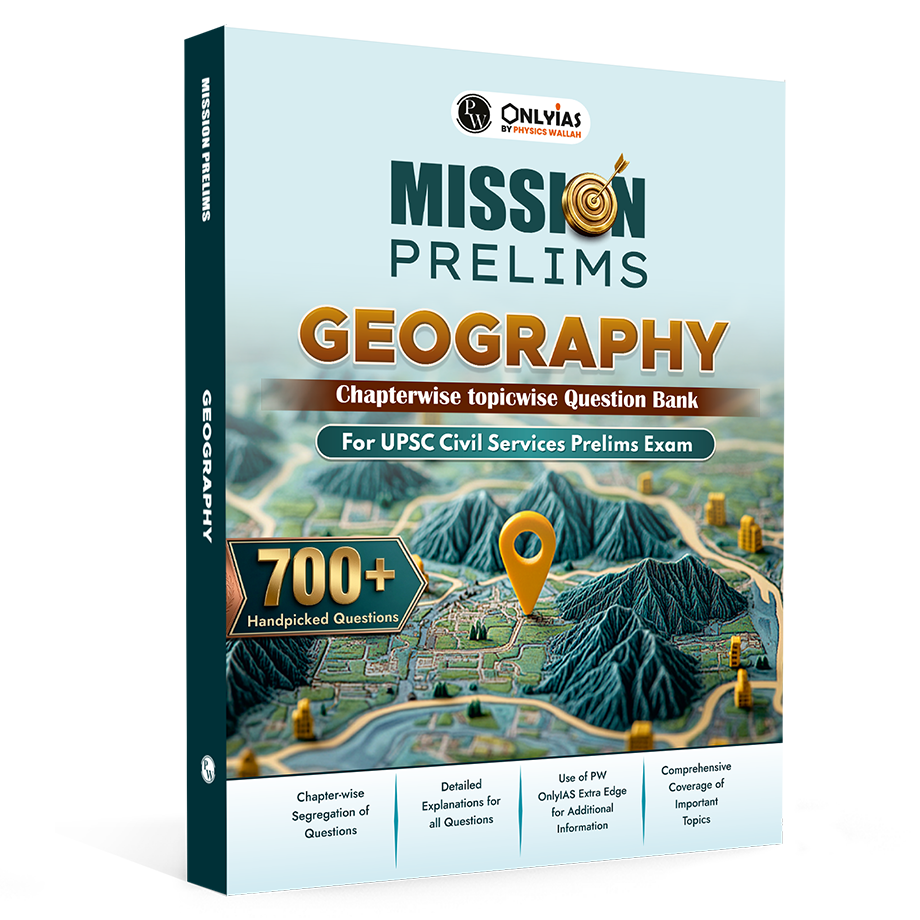
Make your UPSC Prelims practice more organised with a large collection of questions covering important subjects and topics. The UPSC question bank combines regular practice, explanations, and extra exam-focused information in one resource.
-
Study Topic by Topic: Questions are arranged chapter-wise and topic-wise so aspirants can focus on one area during practice and revision.
-
5020+ Questions to Practise: Includes 5020+ handpicked questions based on the UPSC Prelims exam pattern to provide regular practice across different question types.
-
Understand the Answer Logic: Detailed explanations help aspirants understand why an answer is correct and clear their doubts after every question.
-
Get the Only IAS Extra Edge: Additional facts, insights, and useful exam information provide extra support during regular preparation.
-
Covers Important Prelims Topics: Includes major areas needed for UPSC Civil Services Preliminary Examination preparation.
-
Improve Through Regular Practice: Repeated practice can help aspirants work on accuracy, speed, concept clarity, and confidence.
-
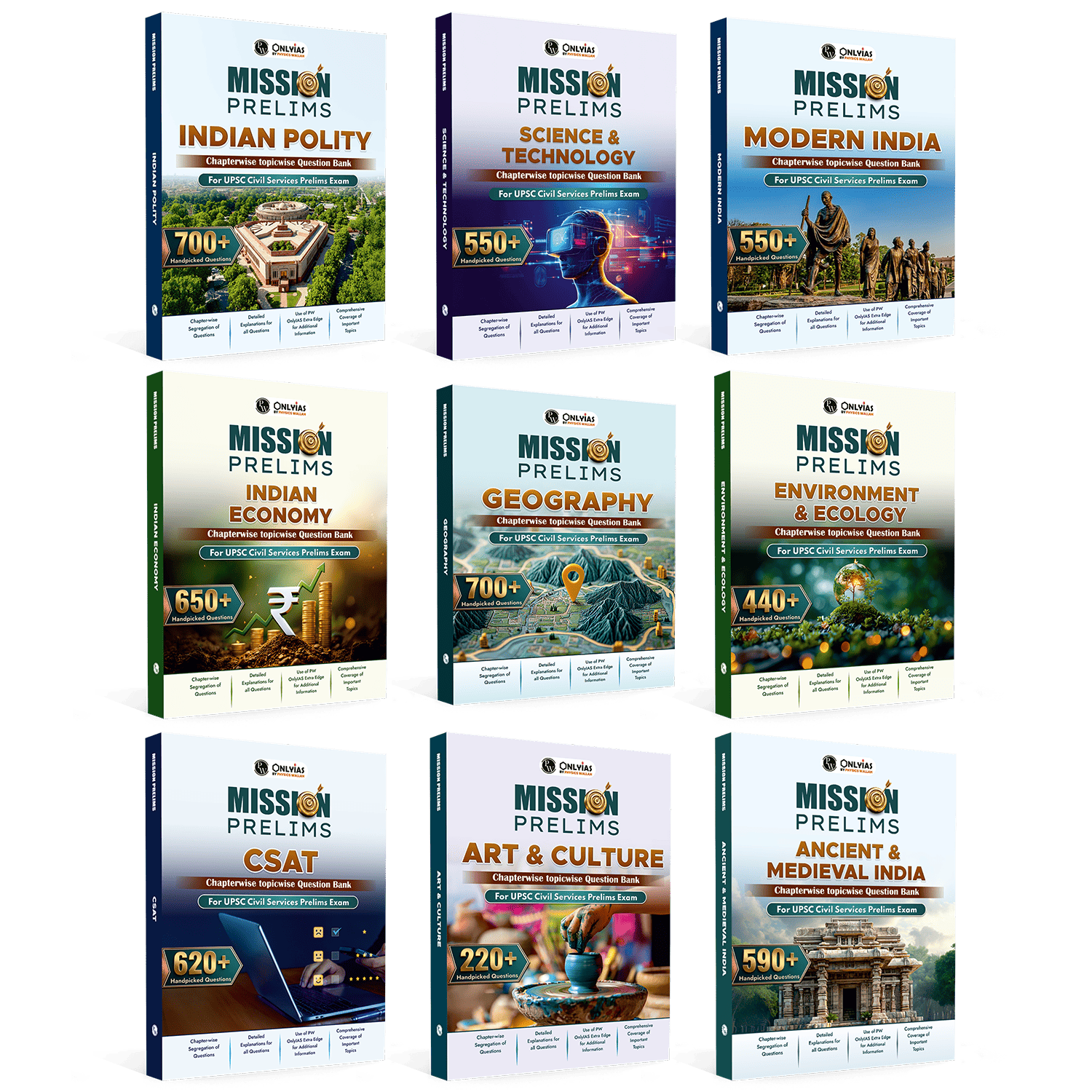
All-in-One Prelims Question Bank Combo: Brings subject-wise practice, chapter revision, detailed solutions, and exam-focused questions together in one resource.
What are the Geomorphology Topics in UPSC Geography Question Bank?
Geomorphology explains how the Earth's surface changes because of internal and external forces. It is an important area for physical geography preparation. Aspirants should practise questions that test both basic concepts and their application.
-
Plate Tectonics: Study convergent, divergent, and transform plate boundaries and the landforms linked to them.
-
Fluvial Landforms: Revise features such as meanders, oxbow lakes, floodplains, deltas, and peneplains.
-
Earthquakes: Understand seismic waves, epicentres, focus, and earthquake shadow zones.
-
Volcanism: Learn about different types of volcanoes, volcanic landforms, and areas where volcanic activity is common.
Practising UPSC physical geography questions after completing these topics can help aspirants understand how physical processes shape the Earth's surface. Detailed solutions can also help clear confusion between similar landforms and geological processes.
What are the Climatology Topics in UPSC Geography Question Bank?
Climatology covers the atmosphere, weather, winds, rainfall, and major climate systems. These topics require both conceptual understanding and regular revision.
-
Atmospheric Circulation: Study Hadley, Ferrel, and Polar cells along with major pressure belts.
-
Jet Streams: Understand the role of upper-air winds in weather and climate systems.
-
Monsoons: Revise the factors affecting the South-West and North-East monsoons.
-
Cyclones: Study the formation, movement, and features of tropical and temperate cyclones.
-
Climate Classification: Learn the basic features of Köppen's climate classification system.
Solving UPSC prelims geography questions on these areas helps aspirants practise concepts instead of only memorising facts. Regular practice with UPSC PYQ can also improve recall of pressure belts, winds, rainfall patterns, and climatic conditions.
What are the Oceanography Topics in UPSC Geography Question Bank?
Oceanography focuses on oceans, their physical features, movements, and related processes. Questions can test knowledge of ocean floors, currents, tides, temperature, and salinity.
-
Submarine Relief: Study continental shelves, continental slopes, deep-sea plains, and ocean trenches.
-
Ocean Currents: Learn the major warm and cold currents of the Atlantic, Pacific, and Indian Oceans.
-
Tides: Understand spring and neap tides and the role of the Sun and Moon.
-
Ocean Temperature: Revise the distribution of temperature and salinity at different depths.
-
Coral Reefs: Learn the basic conditions required for coral growth and the causes of coral bleaching.
Using a geography question bank for oceanography can help aspirants connect maps with physical processes. Practising UPSC physical geography questions also makes it easier to remember the location and direction of important ocean currents.
What are Biogeography and Soil Science in UPSC Geography Question Bank?
Biogeography connects physical geography with ecosystems, vegetation, soils, and biodiversity. These topics require regular revision because many questions involve comparisons between different regions.
-
Soil Formation: Study the role of climate, parent material, relief, organisms, and time in soil formation.
-
Major Biomes: Compare tropical forests, grasslands, deserts, taiga, and tundra.
-
Soil Types: Revise the main features and distribution of important soils in India.
-
Biogeochemical Cycles: Understand the movement of carbon, nitrogen, and phosphorus through natural systems.
Practising questions from these areas through a geography question bank can help aspirants remember important differences between soils and biomes. Regular UPSC geography MCQs can also show which concepts need more revision.
How to do Mapping and Spatial Analysis with a UPSC Geography Question Bank?
Map practice is an important part of geography preparation. Physical geography questions may ask about the location of mountains, rivers, seas, passes, deserts, and other important features.
-
Mountain Ranges: Locate major Himalayan ranges and important mountain systems around the world.
-
Mountain Passes: Revise important passes and their locations.
-
Drainage Systems: Trace major rivers, tributaries, and drainage basins.
-
World Physical Features: Practise the location of deserts, plateaus, seas, straits, trenches, and major rivers.
-
Important Locations: Connect physical features with countries, regions, and nearby geographical features.
Regular map-based UPSC prelims geography practice can improve spatial understanding. Using the UPSC Prelims Wallah Mission Prelims Combo Set along with geography practice questions and map work can also help aspirants remember locations more effectively than reading them alone.
How to do Physical Geography Practice With UPSC Geography Question Bank?
A good practice routine should combine topic revision, question solving, and mistake analysis. Simply solving a large number of questions is not enough if mistakes are not reviewed.
-
Complete the Concept First: Read the topic before attempting its questions.
-
Solve Without Looking at Answers: Try each question independently before checking the solution.
-
Mark Difficult Questions: Keep a separate list of questions that require another attempt.
-
Review Mistakes: Find out whether the mistake happened because of a concept gap, confusion, or careless reading.
-
Practise With a Timer: Timed practice can help improve speed and decision-making.
-
Revise Repeatedly: Revisit difficult topics and incorrect questions after a few days.
This approach makes a geography question bank more useful because every question becomes part of the learning process.
Read More: How to Study Current Affairs for UPSC Exam
UPSC Geography Question Bank FAQs
What is the best way to use a UPSC geography question bank?
Start with chapter-wise practice after completing the basic theory of a topic. Attempt the questions without checking the answers, then read the explanations and note your mistakes. This makes a geography question bank useful for both learning and revision.
How many UPSC physical geography questions should I solve daily?
There is no fixed number for every aspirant. A target of around 20 to 30 UPSC physical geography questions can provide regular practice if you also spend enough time reviewing the answers and mistakes.
Are NCERT textbooks enough for solving UPSC geography MCQs?
NCERT books are useful for building basic concepts, but practising UPSC geography MCQs from additional question banks can provide more exposure to different question styles and application-based problems.
Which topics should I practise most in UPSC prelims geography?
Give regular attention to geomorphology, climatology, oceanography, soils, biogeography, and map-based physical features. Instead of focusing only on the number of questions from a topic, understand the concepts and revise areas where you make repeated mistakes.
How do geography practice questions improve accuracy?
Regular geography practice questions help you identify weak concepts and common mistakes. Reviewing explanations after each practice session can improve understanding and help you make better choices when facing confusing options in the exam.