UPSC GS PYQ Book for All Government Exam Preparation

If you are preparing for government exams conducted by the UPSC, you likely feel the pressure of an ever-changing syllabus and unpredictable question patterns. Most students spend months reading textbooks only to feel lost when they see the actual exam paper.
The gap between "knowing the content" and "solving the question" is often the biggest hurdle to success. This is where a reliable UPSC GS PYQ resource becomes essential. Relying on the right PYQ allows you to understand the specific language and logic used by examiners.
By practicing with the UPSC PYQ book, you can bridge the gap between theory and application, ensuring that your hard work translates into a high score on exam day.
Check out: UPSC CSE Books
Overview of the UPSC GS PYQ
When you start your preparation for exams like NDA, CDS, CAPF, or EPFO, the sheer volume of General Studies content can be overwhelming. The PYQ collection serves as a compass, pointing you toward the topics that actually matter.
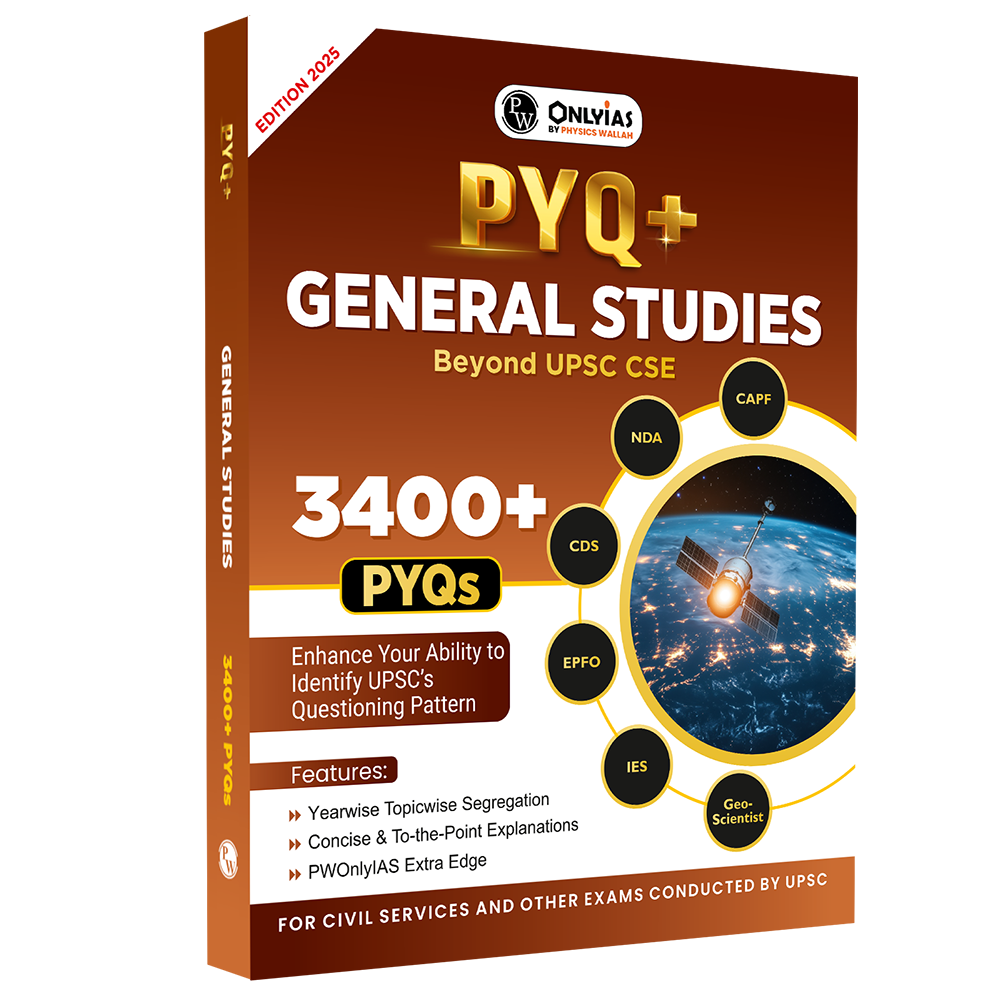
This specific PYQ book is curated to provide a structured approach to General Studies, moving beyond just the Civil Services Examination to cover a broad spectrum of UPSC-conducted tests.
The PYQ book is designed to provide clarity through high-quality explanations. Instead of just giving you the answer key, it breaks down why a specific option is correct and why others are not. This helps in building a solid foundation for UPSC GS paper 1 PYQ topics, ensuring you are prepared for any surprises the commission might throw at you.
Features of the UPSC GS PYQ Resource
Selecting UPSC GS PYQ book is a critical decision in your journey. You need a tool that simplifies your work rather than adding to the clutter. Here are the standout features of this PYQ guide:
-
Massive Question Bank: Contains over 3400+ previous year questions spanning from 2020 to 2025.
-
Diverse Exam Coverage: Includes questions from CAPF, CDS, NDA, EPFO, Geo-scientist, and IES exams.
-
Subject Integration: Comprehensive coverage of History, Art and Culture, Polity, Economy, Geography, Environment, Science and Tech, and International Relations.
-
Topic-Wise Segregation: Questions are organised by specific topics, making it easier to finish a chapter and immediately test your knowledge.
-
Detailed Explanations: Every question comes with a concise, to-the-point explanation to facilitate quick learning.
-
Visual Learning Aids: The use of maps, diagrams, and infographics helps you retain complex information much longer than plain text.
How to Improve Your Score Using UPSC GS PYQ
Simply owning a book is not enough; you must use it strategically to see a real jump in your mock test scores. Follow these steps to get the most out of your PYQ practice:
-
Read the Theory First: Complete a chapter from your standard textbook before touching the PYQ.
-
Solve Without Looking at Answers: Attempt at least 20-30 questions from that topic in the UPSC PYQ book without checking the solutions.
-
Analyse the Gaps: Mark the questions you got wrong. Is it because you didn’t know the facts, or did you misunderstand the concept?
-
Study the Explanations: Even for the questions you got right, read the explanation in the UPSC GS PYQ resource. You might find a shortcut or a related fact you didn’t know.
-
Reverse Learning: If you find a topic in the UPSC GS paper 1 PYQ that wasn't in your notes, go back and add it. This ensures your notes are "UPSC-ready."
When to Start Practising with UPSC GS PYQ
A common mistake is waiting until the very end of the syllabus to start the PYQ. This often leads to panic when you realise you’ve been studying the wrong way.
-
Early Phase: Use the UPSC PYQ to understand the weightage of different chapters. For instance, you might find that certain areas of Ancient History are asked more frequently than others.
-
Mid Phase: Use the book as a daily practice tool. After every study session, solve 10-15 related questions.
-
Final Phase: Use the UPSC prelims PYQ book for full-length revision. This helps you transition from topic-wise thinking to the mixed-bag approach required in the actual exam.
Benefits of Using UPSC GS PYQ
Using a dedicated PYQ manual changes the way you look at a syllabus. Instead of memorising every line of a book, you start identifying patterns. Here is how this PYQ book adds value to your daily routine:
Develops an Examiner’s Perspective
The more you engage with UPSC GS paper 1 PYQ, the more you begin to anticipate the questions. You start noticing how the UPSC often frames questions around current events or specific historical turning points. This "examiner’s mindset" is what differentiates toppers from average candidates.
Enhances Speed and Accuracy
Solving PYQ in a timed environment helps you manage your exam-day stress. Since the General Studies paper often has a tight timeline, being familiar with the question format through a PYQ resource allows you to process information faster and reduce silly mistakes.
Eliminates Conceptual Confusion
Many students struggle with "close options" where two answers seem correct. The UPSC prelims PYQ book provides option-wise explanations. By understanding the "why" behind each incorrect option, you clear up deep-seated misconceptions in subjects like Polity and Economy.
Study Plan for Using UPSC GS PYQ
To master the General Studies section, you need a balanced plan that integrates the PYQ into your weekly schedule.
|
Day |
Focus Area |
Activity with UPSC GS PYQ |
|
Monday |
Polity & Governance |
Solve 50 questions from the PYQ book. |
|
Tuesday |
Geography & Environment |
Focus on map-based questions in the GS PYQ. |
|
Wednesday |
History & Art/Culture |
Track chronological questions in PYQ. |
|
Thursday |
Economy & Science |
Review conceptual explanations in the UPSC PYQ book. |
|
Friday |
International Relations |
Check recent years' trends in PYQ. |
|
Saturday |
Weak Areas |
Re-attempt the questions you marked "wrong" previously. |
|
Sunday |
Full Revision |
Review the sections for all subjects. |
Using this table as a guide ensures that you cover every subject systematically while keeping the PYQ at the centre of your preparation.
Read More: UPSC Previous Year Question Papers PDF
UPSC GS PYQ Book FAQs
1. Is the UPSC GS PYQ book enough for all government exams?
While this book covers 3400+ questions from various UPSC exams, it is best used alongside standard textbooks. The PYQ helps you apply the knowledge you gain from your primary study materials.
2. How recent are the questions in the UPSC PYQ book?
The book is highly updated, featuring questions from the year 2020 up to 2025. This ensures you are practising with the most current exam trends and question formats found in the PYQ.
3. Can I use the UPSC prelims PYQ book for NDA and CDS preparation?
Absolutely. The PYQ book is designed for all exams conducted by UPSC, including NDA, CDS, and CAPF. The General Studies syllabus for these exams has significant overlap.
4. Why should I choose a topic-wise UPSC GS PYQ over a year-wise one?
Topic-wise UPSC GS PYQs allow for "vertical learning." You can master one subject at a time, ensuring that your foundation is strong before moving to the next topic in your PYQ book.