How the UPSC Indian Polity Mind Maps Book Connects Constitutional Articles with Real Governance
Civil services preparation requires more than memorising constitutional articles and provisions. Many aspirants understand individual concepts but struggle to connect them with current governance, administrative decisions, and real-world applications.
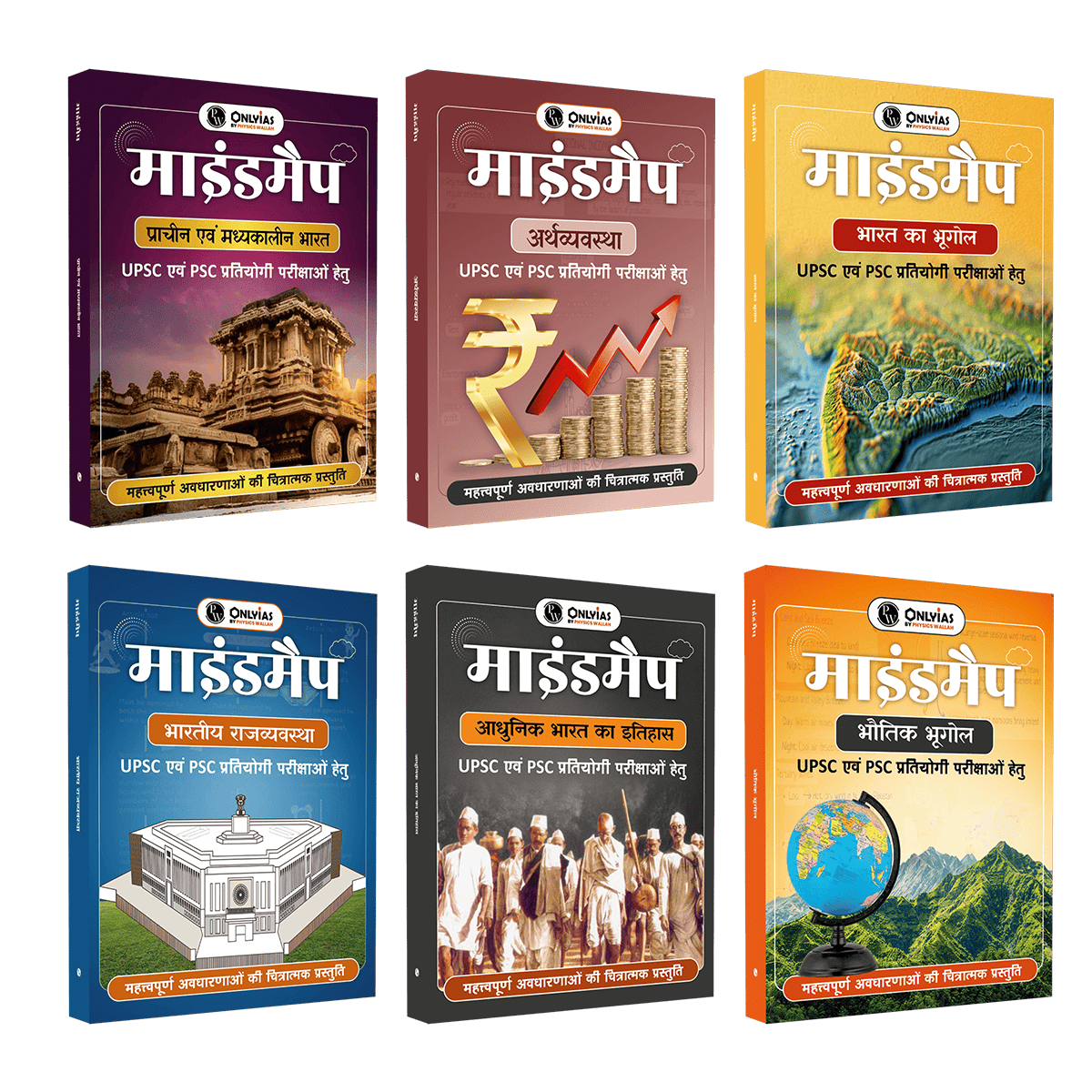
The UPSC Polity Mind Map helps solve this challenge by converting complex polity concepts into structured visual summaries. Instead of studying constitutional articles as isolated facts, aspirants can understand how different parts of the Indian political system work together.
Importance of UPSC Polity Mind Map
Indian Polity is one of the most important sections of the Civil Services Examination. However, the subject includes numerous articles, amendments, institutions, and legal concepts that can become difficult to revise without proper organisation.
The UPSC Polity Mind Map helps aspirants build a clear connection between constitutional theory and practical governance. It presents complex topics in a simplified visual format, allowing students to understand relationships between different institutions instead of memorising disconnected information.
-
Better Concept Retention: Visual representation makes constitutional provisions easier to remember for longer periods.
-
Quick Revision Support: Large topics can be revised through organised charts and interconnected diagrams.
-
Improved Answer Writing: Mind maps help students structure Mains answers with clear points and logical flow.
-
Exam-Focused Learning: Important concepts are presented in a way that matches UPSC Prelims and Mains requirements.
Features of UPSC Polity Mind Map
The UPSC Polity Mind Map is designed to simplify complicated constitutional concepts and present them in an easy-to-revise format. When used alongside concise UPSC Revision Books, it helps aspirants revise faster, retain interconnected concepts, and strengthen exam-oriented preparation.
Visual Concept Mapping
Instead of reading long paragraphs, aspirants can understand how constitutional bodies, rights, and government systems connect with each other through diagrams.
Article-Based Organisation
Important constitutional articles are arranged systematically, helping students remember their purpose and application.
Governance-Based Approach
The mind maps connect constitutional provisions with real administrative functions, making it easier to understand how laws influence governance.
Exam-Oriented Presentation
The content focuses on important concepts frequently tested in UPSC exams, making revision more targeted.
How to Use UPSC Polity Mind Map Effectively in Your Study Plan?
The UPSC Polity Mind Map works best when combined with regular concept learning and revision practices. Using it strategically can improve understanding and recall.
Step 1: Build Basic Understanding
Read the topic first to understand the background and meaning of constitutional concepts.
Step 2: Connect Concepts Using Mind Maps
Use the mind map to identify relationships between articles, institutions, and governance mechanisms.
Step 3: Add Current Examples
Connect important topics with recent government policies, legal developments, and administrative examples.
Step 4: Practise Active Recall
Try recreating the flow of the mind map without looking at the page. This strengthens memory and improves exam recall.
Benefits of UPSC Polity Mind Map for Prelims and Mains Preparation
The UPSC Polity Mind Map provides multiple advantages by making polity preparation more structured and revision-friendly.
Faster Revision
Instead of revisiting lengthy chapters repeatedly, aspirants can revise major concepts through concise visual summaries.
Better Understanding of Interconnections
Polity questions often test relationships between institutions. Mind maps help students understand how the Parliament, Executive, and Judiciary function together.
Improved Prelims Accuracy
Visual organisation helps aspirants quickly recall articles, constitutional provisions, and important facts while solving MCQs.
Stronger Mains Answers
The structured format helps students include constitutional references, examples, and logical explanations in their answers.
UPSC Polity Mind Map for Understanding Constitutional Articles and Governance
The Constitution works as an interconnected system where different institutions perform specific roles.
A structured polity mind map helps aspirants understand this relationship:
Constitution
↓
Executive → President, Prime Minister, Council of Ministers
Legislature → Parliament, Lok Sabha, Rajya Sabha
Judiciary → Supreme Court, High Courts, Subordinate Courts
This approach helps students understand how constitutional authority moves across different levels of governance.
For example, emergency provisions are not only about remembering articles but also understanding their impact on federal relations and administration.
Similarly, local governance provisions explain how constitutional amendments influence Panchayats and Municipal bodies.
Tips to Maximize UPSC Polity Mind Map Usage
Using the UPSC Polity Mind Map correctly can make revision more effective and help build stronger conceptual clarity. A structured UPSC Mind Map approach helps aspirants connect topics visually, improve recall speed, and make revision more exam-oriented.
-
Revise regularly: Use mind maps during daily or weekly revision cycles.
-
Highlight important connections: Mark frequently tested articles and concepts.
-
Combine with practice questions: Apply concepts by solving Prelims and Mains questions.
-
Create quick recall sessions: Spend a few minutes reviewing diagrams before tests.
-
Link static and current topics: Connect constitutional concepts with recent developments.
Mistakes to Avoid While Using UPSC Polity Mind Map
While the UPSC Polity Mind Map is a useful revision tool, using it incorrectly can reduce its effectiveness.
Using It Without Understanding Concepts
Mind maps should support learning, not replace basic conceptual understanding.
Memorising Without Connecting Ideas
Polity questions often test application. Focus on understanding relationships between concepts rather than only remembering facts.
Ignoring Current Developments
Constitutional topics often appear with real-world examples. Always connect static concepts with recent events.
Revising Only Once
Mind maps provide maximum benefit when revised multiple times throughout preparation.
Read More: Most Important Topics for UPSC Prelims and Mains Exam
UPSC Polity Mind Map FAQs
1. How does UPSC Polity Mind Map help in UPSC preparation?
The UPSC Polity Mind Map simplifies complex constitutional topics through visual summaries, helping aspirants improve retention, revision speed, and conceptual clarity.
2. Can UPSC Polity Mind Map replace detailed polity study material?
No, it works as a revision and concept-organising tool. Aspirants should use it along with their regular study resources for complete preparation.
3. Is the UPSC Polity Mind Map useful for both Prelims and Mains?
Yes, it helps Prelims preparation through quick factual recall and supports Mains answer writing by improving concept organization.
4. How does a polity mind map improve revision?
It condenses large topics into structured diagrams, making it easier to revise constitutional articles, institutions, and governance concepts quickly.
5. Can beginners use UPSC Polity Mind Map?
Yes, beginners can use it after understanding basic concepts to create a clear foundation and improve their learning process.