UPSC Polity Question Bank: 10 Topics You Should Practise Before Prelims
UPSC Civil Services Prelims includes questions on Indian Polity and Governance, covering areas such as the Constitution, political system, Panchayati Raj, public policy, and rights issues.
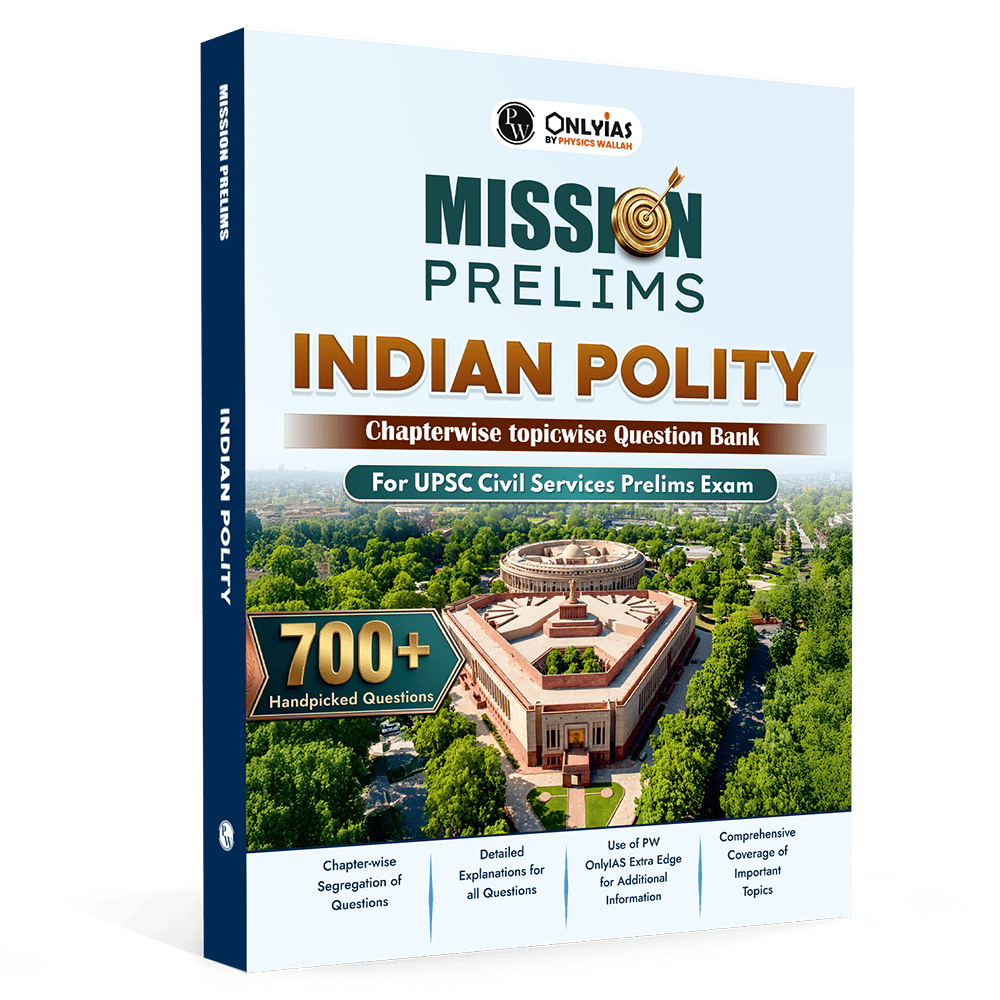
Reading a standard polity book is important, but practice is also needed to understand how concepts are tested through objective questions. A dedicated UPSC polity question bank can help aspirants revise important areas, test their understanding, and identify topics that need more study.
Why Is a UPSC Polity Question Bank Important for Prelims?
A UPSC polity question bank can help aspirants practise important Constitution and governance topics in a structured way. Regular practice allows students to test their understanding of Fundamental Rights, Parliament, judiciary, constitutional bodies, federalism, local government, and other important areas.
Solving questions also helps improve accuracy, recall, and option-elimination skills. By reviewing wrong answers, aspirants can identify weak topics and focus on areas that need more revision. A question bank can therefore support regular practice alongside standard books, notes, and previous year questions.
Features of UPSC Polity Question Bank
Prepare for UPSC Prelims with a structured question bank that brings focused practice, detailed solutions, and useful exam insights together. It helps aspirants revise important topics and practise questions in an organised way.
-
Chapter and Topic-Based Practice: Questions are arranged by chapters and topics, making it easier to study one area at a time and revise without confusion.
-
5020+ Selected Questions: Practise 5020+ questions prepared around the UPSC Prelims pattern to understand common question types and improve speed.
-
Clear Solutions for Every Question: Detailed explanations help you understand why an answer is correct instead of simply memorising the option.
-
Only IAS Extra Edge: Get additional exam-focused information, useful facts, and extra insights that can support deeper preparation.
-
Covers Key Prelims Areas: The question bank includes important topics needed for UPSC Civil Services Preliminary Examination preparation.
-
Practice With an Exam Focus: Regular question solving helps improve accuracy, speed, understanding, and confidence before the actual examination.
-
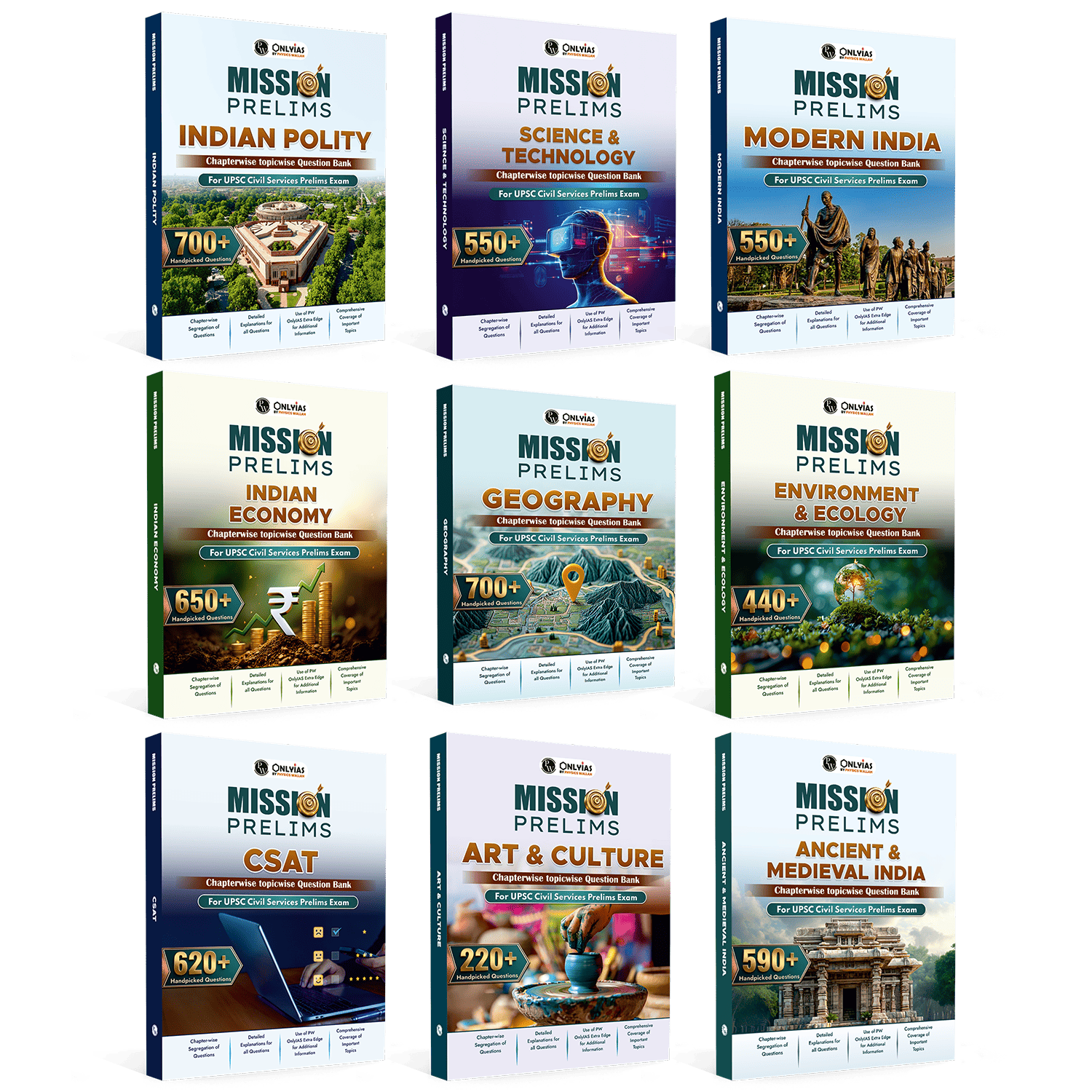
Complete Prelims Practice Combo: A useful UPSC Prelims book set for subject-wise practice, topic revision, question solving, and learning through detailed explanations.
What are the 10 Most Important Topics to Study from UPSC Polity Question Bank Before Prelims?
Before appearing for the Prelims, focus on topics that carry significant weight and form the foundation of the exam. Prioritising these areas can help you strengthen your conceptual understanding and improve your preparation.
Here are the 10 most important topics to focus on before Prelims.
1. Fundamental Rights and Directive Principles With UPSC Polity Question Bank
Fundamental Rights and Directive Principles of State Policy are important parts of the Constitution. Part III deals with Fundamental Rights, while Part IV contains the Directive Principles. Practising questions from a polity question bank can help aspirants understand the difference between enforceable rights and principles that guide the State.
Questions may also test reasonable restrictions, constitutional remedies, and important Supreme Court interpretations. Aspirants should remember that Article 31, which earlier dealt with compulsory acquisition of property as a Fundamental Right, has been omitted. The right to property is now protected under Article 300A.
-
Revise important Supreme Court interpretations related to Fundamental Rights.
-
Study the reasonable restrictions linked to Article 19.
-
Compare Fundamental Rights with the Directive Principles.
-
Understand the role of Article 32 and constitutional remedies.
2. Parliament and State Legislature With UPSC Polity Question Bank
Parliamentary procedures are another important area for practice. A polity question bank can help candidates revise ordinary bills, Money Bills, Constitutional Amendment Bills, parliamentary committees, privileges, and different types of motions.
Questions may also test the roles of the Lok Sabha, Rajya Sabha, State Legislatures, and presiding officers. Candidates should understand the difference between legislative procedures instead of relying only on memorised facts.
-
Revise provisions related to joint sittings.
-
Understand parliamentary funds and the appropriation process.
-
Study the main types of parliamentary motions.
-
Review the Tenth Schedule and anti-defection provisions.
-
Practise questions on parliamentary committees and their functions.
3. Constitutional Bodies and Statutory Authorities With UPSC Polity Question Bank
Constitutional and statutory bodies have different sources of authority, functions, and appointment procedures. A good polity question bank can help aspirants compare these institutions and identify differences that may appear in Prelims questions.
The Election Commission, Comptroller and Auditor General, Union Public Service Commission, Finance Commission, and National Human Rights Commission are examples that students should study carefully.
-
Revise the constitutional basis of important constitutional bodies.
-
Study appointment, tenure, and removal provisions.
-
Compare constitutional bodies with statutory bodies.
-
Check how different bodies submit reports or recommendations.
-
Understand their major functions and areas of responsibility.
4. Judiciary and Judicial Review With UPSC Polity Question Bank
The Indian judiciary is an important part of the constitutional system. Practising an polity question bank can help candidates revise the Supreme Court and High Courts, their jurisdictions, writs, judicial review, and important constitutional doctrines.
Aspirants should also understand concepts such as the basic structure doctrine, Public Interest Litigation, review jurisdiction, and the broad framework of judicial appointments.
-
Differentiate between the original, appellate, and advisory jurisdictions of the Supreme Court.
-
Revise the five constitutional writs and their basic purposes.
-
Understand judicial review and the basic structure doctrine.
-
Study review and curative petitions at a basic level.
-
Revise constitutional safeguards related to judicial independence.
5. Centre-State Relations With UPSC Polity Question Bank
Centre-State relations are an important part of Indian federalism. A focused polity question bank can help aspirants revise the distribution of legislative powers and financial responsibilities between the Union and the States.
Questions may cover the Union, State, and Concurrent Lists, residuary powers, grants-in-aid, Finance Commission recommendations, and emergency provisions affecting federal relations.
-
Study the distribution of legislative powers.
-
Revise residuary powers and their allocation.
-
Understand the role of the Finance Commission.
-
Study grants-in-aid and important financial provisions.
-
Review the constitutional framework for Centre-State relations.
6. Emergency Provisions and Special Status With UPSC Polity Question Bank
Emergency provisions can change the normal working of India's federal and constitutional system. Practising an polity question bank can help candidates understand National Emergency, President's Rule, and Financial Emergency.
Aspirants should carefully study Articles 352, 356, and 360, along with the constitutional effects of emergency provisions. Questions can also cover special provisions for certain states and regions under Part XXI.
-
Revise the conditions and approval requirements for different emergencies.
-
Understand the constitutional effects of President's Rule.
-
Study the relationship between emergency provisions and Fundamental Rights.
-
Review special constitutional provisions for particular states and regions.
-
Avoid confusing emergency provisions with ordinary executive powers.
7. Panchayati Raj and Municipal Governance With UPSC Polity Question Bank
Local government is an important part of India's constitutional system. The 73rd and 74th Constitutional Amendment Acts created the constitutional framework for Panchayats and Municipalities.
An polity question bank can help candidates practise questions on local bodies, reservations, State Election Commissions, State Finance Commissions, and the Eleventh and Twelfth Schedules.
-
Revise the main features of the 73rd and 74th Amendments.
-
Study the Eleventh and Twelfth Schedules.
-
Understand the role of State Election Commissions.
-
Revise State Finance Commission provisions.
-
Study reservation provisions for local representatives.
8. Constitutional Amendments and Basic Structure With UPSC Polity Question Bank
The Constitution provides a formal process for amendments, mainly under Article 368. A strong polity question bank can help aspirants revise important amendments and understand how the amendment process has developed through constitutional cases.
The basic structure doctrine is especially important because it limits Parliament's amending power in certain ways. The Kesavananda Bharati case is central to understanding this doctrine.
-
Study the different types of constitutional amendments.
-
Identify amendments that require ratification by at least half of the State Legislatures.
-
Revise important amendments and the changes they introduced.
-
Understand the basic structure doctrine.
-
Review important cases related to Parliament's amending power.
9. Executive and Prime Ministerial System With UPSC Polity Question Bank
The Union executive includes the President, Vice-President, Prime Minister, and Council of Ministers. At the State level, the Governor, Chief Minister, and Council of Ministers form the main executive structure.
Using a polity question bank helps candidates compare constitutional positions, powers, and responsibilities. Questions can also cover ordinance-making, pardoning powers, collective responsibility, and the relationship between the President and Council of Ministers.
-
Compare the roles of the President and Prime Minister.
-
Study the constitutional position of the Governor and Chief Minister.
-
Revise pardoning powers under Articles 72 and 161.
-
Understand collective responsibility of the Council of Ministers.
-
Study the basic constitutional rules related to ordinances.
10. Local Governance in Scheduled Areas With UPSC Polity Question Bank
Scheduled Areas and tribal areas have special constitutional arrangements. A complete polity question bank should include questions from the Fifth and Sixth Schedules and the Panchayats (Extension to Scheduled Areas) Act, commonly called PESA.
The Fifth Schedule mainly deals with the administration and control of Scheduled Areas and Scheduled Tribes in specified states. The Sixth Schedule provides for autonomous arrangements in certain tribal areas of Assam, Meghalaya, Tripura, and Mizoram.
-
Differentiate between the Fifth and Sixth Schedules.
-
Study the role of Tribal Advisory Councils.
-
Understand Autonomous District Councils under the Sixth Schedule.
-
Revise the basic features of PESA.
-
Study the constitutional role of Governors in Scheduled Areas.
UPSC Polity Question Bank FAQs
What makes a UPSC polity question bank effective for prelims?
An effective polity question bank should cover important constitutional and governance topics, provide clear explanations, and include questions that test both factual knowledge and application. It should also help aspirants identify mistakes and revise weak areas.
How many UPSC polity questions should I solve daily?
There is no fixed number that works for every aspirant. Solving around 20 to 30 UPSC polity questions can be a practical daily target if the questions are reviewed properly. The quality of revision matters more than simply counting the number of questions completed.
Can UPSC polity MCQs replace standard textbook reading?
No. UPSC polity MCQs should support textbook and class-note study rather than replace it. First understand the constitutional concepts, then use MCQs to test recall, application, and elimination skills.
Which Polity topics carry the highest weightage?
There is no fixed topic-wise weightage announced by UPSC for Polity. Areas such as Fundamental Rights, Parliament, constitutional bodies, judiciary, federalism, local government, and constitutional amendments are all relevant to the syllabus. Aspirants should use the official syllabus and previous question papers rather than assume that one topic will receive a fixed number of questions.
How does practicing UPSC prelims polity improve elimination skills?
Regular practice of UPSC prelims polity questions can help candidates become familiar with common option patterns and constitutional details. By reviewing wrong options carefully, aspirants can learn to identify incorrect statements, exceptions, and differences between similar provisions. UPSC publishes previous Civil Services question papers, which can also be used for this type of practice.