UPSC Prelims Safe Score: How to Set a Target Score with PW Books
Setting a UPSC prelims safe score is an important part of UPSC preparation. Many aspirants look at previous cut-offs and set their target only a few marks above them.
However, the cut-off can change from year to year based on paper difficulty, vacancies, and overall performance. Using UPSC books, PYQs, and mock tests can help students set a practical target and improve their preparation.
Overview of UPSC Prelims Safe Score
Previous UPSC Prelims cut-offs show that the qualifying mark can change from one year to another. The General category cut-off was 75.41 marks in 2023, 87.98 marks in 2024, and 92.66 marks in 2025, based on the official UPSC cut-off information for those years.
These numbers show why candidates should not treat one previous cut-off as a fixed UPSC prelims target score. A difficult paper may lead to a lower cut-off, while an easier paper can result in a higher cut-off.
A better approach is to study previous cut-offs and then keep a reasonable margin above them while preparing through mock tests.
-
Study Multiple Years: Do not depend on one year's cut-off.
-
Check Paper Difficulty: Compare your mock scores with the difficulty level of the test.
-
Keep a Score Buffer: Set a target above recent cut-off levels instead of preparing only for the minimum.
-
Track Your Average: Look at your scores across several mocks instead of judging yourself from one test.
-
Review Changes: Check official UPSC cut-off information when it is released.
How to Set Your UPSC Prelims Safe Score?
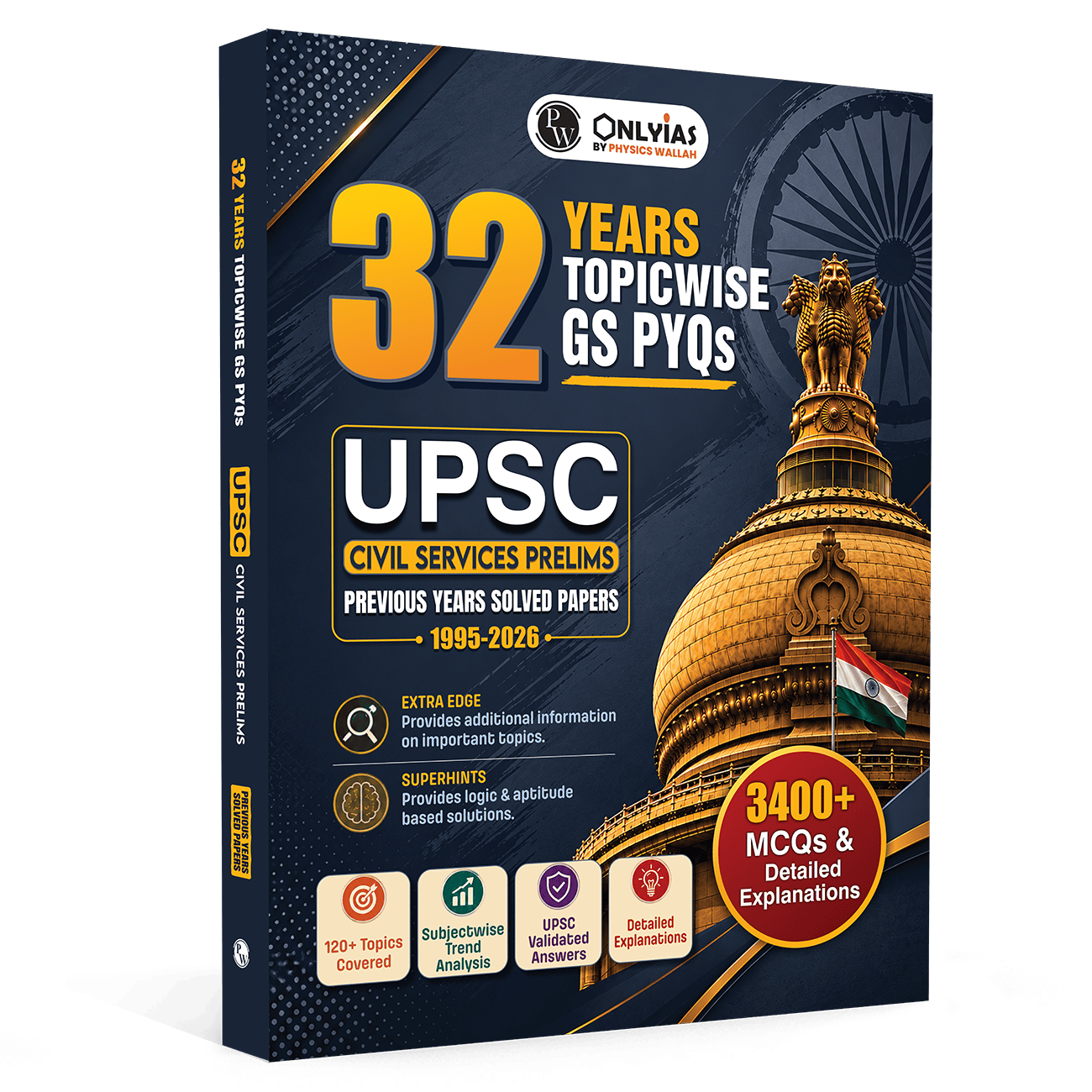
Setting an UPSC prelims target score becomes easier when you combine UPSC PYQs, practice questions, and mock tests. You can use helpful resources as part of this process to revise concepts and practise objective questions.
The aim should not be to complete a book quickly. Instead, use the questions to understand your strong and weak areas and track whether your mock scores are improving.
-
Targeted Practice: Solve objective questions regularly to improve concept application.
-
Topic-Wise PYQs: Practise previous year questions to understand how UPSC tests different concepts.
-
Detailed Explanations: Read solutions after attempting a question to understand why an option is correct or incorrect.
-
Track Mock Scores: Maintain a simple record of your marks, accuracy, and mistakes.
-
Revise Weak Areas: Use your test results to decide which topics need more study.
Using books along with PYQs and mock tests can turn reading into regular question practice. It also helps candidates understand whether their preparation is moving towards their planned UPSC prelims target score.
How Is the UPSC Prelims Safe Score Decided?
The UPSC prelims cut off for qualification is based on General Studies Paper I. CSAT, or General Studies Paper II, is a qualifying paper, and candidates need to secure at least 33% in it.
For GS Paper I, the marks awarded for correct and incorrect answers depend on the question paper's marking scheme. In the usual Prelims format, an incorrect answer carries a penalty of one-third of the marks assigned to that question.
The number of candidates admitted to the Mains examination is also linked to the number of vacancies and UPSC's rules for shortlisting. Therefore, candidates should not use a fixed number of attempts or a fixed score as a guaranteed qualifying point.
-
Cut-Off Changes: The cut-off can change each year.
-
CSAT Requirement: CSAT must be cleared even though it is qualifying in nature.
-
Negative Marking: Incorrect answers can reduce your GS Paper I score.
-
Accuracy Matters: More attempts do not automatically mean a higher score.
-
Mock Analysis: Calculate your score using the actual marking rules.
For example, attempting many questions with low accuracy can reduce the final score. A balanced attempt strategy should consider both your knowledge and your ability to eliminate options.
How to Improve Your UPSC Prelims Safe Score?
Improving your UPSC prelims marks requires more than simply taking more mock tests. You should analyse every test and understand why you lost marks.
One useful method is to divide questions into different confidence levels before deciding whether to attempt them.
-
High-Confidence Questions: Attempt questions where you know the concept or can confidently identify the correct option.
-
Fifty-Fifty Questions: Consider attempting questions where you can remove enough wrong options and make a reasoned choice.
-
Low-Confidence Questions: Be careful with questions where you have little information and cannot narrow down the options.
-
Review Mistakes: Check whether each wrong answer happened because of a concept gap, calculation error, poor reading, or unnecessary guessing.
-
Repeat Difficult Topics: Revise weak areas and test them again after some time.
Do not judge your preparation from one unusually high or low mock score. Using UPSC Revision Books along with a series of tests gives a better picture of your preparation and helps you understand your actual UPSC Prelims score range..
How to Maintain Consistency for a UPSC Prelims Safe Score?
Consistency is important when preparing for the Prelims. Instead of studying only before mock tests, candidates should revise regularly and solve questions throughout their preparation.
Static subjects such as Polity, History, Geography, Economy, and Environment can be studied along with relevant current affairs. Recognised books and other trusted study resources can be used to support this preparation.
-
Core Subject Practice: Build a strong base in the main General Studies areas.
-
Regular Mock Tests: Take full-length tests at planned intervals.
-
Error Tracking: Keep a record of incorrect and doubtful questions.
-
Revision Cycles: Revisit important concepts instead of studying them only once.
-
Score Tracking: Compare your mock results over time rather than focusing on one test.
A stable improvement in mock performance can help you understand whether your preparation is moving towards your desired UPSC prelims score. The goal should be consistent preparation, not a promise that one particular score will always be enough.
Setting a UPSC prelims safe score is an important part of UPSC preparation. Many aspirants look at previous cut-offs and set their target only a few marks above them.
However, the cut-off can change from year to year based on paper difficulty, vacancies, and overall performance. Using books, PYQs, and mock tests can help students set a practical target and improve their preparation.
Overview of UPSC Prelims Safe Score
Previous UPSC Prelims cut-offs show that the qualifying mark can change from one year to another. The General category cut-off was 75.41 marks in 2023, 87.98 marks in 2024, and 92.66 marks in 2025, based on the official UPSC cut-off information for those years.
These numbers show why candidates should not treat one previous cut-off as a fixed UPSC prelims target score. A difficult paper may lead to a lower cut-off, while an easier paper can result in a higher cut-off.
A better approach is to study previous cut-offs and then keep a reasonable margin above them while preparing through mock tests.
-
Study Multiple Years: Do not depend on one year's cut-off.
-
Check Paper Difficulty: Compare your mock scores with the difficulty level of the test.
-
Keep a Score Buffer: Set a target above recent cut-off levels instead of preparing only for the minimum.
-
Track Your Average: Look at your scores across several mocks instead of judging yourself from one test.
-
Review Changes: Check official UPSC cut-off information when it is released.
Check Out: UPSC Question Banks
How to Set Your UPSC Prelims Safe Score?
Setting an UPSC prelims target score becomes easier when you combine PYQs, practice questions, and mock tests. You can use helpful resources as part of this process to revise concepts and practise objective questions.
The aim should not be to complete a book quickly. Instead, use the questions to understand your strong and weak areas and track whether your mock scores are improving.
-
Targeted Practice: Solve objective questions regularly to improve concept application.
-
Topic-Wise PYQs: Practise previous year questions to understand how UPSC tests different concepts.
-
Detailed Explanations: Read solutions after attempting a question to understand why an option is correct or incorrect.
-
Track Mock Scores: Maintain a simple record of your marks, accuracy, and mistakes.
-
Revise Weak Areas: Use your test results to decide which topics need more study.
Using books along with PYQs and mock tests can turn reading into regular question practice. It also helps candidates understand whether their preparation is moving towards their planned UPSC prelims target score.
How Is the UPSC Prelims Safe Score Decided?
The UPSC prelims cut off for qualification is based on General Studies Paper I. CSAT, or General Studies Paper II, is a qualifying paper, and candidates need to secure at least 33% in it.
For GS Paper I, the marks awarded for correct and incorrect answers depend on the question paper's marking scheme. In the usual Prelims format, an incorrect answer carries a penalty of one-third of the marks assigned to that question.
The number of candidates admitted to the Mains examination is also linked to the number of vacancies and UPSC's rules for shortlisting. Therefore, candidates should not use a fixed number of attempts or a fixed score as a guaranteed qualifying point.
-
Cut-Off Changes: The cut-off can change each year.
-
CSAT Requirement: CSAT must be cleared even though it is qualifying in nature.
-
Negative Marking: Incorrect answers can reduce your GS Paper I score.
-
Accuracy Matters: More attempts do not automatically mean a higher score.
-
Mock Analysis: Calculate your score using the actual marking rules.
For example, attempting many questions with low accuracy can reduce the final score. A balanced attempt strategy should consider both your knowledge and your ability to eliminate options.
How to Improve Your UPSC Prelims Safe Score?
Improving your UPSC prelims marks requires more than simply taking more mock tests. You should analyse every test and understand why you lost marks.
One useful method is to divide questions into different confidence levels before deciding whether to attempt them.
-
High-Confidence Questions: Attempt questions where you know the concept or can confidently identify the correct option.
-
Fifty-Fifty Questions: Consider attempting questions where you can remove enough wrong options and make a reasoned choice.
-
Low-Confidence Questions: Be careful with questions where you have little information and cannot narrow down the options.
-
Review Mistakes: Check whether each wrong answer happened because of a concept gap, calculation error, poor reading, or unnecessary guessing.
-
Repeat Difficult Topics: Revise weak areas and test them again after some time.
Do not judge your preparation from one unusually high or low mock score. Using the Quarterly Current Affairs Combo along with a series of tests gives a better picture of your preparation and helps you understand your actual UPSC Prelims score range.
How to Maintain Consistency for a UPSC Prelims Safe Score?
Consistency is important when preparing for the Prelims. Instead of studying only before mock tests, candidates should revise regularly and solve questions throughout their preparation.
Static subjects such as Polity, History, Geography, Economy, and Environment can be studied along with relevant current affairs. Recognised books and other trusted study resources can be used to support this preparation.
-
Core Subject Practice: Build a strong base in the main General Studies areas.
-
Regular Mock Tests: Take full-length tests at planned intervals.
-
Error Tracking: Keep a record of incorrect and doubtful questions.
-
Revision Cycles: Revisit important concepts instead of studying them only once.
-
Score Tracking: Compare your mock results over time rather than focusing on one test.
A stable improvement in mock performance can help you understand whether your preparation is moving towards your desired UPSC prelims score. The goal should be consistent preparation, not a promise that one particular score will always be enough.
UPSC Prelims FAQs
What is considered a safe UPSC prelims safe score?
There is no single UPSC prelims safe score that guarantees qualification every year. The official cut-off changes based on factors such as paper difficulty, vacancies, and candidate performance. Aspirants can study recent cut-offs and keep a reasonable score buffer while setting their personal target.
How does the difficulty of the exam impact the UPSC safe score?
Exam difficulty can affect the marks candidates obtain and may also influence the final cut-off. A more difficult paper can result in lower overall scores, while a relatively easier paper may produce higher scores. This is why candidates should avoid depending on one fixed UPSC safe score.
Why should I use books to improve my UPSC prelims target score?
Books can provide organised practice questions, PYQs, and explanations in one study resource. Candidates can use them to revise concepts, practise objective questions, review mistakes, and track their progress towards their UPSC prelims target score.
Does performance in CSAT affect the UPSC prelims cut off?
CSAT is a qualifying paper, so its marks are not added to the GS Paper I cut-off in the same way as the merit-based paper. However, candidates must meet the required qualifying standard in CSAT. Not clearing CSAT can prevent a candidate from qualifying for the next stage.
How can I track my progress to ensure my UPSC prelims marks cross the threshold?
Take regular full-length mocks under exam-like conditions and calculate your marks using the applicable negative-marking rules. Record your scores, accuracy, attempted questions, and mistakes. Comparing several tests gives a better picture of your preparation than relying on one UPSC prelims marks result.
What is considered a safe UPSC prelims safe score?
There is no single UPSC prelims safe score that guarantees qualification every year. The official cut-off changes based on factors such as paper difficulty, vacancies, and candidate performance. Aspirants can study recent cut-offs and keep a reasonable score buffer while setting their personal target.
How does the difficulty of the exam impact the UPSC safe score?
Exam difficulty can affect the marks candidates obtain and may also influence the final cut-off. A more difficult paper can result in lower overall scores, while a relatively easier paper may produce higher scores. This is why candidates should avoid depending on one fixed UPSC safe score.
Why should I use books to improve my UPSC prelims target score?
Books can provide organised practice questions, PYQs, and explanations in one study resource. Candidates can use them to revise concepts, practise objective questions, review mistakes, and track their progress towards their UPSC prelims target score.
Does performance in CSAT affect the UPSC prelims cut off?
CSAT is a qualifying paper, so its marks are not added to the GS Paper I cut-off in the same way as the merit-based paper. However, candidates must meet the required qualifying standard in CSAT. Not clearing CSAT can prevent a candidate from qualifying for the next stage.
How can I track my progress to ensure my UPSC prelims marks cross the threshold?
Take regular full-length mocks under exam-like conditions and calculate your marks using the applicable negative-marking rules. Record your scores, accuracy, attempted questions, and mistakes. Comparing several tests gives a better picture of your preparation than relying on one UPSC prelims marks result.