UPSC Prelims 2027: How to Stop Overthinking Between Two Options

Preparing for UPSC Prelims 2027 requires good subject knowledge, regular practice, and smart decision-making. Many candidates can remove two wrong options but still struggle to choose between the remaining two. This confusion wastes time and can lead to wrong answers. Learning simple elimination methods, practicing mock tests, and reviewing mistakes can help you improve accuracy and make better decisions during the exam.
Overview of UPSC Prelims 2027 Exam Pattern
The UPSC Civil Services Preliminary Examination tests a candidate's knowledge, understanding, and ability to choose the correct answer from multiple options. Knowing the syllabus is important, but candidates must also learn how to handle confusing questions under time pressure.
Here are some common challenges during the exam:
-
Choosing Between Two Options: Two answers may look correct because they use similar words or discuss related ideas.
-
Negative Marking: Under the usual rules, one-third of the marks assigned to a question are deducted for a wrong answer in the objective papers. Check the official notification for the applicable rules.
-
Managing Time: Spending too long on one question leaves less time for other questions.
-
Handling Exam Pressure: Fear of making mistakes can make even familiar questions seem difficult.
-
Reading Statements Carefully: A small word such as "only", "all", or "not" can change the meaning of a statement.
What are Overthinking Problems and Their Common Causes in UPSC Prelims 2027?
Many candidates experience UPSC overthinking questions because they are afraid of losing marks. Even after studying a topic, they may doubt their knowledge when two options appear equally possible.
Some common reasons for this problem are:
-
Reading Too Much Into a Statement: Candidates may imagine exceptions or hidden meanings that are not supported by the question.
-
Incomplete Knowledge: Remembering only part of a fact can make it difficult to judge which option is correct.
-
Fear of Negative Marking: Worrying about losing marks can lead to repeated checking without finding any new information.
-
Changing Answers Without Evidence: Candidates sometimes change a correct answer because another option starts to look more attractive.
-
Lack of Mock Test Practice: Students who rarely practice full-length tests may find it harder to make quick decisions under pressure.
To reduce overthinking, ask yourself one simple question: What fact or rule supports this option? If you can identify a clear reason, use it to make your decision. If you cannot find enough evidence, mark the question for review and move ahead.
Tips to Choose Between Two Options in UPSC Prelims 2027
When you face UPSC two options confusion, do not compare the answers again and again without a clear method. Instead, check each option against the exact wording of the question and the facts you know.
Follow these steps:
-
Read the Question Again: Identify what the question asks. Check whether it asks for the correct, incorrect, or most appropriate statement.
-
Check Each Statement Separately: Decide whether each statement is true, false, or uncertain before looking at the answer combinations.
-
Look for Extreme Words: Words such as "always", "never", "only", and "all" can make a statement too broad. However, these words do not automatically make an option wrong.
-
Use Subject Knowledge: Check the option against the relevant constitutional provision, historical fact, scientific concept, or other reliable knowledge.
-
Compare the Exact Meaning: Two options may appear similar, but a small difference in wording can make one correct and the other incorrect.
-
Make a Decision: Once you have enough evidence, select the better-supported option or move on if the question is taking too much time.
Do not follow the idea that your first instinct is always correct. Your first answer may be right when it comes from clear knowledge, but it can also be wrong. Change an answer when you find a genuine factual reason, not simply because you feel nervous.
UPSC Prelims 2027 MCQ Elimination Techniques
Elimination is one of the most useful skills for improving performance in multiple-choice questions. You do not always need to know the correct answer immediately. Sometimes, you can reach it by identifying which options are incorrect.
Use these methods during practice:
-
Remove Clearly Wrong Options: Eliminate answers that directly contradict a fact or concept you know.
-
Check Statement Combinations: In questions with multiple statements, determine which statements are true or false. This can help you remove answer combinations that do not fit.
-
Use Basic Concepts: Apply your knowledge of polity, history, geography, economics, and science to check whether an option makes sense.
-
Watch for Unsupported Claims: Be careful when an option makes a very broad claim that you cannot support with the syllabus or reliable facts.
-
Compare Similar Options: Focus on the exact difference between two choices instead of reading both as if they mean the same thing.
-
Avoid Guessing Based on Patterns: Do not choose an option just because it appears more detailed or uses technical language.
When Should You Attempt a Question? After eliminating options, consider how much confidence you have in the remaining choices. If you can remove two options with good reasons, the remaining choice may offer a reasonable chance of being correct. However, eliminating two options does not guarantee that you will choose the right one.
Practice this method with previous year questions so that you learn when elimination is useful and when you should leave a question unanswered.
What are the Best Books for UPSC Prelims 2027 Preparation?
Good UPSC books can help candidates build subject knowledge and practice the skills needed for Prelims. Study resources should include clear explanations, revision tools, and questions that help you understand why an option is right or wrong.
-
Complete Subject Coverage: Study History, Art and Culture, Polity, Economy, Geography, Environment and Ecology, Science and Technology, and Current Affairs. Prepare CSAT separately as well.
-
Handwritten Study Notes: Use notes with maps, timelines, mind maps, and comparisons to make revision easier.
-
Quick Revision Resources: Review short notes, diagrams, infographics, and tables to recall important facts before mock tests.
-
Chapter-Wise Practice: Solve topic-based questions to identify which subjects or chapters need more attention.
-
Previous Year Questions: Practice UPSC PYQs from the years covered by your selected resource. Check the edition to confirm the exact papers included.
-
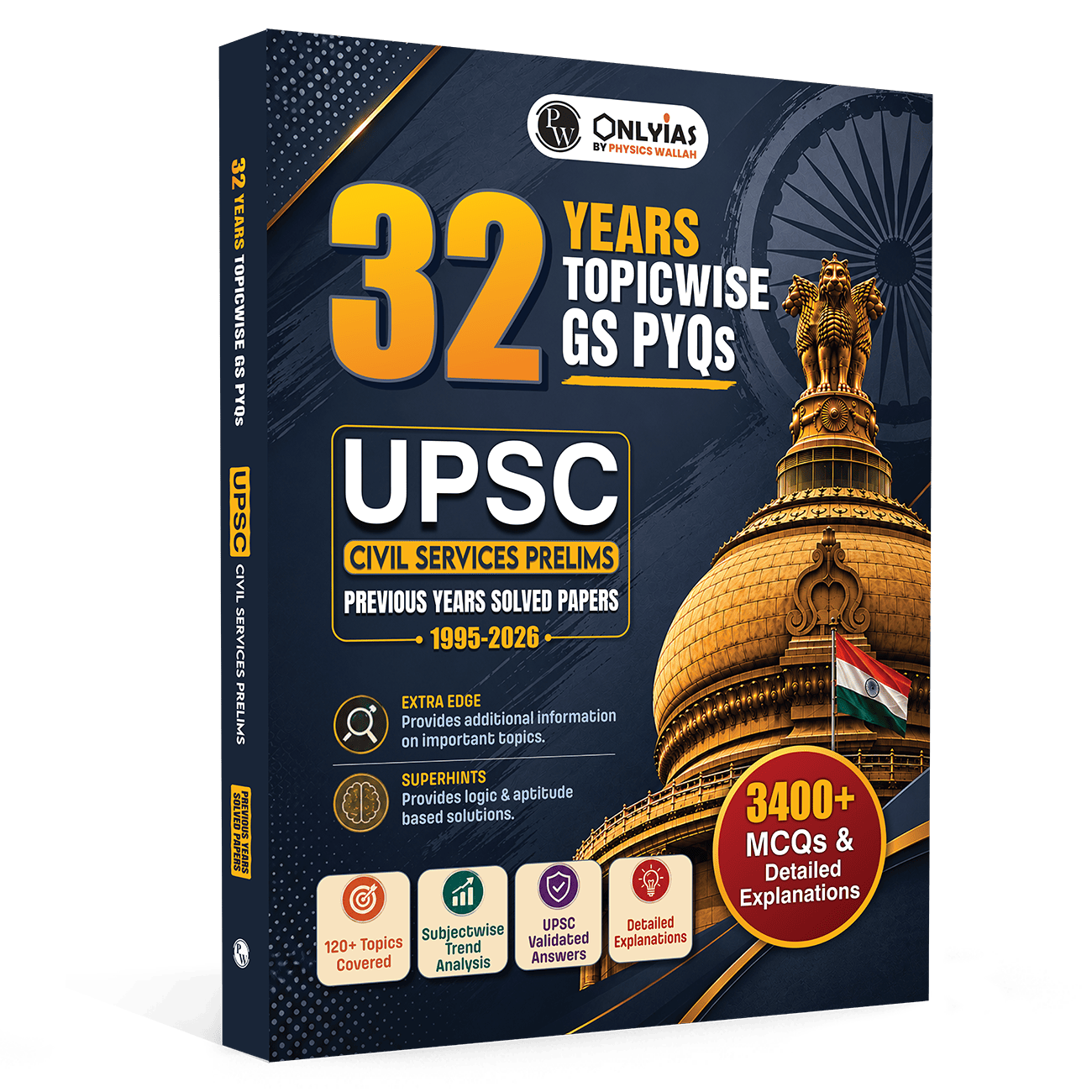
Solutions With Reasoning: Resources such as Mission Prelims and the 32-year PYQ book are described as offering detailed explanations, option-wise reasoning, elimination methods, and Superhints. Check the current product details for exact features.
-
Geography Through Maps: Atlas-based questions and map activities can help you revise locations, rivers, mountain ranges, and other geographical features.
-
Full-Length Test Papers: Test series can help you practice time management and make decisions in an exam-like setting.
You can explore UPSC books from Physics Wallah to review the available study and practice resources. Choose books based on your preparation needs and use their explanations to understand the logic behind each answer.
How to Improve Accuracy in UPSC Prelims 2027 Results?
Improving UPSC Prelims accuracy means learning to answer questions correctly while avoiding unnecessary mistakes. Attempting more questions does not always lead to a higher score, especially when many answers are based on random guesses.
Use these methods to improve your performance:
-
Maintain an Error Log: Record wrong answers and label them as knowledge gaps, misreading, confusion between options, or careless mistakes.
-
Review Every Mock Test: Understand why your selected answer was wrong and why the correct option is supported by the facts.
-
Practice Under Time Limits: Take full-length tests to get used to making decisions within the available time.
-
Revise Weak Topics: If you repeatedly make mistakes in a subject, return to the basic concepts before attempting more questions.
-
Track Accuracy by Topic: Compare your performance in Polity, History, Geography, Economy, and other areas.
Common Mistakes to Avoid in UPSC Prelims 2027
Small mistakes can affect your final score. Developing a careful question-solving routine can help you avoid them.
-
Missing Important Words: Read words such as "not", "incorrect", "only", and "all" carefully before selecting an answer.
-
Changing Answers Without a Reason: Change an answer only when you find new evidence or notice a mistake in your original reasoning.
-
Spending Too Long on One Question: If you cannot make progress, move to another question and return later if time permits.
-
Ignoring the Full Statement: Do not judge an option by one correct phrase if another part of the statement makes it incorrect.
-
Making Random Guesses: Do not select an answer only because you feel you must attempt more questions.
-
Skipping Mock Test Analysis: A mock test is less useful if you check only your score and do not study your mistakes.
Build a simple routine: read the question, check the options, eliminate what you can, decide whether to attempt it, and move on. Practice this routine until it becomes a natural part of your preparation.
UPSC Prelims 2027 FAQs
How can I stop overthinking between two options in UPSC Prelims 2027?
Read the question carefully, check each option against your subject knowledge, and remove choices that are clearly incorrect. If you still have two options, compare their exact wording and look for facts that support one over the other. Do not change your answer only because you feel nervous.
What causes UPSC overthinking questions during the exam?
Common reasons include exam pressure, fear of negative marking, incomplete knowledge, and a habit of doubting answers without evidence. Regular mock tests and careful review of mistakes can help candidates become more comfortable with difficult choices.
What are the best resources to improve UPSC Prelims accuracy?
Previous year questions, standard subject books, reliable explanations, and good mock tests can help improve accuracy. The most important step is to review each mistake and understand why an option is correct or incorrect instead of simply checking the final score.
Should I always trust my first answer in UPSC Prelims?
No. Keep your first answer when it is based on clear knowledge and you have no reason to doubt it. Change it if you notice a factual error, misread the question, or find evidence that supports another option. Avoid changing answers only because of anxiety.