Why Every Beginner Should Start UPSC Preparation with PYQs?
Beginning UPSC preparation can feel overwhelming because of the vast syllabus and countless study resources. Practicing UPSC PYQ from the start helps beginners understand the exam pattern, identify high-weightage topics, and focus on relevant concepts instead of unnecessary content. Regular UPSC PYQ practice builds exam awareness, improves preparation strategy, and develops confidence for every stage of the Civil Services Examination.
Importance of UPSC PYQ Analysis for Beginners
When starting civil services preparation, understanding the exact demand of the examination is critical. Reading reference books blindly without analyzing UPSC previous year questions often results in wasted study hours on low-yielding topics.
An authentic PYQ resource acts as a compass, guiding you through the vast syllabus. Here are the core reasons why past paper analysis is non-negotiable for every aspirant:
-
Deconstructs examiner mindset: Reviewing past papers shows how UPSC turns plain factual statements into conceptual, multi-statement options.
-
Filters essential reading: Knowing past trends prevents you from memorizing non-essential details in reference textbooks.
-
Highlights core subject weightage: Helps you realize which sections within Indian Polity, Economy, and History require maximum revision.
-
Builds smart elimination skills: Regular practice reveals how options are structured, aiding in option elimination during the actual exam.
[Raw Syllabus] + [Standard Textbooks]
│
▼
[ PYQ Trend Analysis]
│
▼
┌─────────────────────┴─────────────────────┐
▼ ▼
[High-Yield Focus Areas] [Targeted MCQ Practice]
How topic-wise UPSC PYQs Improves the vast syllabus
Attempting past year papers year by year (e.g., solving the entire 2023 paper at once) can be intimidating for someone who has just completed one or two chapters of Indian Polity or Geography. This is where topic-wise PYQs transform your preparation strategy.
When questions are categorized by subject and chapter, you can solve relevant MCQs immediately after reading a specific topic.
Key advantages of solving questions by topic
-
Immediate concept testing: You can solve UPSC GS questions related to 'Preamble' right after finishing the chapter in your textbook.
-
Clear identification of recurring themes: Grouping questions across 30+ years shows how topics like 'Inflation', 'Monsoon', or 'Fundamental Rights' are asked repeatedly.
-
Structured progress tracking: Completing past questions chapter by chapter builds early confidence without causing information overload.
-
Enhanced memory retention: Applying newly learned theoretical concepts to solved MCQs cements the facts long-term.
How to use UPSC PYQs for Prelims for active learning
Many aspirants treat UPSC PYQ book purely as a testing tool after completing their syllabus. However, the most successful candidates use a UPSC prelims PYQ set as a learning tool right from the start.
Instead of just checking whether your choice was correct, deep-dive into all four options provided in every question.
┌─────────────────────────────┐
│ Select a Topic / Chapter │
└──────────────┬──────────────┘
│
▼
┌─────────────────────────────┐
│ Read Core Reference Material│
└──────────────┬──────────────┘
│
▼
┌─────────────────────────────┐
│ Solve Topic-Wise PYQs │
└──────────────┬──────────────┘
│
▼
┌─────────────────────────────┐
│ Analyze Incorrect Options & │
│ Note Down Concepts │
└─────────────────────────────┘
Steps for improved retention with past papers
-
Analyze every option: Investigate why incorrect options are wrong. UPSC frequently turns incorrect options from past papers into full-length questions in subsequent years.
-
Identify trap patterns: Note down common traps such as extreme words ("only", "drastically", "all") used by the commission.
-
Cross-reference with core text: Whenever you mark a question wrong, revisit that exact topic in your notes to fill knowledge gaps.
-
Maintain an error log: Keep a small notebook dedicated to tricky facts and concepts derived from detailed option-wise explanations.
How to choose the right upsc PYQ books for past papers
Not all compilation books are created equal. To get maximum benefit from past paper practice, you need a resource that provides comprehensive coverage, accurate answer keys, and clear explanations.
Choosing reliable UPSC books is a critical decision for every beginner. A good compilation should offer comprehensive coverage, genuine answer keys, and well-structured option-wise solutions.
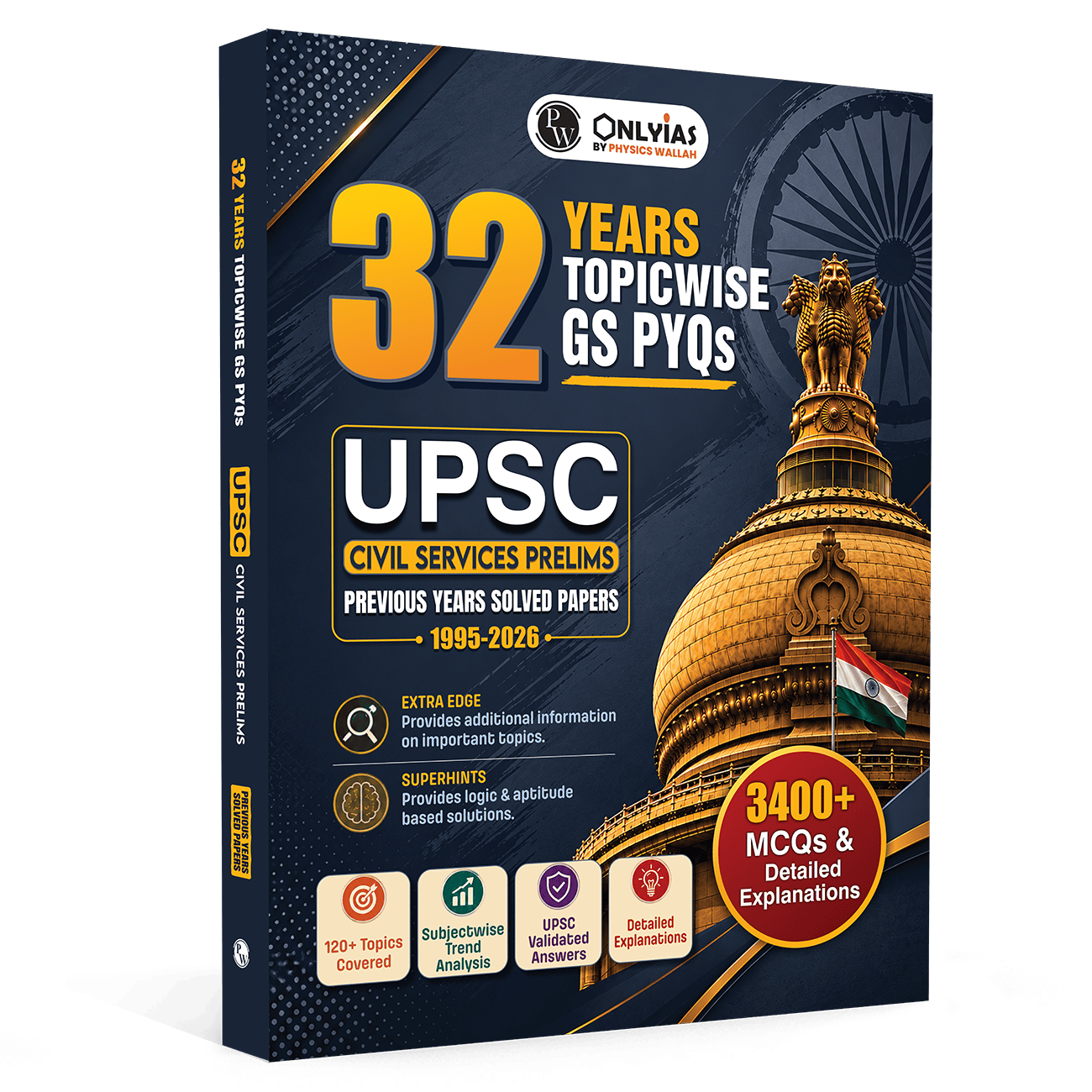
For a reliable, structured resource, the topic-wise solved paper compilation featuring many MCQs with detailed explanations across General Studies Paper 1 and CSAT Paper 2.
|
Book Feature |
What Beginners Need |
Why It Helps |
|
Timeframe Covered |
30+ Years (e.g., 1995–2026) |
Reveals long-term evolution of question patterns. |
|
Categorization |
120+ Micro-Topics |
Integrates smoothly with daily subject-wise study plans. |
|
Explanations |
Detailed Option-Wise Analysis |
Explains why an option is right or wrong beyond basic facts. |
|
Paper Coverage |
GS Paper 1 + CSAT Paper 2 |
Provides complete coverage for Preliminary exam preparation. |
|
Extra Insights |
Trend Analysis & Visual Aids |
Highlights high-weightage sections using diagrams and maps. |
How to Excel GS questions with UPSC PYQ
General Studies Paper 1 demands both conceptual clarity and sharp analytical skills. Solving structured UPSC GS questions regularly ensures that you do not just memorize facts but also learn how to apply them under exam pressure.
By combining primary textbook reading with structured PYQ practice, you build the required speed, accuracy, and elimination logic needed to clear the Prelims cutoff comfortably.
Check Out: UPSC Question Banks
How UPSC PYQ Helps You Avoid Common Preparation Mistakes
Many beginners spend months collecting study materials instead of understanding what the examination actually demands. They often read multiple books for the same subject, make lengthy notes, and postpone question practice until the syllabus is complete. This approach usually leads to information overload and weak retention. Solving PYQ from the beginning prevents these common mistakes by providing a clear direction for preparation.
Past year questions show how topics are tested and help aspirants differentiate between important concepts and background information. For example, after studying a chapter on the Indian Constitution, solving related questions immediately reveals whether you have understood the concepts well enough to apply them in the examination. If you answer incorrectly, you can revisit only the relevant section instead of rereading the entire chapter.
A structured PYQ routine also helps beginners develop better study habits. Rather than spending excessive time on one subject, aspirants learn to balance reading, revision, and practice. This makes preparation more efficient and reduces the stress of covering the vast UPSC syllabus.
Some common mistakes that PYQ practice helps you avoid include:
-
Reading multiple reference books without completing one thoroughly.
-
Memorising facts without understanding concepts.
-
Ignoring recurring themes from previous examinations.
-
Delaying MCQ practice until the end of syllabus completion.
-
Failing to analyse incorrect answers and learn from mistakes.
-
Spending too much time on low-weightage topics.
Developing these habits early saves valuable preparation time and builds the analytical thinking required for both the Prelims and later stages of the Civil Services Examination.
Read More: UPSC Previous Year Question Papers PDF, Prelims & Mains PYQ's PDF
UPSC PYQ FAQs
How many years of UPSC PYQs should a beginner solve?
Aspirants should ideally solve at least 20 to 30 years of past papers. Solving 30+ years provides a wider exposure to core stasis themes and recurring question structures.
Are past questions repeated in the UPSC Prelims exam?
While exact questions are rarely repeated verbatim, themes, core concepts, and options frequently reappear in tweaked formats across different years.
When should a beginner start solving past year questions?
Beginners should start solving questions immediately after completing a topic or chapter. Integrating past papers from day one builds exam-oriented focus early.
Are topic-wise PYQs better than year-wise papers for beginners?
Yes, topic-wise compilations are better for beginners because they allow you to test concepts right after reading a specific chapter without needing to complete the full syllabus.
How does analyzing UPSC previous year questions help in option elimination?
Analyzing past papers highlights typical examiner phrasing, common distractors, and conditional terms, helping you make educated guesses when uncertain.