UPSC Science & Tech Question Bank: How to Prepare Through Practice Questions?

Navigating the extensive syllabus of the Civil Services Examination often leaves aspirants overwhelmed by rapid technological developments and dense technical terminology. Traditional textbook reading alone frequently falls short when applied to tricky, multi-layered analytical Prelims queries.
Solving targeted questions bridges this vital gap by transforming passive reading into active, high-retention recall.
Utilizing a structured UPSC science and tech question bank helps candidates evaluate their preparation levels accurately, decode complex exam trends, and fine-tune critical time management. Systematic practice ensures that raw theoretical concepts transform into concrete, application-ready knowledge required to clear the preliminary cutoff with absolute confidence.
What Is UPSC Science and Tech Question Bank?
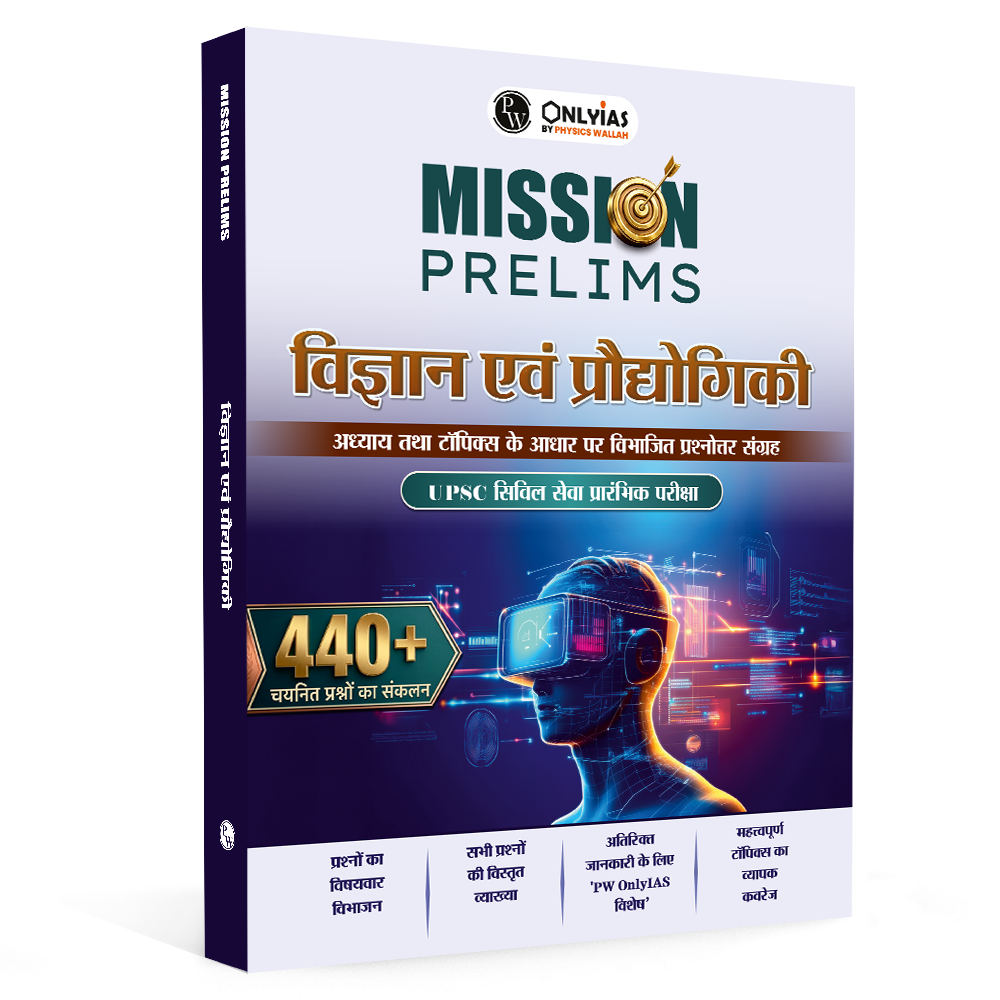
An organized UPSC science and tech question bank is a curated collection of multiple-choice questions designed around the official Civil Services syllabus. These resources feature chapter-wise and topic-wise segregation to streamline revision. Aspirants utilize these compilations to test their understanding of contemporary innovations and fundamental principles.
-
Targeted Practice: Questions mimic actual exam standards to test analytical ability rather than rote learning.
-
Detailed Explanations: Every question includes comprehensive rationale to clarify underlying scientific principles.
-
Structured Format: Systematic sorting enables aspirants to tackle specific sub-topics efficiently.
-
Exam Simulation: Replicates the pressure and pacing of the actual examination hall to build endurance.
-
Progress Tracking: Allows candidates to measure their improvement across different iterations of practice sets.
Which Topics are Covered in a UPSC Science and Tech Question Bank?
A comprehensive UPSC science and tech question bank must encompass both static scientific principles and dynamic technological breakthroughs. Questions should span multiple sub-sections to ensure complete preparation for the Preliminary examination.
-
Space Technology: Satellites, launch vehicles, ISRO missions, deep space exploration, and astronomical phenomena.
-
Biotechnology: Genetic engineering, stem cell research, CRISPR technology, vaccines, and biomedical advancements.
-
Information and Communication Technology: Artificial intelligence, robotics, cybersecurity, quantum computing, and next-generation networks.
-
Defence and Nanotechnology: Missile systems, nanotechnology applications, and advanced material sciences.
-
Health and Disease: Public health initiatives, infectious diseases, antimicrobial resistance, and basic human physiology.
How to Use UPSC Science and Tech Question Bank for Practice?
Effective utilization of a UPSC science and tech question bank requires disciplined execution and active engagement with the material. Aspirants should avoid treating practice sets as mere reading exercises. Instead, simulated testing environments yield the best results for competitive exams.
-
Timed Solvings: Attempt practice sets under strict time constraints to build exam-day speed.
-
Active Engagement: Read every question twice to catch qualifying words like not or correctly matched.
-
Regular Revision Cycles: Mark difficult or confusing questions for secondary review during later revision phases.
-
Error Logging: Maintain a dedicated notebook to record every conceptual lapse encountered during practice.
-
Post-Test Reflection: Spend twice as long reviewing solutions as you did attempting the questions.
How to Analyse Answers from a UPSC Science and Tech Question Bank?
Evaluating performance after attempting questions holds equal importance to the practice session itself. Reviewing incorrect responses uncovers conceptual gaps and prevents recurring errors during actual examinations.
-
Error Categorization: Distinguish between conceptual blunders, silly reading mistakes, and wild guesses.
-
Explanation Deep-Dive: Read the provided detailed explanations thoroughly, even for correctly answered items, to learn alternative perspectives.
-
Note-Keeping: Maintain a separate log for factual updates, new technologies, and recurring terminologies encountered during practice.
-
Option Dissection: Analyze why incorrect options were wrong to sharpen elimination skills.
-
Trend Mapping: Note which specific sub-topics trigger frequent mistakes and revisit core notes accordingly.
Study Strategy for Practising with UPSC Science and Tech Question Bank
Integrating question practice seamlessly into daily study schedules ensures steady progress across the entire syllabus. A balanced approach combines newspaper analysis with systematic question solving.
-
Thematic Alignment: Pair static textbook chapters with relevant question sets immediately after completion.
-
Current Affairs Integration: Link daily technological news items with historical background found in standard question sets.
-
Cumulative Testing: Conduct weekend tests covering multiple chapters to evaluate long-term retention and overall speed.
-
Incremental Difficulty: Start with foundational topic sets before graduating to full-length mixed simulations.
-
Peer Discussion: Debate confusing questions with study partners to test alternative logical deductions.
A successful preparation schedule leaves no room for random, disorganized studying. By tying question practice directly to weekly reading goals, candidates ensure that their theoretical learning faces immediate practical stress tests.
If a chapter on nanotechnology is finished on Tuesday, the corresponding question set should be completed by Wednesday morning. This tight feedback loop cements core principles into long-term memory and prevents knowledge decay.
Mistakes to Avoid While Using UPSC Science and Tech Question Bank
Avoiding common pitfalls optimizes the utility of any UPSC science and tech question bank and preserves valuable preparation time. Unplanned practicing often leads to diminished returns and low confidence.
-
Rote Memorisation: Memorising answers without understanding the underlying scientific mechanism harms analytical performance.
-
Ignoring Explanations: Skipping detailed solutions prevents aspirants from learning secondary concepts embedded in the options.
-
Neglecting Weak Areas: Avoiding difficult sub-topics creates critical blind spots for the Preliminary examination.
-
Passive Reading: Reading questions and answers like a novel instead of actively solving them.
-
Overconfidence: Dismissing foundational questions because they appear simple on the surface.
Recognizing these traps early saves aspirants from weeks of frustrated effort. Memorising question-answer pairs is a dangerous trap because the actual examination rarely repeats exact phrasing. Examiners test underlying principles, meaning that true success depends entirely on grasping the structural logic behind why a statement stands correct or incorrect.
Honing this analytical reflex remains the ultimate goal of working through rigorous practice compilations.
Practice Plan for UPSC Science and Tech Question Bank Preparation
A structured roadmap ensures steady coverage without causing burnout or last-minute panic. Breaking down the preparation timeline allows aspirants to monitor milestones effectively.
-
Phase One: Focus on foundational concepts alongside introductory chapter practice questions.
-
Phase Two: Transition to mixed-topic practice sets to test versatility across biotechnology, space, and defence.
-
Phase Three: Undertake full-length simulated mock tests focusing strictly on time management and accuracy enhancement.
-
Phase Four: Final revision of bookmarked incorrect questions during the last month before the exam.
-
Phase Five: Maintenance practice focusing on current technological developments paired with static questions.
A phased approach prevents the psychological exhaustion that often accompanies unstructured exam preparation. By treating preparation as a series of manageable milestones, candidates maintain high motivation levels throughout the year.
Each completed phase acts as a stepping stone, steadily building the competence and composure required to face the Civil Services Preliminary examination with absolute assurance.
UPSC Science and Tech Question Bank FAQs
What makes an UPSC science and tech question bank essential for Prelims?
An UPSC science and tech question bank provides targeted practice, helps aspirants understand changing exam trends, and builds conceptual clarity through detailed explanations.
How many UPSC science and technology questions should I solve daily?
Aspirants should aim to solve between twenty and thirty questions daily, ensuring they thoroughly review the explanations for each item.
Can UPSC science MCQs help with current affairs integration?
Yes, solving curated UPSC science MCQs connects dynamic technological developments from current affairs with necessary static background knowledge.
Why are detailed explanations important in a science and tech practice questions book?
Detailed explanations clarify the core logic behind correct and incorrect options, strengthening overall problem-solving skills for the Civil Services examination.
How should beginners approach UPSC prelims science practice?
Beginners should start with topic-wise segregation to build fundamental clarity before attempting mixed-chapter timed mock tests.