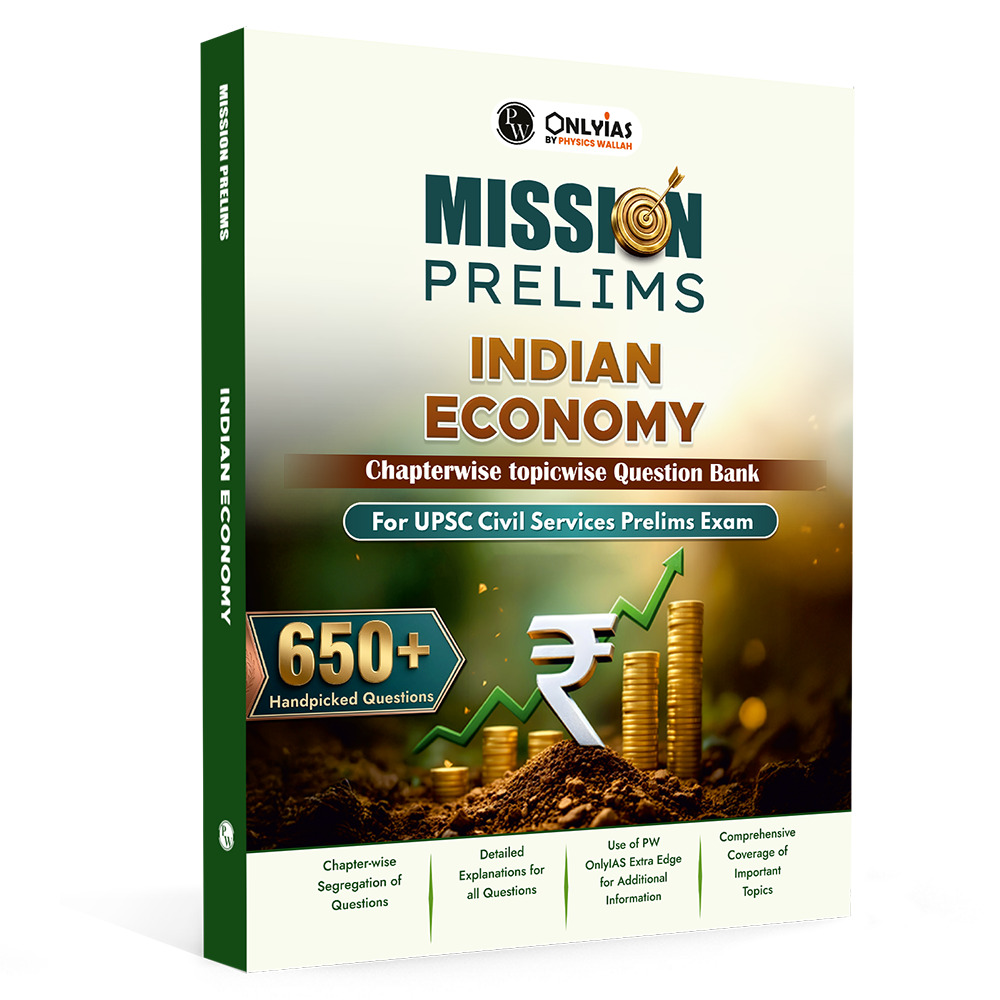
How to Use 650+ UPSC Economy Questions for Effective Practice

Mastering Indian Economy for the UPSC Civil Services Examination requires more than just reading standard textbooks; it demands consistent, targeted question solving. Many candidates understand fundamental economic concepts but struggle when faced with tricky, multi-statement questions in the Prelims exam.
Utilizing a dedicated UPSC economy question bank bridges this exact gap between conceptual reading and exam-day performance. By working systematically through structured practice sets, candidates can pinpoint their knowledge gaps, refine their elimination techniques, and build the speed necessary to clear high cut-offs.
Overview of UPSC Economy Question Bank
A structured UPSC economy question bank serves as a specialized practice tool designed to help Civil Services aspirants test their grasp over macroeconomic concepts, fiscal policies, and national development programs. Instead of testing random facts, a high-quality question bank mirrors the analytical nature of the UPSC Civil Services Examination.
-
650+ Handpicked Questions: Contains carefully selected practice items mapped to recent exam trends.
-
Chapter-Wise Segregation: Topics are arranged systematically so candidates can practice immediately after finishing a textbook chapter.
-
Detailed Explanations: Explains why a specific option is correct and why alternative options are incorrect to deepen subject knowledge.
-
Comprehensive Topic Coverage: Encompasses key areas including Banking, Inflation, Foreign Trade, Public Finance, and Sustainable Development.
-
Extra Edge Insights: Offers additional value-added notes to provide extra clarity on complex economic issues.
Why Use UPSC Economy Question Bank for Practice?
Solving targeted UPSC economy practice questions allows candidates to transition from passive reading to active recall. Economy is a subject where conceptual clarity directly dictates success, as questions often combine static theory with dynamic current affairs.
-
Builds Accuracy and Speed: Solving multiple-choice questions regularly reduces careless errors and helps manage time efficiently during the actual exam.
-
Enhances Conceptual Clarity: Detailed explanations help clarify difficult topics like monetary policy transmission, balance of payments, and exchange rate fluctuations.
-
Strengthens Elimination Skills: UPSC option combinations require strong logic; solving a dedicated UPSC question bank helps candidates master the art of ruling out incorrect statements.
-
Tracks Real-Time Progress: Chapter-wise segregation enables aspirants to identify specific weak areas and revisit textbook notes immediately.
Topics Covered in UPSC Economy Question Bank
To ensure complete coverage, a solid UPSC economy question bank organizes questions according to the syllabus breakdown of the Civil Services Prelims examination.
|
Module Name |
Core Topics Covered |
Question Type Focus |
|
National Income & Growth |
GDP, GNP, NNP, Real vs Nominal Growth, Capital Formation |
Conceptual & Formula-Based |
|
Money & Banking |
RBI Policies, Repo Rates, NPA Resolution, Digital Currency |
Analytical & Applied |
|
Public Finance & Fiscal Policy |
Union Budget, Taxes (GST), Fiscal Deficit, Finance Commission |
Static + Current Schemes |
|
Inflation & Business Cycles |
CPI, WPI, Inflation Targeting, Deflationary Trends |
Real-world Impact |
|
External Sector & Trade |
Balance of Payments, Forex Reserves, WTO, Exchange Rates |
Dynamic Data & Rules |
|
Agriculture & Land Reforms |
MSP, Priority Sector Lending, Food Processing, Subsidies |
Policy & Direct Impact |
When to Use UPSC Economy Question Bank?
Timing your practice correctly ensures maximum retention and helps you avoid burnout. Integrating an Economy Question Bank for UPSC with UPSC Books at specific stages of your preparation can help strengthen conceptual understanding, reinforce important topics, and make revision more structured and effective.
-
Immediately After Studying a Chapter: Solve topic-specific indian economy mcqs UPSC right after reading standard books to solidify core concepts.
-
During Weekly Revisions: Use the question bank during weekend revision sessions to test long-term retention of earlier topics.
-
Two Months Before Prelims: Intensify practice by taking timed tests using the UPSC economy question bank to build exam stamina.
-
Post Current Affairs Updates: Attempt questions related to the Economic Survey and Union Budget after completing your annual revision modules.
How to Use UPSC Economy Question Bank?
Simply solving questions is not enough; the method you adopt determines your final score. Using an UPSC economy question bank effectively requires a deliberate four-step practice strategy.
-
Step 1 - Attempt Without Guesswork: Read the question carefully and mark options based solely on sound reasoning. Avoid blind guessing during initial practice.
-
Step 2 - Analyze Explanations Thoroughly: Read the provided solutions for every question, including the ones you answered correctly, to discover simpler logic or extra facts.
-
Step 3 - Cross-Reference with Previous Papers: Compare the practice items with authentic UPSC economy PYQs to judge the difficulty level and question patterns.
-
Step 4 - Maintain an Error Log: Note down recurring mistakes, forgotten formulas, or novel concepts in a dedicated notebook for quick pre-exam review.
How to Make a Study Plan With UPSC Economy Question Bank?
Creating a balanced daily and weekly routine helps cover 650+ questions systematically without overwhelming your study schedule. The UPSC Mission Prelims Combo Set 9 2026 can support this approach with structured practice, helping you manage questions efficiently, track your progress, and strengthen your preparation consistently.
-
Phase 1 (Days 1 to 15) - Core Banking & National Income: Solve 25 to 30 UPSC prelims economy questions daily after finishing foundational theory topics.
-
Phase 2 (Days 16 to 30) - Fiscal Policy & External Sector: Move on to complex topics like taxation and international trade, dedicating 1.5 hours daily to question solving.
-
Phase 3 (Days 31 to 45) - Agriculture, Schemes & Misc: Target sector-specific MCQs and integrate current affairs-based economic questions.
-
Phase 4 (Days 46 to 60) - Revision & Retesting: Re-attempt all previously marked incorrect items from your UPSC economy question bank to ensure 100% accuracy on core concepts.
Common Mistakes With UPSC Economy Question Bank
Many candidates fail to get the maximum benefit from their study materials due to improper usage strategies.
-
Ignoring Question Explanations: Focus strictly on finding the correct answer choice without reading the detailed solution rationale.
-
Practicing Without Time Limits: Solving questions casually without monitoring speed leads to poor time management during the actual examination.
-
Delaying Practice Until the End: Waiting to finish the entire syllabus before opening the UPSC economy question bank causes unnecessary pressure.
-
Not Revisiting Wrong Answers: Skipping the revision of incorrectly answered questions leads to repeating the same conceptual mistakes on exam day.
Read More: UPSC Previous Year Question Papers PDF
UPSC Economy Question Bank FAQs
Q1: How many practice items are included in this UPSC economy question bank?
It includes over 650+ handpicked questions arranged chapter-wise with detailed conceptual explanations.
Q2: Is a specialized UPSC economy question bank suitable for beginners?
Yes, because questions are segregated by chapter, beginners can solve relevant items right after reading a specific topic.
Q3: Does the question bank include UPSC economy PYQs?
The collection aligns directly with standard exam patterns and incorporates static and dynamic trends reflected in authentic past papers.
Q4: Should I practice Indian economy mcqs UPSC daily or weekly?
Daily practice of 20 to 30 questions alongside topic completion yields better retention than solving large sets in a single day.
Q5: How does this question bank help improve prelims accuracy?
It provides clear explanations for all choices, helping you master elimination strategies and avoid trap options on test day.