How to Use Indian Polity Mind Maps After Completing a Chapter
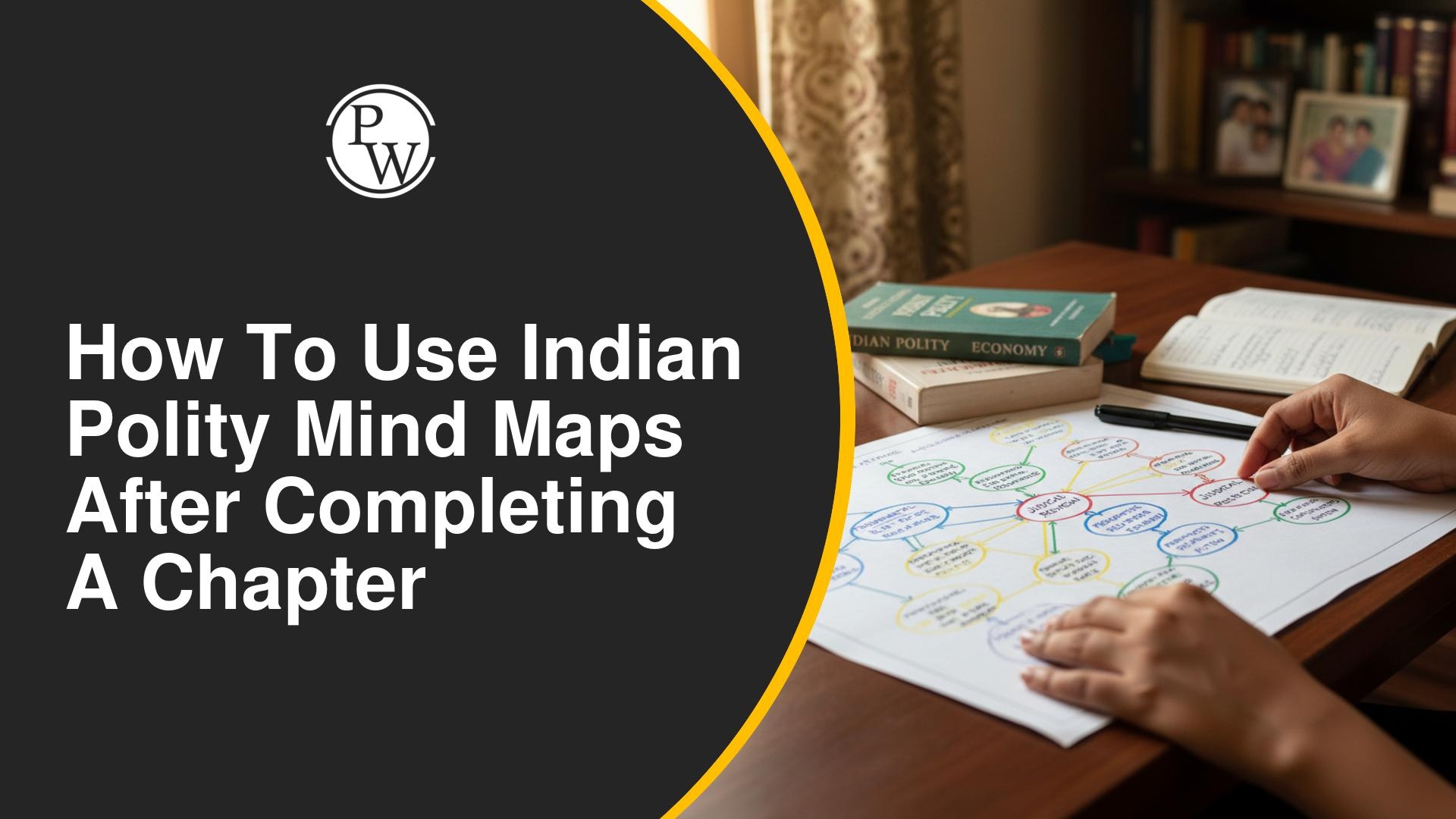
Spending hours completing a textbook chapter only to forget the exact articles, amendments, or structural connections a few days later is a common hurdle. Without an organized visual system to consolidate what you have just read, passive reading fails to translate into active recall. Indian polity mind maps solve this exact issue by transforming massive theoretical concepts into structured visual summaries.
Utilizing Indian polity mind maps right after finishing a chapter establishes immediate mental hooks, streamlines repeat revisions, and bridges the gap between passive reading and exam-ready retention.
What Are Indian Polity Mind Maps?
Indian polity mind maps are exam-focused, visually structured summaries designed to present complex constitutional and administrative concepts in a clear, accessible format. Instead of relying on long paragraphs, these visual frameworks bring together critical topics through snapshot-style summaries, interconnected learning nodes, flowcharts, and infographics.
Using UPSC polity mindmaps allows candidates to capture both the broader context and specific details of a topic in one glance. Whether you are examining the powers of the Executive, the jurisdiction of the Judiciary, or constitutional bodies, these tools break down dense legal frameworks into manageable points.
A dedicated polity mind map book serves as a central hub where static concepts meet analytical insights, helping visual learners retain information much faster than traditional reading methods.
Why Use Indian Polity Mind Maps After Completing a Chapter?
Finishing a chapter gives you a foundational understanding, but immediate consolidation determines how long that information stays with you. Relying solely on textbooks for second and third readings often leads to fatigue. Incorporating Indian polity mind maps immediately after a chapter transforms revision into an active mental exercise.
-
Simplified Visuals for Complex Concepts: Each map organizes intricate ideas into a clear visual hierarchy, helping candidates absorb complicated subjects without wading back through massive chapters.
-
Faster Information Retention: Snapshot-style visual summaries allow visual learners to memorize articles, constitutional amendments, and procedural steps significantly faster.
-
Holistic and Balanced Coverage: Designed for complete alignment with syllabus demands, these tools ensure candidates capture both high-level context and exact details.
-
Support for Answer Writing: The visual layout mirrors structured answers, making it easier to organize main points, sub-points, and supporting legal provisions during Mains answer writing.
-
Efficient Rapid Revision: Turning to an established polity revision book saves time during peak exam preparation phases, replacing lengthy reading sessions with targeted visual reviews.
Topics Covered in Indian Polity Mind Maps
Comprehensive visual revision resources ensure full coverage of critical subjects across the entire governance and constitutional spectrum. Broad syllabus categories are mapped into interconnected nodes to support analytical understanding:
|
Syllabus Area |
Key Components Mapped |
Target Exam Focus |
|
Constitutional Framework |
Historical background, Preamble, Fundamental Rights, Directive Principles, Fundamental Duties, Amendment processes |
Prelims factual recall & Mains foundation |
|
System of Government |
Parliamentary system, Federal structure, Centre-State relations, Inter-State relations, Emergency provisions |
Analytical understanding of federal dynamics |
|
Central & State Executive |
President, Vice-President, Prime Minister, Council of Ministers, Governor, Chief Minister |
Comparative structural analysis |
|
Union & State Legislature |
Parliament composition, legislative procedures, parliamentary committees, State Assemblies |
Procedural clarity & legislative power breakdowns |
|
Judiciary |
Supreme Court, High Courts, Subordinate Courts, Judicial Review, Judicial Activism |
Jurisdictional clarity & constitutional interpretation |
|
Constitutional & Non-Constitutional Bodies |
Election Commission, UPSC, Finance Commission, NITI Aayog, NHRC, CBI |
Functions, appointments, autonomy, and structural roles |
When to Use Indian Polity Mind Maps?
Timing plays a crucial role in getting the most out of visual revision resources. Using visual notes at the wrong stage of study can lead to passive skimming rather than true retention.
-
Immediately Post-Chapter Reading: Use the map right after completing a standard textbook chapter to consolidate newly learned information and organize mental notes.
-
During Daily and Weekly Revision Slots: Use snapshots for quick morning or evening reviews to keep previously covered topics fresh.
-
Before Solving Practice Sheets: Review visual nodes right before taking topic-wise quizzes to refresh memory on specific rules and exceptions.
-
During Mains Answer Writing Practice: Refer to interconnected nodes while structuring answers to quickly retrieve relevant articles and logical flow points.
-
In the Final Weeks Before Exams: Rely on high-density visual summaries during peak UPSC polity revision periods when time does not permit reading full text chapters.
How to Use Indian Polity Mind Maps After Each Chapter?
To maximize the benefits of visual tools after finishing a chapter, follow a deliberate, step-by-step process that actively engages your brain.
Step 1: Perform an Active Recall Self-Test
Close your textbook immediately after finishing a chapter. Take a blank sheet of paper and scribble down the main headings, core articles, and key processes you remember.
Step 2: Cross-Check with the Visual Framework
Open your Indian polity mind maps and compare your scribbled outline against the visual structure. Identify missing articles, overlooked exceptions, or misremembered procedural steps.
Step 3: Trace Interconnected Relationships
Study how different concepts link together within the map. For instance, trace how Fundamental Rights connect with Directive Principles or how Presidential powers overlap with Cabinet decisions.
Step 4: Add Personal Annotations
Treat your visual resources as living documents. Add small personal notes, recent judicial precedents, or tricky Prelims points directly alongside the relevant branches.
Step 5: Perform a 5-Minute Visual Sweep
Finish your study session with a rapid five-minute visual sweep of the entire map to lock the layout, colors, and hierarchical nodes into your visual memory.
How to Make a Study Plan With Indian Polity Mind Maps?
Integrating visual tools into a long-term study plan brings structure and consistency to your overall strategy. A well-organized routine ensures complete syllabus coverage while preventing burnout.
-
Phase 1: First Reading and Direct Mapping (Days 1–30)
Read one textbook chapter per session, followed immediately by a detailed review of the matching map to establish solid conceptual clarity. -
Phase 2: Cyclic Weekly Revisions (Days 31–60)
Set aside specific weekly revision slots exclusively for reviewing UPSC polity notes using visual summaries, covering 3–4 past chapters per session. -
Phase 3: Integration with Mock Exams (Days 61–90)
Before attempting full-length mock tests, use your polity revision notes to perform rapid sweeps across broad sections like Governance, Executive, and Judiciary. -
Phase 4: Final High-Speed Sweeps (Pre-Exam Phase)
Replace all heavy textbooks with visual notes, reviewing the entire syllabus in short, focused visual sweeps over a few days.
Tips to Revise With Indian Polity Mind Maps
Simple techniques can significantly boost how efficiently you absorb visual information during revision sessions:
-
Use the Cover and Reveal Technique: Cover sections of the map with your hand, attempt to state the underlying points or articles out loud, and reveal the section to verify accuracy.
-
Focus on Key Terminology: Focus on visual anchors like constitutional articles, amendment numbers, and specific statutory phrases highlighted within the nodes.
-
Combine Visuals with Audio Recall: Explain the map out loud as if teaching a peer; verbalizing complex legal pathways strengthens memory retention.
-
Focus on High-Yield Chapters: Prioritize visual reviews for dense, highly detailed chapters such as Parliament, Fundamental Rights, Emergency Provisions, and Federal Structure.
-
Keep Revision Slots Short and Frequent: Review visual nodes in energetic 15-to-20-minute bursts rather than long, passive study blocks.
Practice Sheets for Indian Polity Mind Maps
Testing your knowledge right after studying visual summaries ensures that visual clarity translates directly into high exam scores. Combining structured visual review with targeted practice sheets helps turn passive familiarity into active exam performance:
-
Blank Node Completion Sheets: Practice sheets featuring empty branches allow you to manually fill in articles, body structures, and legal features from memory.
-
Prelims Focused MCQs: Solving topic-wise multiple-choice questions right after a visual sweep highlights subtle factual gaps and tricky statement options.
-
Mains Structure Worksheets: Use simplified visual layouts to draft quick intro-body-conclusion outlines for past Mains questions within tight time limits.
-
Comparative Tables and Drills: Complete exercises comparing roles—such as Governor vs. President or Constitutional vs. Non-Constitutional bodies—to reinforce analytical clarity.
UPSC Indian Polity Mind Maps FAQs
How do Indian polity mind maps help in civil services preparation?
They simplify complex legal and constitutional concepts into visual, snapshot-style summaries that improve retention, speed up revision, and help structure Mains answers.
Can UPSC polity mindmaps replace standard textbooks completely?
No, visual notes complement standard textbooks. Textbooks build initial foundational understanding, while visual maps consolidate facts, articles, and interconnections for post-chapter revision.
When is the best time to review a polity mind map book?
The best time is immediately after completing a textbook chapter, followed by weekly revision cycles and pre-exam revision phases.
How do polity revision notes assist in writing better Mains answers?
Visual notes organize main concepts, sub-points, and constitutional provisions logically, making it easier to structure coherent, well-organized answers under timed exam conditions.
Are visual notes suitable for beginners using UPSC polity notes for the first time?
Yes, visual frameworks break down intimidating, text-dense topics into accessible, step-by-step summaries, helping beginners grasp the broader picture without feeling overwhelmed.