How to Use PW 32 Years UPSC PYQ Book for Prelims 2027

You might know the facts, but figuring out how the commission tests those facts in the actual exam hall is a completely different challenge. Many students find themselves stuck in a cycle of endless reading without understanding the actual exam pattern.
This is exactly where practicing with a dedicated UPSC PYQ book bridges the gap between passive reading and active problem-solving.
Overview of UPSC PYQ Book
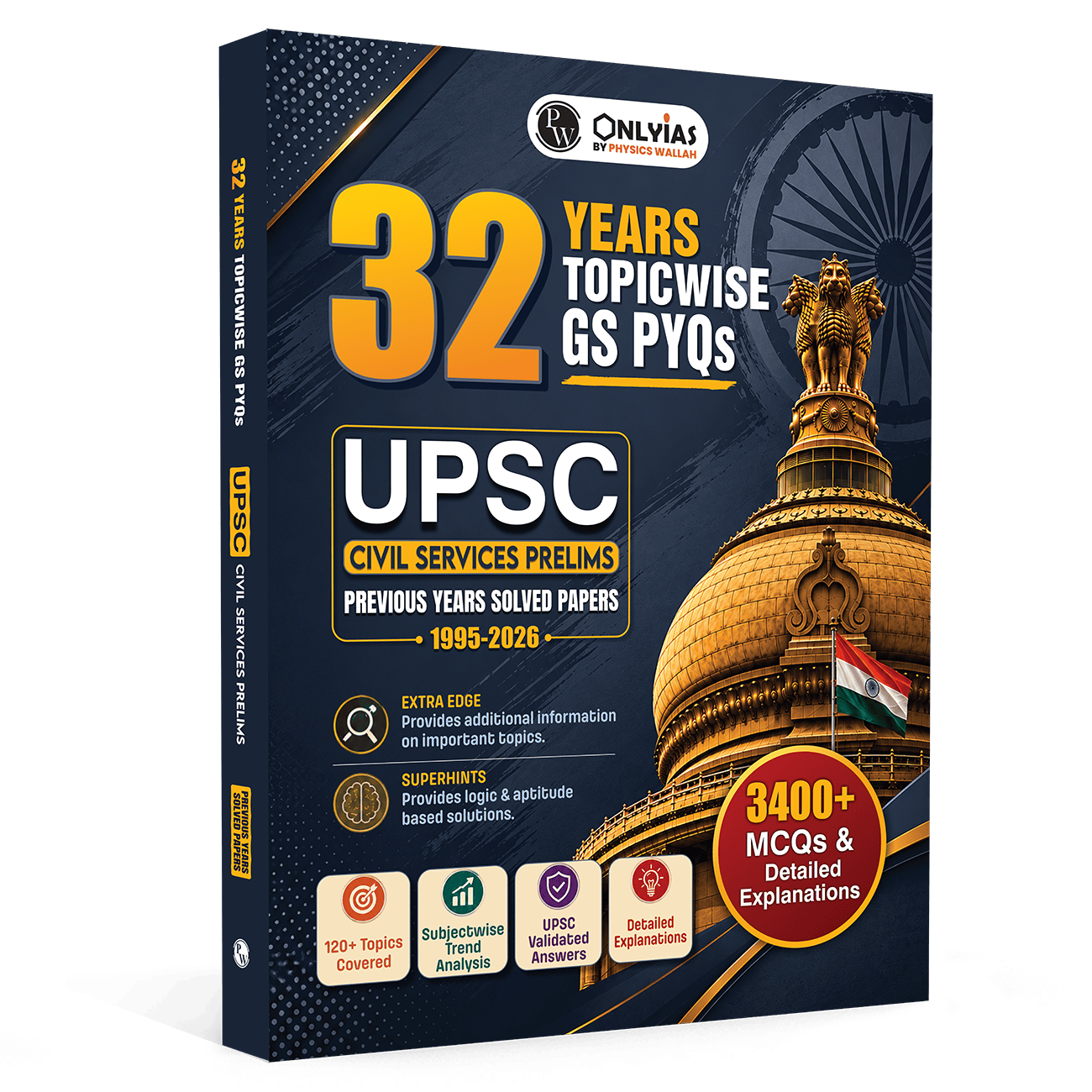
The comprehensive UPSC PYQ book compiles past examination papers spanning from 1995 to 2026. It serves as a foundational resource designed to match the current expectations of the civil services preliminary test. Instead of just listing questions chronologically, it systematically organizes the content to match your daily study targets.
-
Syllabus Coverage: It includes extensive coverage of General Studies (GS) Paper 1 and CSAT Aptitude Paper 2.
-
Question Volume: Contains over 3400 authentic solved multiple-choice questions (MCQs) for extensive practice.
-
Topic Segregation: Questions are neatly categorized across more than 120 individual topics.
-
Subject Depth: Covers essential subjects including Polity, Economy, History, Geography, Environment, Science & Technology, and Current Affairs.
-
Analytical Solutions: Provide detailed, option-wise explanations to clarify why an answer is correct and why others are wrong.
-
Visual Aids: Incorporates maps, diagrams, infographics, and other visual supports to build solid conceptual clarity.
Why Is the UPSC PYQ Book Essential for Prelims 2027 Preparation?
Relying entirely on mock tests without analyzing actual historical papers can lead your study sessions astray. Integrating a reliable UPSC PYQ book into your routine ensures your practice stays directly aligned with the real exam standard.
1. Authentic Trend Mapping
Using this volume helps you track how questions have changed over three decades. It provides a strategic preparation framework that lets you observe the evolution of question formats, from straightforward factual queries to complex, analytical statements.
2. Balanced GS and CSAT Practice
Securing a pass mark in CSAT has become a major hurdle for many aspirants in recent terms. Because this book covers both GS Paper 1 and CSAT Paper 2, you can build your logical reasoning, data interpretation, and quantitative skills alongside your general knowledge subjects.
3. Seamless Prelims and Mains Integration
Many subjects overlap significantly between the two stages of the civil services exam. Working through these chapterwise UPSC PYQs develops deep conceptual clarity that proves highly beneficial for writing descriptive answers in the subsequent Mains stage.
How Does the UPSC PYQ Book Help Identify High-Weightage Topics?
You do not need to give equal attention to every single page of your standard textbooks. Reviewing an authentic UPSC PYQ book allows you to separate high-yield areas from low-priority details, saving you valuable hours during your UPSC prelims 2027 preparation.
-
Isolating Recurring Themes: You can quickly see which areas face constant questioning, such as Buddhist architecture in History or Fundamental Rights in Polity.
-
Weightage Analysis: It allows you to calculate the approximate number of questions asked from a specific subject over the last ten years.
-
Tracking Question Shifts: You can notice when the exam shifts its focus, for instance, moving from basic environmental facts to complex international climate treaties.
-
Refining Your Focus: Helps you dedicate more hours to complex, high-weightage topics rather than skimming through everything equally.
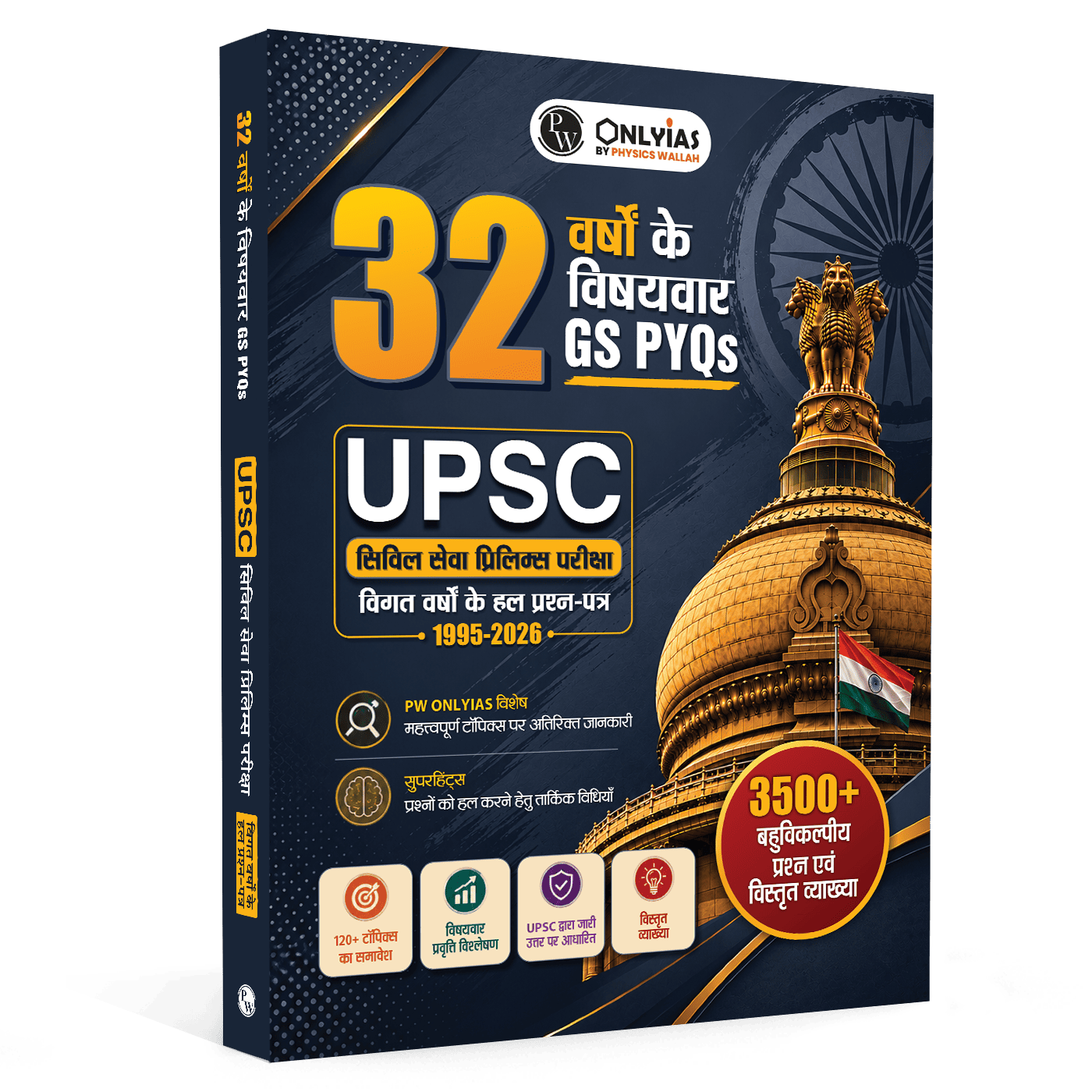
Prepare for UPSC Prelims 2027 with UPSC PYQ Hindi Book, covering 32 years of topic-wise GS questions from 1995–2026, 3500+ MCQs, and detailed explanations for focused practice.
How to Start Using the UPSC PYQ Book?
Diving straight into solving papers without a clear method can quickly become discouraging. To get the most out of your UPSC PYQ book, follow a structured step-by-step approach that fits naturally into your existing routine.
-
Read the Base Theory First: Finish a complete chapter from your standard textbook or lecture notes before opening the question bank.
-
Examine the Trend Analysis: Review the trend charts at the start of the section to see how many questions that topic generally produces.
-
Attempt Without Looking at Answers: Read each question carefully and try to solve it on your own before checking the provided key.
-
Study the Explanations Thoroughly: Do not just check if you got it right; read the option-wise breakdowns to understand the underlying logic completely.
-
Highlight Critical Explanations: Mark complex explanations or extra hints so you can return to them quickly during your next study cycle.
Combining systematic PYQ practice with reliable UPSC Books helps strengthen concepts, improve analytical thinking, and build the confidence required to excel in the UPSC Civil Services Examination.
How to Solve the UPSC PYQ Book Topic-Wise for Better Concept Clarity?
Solving questions chronologically by year can sometimes feel disjointed because the topics jump around constantly. Using chapterwise UPSC PYQs allows you to focus deeply on one specific subject area at a time.
This targeted method ensures you face different variations of the same core concept all at once. For instance, when you complete the "Presidential Powers" section under Indian Polity, you will see exactly how the commission has framed questions on that topic over the past 32 years.
This approach exposes the common traps, deceptive language, and specific keywords that examiners use to test your knowledge. It changes your approach from simple memorization to active, critical thinking.
Furthermore, the detailed option-wise solutions act as an excellent secondary learning tool. Understanding why three options are incorrect teaches you just as much as knowing the single correct answer. This systematic elimination process is a crucial skill to develop for your upcoming UPSC PYQ strategy.
Study Plan for Using UPSC PYQ Book
To finish the entire question bank systematically by the end of your mid-term phase, you need an organized timeline. This structured UPSC study plan divides your preparation into three distinct stages to ensure complete coverage.
|
Phase |
Main Focus Area |
Expected Daily Commitment |
Target Outcome |
|
Phase 1: Initial Mapping |
Solve questions alongside your primary reading of basic topics. |
45 minutes daily |
Build basic familiarity with actual question styles. |
|
Phase 2: Deep Drilling |
Group questions by theme to run dedicated subject revision blocks. |
1.5 hours daily |
Perfect your elimination methods and option analysis. |
|
Phase 3: Final Simulation |
Re-solve filtered, difficult questions under strict time limits. |
2 hours daily |
Maximize speed and minimize silly mistakes before the exam. |
UPSC Mindmaps Combo Set of 6 Books for visual, chapter-wise learning through mind maps, infographics, and flowcharts covering Indian Polity, Physical Geography, Economy, Ancient & Medieval India, Indian Geography, and Modern Indian History. This combo simplifies complex UPSC concepts, strengthens revision, and helps improve retention for Prelims and Mains preparation.
Common Mistakes to Avoid While Solving the UPSC PYQ Book
Many candidates own an excellent UPSC PYQ book but fail to use it effectively because of poor study habits. Staying aware of these common pitfalls will help keep your preparation on track.
-
Memorizing Answers Instead of Concepts: Avoid simply memorizing the correct option letter. Focus entirely on understanding the underlying principle behind the question.
-
Ignoring the Wrong Options: Do not skip the explanation text for the incorrect choices. The themes hidden in wrong options often turn into primary questions in later exam cycles.
-
Neglecting the CSAT Sections: Leaving the aptitude papers untouched until the final few weeks is risky. Practice the CSAT questions consistently to keep your problem-solving sharp.
-
Delaying Your Practice: Do not wait until you finish the entire syllabus to open your question bank. Use it daily alongside your theory reading to guide your understanding.
-
Skipping Regular Revision: Failing to revisit the questions you answered incorrectly means you are likely to repeat those same errors on the actual exam day.
Read More: Most Important Topics for UPSC Prelims and Mains Exam
UPSC PYQ Book FAQs
Q1: Can I rely only on a UPSC PYQ book to clear the exam?
No, it is a supportive tool designed to sharpen your question-solving skills and track trends. You must combine it with standard textbooks, reference notes, and current affairs tracking to build a complete foundation.
Q2: How do chapterwise UPSC PYQs help more than year-wise papers?
They group similar questions together, allowing you to check your understanding of a single topic immediately after reading the theory. This reinforces your learning and reveals your weak spots right away.
Q3: When is the best time to start using previous year questions UPSC in my schedule?
You should integrate them right from the start of your preparation. Looking over past questions before and after reading a chapter helps you understand which details deserve the most attention.
Q4: How does this volume assist me during my final prelims revision phase?
It highlights high-yield topics and offers detailed explanations that work as quick summaries. Re-solving your marked questions helps reinforce your elimination techniques efficiently.