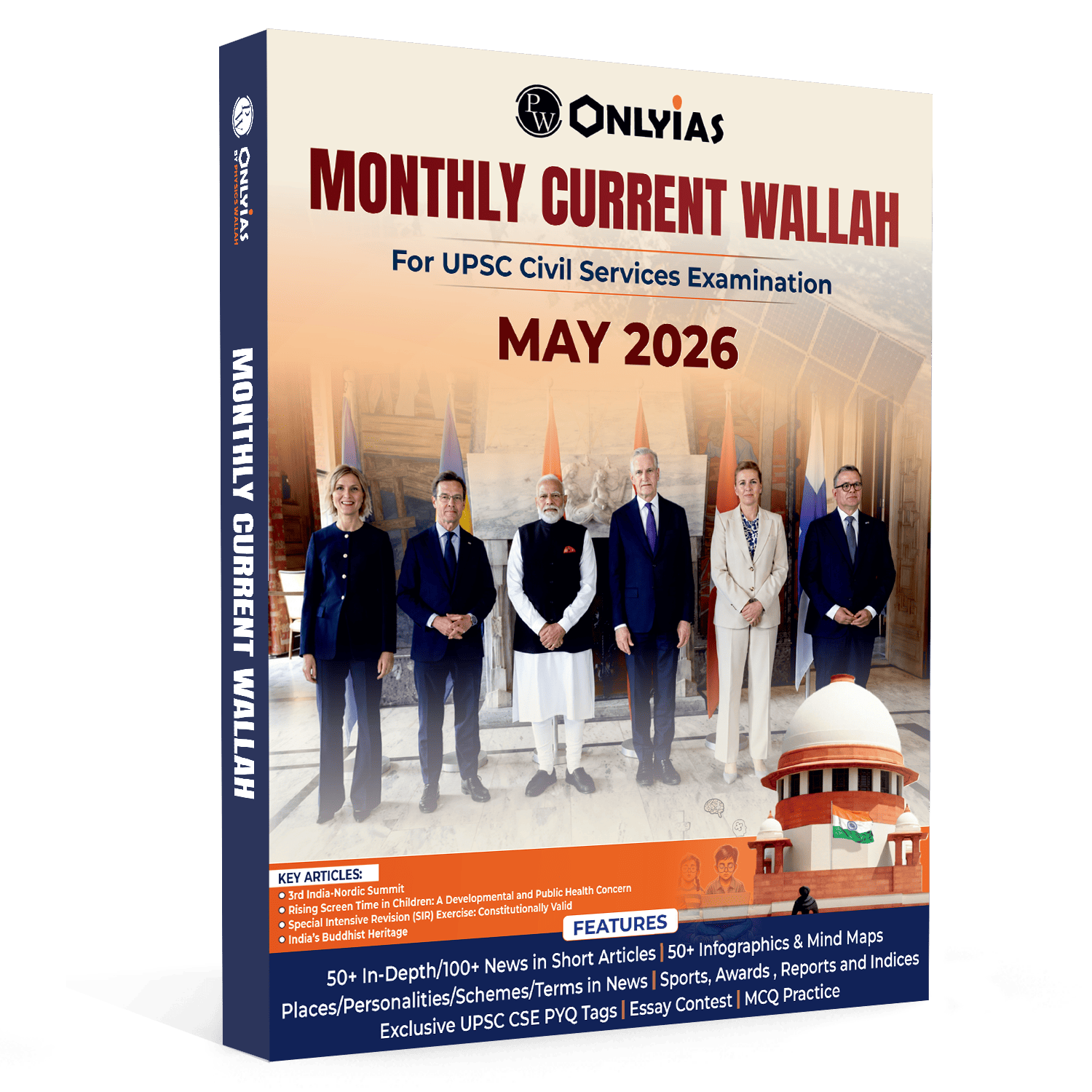
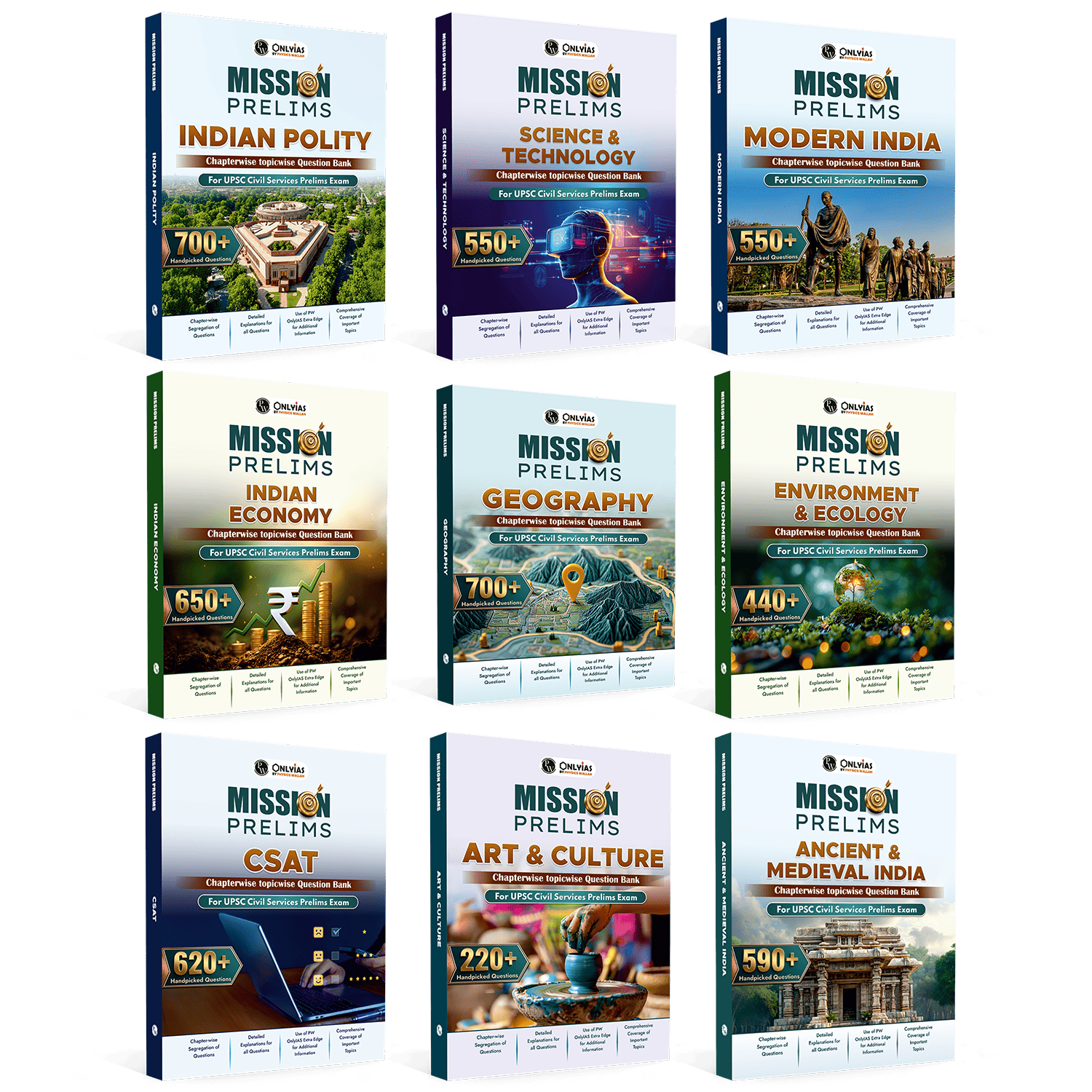
How to Use PW UPSC Current Affairs May 2026 Book for Preparation

The additional stress of daily news, together with static syllabus modifications, contributes to inefficient revising procedures. This huge challenge is solved by the PW UPSC current affairs May 2026 book which compiles complex dynamic events into a systematic syllabus-mapped reference. It bridges the gap between the dynamic daily events and the static core subjects, offering aspirants a single monthly package to increase analytical depth for Mains and strengthen factual memory for Prelims.
Importance of PW UPSC Current Affairs May 2026 Book for Preparation
To stay ahead in the tough Civil Services Examination, you need a guide that cuts through the superfluous noise and focuses on high-yield exam themes. The May current affairs book contains selected matters from eight national dailies, government reports and worldwide think institutes.
For the UPSC prelims current affairs, aspirants usually encounter two primary problems i.e. to find out which themes to study for the exam, and to remember individual facts. The current affairs book overcomes these issues by removing the clutter of needless headlines, offering a clear context and by including previous year questions (PYQs) together with probable questions.
Strategic Advantages for Candidates:
-
Curated Content Source : It compiles the material from the leading national dailies, government portals and reputable think tanks in one volume.
-
Dual-Stage Coverage: Factual insights for current affairs & Creating analytical frameworks for GS Papers I to IV
-
Time-saving: Provides pre-organized, exam-focused summaries, saving you hours of daily manual note-making.
-
Visual Retention Tools: Has extensive flowcharts, maps and comparison tables to increase retention during pre-exam modifications.
How to Read the PW UPSC Current Affairs May 2026 Book
One needs to approach a thorough current events book strategically instead of reading it passively. By following this step by step approach you will be able to retain as much as you can and also cover all the topics of May 2026 current affairs.
Step 1: Begin with the "News in Short" Section
Begin your study session with shortened news briefs. It gives a short macro overview of what’s happening month to month, before we go into long bits of analysis.
Step 2: Study In-Depth Mains Articles
Analyze comprehensive essays on governance, economics, environmental policy, and international relations. Focus on noting down statistics, committee recommendations, and key arguments for answer writing.
Step 3: Learn Prelims-Specific Segments
Read targeted prelims topics featuring integrated Previous Year Questions (PYQs) and probable practice items. Focus on geographical locations, statutory bodies, and scientific developments.
Step 4: Utilize Visual Aids for Quick Recall
Review infographics, conceptual mind maps, and thematic charts. Visual aids help simplify complex legal and ecological frameworks for rapid memory retrieval.
Step 5: Attempt "Test Yourself" Exercises
Conclude your monthly cycle by solving practice MCQs and Mains question prompts at the end of each module. Testing your knowledge immediately identifies gaps in your preparation.
How the PW UPSC Current Affairs May 2026 Book Connects Static and Current Affairs
The Civil Services Exam tests how effectively candidates link dynamic events with foundational static concepts. Combining standard reference texts with the this book builds an integrated understanding across all subjects.
|
Subject Area |
Dynamic May 2026 Focus Area |
Static Textbook Linkage |
|
Polity & Governance |
Bills, Constitutional Bench rulings, judicial reforms |
Fundamental Rights, Parliament, Judicial Review |
|
Indian Economy |
Banking policies, RBI norms, international trade pacts |
Monetary Policy, Fiscal Deficit, Monetary Aggregates |
|
Environment & Ecology |
Climate summits, species protection, national parks |
Wildlife Acts, Ecosystem Dynamics, Biodiversity Reserves |
|
Science & Technology |
Space exploration, defense tech, AI regulations |
Physics basics, Biotechnology, Satellite Orbits |
|
International Relations |
Regional summits, multilateral treaties, trade routes |
Foreign Policy, Global Bodies, Geopolitical History |
Linking Dynamic News to Core Subjects
-
Polity: When reading about recent constitutional judgments in your UPSC current affairs notes, review corresponding Articles on judicial independence and fundamental rights in your static textbook.
-
Economy: Connect monthly inflation data or regulatory changes in the PW UPSC current affairs book directly to core economic concepts like repo rates and fiscal policy mechanisms.
-
Environment: Map updates on newly designated wetlands or international agreements directly to your standard ecology notes.
How the PW UPSC Current Affairs May 2026 book Helps With Mains Answer Writing
This book goes beyond standard news summaries by offering specialized features designed for GS Paper IV (Ethics) and the Essay paper.
1. Integrating Real-World Ethics Case Studies
The publication includes practical case studies showcasing real-world administrative dilemmas, ethical governance practices, and integrity in public service. Studying these examples helps candidates draft authentic, well-reasoned responses for GS Paper IV.
2. Utilizing Research-Backed Mains Arguments
Each major Mains article provides structured arguments, official committee reports, and policy critiques. Incorporating these data points into your practice answers adds depth and authority to your arguments.
3. Participating in Essay Writing Contests
Candidates can use the monthly Essay contest prompts to test their writing skills and receive constructive feedback on the platform. Regular practice builds the structure, clarity, and coherence required for top essay marks.
How to Revise With the PW UPSC Current Affairs May 2026 book
Consistently revising your current affairs book is essential for long-term retention. A structured revision system prevents pre-exam fatigue and reinforces critical details.
First Pass (Days 1–10) ──► Read thoroughly & highlight facts, stats, and laws
Second Pass (Day 20) ──► Review highlighted text, charts, & News in Short
Third Pass (Day 30) ──► Revise mind maps & re-solve practice MCQs
The 3-Pass Revision Method:
-
First Pass (Days 1–10): Read through the volume carefully. Highlight important statistics, committee names, and legal provisions directly on the page.
-
Second Pass (Day 20): Focus on highlighted summaries, visual diagrams, and the "News in Short" section. Re-solve practice questions to test your memory.
-
Third Pass (Day 30): Review key headings, conceptual flowcharts, and answer-writing frameworks right before moving to the next monthly edition.
How to Practise With the PW UPSC Current Affairs May 2026 book
Practice is essential for understanding UPSC Prelims current affairs. This book simplifies practice by embedding Previous Year Questions directly alongside relevant topic analyses.
Benefits of Integrated Practice:
-
Understanding Question Trends: Seeing how UPSC framed questions on similar topics in previous years helps you focus on high-priority details while reading.
-
Testing Precision with Probable MCQs: Solving practice MCQs immediately after reading a topic validates your understanding and improves elimination skills.
-
Building Exam Confidence: Working through realistic practice questions reduces exam anxiety and improves time management for the actual paper.
FAQs
Is the PW current affairs book sufficient for Prelims?
Yes, this book offers comprehensive coverage by integrating news from over eight credible sources, PYQs, and dedicated practice MCQs.
How does this PW UPSC current affairs book help with Mains answer writing?
The current affairs book provides structured analytical articles, research-backed arguments, ethics case studies, and data points designed for GS Mains answers.
Should I still read daily newspapers if I use the PW UPSC book?
Reading the daily newspaper helps in building the basic framework but this current affairs book consolidates, organizes and categorizes the important happenings for quick revisions.
How are static topics integrated into the May 2026 current affairs content?
Articles in the current affairs edition explicitly link dynamic events to static subjects like Polity, Economy, and Environment, helping you build a connected understanding.
Where can I get the PW UPSC book?
You can get printed copies or download digital versions right there on the educational portal.