What does the UPSC Monthly Current Affairs February 2026 include

Preparing for civil services requires an organized approach to a vast sea of information. Many aspirants struggle to find a reliable resource that filters daily news into structured study material, creating stress and wasted hours.
This article explores how a dedicated UPSC current affairs February resource resolves this issue by streamlining monthly events into comprehensive, syllabus-aligned insights.
Overview of UPSC Current Affairs February 2026
The civil services examination demands a deep understanding of domestic and international events. Relying on scattered news headlines often leaves candidates unprepared for the complex, multi-layered questions asked in the examination. The current affairs February 2026 edition serves as a centralized compilation designed to bridge this knowledge gap.
By organizing news from the second month of the year into distinct academic pillars, it eliminates the need for manual curation.
This edition gathers essential information from multiple dimensions, ensuring that candidates do not miss out on critical regulatory changes, economic policies, or international pacts. It translates complex developments into clear explanations that mirror the exact demands of the civil services syllabus.
Topics Covered in UPSC Current Affairs February
A systematic approach to the UPSC current affairs February syllabus ensures that all major general studies papers are addressed uniformly. Rather than random assemblies of events, the topics are categorized into distinct thematic sectors that follow the examination pattern.
Polity and Governance
Developments concerning legislative bills, landmark judicial verdicts, constitutional amendments, and administrative reforms from February form the foundation of this section. It covers institutional structural updates, local self-government directives, and government transparency initiatives.
Economic Development
This section breaks down macroeconomic updates, fiscal policies, banking structural adjustments, and international trade trends. Special emphasis is given to budgetary announcements, sector-specific allocations, industrial corridors, and welfare schemes launched during the month.
International Relations
Global dynamics shift rapidly. The compilation tracks bilateral agreements, regional summits, institutional treaties, and geopolitical conflicts involving national interests. It decodes the strategic undertones of interactions with major global powers and neighboring countries.
Environment, Science, and Technology
From climate change policies to advancements in space research, biotechnology, and artificial intelligence, this module simplifies complex scientific jargon. It highlights biodiversity conservation efforts, pollution control frameworks, and newly discovered flora and fauna species.
Social Justice and Ethics Case Studies
The publication includes real-life examples and targeted case studies designed to strengthen preparation for General Studies (GS) Paper IV. These scenarios help candidates craft balanced, mature answers for the ethics paper.
UPSC Current Affairs stay updated with exam-relevant national and international developments through structured monthly coverage. These resources help simplify complex issues using concise notes, analysis, maps, practice questions, and revision tools to strengthen preparation for both UPSC Prelims and Mains.
How to Use UPSC Current Affairs February for Revision
A compilation is only as good as the revision strategy applied to it. To convert information into usable marks, candidates must adopt a structured method for utilizing the monthly notes.
First, leverage the visual learning aids, such as flowcharts and maps, to conduct quick weekly reviews. These diagrams condense multiple pages of text into single-page visual summaries, making them perfect for active recall sessions.
Second, engage with the integrated assessment tools. Do not skip the "Test Yourself" questions or the practice MCQs provided at the end of chapters. Attempting these questions immediately after reading a section highlights gaps in your understanding, ensuring that corrective reading happens before errors become a habit during the actual examination.
Benefits of UPSC Current Affairs February
Using a structured monthly compilation offers distinct advantages that help candidates outpace standard preparation methods. When analyzing the key features displayed, several structural advantages become evident for serious candidates:
-
Ahead of the Curve: This resource is released much earlier than most standard magazines. This early publication gives candidates significantly more time for systematic revision, personalized note-making, and continuous practice before the exam season peaks.
-
Diverse & Credible Sources: The content is carefully curated from leading newspapers, comprehensive government reports, the Press Information Bureau (PIB), Yojana, Kurukshetra, international institutions, and highly reputed think tanks. This provides a well-rounded and authentic coverage of events.
-
Beyond the News through Analytical Insights: Instead of encouraging rote learning or the mere memorization of shallow headlines, it helps candidates deeply understand the background, long-term impact, and structural relevance of important events.
-
UPSC Syllabus-Aligned Content: Every single article within the resource is directly mapped to the specific themes of the prelims and mains syllabus. This ensures focused, strategic, and highly relevant preparation.
-
Visual Learning Aids: The compilation utilizes detailed infographics, maps, structural flowcharts, data charts, and clear illustrations. These visual elements simplify highly complex topics and significantly improve long-term retention.
-
Practice Material: True learning requires validation. The text incorporates dedicated "Test Yourself" sections, multiple-choice questions (MCQs), and mock practice exercises to reinforce retention and help with self-evaluation.
-
Study Anytime, Anywhere: To accommodate different learning habits, the material is available in both premium print and accessible digital formats, ensuring flexible study schedules.
When to Use UPSC Current Affairs February During Preparation
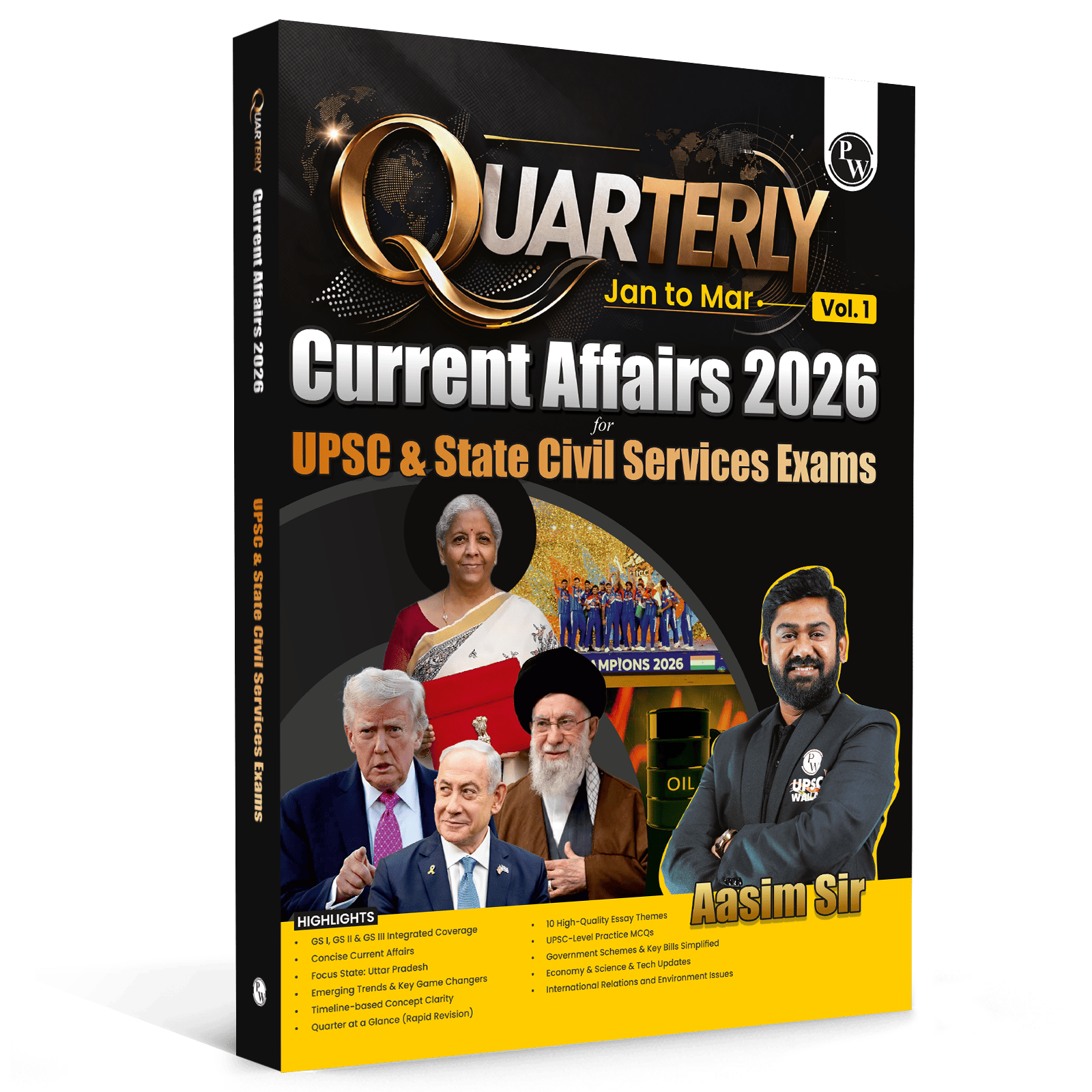
Timing dictates the utility of your study resources. Integrating the monthly current affairs for UPSC into your daily routine requires balancing dynamic news with your static syllabus. Instead of consuming scattered information, a structured approach helps create continuity across subjects and improves retention. Using consolidated resources allows you to revise efficiently and connect current developments with conceptual topics asked in Prelims and Mains. To make this process more organised and focused, aspirants can also use the Quarterly Current Affair UPSC Jan 2026 resource.
|
Phase of Preparation |
Ideal Utilization Strategy |
Expected Outcome |
|
Early Stages |
Read alongside foundational NCERT textbooks to see how static concepts apply to current events. |
Develops basic analytical thinking. |
|
Mid-Term Stage |
Dedicate specific blocks of time every month to complete the compilation and make micro-notes. |
Builds a comprehensive knowledge base. |
|
Advanced Stage |
Use the analytical insights to write answers and participate in essay evaluations. |
refines presentation and answer structure. |
Study Strategy Plan for UPSC Current Affairs February
Succeeding in current affairs preparation for UPSC involves dividing your learning into actionable steps. A simple weekly structure helps break down the vast content into achievable daily targets.
Week 1: Foundational Reading and Mapping
Focus entirely on the high-weightage sections like Polity and Economy. Read through the analytical insights to understand the background of every issue. Match the topics with your static syllabus notes to ensure you see the bigger picture.
Week 2: Analytical Expansion and Visuals
Review the International Relations and Environment modules. Spend time analyzing the infographics and maps to anchor geographic locations and diplomatic developments in your memory.
Week 3: Applications and Ethics
Study the real-life examples and specific case studies designated for GS Paper IV. Use the essay writing contest guidelines mentioned to draft comprehensive arguments on contemporary social and economic themes.
Week 4: Testing and Consolidation
Dedicate the final week to self-evaluation. Solve all the practice exercises, review your incorrect answers, and revisit the highlighted sections of the text to consolidate your learning.
Common Mistakes to Avoid While Covering UPSC Current Affairs February
Even with top-tier materials, wrong study habits can limit your progress. Being aware of these pitfalls ensures your UPSC prelims current affairs preparation remains highly productive.
-
Neglecting the Static Base: Current developments cannot be understood in isolation. Trying to read about financial policies without knowing basic banking terms leads to weak conceptual clarity.
-
Skipping Practice Questions: Passive reading creates a false sense of confidence. Skipping the built-in mock questions deprives you of crucial self-evaluation.
-
Ignoring the Syllabus Connections: Memorizing random facts that do not connect to the civil services syllabus leads to cluttered notes and low exam performance.
-
Overlooking Visual Tools: Failing to study the provided charts and maps forces you to rely on long paragraphs, reducing your revision speed.
Using the structured current affairs magazine 2026 helps you avoid these issues by providing a clear path from reading to retention.
Read More: Daily Study Plan for UPSC Preparation
UPSC Current Affairs February FAQs
What are the main sources used for the UPSC current affairs February compilation?
The material is curated using credible portals, including leading national newspapers, international think tank analyses, government reports, PIB, Yojana, and Kurukshetra magazines.
How do visual aids help in understanding the UPSC current affairs February trends?
The included maps, charts, flowcharts, and infographics simplify dense regulatory or scientific topics, allowing for faster visual tracking and stronger long-term memory retention.
Does this magazine include specific practice questions for self-evaluation?
Yes, the compilation includes dedicated "Test Yourself" questions, multi-choice questions, and targeted practice exercises to help candidates validate their knowledge.
Can I find content specific to the ethics paper in this edition?
The edition contains real-life examples and dedicated ethics case studies to help candidates prepare effectively for GS Paper IV.
Is there an option to evaluate my essay writing skills through this resource?
The publication features an essay writing contest that gives aspirants an opportunity to practice, improve their writing skills, and gain visibility on the platform.