Which UPSC Subject Benefits Most from Mind Map Revision Books
Many students preparing for the Civil Services Examination find it difficult to revise the huge UPSC syllabus. There are thousands of pages to study, and many topics are connected with each other. Reading the same books again and again during the final days before the exam can take a lot of time. This is where a UPSC mind map becomes very useful.
A good mind map turns long chapters into simple visual charts. It helps students see important topics, understand connections, and remember information faster. Instead of reading full chapters, students can revise complete subjects through visual diagrams. This saves time and improves memory. Pairing mind map revision with well-structured UPSC Books further strengthens conceptual understanding, supports systematic coverage of the syllabus, and makes revision more efficient during preparation.
Overview of UPSC Mind Map
A mind map is a visual learning tool that shows important topics in a simple and organized format. It helps students revise large amounts of information quickly. Instead of reading long paragraphs, students can understand a complete topic through connected branches, diagrams, and charts. The Civil Services syllabus contains many subjects with complex topics and facts. During revision, students need a quick way to review important information. This is why many aspirants use an IAS mind map to make revision faster and easier.
Subjects with many connected topics, timelines, and structures benefit the most from visual learning. These subjects include Indian Polity, Geography, Environment, History, and Economy.
Using a UPSC mind map book can help students:
-
Revise faster before the exam
-
Improve memory retention
-
Understand topic connections
-
Reduce revision time
-
Improve answer writing structure
-
Build confidence during preparation
Features of UPSC Mind Map
A quality mind map comes with several useful features that make UPSC preparation and revision much easier. Instead of reading long chapters again and again, students can use visual layouts to understand and remember important topics quickly. These features help save time, improve memory, and make the revision process more effective during both Prelims and Mains preparation.
Visual Learning Format
One of the biggest advantages of a mind map is its visual learning format. Information is presented through charts, branches, flow diagrams, and connected topics instead of long blocks of text. This makes difficult concepts easier to understand and helps students quickly identify important points during revision.
Easy Topic Connections
Many UPSC subjects contain topics that are linked with each other. A good mind map shows these connections clearly. Related concepts, events, and ideas are connected through visual branches, helping students understand the complete topic instead of studying isolated facts. This improves conceptual understanding and helps in answer writing.
Quick Revision
A complete chapter that normally takes several pages can often be revised through one or two visual charts. This allows students to cover more topics in less time. During the final weeks before the exam, quick revision becomes very important, and mind maps make this process much faster and more organized.
Better Memory
Visual layouts are easier for the brain to remember than long paragraphs. By studying through diagrams and structured charts, students can improve memory retention and recall information more easily during the examination. This is especially useful for subjects that contain many facts, articles, dates, and definitions.
Exam-Focused Content
Most mindmaps for UPSC focus only on important topics that are relevant for Prelims and Mains. Unnecessary details are removed, allowing students to concentrate on key concepts, important facts, and frequently asked questions. This targeted approach helps make revision more efficient and exam-oriented.
Organized and Structured Layout
Another useful feature is the organized structure of the content. Topics are arranged in a logical order, making it easier to move from one concept to another. This structured format helps students understand the flow of information and reduces confusion while studying complex subjects.
Useful for Multiple Subjects
A UPSC mind map books can be used for subjects such as Indian Polity, Geography, History, Economy, Environment, and Science. Since many UPSC topics are interconnected, visual revision works well across different parts of the syllabus and helps students revise multiple subjects efficiently.
How to Prepare with UPSC Mind Map?
A mind map works right when used together with standard books, class notes, and study materials. Mind maps are mainly revision tools, so they should support your learning instead of replacing it.
When used correctly, they can help you revise faster, improve your memory, and understand important topics more clearly. The key is to combine regular study with visual revision throughout your preparation journey.
Start with Basic Books
Before using any mind map, build a strong foundation by reading NCERT books and standard reference books. These resources help you understand the basic concepts, facts, and theories needed for UPSC preparation. A clear understanding of the subject makes mind maps much more effective during revision.
Use Mind Maps for Revision
After completing a chapter or topic, revise it using a mind map. Visual charts help you quickly review important points without reading the entire chapter again. This method strengthens memory and helps you remember key information for a longer time. Pairing this approach with UPSC Revision Books makes revision even more efficient by providing concise summaries, quick recall points, and exam-focused content for faster preparation.
Focus on Important Subjects
Some subjects benefit more from visual revision than others. Spend extra time using a mind map for subjects like Indian Polity, Geography, History, Economy, and Environment. These subjects contain many connected topics, making them ideal for mind map-based learning.
Revise Regularly
Regular revision is important for long-term retention. Review your visual charts every week to keep important facts and concepts fresh in your mind. Even a quick revision session can help prevent forgetting information and improve recall during the exam.
Practice Active Recall
Do not just look at the charts. Try to remember the complete topic without reading every point. Active recall helps train your brain to retrieve information quickly, which is useful during both Prelims and Mains examinations.
Link Current Affairs with Mind Maps
Many UPSC topics are connected with current events. Add important current affairs points to your existing mind maps whenever possible. This helps you connect static subjects with current developments and improves your overall understanding of the syllabus.
UPSC Mind Map Study Plan
A simple study plan can help you use mindmaps for UPSC in a better and more organized way. Regular revision with visual charts helps improve memory and keeps important topics fresh in your mind. By following a weekly plan, you can cover different subjects without feeling stressed or overloaded.
Monday and Tuesday
Study new topics from UPSC NCERT books, standard reference books, and class notes. Focus on understanding concepts and make short notes for future revision.
Wednesday
Revise Indian Polity using an IAS mind map. Review important Articles, Fundamental Rights, Constitutional Bodies, and Centre-State Relations through visual charts.
Thursday
Revise Geography and Environment using visual diagrams and structured layouts. Focus on climate, landforms, ecosystems, biodiversity, and important environmental topics.
Friday
Review Modern History timelines, important movements, British Acts, and freedom struggle events. Visual timelines can help you remember events in the correct order.
Saturday
Revise the Economy and connect important current affairs topics with economic concepts. Focus on inflation, banking, budget, monetary policy, and government schemes.
Sunday
Use your mind map for UPSC to revise all the important topics studied during the week. Spend time reviewing weak areas and topics that need more attention. You can also take a short mock test or practice questions to check your understanding.
Benefits of Using UPSC Mind Map
Using an mind map offers many advantages during UPSC preparation.
Saves Time
Large chapters can be revised quickly through visual summaries.
Improves Memory
Pictures, diagrams, and structured layouts are easier to remember than long text.
Helps in Prelims
Students can quickly recall facts and eliminate incorrect options.
Helps in Mains
Mind maps provide a ready structure for writing organized answers.
Reduces Revision Burden
Students do not need to repeatedly read hundreds of textbook pages.
Builds Confidence
Regular revision improves understanding and reduces exam stress.
Makes Learning Easier
Complex topics become simpler when presented in visual form.
How to Use the UPSC Mind Map for Different Subjects?
Some UPSC subjects benefit more than others when using a mind map book. Subjects that contain many connected topics, facts, timelines, and processes are easier to revise through visual charts.
A well-designed mind map helps students understand relationships between topics and remember information more effectively. Below are some of the best subjects for mind map-based revision.
UPSC Mind Map for Indian Polity
Indian Polity is one of the most important subjects in the UPSC syllabus and is highly suitable for visual revision. Many topics in Polity are connected with each other, making an IAS mind map very useful for quick understanding and revision. Resources like the UPSC Indian Polity Mind Map further simplify complex constitutional concepts, governance topics, and interlinked themes through visual learning, helping aspirants revise faster and retain information more effectively.
Students can use an IAS mind map to revise:
-
Constitutional Articles
-
Fundamental Rights
-
Directive Principles of State Policy
-
Constitutional Bodies
-
Statutory Bodies
-
Center-State Relations
-
Emergency Provisions
-
Parliament and State Legislatures
-
President, Prime Minister, and Governor
-
Constitutional Amendments
A visual chart helps students compare topics quickly, understand important differences, and avoid confusion during the examination.
UPSC Mind Map for Geography
Geography is naturally a visual subject, making it one of the right subjects for a mind map book. Many geographical concepts involve locations, processes, and connections that are easier to understand through diagrams than through plain text. Resources like Mindmaps Indian Geography for UPSC help aspirants revise important geographical concepts in a structured visual format, making learning faster, improving retention, and supporting efficient revision during preparation.
Important topics include:
-
Landforms
-
Weathering
-
Climate
-
Atmospheric Layers
-
Ocean Currents
-
Agriculture
-
Mineral Resources
-
Soil Types
-
Natural Vegetation
-
Disaster Management
Visual diagrams help students understand geographical processes clearly and improve memory retention during revision.
UPSC Mind Map for Modern History
Modern History contains many events, movements, leaders, and timelines. A mind map for UPSC helps students organize all this information in a simple visual format. Resources like Mindmaps Modern Indian History for UPSC further support revision by presenting important events, freedom movements, and historical connections in an easy-to-follow visual structure, helping aspirants retain information more effectively and revise faster.
Students can revise:
-
British Acts
-
Freedom Struggle
-
Social Reform Movements
-
Important Leaders
-
Revolts and Uprisings
-
Congress Sessions
-
Revolutionary Movements
-
Important Committees and Reports
Visual timelines help students understand the sequence of events and remember important historical developments more easily.
UPSC Mind Map for Economy
Economy is another subject that benefits greatly from visual learning. Many economic topics are connected through cause-and-effect relationships, which can be difficult to understand from text alone. Resources like UPSC Mindmaps Economy help simplify economic concepts through structured visual frameworks, making it easier to understand relationships between topics, revise faster, and retain important information for the examination.
Students can revise:
-
Inflation
-
Banking
-
Monetary Policy
-
Fiscal Policy
-
Budget
-
Economic Growth
-
Taxation
-
Financial Institutions
-
Government Schemes
A structured diagram helps students understand how different parts of the economy work together and how one economic change affects another.
UPSC Mind Map for Environment
Environment and Ecology contain many interconnected concepts that become easier to understand through visual learning. A mind map for UPSC helps students revise these topics quickly and effectively.
Students can revise:
-
Food Chains
-
Food Webs
-
Biodiversity
-
National Parks
-
Wildlife Sanctuaries
-
International Conventions
-
Climate Change
-
Ecosystems
-
Environmental Organizations
Connected diagrams make it easier to remember environmental concepts, important species, conservation efforts, and international agreements.
UPSC Mind Map for Hindi Medium Students
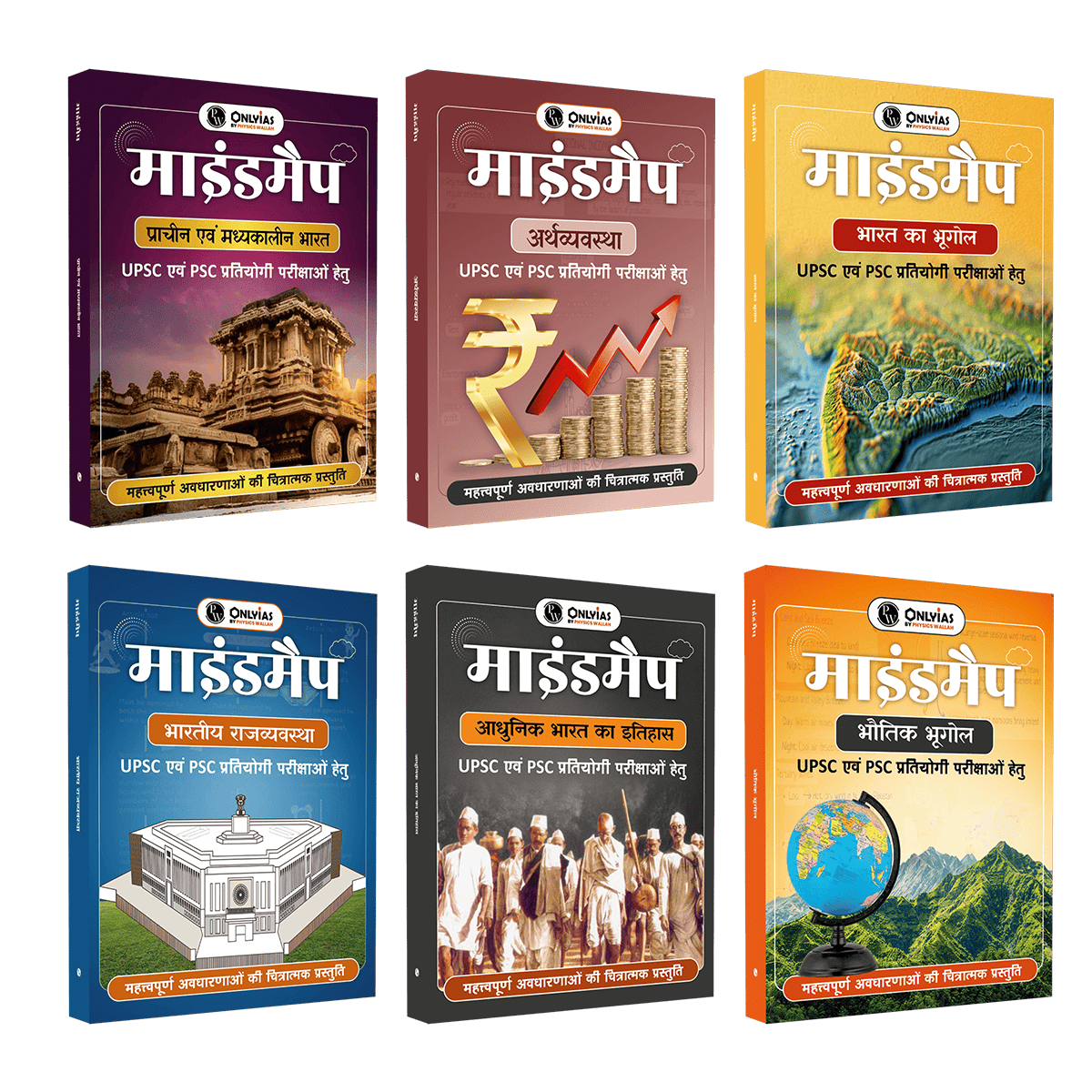
Many Hindi-medium students prefer studying through a mind map in Hindi UPSC. These resources provide the same benefits as English versions while using simple Hindi terminology.
A good mind map in Hindi for the UPSC helps students:
-
Understand difficult topics easily
-
Learn standard exam terms
-
Revise faster
-
Improve concept clarity
-
Save preparation time
Hindi-medium aspirants can use these resources for subjects like Geography, Economy, History, and Polity.
Tips for Using UPSC Mind Map
Follow these simple tips to get the best results from your mind map.
Revise Every Week
Regular revision improves memory and understanding.
Keep Books and Mind Maps Together
Use textbooks for learning and mind maps for revision.
Focus on Weak Areas
Spend more time revising subjects you find difficult.
Practice Recall
Try to redraw important charts from memory.
Use Before Tests
Review visual summaries before mock tests and exams.
Update Current Affairs
Add important current events to your existing diagrams.
Mistakes to Avoid While Using UPSC Mind Map
Many students do not use mind maps for UPSC correctly. Avoid these common mistakes.
Using Only Mind Maps
Mind maps should support learning, not replace standard books.
Skipping Regular Revision
A chart is useful only when reviewed regularly.
Ignoring Concept Understanding
Do not memorize diagrams without understanding the topic.
Creating Overcrowded Maps
Too much information can make revision difficult.
Not Practicing Questions
Always combine revision with answer writing and mock tests.
Depending on Last-Minute Revision Only
Use mind maps throughout preparation, not only before the exam.
Read More: How to Study Current Affairs for UPSC Exam
UPSC MindMap FAQs
Which subject benefits the most from a mind map?
Indian Polity and Geography benefit the most from a mind map. Both subjects contain many connected topics, concepts, and facts that are easier to understand through visual diagrams. Polity includes Articles, Constitutional Bodies, and governance structures, while Geography contains maps, climate systems, and physical processes that naturally fit visual learning methods.
Can an IAS mind map help in both Prelims and Mains?
Yes, an IAS mind map can be very useful for both stages of the UPSC examination. For Prelims, it helps with quick revision of facts, concepts, and important topics. For Mains, it helps students organize their thoughts, improve answer structure, and remember key points while writing descriptive answers.
Is a mind map book for UPSC better than making my own charts?
A mind map book for UPSC saves a lot of time because it already contains organized, verified, and exam-focused information. Students can start revising immediately without spending hours creating diagrams. However, making your own charts can also be useful because the process of creating them helps improve understanding and memory retention.
Is a mind map in Hindi UPSC available for major subjects?
Yes, many publishers now offer a mind map in Hindi UPSC for major UPSC subjects. Hindi-medium students can find visual revision resources for Indian Polity, History, Geography, Economy, Environment, and other important areas of the syllabus. These resources use simple and standard Hindi terms that are suitable for UPSC preparation.
How often should I revise mindmaps for UPSC?
You should review your mindmaps for UPSC at least once every week. Regular revision helps keep important information fresh in your memory. During the final months before the examination, many students revise their mind maps multiple times a week to improve recall and strengthen their preparation.