Who Benefits Most From an UPSC Indian Polity Mind Map — Law Graduates or Non-Law

A UPSC Polity Mind Map helps bridge this gap by converting lengthy constitutional concepts into organised visual structures. Instead of memorising isolated facts, aspirants can understand relationships between the Constitution, Parliament, Executive, Judiciary, Fundamental Rights, and governance systems.
Whether you are a law graduate familiar with legal terminology or a non-law student starting from basics, a structured mind map can simplify revision and improve conceptual clarity.
Why Use a UPSC Polity Mind Map for Civil Services Preparation?
Traditional polity books explain topics chapter by chapter, but the Constitution functions as an interconnected system. The powers of Parliament affect the Executive, judicial review influences governance, and constitutional amendments reshape institutions.
A mind map helps aspirants view Indian Polity as one connected framework instead of separate chapters.
UPSC Polity Mind Map: Complete Governance Structure
INDIAN CONSTITUTION
│
┌───────────────────────┼───────────────────────┐
│ │ │
EXECUTIVE LEGISLATURE JUDICIARY
│ │ │
President Parliament Supreme Court
PM & Council Lok Sabha High Courts
Ministers Rajya Sabha Judicial Review
│ │ │
Policy Making Law Making Constitutional Protection
This visual approach allows students to quickly revise constitutional bodies, powers, and relationships before examinations.
How Visual Learning Improves Polity Preparation
A UPSC Polity Mind Map supports preparation by:
-
Improving memory retention: Concepts become easier to recall through connected diagrams.
-
Reducing revision time: Large chapters can be revised through compact visual summaries.
-
Building analytical understanding: Students learn how constitutional provisions influence governance.
-
Supporting answer writing: Structured diagrams help create organised Mains responses.
For example, instead of remembering the Judiciary as an isolated chapter, students can connect it with Fundamental Rights, judicial review, and constitutional supremacy.
How Does a UPSC Polity Mind Map Connect Constitutional Concepts?
UPSC questions rarely test only direct definitions. They often check whether aspirants understand the relationship between constitutional provisions and their practical application.
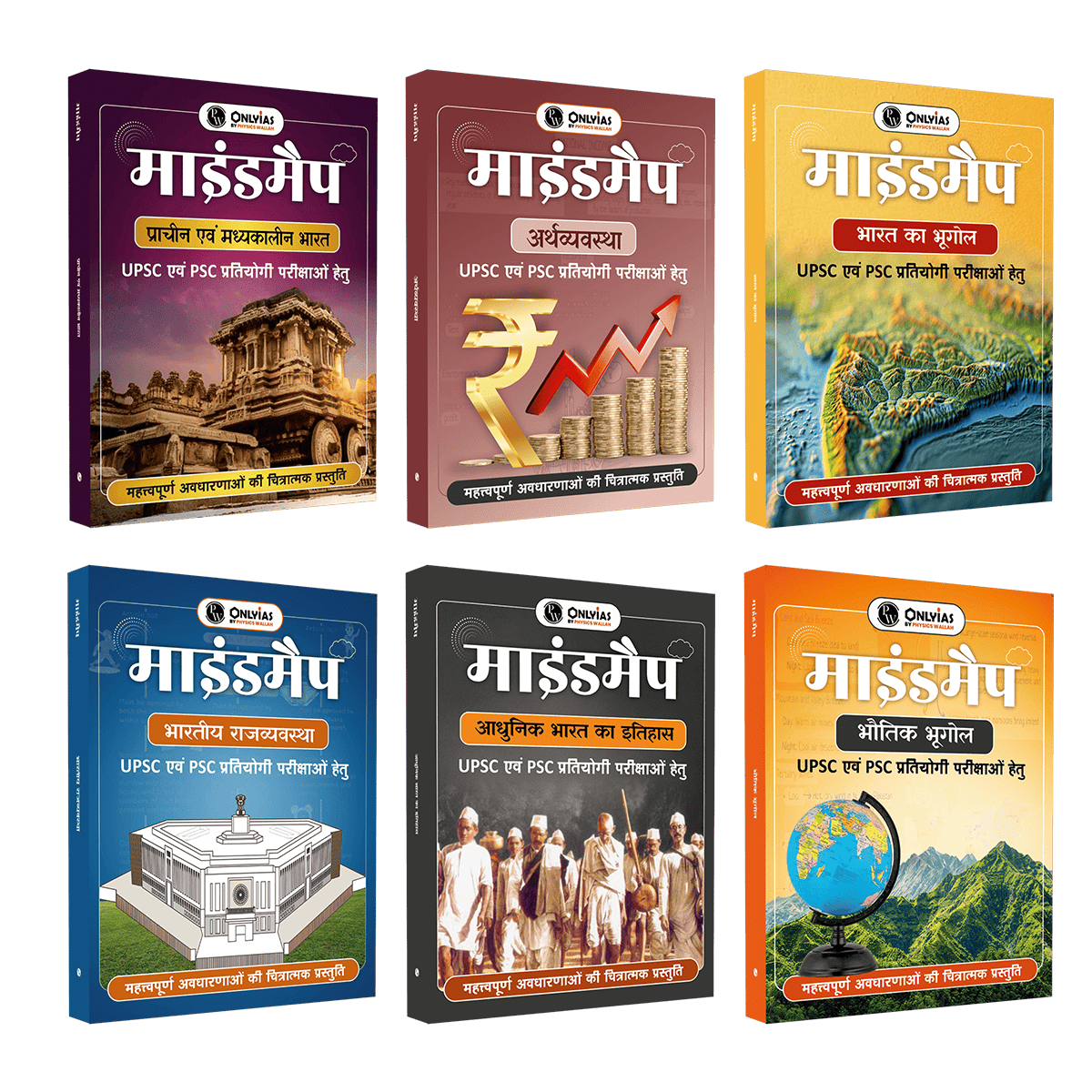
A visual revision system helps students connect Articles, amendments, institutions, and important judgments. When combined with concise UPSC Revision Books, this approach becomes even more effective by helping aspirants revise faster, strengthen conceptual clarity, and retain interconnected Polity topics for both Prelims and Mains preparation.
UPSC Polity Mind Map: Constitution to Governance Application
CONSTITUTIONAL PROVISION
│
▼
INSTITUTION / POWER
│
▼
GOVERNANCE IMPACT
│
▼
CURRENT AFFAIRS CONNECTION
For example:
Article 356 – President’s Rule
Article 356
│
▼
Failure of Constitutional Machinery
│
▼
Central Intervention
│
▼
Judicial Review
│
▼
S.R. Bommai Judgment
A normal textbook may explain the provision, but a mind map helps aspirants understand:
-
When can President’s Rule be applied
-
Role of the Governor
-
Parliamentary approval requirements
-
Judicial limitations on misuse of power
This approach makes revision more effective for both objective and descriptive papers.
UPSC Polity Mind Map for Local Governance and Decentralization
The Panchayati Raj and Urban Local Bodies sections are important parts of Indian Polity. Understanding the 73rd and 74th Constitutional Amendments becomes easier when their structure is mapped visually.
UPSC Polity Mind Map: Local Self Government
LOCAL GOVERNANCE
│
┌──────┴────────┐
│ │
RURAL URBAN
│ │
Panchayats Municipalities
│ │
73rd 74th
Amendment Amendment
│ │
Democratic Decentralisation
Important constitutional links:
|
Constitutional Provision |
Focus Area |
Governance Impact |
|
Article 243G |
Powers of Panchayats |
Enables local planning and development |
|
Article 243I |
State Finance Commission |
Supports financial decentralisation |
|
Article 243K |
Panchayat Elections |
Ensures independent local elections |
Through visual revision, aspirants can quickly connect constitutional provisions with their practical significance.
What Makes a UPSC Polity Revision Book Effective?
Choosing the right study resource plays an important role in UPSC preparation. A good UPSC Polity Revision Book should not only provide information but also help aspirants organise concepts, revise faster, and apply knowledge during the examination.
A visual revision resource transforms complex constitutional topics into easy-to-understand frameworks. It works as a bridge between detailed textbooks and quick exam-time revision.
UPSC Polity Mind Map: Features of an Effective Revision Resource
UPSC POLITY REVISION BOOK
│
┌────────────────┼────────────────┐
│ │ │
Syllabus Visual Notes Exam Focus
Alignment & Charts Approach
│ │ │
Prelims Flowcharts MCQ Practice
Mains Timelines Answer Writing
A quality polity revision book should include:
1. Syllabus-Based Content Organisation
Every topic should connect with the UPSC syllabus. Instead of unnecessary details, focus should remain on high-value areas such as:
-
Constitutional Framework
-
Fundamental Rights
-
Directive Principles
-
Parliament
-
Executive
-
Judiciary
-
Constitutional Bodies
-
Local Governance
2. Concept-Based Visual Summaries
Topics like the Basic Structure Doctrine, separation of powers, and judicial review involve multiple concepts. Mind maps simplify these ideas by showing how they developed over time.
UPSC Polity Mind Map: Basic Structure Doctrine
CONSTITUTIONAL AMENDMENTS
│
▼
Parliament's Amendment Power
│
▼
Challenge Before Judiciary
│
▼
Basic Structure Doctrine
│
▼
Constitutional Limits on Power
This helps aspirants remember not just the judgment but also the reasoning behind it.
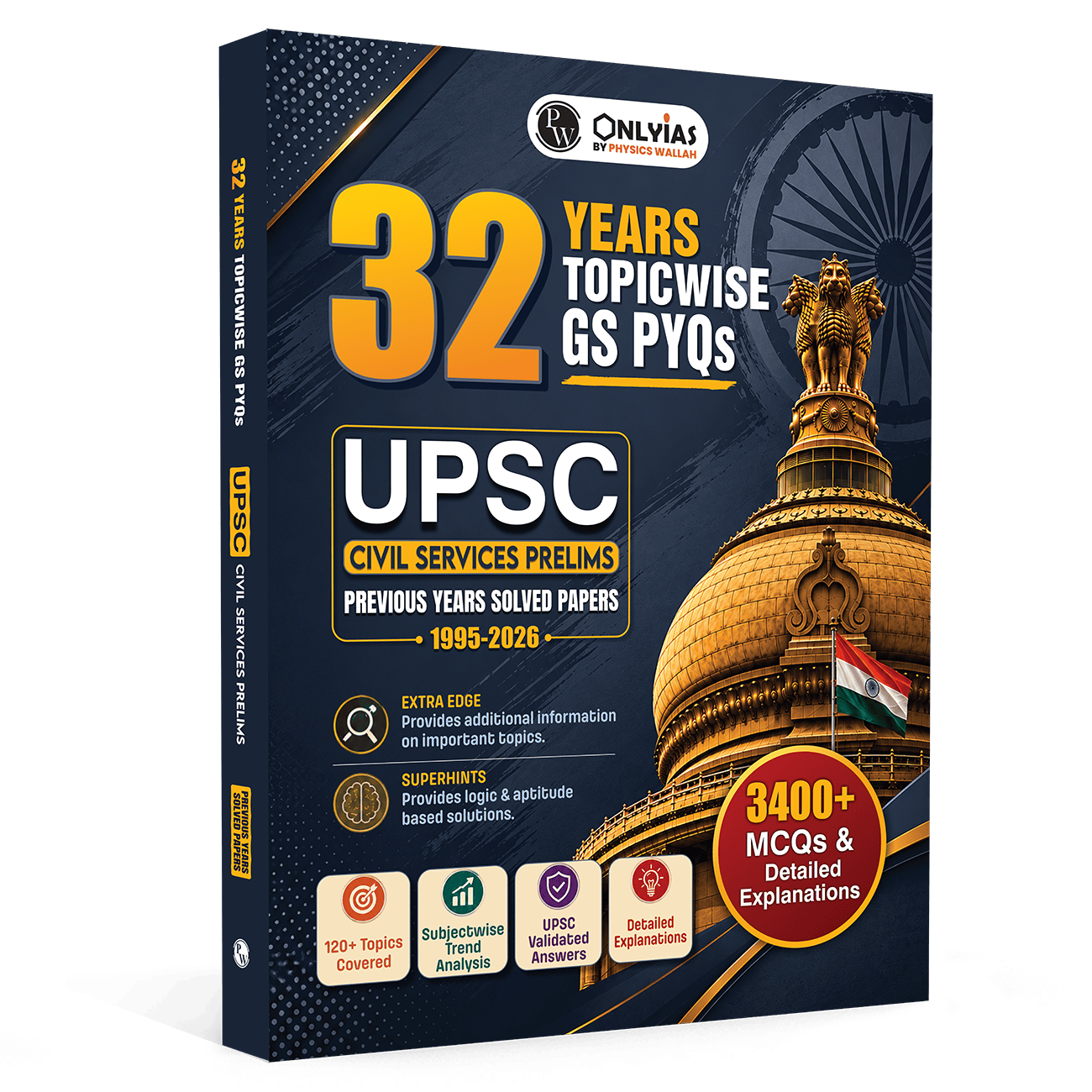
Also Check, UPSC Previous Year Papers
How to Use UPSC Polity Mind Maps for Prelims Preparation?
A mind map becomes most effective when combined with an active revision strategy. Simply reading notes repeatedly does not guarantee retention. Aspirants need to repeatedly connect, recall, and apply concepts.
UPSC Polity Mind Map: Prelims Revision Strategy
READ TEXTBOOK
│
▼
UNDERSTAND CONCEPTS
│
▼
CONNECT THROUGH MIND MAP
│
▼
ADD CURRENT AFFAIRS
│
▼
PRACTICE QUESTIONS
A practical study cycle includes:
Step 1: Build Foundation
Start with standard polity books to understand:
-
Constitutional terms
-
Historical background
-
Institutional functions
-
Important Articles
Step 2: Convert Learning Into Visual Memory
After completing a chapter, revise it through a UPSC Polity Mind Map. This helps identify connections between topics.
For example:
Parliament is connected with:
-
Law-making process
-
Money Bills
-
Constitutional amendments
-
Executive accountability
Step 3: Add Current Affairs Connections
Polity preparation becomes stronger when static concepts are linked with recent developments, such as:
-
Supreme Court decisions
-
New legislation
-
Government policies
-
Constitutional debates
How Can UPSC Polity Mind Maps Improve Mains Answer Writing?
UPSC Mains requires more than factual knowledge. Aspirants need structured answers with constitutional references, examples, and logical analysis.
Mind maps naturally train students to organise information.
UPSC Polity Mind Map: Answer Writing Framework
QUESTION
│
▼
INTRODUCTION
│
▼
CONSTITUTIONAL PROVISION
│
▼
ANALYSIS
│
▼
EXAMPLES / JUDGMENTS
│
▼
CONCLUSION
For example, while answering a question on Fundamental Rights, a student can quickly structure:
-
Meaning of Fundamental Rights
-
Relevant Articles
-
Role of Judiciary
-
Reasonable restrictions
-
Contemporary examples
This creates answers that are clear, analytical, and easy to evaluate.
UPSC Polity Mind Map vs Traditional Textbook Notes
Both textbooks and revision notes have value, but they serve different purposes.
UPSC Polity Mind Map: Learning Comparison
TEXTBOOK APPROACH
│
▼
Detailed Information
│
▼
Long Revision Time
MIND MAP APPROACH
│
▼
Connected Concepts
│
▼
Quick Recall
Key Differences:
|
Traditional Notes |
UPSC Polity Mind Map |
|
Information spread across pages |
Concepts visible in one structure |
|
Requires repeated reading |
Supports active recall |
|
Topics appear separate |
Shows relationships |
|
Revision takes more time |
Faster last-minute review |
A combination of both methods creates a stronger preparation strategy.
Read More: UPSC Prelims Subject-wise Weightage Syllabus and Strategy
UPSC Polity Mind Map FAQs
1. How does a UPSC Polity Mind Map help in Prelims preparation?
A UPSC Polity Mind Map converts lengthy constitutional topics into visual connections, making it easier to remember Articles, institutions, amendments, and important concepts during revision.
2. Can a UPSC Polity Mind Map replace standard books?
No. It works as a revision tool. Standard books help build concepts, while mind maps help organise and recall information quickly.
3. When should aspirants use UPSC Polity revision notes?
They can be used after completing textbook chapters, during weekly revision, and especially before Prelims and Mains examinations.
4. Which polity topics should be prioritised for UPSC?
Important areas include Fundamental Rights, Directive Principles, Parliament, Executive, Judiciary, Constitutional Bodies, Emergency Provisions, and Local Governance.
5. What should a good UPSC Polity revision book include?
A useful revision book should contain syllabus-focused content, visual summaries, flowcharts, constitutional comparisons, and exam-oriented explanations.