Who Should Prioritise Indian Geography Mind Maps in their UPSC Revision
Geography is a core pillar of the syllabus, but memorising extensive textual data about rivers, mineral locations, and climate zones often overwhelms candidates. Many learners struggle to retain these detailed facts as the examination approaches, leading to confusion during revision.
To overcome this challenge, integrating UPSC geography mind maps into your study routine serves as an effective strategy. Visual tools break down lengthy chapters into concise, interconnected diagrams, ensuring that you grasp the foundational concepts while saving valuable preparation time.
What Are UPSC Geography Mind Maps?
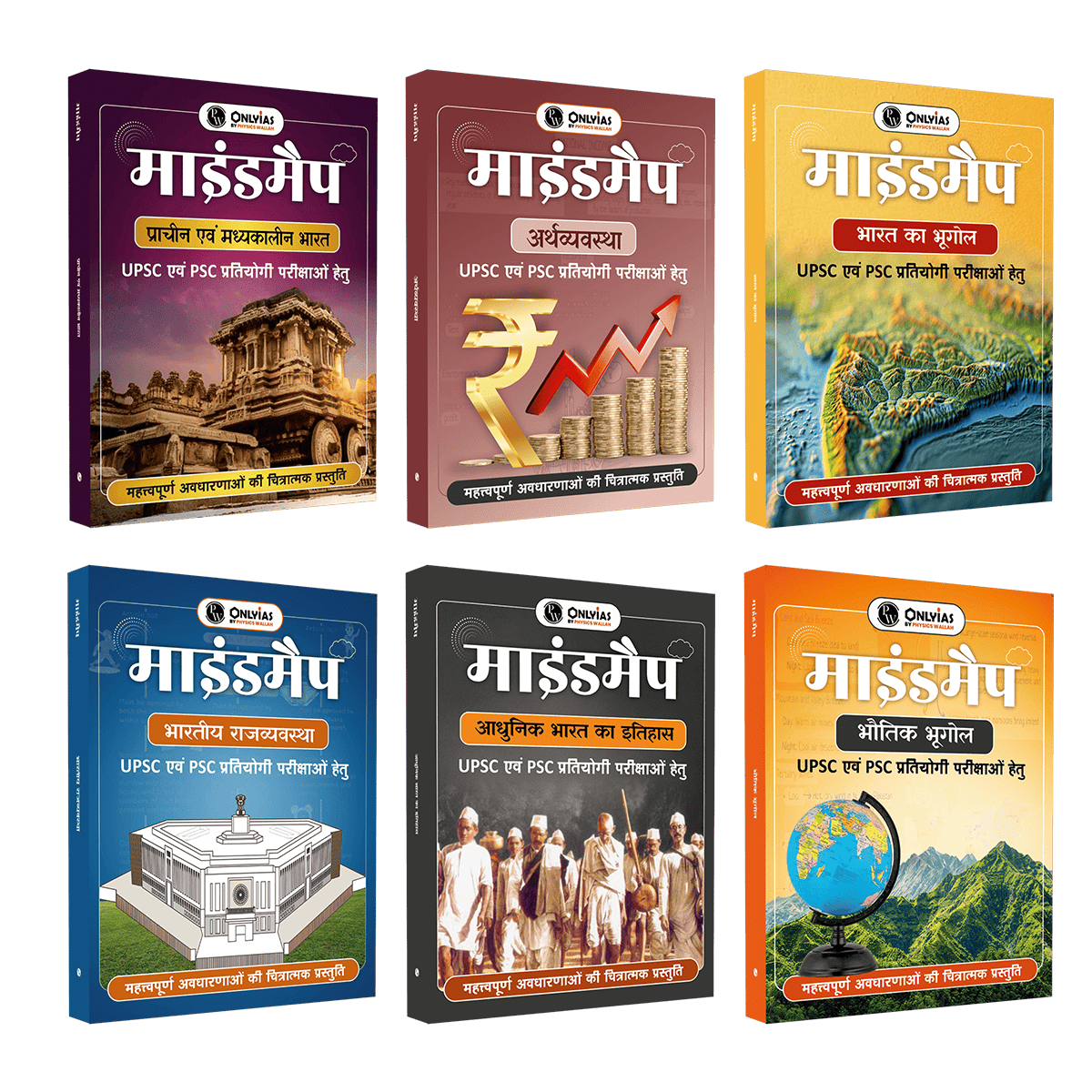
An UPSC geography mind maps resource is a structured visual framework designed to convert dense textual paragraphs into interconnected graphical layouts. Instead of reading pages of continuous text, these maps display a central geographical theme with branches extending to related sub-topics, critical data, and physical characteristics.
For the civil services examination, these mind maps consolidate the extensive syllabus into simplified visual architectures. They integrate thematic maps, flowcharts, and infographics to depict complex spatial relationships.
For instance, rather than reading a long description of a river system, UPSC mind map displays the river source, major tributaries, dams, and outflow points in a single, scannable diagram. This approach ensures that you absorb the entire ecosystem of a topic at a glance.
Why UPSC Geography Mind Maps Are Useful for Revision
UPSC Geography Mind Maps make revision more effective by converting lengthy geographical concepts into structured visual summaries. They help aspirants quickly recall important topics, connect related concepts, and improve retention during Prelims and Mains preparation. By using these mind maps regularly, students can revise more quickly and organize their answers with greater clarity.
-
Enhanced Memory Retention
The human brain processes visual information significantly faster than plain text. Traditional textbooks require high cognitive effort to recall specific regional distributions during exams.
Visual frameworks create strong mental anchors, making it easier to recreate maps and diagrams in the examination hall.
-
Streamlined Content Delivery
Syllabus coverage requires filtering out excessive details and focusing on exam-relevant facts. These visual tools compile essential points from multiple standard sources, presenting them in a highly condensed manner.
This allows you to revise complete topics in a fraction of the time it takes to read a conventional textbook chapter.
-
Quick Revision of Complex Data
Geography involves a heavy mix of theoretical concepts and factual data points, such as the location of mineral resources or industrial corridors. A structured visual layout clusters this data logically, allowing you to review multi-layered topics without getting bogged down by heavy prose.
Who Should Use UPSC Geography Mind Maps?
UPSC Geography Mind Maps are useful for aspirants who want a structured way to revise geographical concepts and improve their understanding of important topics. They can help beginners build a strong foundation, experienced candidates revise quickly, and Mains aspirants organize concepts into well-structured answers. Combining these visual tools with concise UPSC Revision Books further improves retention, supports faster revision cycles, and helps aspirants revisit important facts and interconnected concepts more efficiently before the examination.
-
Visual Learners
Candidates who absorb information better through diagrams, charts, and spatial layouts will benefit immensely from this approach. If you find yourself drawing diagrams in your notes to understand atmospheric circulation or ocean currents, these pre-structured visual maps match your learning style perfectly.
-
Aspirants Struggling with Retention
Many candidates read the syllabus thoroughly but struggle to recall factual data under exam pressure. If you regularly confuse the tributaries of Peninsular rivers or the specific soil types of different regions, utilising these maps will help anchor these facts clearly in your memory.
-
Working Professionals and Time-Crunched Students
Balancing a full-time job or university curriculum with civil services preparation leaves very little time for long-form reading. These concise tools act as an excellent resource for quick study sessions during commutes or short breaks, ensuring consistent progress without requiring hours of uninterrupted study time.
-
Candidates Aiming for Mains Answer Writing
The Mains examination rewards structured answers accompanied by clear diagrams. By studying pre-made visual layouts, you naturally learn how to structure your thoughts and present geographical data diagrammatically, which directly improves your answer-writing style.
Benefits of Revising with UPSC Geography Mind Maps
Using an organised visual tool brings distinct advantages over standard textbook revisions. The table below outlines how these visual structures improve your preparation compared to traditional text.
|
Revision Aspect |
Traditional Textbooks |
UPSC Geography Mind Maps |
|
Review Speed |
High time consumption per chapter |
Rapid scanning of entire topics in minutes |
|
Information Density |
Heavy prose with scattered facts |
Highly condensed, point-wise layouts |
|
Conceptual Clarity |
Requires deep reading to connect ideas |
Instantly shows relationships between topics |
|
Data Recall |
Prone to mixing up regional facts |
High spatial recall via targeted diagrams |
When to Use UPSC Geography Mind Maps?
UPSC Geography Mind Maps are most useful when aspirants need to revise concepts, connect important topics, and improve recall during different stages of preparation. Using them at the right time helps strengthen understanding, save revision time, and support better Prelims and Mains answer practice. Combining visual revision with UPSC Previous Year Papers further helps aspirants understand how geography concepts are actually tested in the examination.
1. After Completing the Standard Textbook Reading
These visual tools are not meant to replace your primary reading. The best time to introduce them is right after you finish reading a comprehensive geography of India book for UPSC. Once you understand the underlying concepts, the maps serve to solidify that knowledge and organise it for future retrieval.
2. During Daily or Weekly Revision Sessions
To prevent information decay, you need regular revision intervals. Spending fifteen minutes reviewing a visual layout at the end of the day reinforces what you studied earlier, keeping the facts fresh without causing mental fatigue.
3. In the Final Weeks Before the Examination
The final month before the Prelims or Mains is highly stressful, leaving no time to re-read thousands of pages. Relying on concise visual summaries allows you to run through the entire geography of India for UPSC syllabus multiple times, building immense confidence before exam day.
Study Plan for Using UPSC Geography Mind Maps
To get the most out of your visual study aids, you need a structured approach that blends them with standard preparation resources.
-
Step 1: Build Core Knowledge: Start your preparation by reading a standard textbook, such as a dedicated Indian geography book for ias, to understand theoretical foundations thoroughly.
-
Step 2: Cross-Reference with Visuals: Open your mind maps alongside your notes. Match the textual descriptions of landforms or climate zones with the visual branches to see how the information connects.
-
Step 3: Practice Active Recall: Look at a central theme in the mind map, cover the outer branches with a sheet of paper, and try to state the sub-topics from memory before checking the map.
-
Step 4: Use for Answer Writing: Pick previous years' Mains questions and use the structural layout of the mind maps to design your answer introductions, body points, and accompanying diagrams.
-
Step 5: Regular Dynamic Updates: Whenever you encounter a new current affairs update related to a specific region, location, or environmental issue, note it down next to the corresponding branch on your map.
Combining this strategy with an authoritative UPSC Indian geography book ensures that your factual knowledge base and conceptual understanding remain perfectly balanced.
Read More: UPSC Geography Previous Year Papers with Downloaded PDF
UPSC Geography Mind Maps FAQs
1. Can I rely solely on UPSC geography mind maps for my preparation?
No, visual mind maps are designed to complement your standard textbooks, not replace them. You should use them as a secondary tool to revise, consolidate, and retain the information you have gathered from detailed study sources.
2. How do visual maps help in clearing the Prelims examination?
The Prelims exam contains many fact-based and location-specific questions. Visual maps present data like river pathways, mountain passes, and national parks in a clear layout, making it much easier to recall precise details and eliminate incorrect options under exam pressure.
3. Are these mind maps helpful for the Mains descriptive paper?
Yes, they are highly beneficial. The Main paper requires structured answers within strict word limits. Studying the organized hierarchy of mind maps helps you learn how to break down complex topics into clean points and design relevant diagrams for your answers.