Why Physical Geography is Tested more Conceptually in UPSC than Indian Geography
Indian geography involves a good knowledge of factual data, localities and geographical distributions, whereas physical geography requires a comprehensive comprehension of underlying scientific processes. Candidates are expected to have theoretical understanding as well as conceptual clarity in both the Prelims and Mains examinations and structured aids like UPSC physical geography mindmaps help the candidates to bridge the gap.
What Are UPSC Physical Geography Mindmaps?
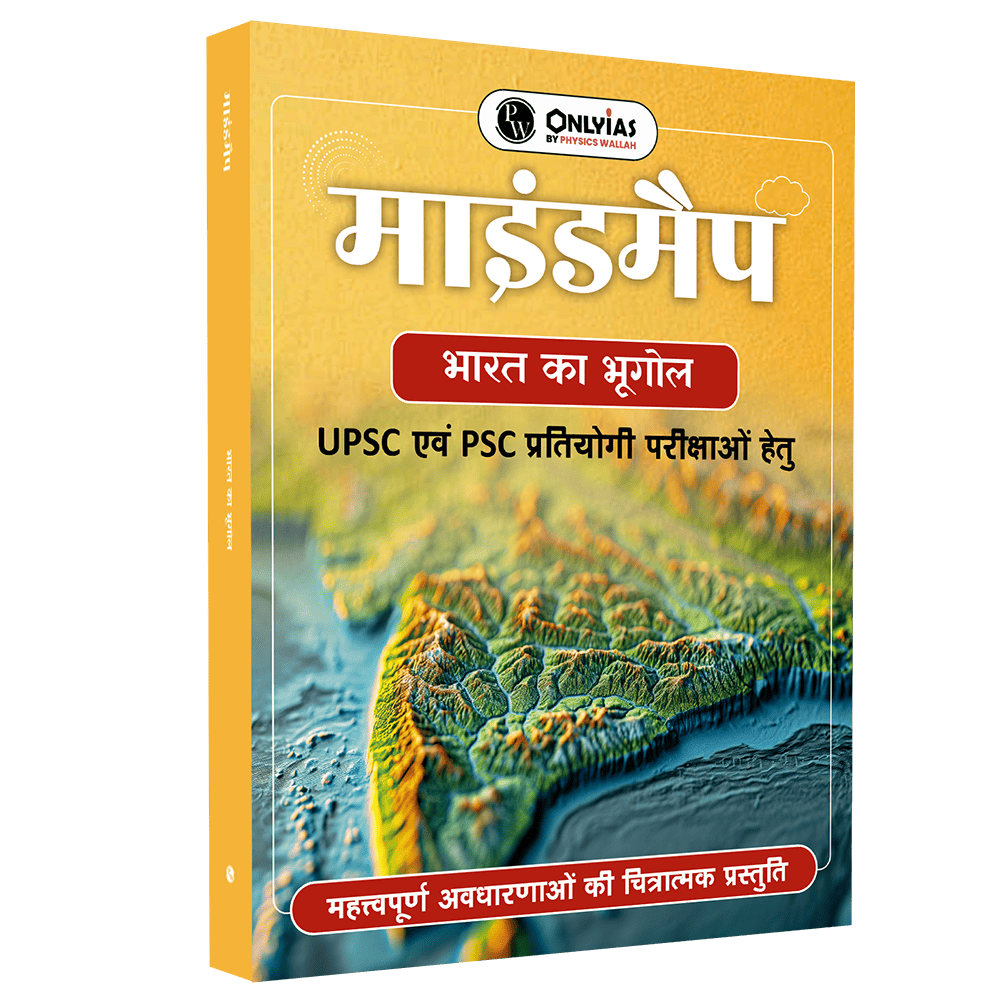
It is a highly visual, exam-focused, and revision-friendly resource designed for serious civil services aspirants. It transforms bulky textual information into clear, structured diagrams, flowcharts, and infographics.
Mindmaps allow learners to see the interconnected geographical concepts at a single glance rather of the complex paragraphs in standard textbooks. They take complicated subjects such as geomorphology, oceanography, climatology and biogeography and break them down into reasonable, bite-sized chunks.
This approach creates a more structured, connected, and easy-to-revise experience, specifically tailored to the demanding nature of the UPSC Civil Services Examination.
Importance of Conceptual Learning in UPSC Physical Geography Mindmaps
The Union Public Service Commission structures its geography syllabus to test an applicant's analytical ability rather than rote memorisation.
Physical geography serves as the foundational science behind all global environmental phenomena, which explains why it is tested through a conceptual lens. To strengthen conceptual retention and simplify repeated revision, aspirants can support their preparation with UPSC Revision Books, which help condense broad geography topics into a more manageable format.
-
Foundation for Environmental Studies: You can’t get climate change , changing agricultural zones , and natural disasters without understanding basic physical laws . Now UPSC tests these events on its ‘why’ and ‘how’ to check the analytical depth of the aspirant.
-
Application in Indian Geography: The monsoon system, distribution of soils and river courses in India are direct consequences of global physical laws. Before you can really learn Indian geography you have to understand planetary winds, ocean currents and plate tectonics first.
-
Mains Answer Writing Demand: The Civil Services Mains test challenges the applicants to explain complex processes like atmospheric circulation or landform evolution in very few words. Conceptual clarity is very important to create accurate and high scoring replies.
Why UPSC Physical Geography Mindmaps Improve Thinking
Developing a clear mental framework is critical when tackling the unpredictable nature of UPSC questions. Relying solely on standard textbooks can make it difficult to link different topics together during the pressure of the actual exam.
Using a dedicated UPSC physical geography mindmap resource trains the brain to think in systems rather than in isolated facts. For instance, when studying cyclones, a mindmap connects sea surface temperature, Coriolis force, low-pressure areas, and latent heat of condensation into a single visual chain.
This structured layout helps aspirants connect topics logically, which directly improves answer-writing quality in the Mains exam. By looking at visual representations, students learn to transition quickly from basic definitions to deep causal relationships, simulating the exact thought process required in the examination hall.
Features of UPSC Physical Geography Mindmaps
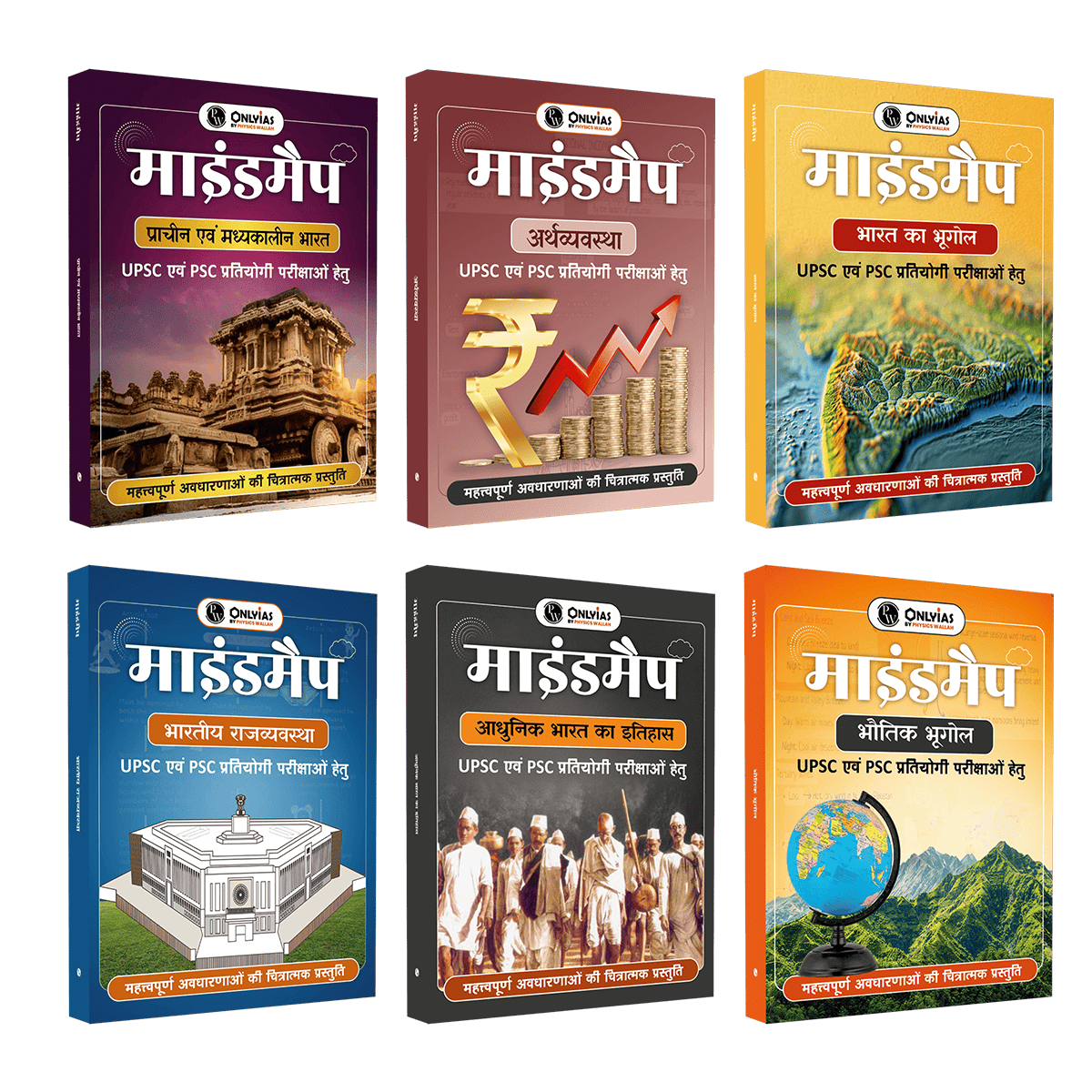
A well-designed visual book offers specific elements that traditional study guides often lack. The features included in these mindmaps are specifically crafted to align with modern UPSC preparation trends. Resources such as the UPSC Mindmap Combo Set 6 can support structured revision by presenting interconnected concepts in a visual format.
-
Engaging Flowcharts: They map out cause-and-effect relationships clearly, making it simple to track how one geographical event triggers another.
-
Clear Infographics: Complex statistical data, atmospheric layers, and earth structures are presented via diagrams that are easy to replicate in exam answer sheets.
-
Snapshot-Style Summaries: Every single mindmap serves as a concise summary of a major topic, filtering out fluff and retaining vital exam-oriented points.
-
Holistic Topic Coverage: It ensures comprehensive coverage of all major syllabus areas, including geomorphology, climatology, oceanography, and biogeography, maintaining conceptual clarity throughout.
Benefits of UPSC Physical Geography Mindmaps
Integrating visual tools into a study routine addresses several common pain points faced by civil services candidates, particularly regarding memory retention and time management.
-
Simplified Visual Learning: Difficult geographical concepts are translated into clear, structured, and easy-to-understand formats that reduce cognitive overload.
-
Rapid Revision and Faster Retention: The snapshot nature of mindmaps provides a quick review mechanism, allowing students to revise entire chapters in a fraction of the time it takes to read text chapters.
-
Enhanced Mains Preparation Support: Seeing topics laid out visually helps students structure their answers better, giving them the confidence to draw accurate diagrams under tight exam timelines.
-
Interconnected Understanding: It helps candidates build a unified view of the syllabus, allowing them to see how planetary winds affect ocean currents, which in turn affect coastal climates.
For those compiling their final revision folders, integrating highly structured physical geography notes for UPSC PDF helps maintain a portable database of foundational facts that complement visual diagrams.
How to Use UPSC Physical Geography Mindmaps
To gain the highest value from UPSC physical geography notes, they must be used systematically alongside standard textbooks rather than as a complete replacement. Combining visual learning with UPSC Previous Year Papers helps aspirants connect conceptual understanding with actual exam patterns.
-
First Reading Companion: When studying a tough topic like jet streams or plate tectonics for the first time in a textbook, keep the mindmap open next to it to track the overall structure of the chapter.
-
Pre-Exam Active Recall: Before answering mock test papers, browse through the mindmaps to quickly trigger memory recall of key terms, cycles, and formations.
-
Diagram Practice Template: Use the clean infographics and flowcharts as templates. Practice drawing simplified versions of these diagrams so you can quickly sketch them in your Mains answer sheets.
-
Post-Test Gap Analysis: When you get a question wrong in a test series, locate that specific topic in the mindmap to identify exactly where your conceptual link broke down.
Candidates who want to build a strong theoretical foundation from day one often search for comprehensive resources like physical geography for UPSC PDF to ensure they understand the underlying science before practicing visual layouts.
Study Plan with UPSC Physical Geography Mindmaps
A structured study plan balances deep theoretical reading with frequent visual reinforcement. This approach ensures long-term retention and quick recall during the exam.
-
Phase 1: Concept Building: Spend time understanding the core mechanics of physical geography using standard reference materials or specialized physical geography for UPSC notes to build a base.
-
Phase 2: Visual Mapping: Immediately after completing a topic, review the corresponding page in your UPSC physical geography mindmap book to solidify the logical connections in your mind.
-
Phase 3: Answer Writing Integration: Practice incorporating the flowchart structures directly into your daily answer writing practice, ensuring your explanations remain crisp and structured.
-
Phase 4: High-Frequency Revision: In the final weeks leading up to the Prelims or Mains, shift your focus entirely to the mindmaps to revise the entire physical geography syllabus multiple times.
Common Mistakes While Using UPSC Physical Geography Mindmaps
While visual tools are incredibly powerful, misusing them can limit their overall effectiveness during preparation.
-
Relying on Mindmaps Without Base Text: Skipping standard textbooks entirely and studying only mindmaps leaves out critical contextual text needed for deep understanding.
-
Passive Browsing Instead of Active Recall: Merely looking at the maps like a picture book without actively questioning the connections between nodes reduces retention.
-
Neglecting Indian Geography Integration: Forgetting to apply the physical concepts learned in the mindmaps to practical Indian geographical features limits your performance in regional questions.
-
Not Replicating Diagrams by Hand: Assuming you can draw a diagram perfectly in the exam just because you looked at it online or in a book often leads to messy sketches under exam pressure.
Read More: UPSC Geography Previous Year Papers with Downloaded PDF
UPSC Physical Geography Mindmaps FAQs
1. Why are UPSC physical geography mindmap useful for civil services preparation?
They simplify complex, scientific geographical processes into visual flowcharts and infographics. This structured format helps candidates understand difficult topics faster, improves memory retention, and provides an easy way to revise the entire syllabus quickly before exams.
2. Can I rely solely on physical geography notes for UPSC to clear the exam?
While comprehensive notes provide necessary factual data and explanations, they work best when combined with visual mindmaps. Notes give you depth of text, while mindmaps help you see connections between topics and teach you how to structure answers logically.
3. How do mindmaps help in writing better answers for UPSC Mains?
UPSC Mains demands clear, structured answers within a strict word limit. Mindmaps train your mind to organize information into cause-and-effect chains, making it much easier to reproduce logical points and clear diagrams on your actual answer sheet.
4. Is it necessary to read a UPSC physical geography textbook if I have summaries?
Yes, reading standard textbooks is necessary to build your initial foundational knowledge. Visual summaries and mindmaps are designed to supplement your reading, streamline your revision, and fix conceptual gaps rather than replace deep textbook study entirely.