Why PW Monthly Current Affairs Compilation Beats Random News Reading
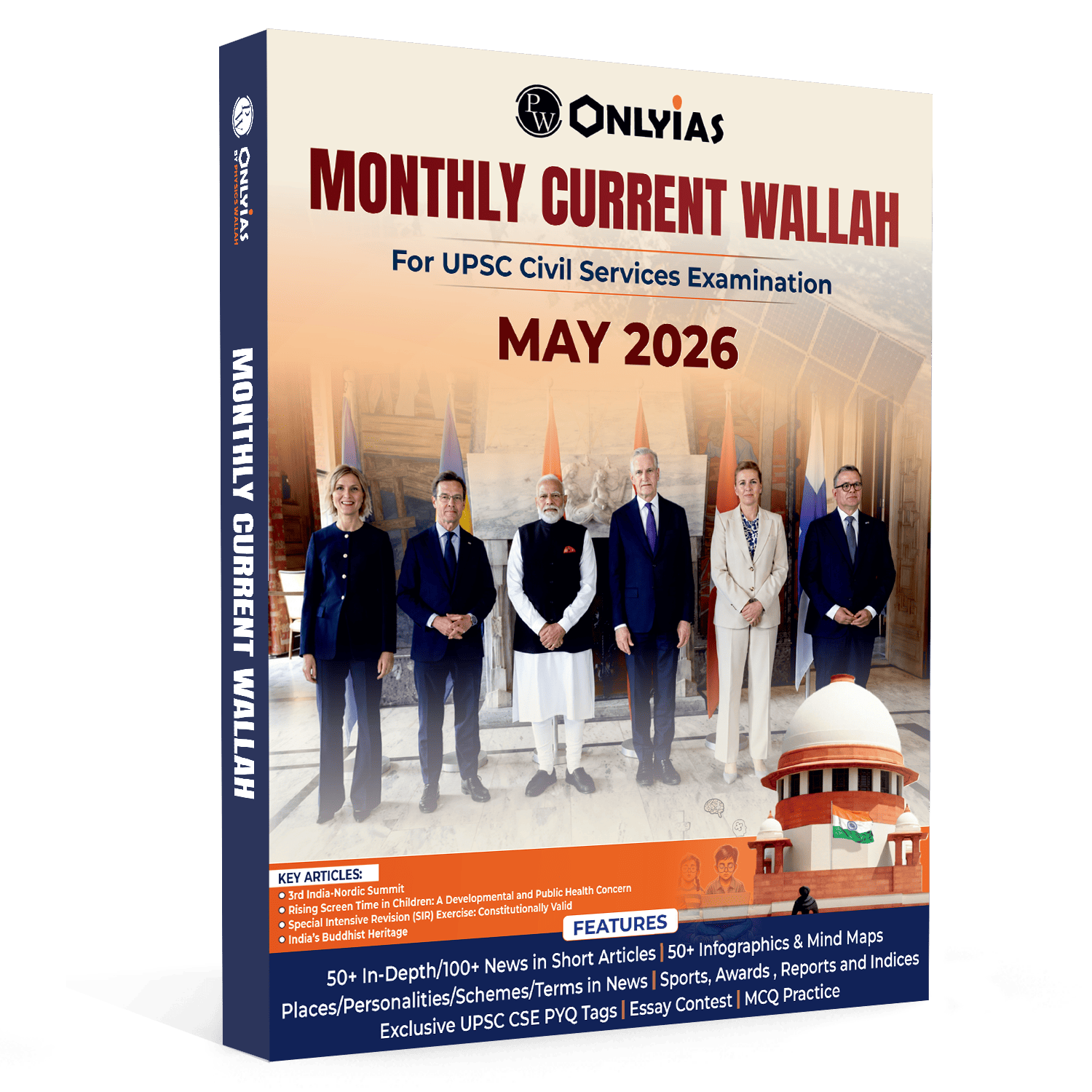
A strategic approach is required to track global and national events for the civil services examination. Many candidates spend hours skimming websites, social media feeds and random articles without any clear plan. The UPSC monthly current affairs resources are very important for a clear structure and saving a lot of time in dealing with this huge amount of information, which are of high quality.
How UPSC Monthly Current Affairs Improve Exam Preparation
Spreading your attention across unstructured news sources is a huge waste of time. Without clear directions you easily end up reading detailed political gossips or regional updates which have zero relevance for the civil services syllabus. This gives you an illusion of productivity while leaving gaping holes in your real core knowledge base.
The average candidate will spend two to three hours a day deciding what to read and what to skip. This chaotic habit makes it difficult to track long-term issues as daily news updates are very fragmented. You see an event today but by next week you lost its background context.
Reading without structure will not help you in getting the big picture you need for answer writing. You just memorise the headlines of the moment, rather than understand the core policy impact. This approach leaves you ill-prepared to face the analytical challenges of Prelims and Mains.
Importance of UPSC Monthly Current Affairs Strategy
A dedicated UPSC current affairs portal offers a well structured route through the unending news cycle. A well-structured timeline guarantees that each piece of information directly refers back to official General Studies curriculum papers. It totally removes the guess work.
Using a comprehensive monthly compilation of current affairs filters out the background noise, leaving you with exam-oriented content. Experts track daily updates, weigh their thematic importance, and present them in a highly readable format. This professional structure gives you absolute clarity on what matters.
-
Syllabus Alignment: Every news item is sorted under specific headers like Polity, Economy, or Environment.
-
Time Management: Reduces daily tracking time from three hours to around thirty minutes of quick updates.
-
Contextual Depth: Explains the historical background and future implications of every major event.
-
Trend Analysis: Highlights which topics are gaining traction among examiners.
Benefits of the UPSC Monthly Current Affairs Book
Relying on a well-edited physical or digital UPSC current affairs book keeps your preparation grounded. Books provide a tactile, distraction-free environment that helps deep concentration, unlike scrolling through endless tabs on a digital screen. This structural layout makes deep learning much easier.
A curated compilation serves as a comprehensive reference manual for the entire year. Instead of searching through stacks of loose sheets, you have a single source that holds verified facts, committee reports, and expert opinions. This level of curation is incredibly difficult to build on your own.
Having a single source of truth prevents the common mistake of buying multiple books for the same subject, keeping your desk and mind organised.
How to Revise UPSC Monthly Current Affairs Effectively
The true secret to clearing this competitive exam lies in your regular current affairs revision routine. Retaining twelve months of extensive dynamic data is impossible without periodic reviews. A structured compilation makes it easy to set up weekly and monthly review cycles.
Using concise summaries allows you to run through major national events in a fraction of the time it took to read them initially. This speed is essential during the high-pressure weeks leading up to the Prelims exam. You can quickly recall key points without feeling overwhelmed.
|
Revision Frequency |
Expected Outcome |
Time Required |
|
Weekly Review |
Consolidates immediate facts and definitions |
Around 2 hours |
|
Monthly Review |
Links dynamic events with static GS concepts |
Around 5 hours |
|
Pre-Exam Review |
Refreshes memory of core committees and data points |
Around 15 hours |
Why UPSC Monthly Current Affairs Are Better Than Random News Reading
While reading daily print media builds a good perspective, it often becomes a massive time sink. A curated monthly compilation serves as an efficient newspaper alternative for candidates struggling to manage their schedule. It provides all the analytical depth without the daily structural clutter.
Mainstream print media caters to the general public, meaning it includes lifestyle sections, sports, and local crime news. An exam-focused compilation strips all of this away. You receive pure, condensed analysis tailored specifically to meet the high standards of the civil services evaluation.
How to Use UPSC Monthly Current Affairs with Static Subjects
Your core preparation strategy must focus on high-yield resources. Integrating standard text books with updated UPSC books ensures your static knowledge aligns perfectly with current dynamic changes. This integration makes your answers stand out in the Mains exam.
A good compilation bridges the gap between basic theory and real-world applications. For instance, when you read about constitutional provisions, the compilation provides recent Supreme Court judgments that illustrate those exact articles in action. This brings your static subjects to life.
-
Data Integration: Easily find relevant statistics to quote in your economy and social justice answers.
-
Schemes Breakdown: Understand government policies through clear charts detailing objectives, funding, and targets.
-
Global Relations: Trace international treaties with clear maps and background timelines.
How to Make Notes from UPSC Monthly Current Affairs
Taking daily notes from multiple platforms often results in unorganised binders filled with scattered and unindexed information. Switching to a professionally compiled monthly current affairs resource eliminates the need to prepare extensive handwritten notes from scratch, allowing you to focus more on learning than on note-making.
Instead of spending hours writing basic definitions and facts, use the monthly compilation as your primary resource and add short personal notes, keywords, or important observations in the margins. This active learning approach saves time while ensuring your own insights remain connected to the core content.
To make your preparation more exam-oriented, revise alongside an UPSC PYQ Book, which contains authentic previous year questions with detailed explanations and topic-wise analysis. Solving PYQs after completing each month's current affairs helps you understand how UPSC links current events with static concepts, strengthens retention, and improves readiness for both the UPSC Prelims and Mains.
How to Remember UPSC Monthly Current Affairs for Longer
To get the absolute most out of your structured learning modules, try incorporating these practical steps into your daily routine:
-
Highlight Judiciously: Use different colours to separate core facts from analytical arguments.
-
Cross-Reference Daily: Spend ten minutes connecting new dynamic updates to your static history or polity notes.
-
Practise Active Recall: Close the book after reading a section and scribble down three main takeaways from memory.
-
Solve Monthly Quizzes: Test your retention levels immediately after finishing a monthly module to flag weak areas.
Using a systematic tool like the PW monthly compilation keeps you ahead of the competition. It changes your approach from passive, anxious reading to active, goal-oriented mastery. Stop drowning in an endless sea of daily links and switch to a structured path that respects your time and effort.
Read More: Importance of Solving Previous Year Papers for UPSC Exam
UPSC Monthly Current Affairs FAQs
Can I completely replace daily news reading with the UPSC current affairs compilation?
Yes, a comprehensive monthly module acts as an excellent standalone resource if you struggle with time management. It compiles all essential updates, analyses them from an exam perspective, and structures them logically, making it an efficient option for busy candidates.
How does a monthly current affairs book help in the Mains exam?
A high-quality module provides deep thematic analysis, arguments for and against major issues, and relevant case studies. This structural breakdown gives you ready-to-use points, data, and committee recommendations that directly improve your answer writing quality.
Is it necessary to buy a separate UPSC current affairs book if I follow daily online updates?
A dedicated book or consolidated compilation brings structure, saves you from digital distractions, and offers an indexed layout for quick reference. It ensures you do not miss minor details that often get lost when browsing random websites.
What is the right way to handle current affairs revision before the Prelims?
The most effective way is to rely on a single, well-highlighted monthly source rather than jumping between new materials. Review the core facts, indices, government schemes, and maps at least three times to build strong visual memory.
How should I coordinate my static UPSC study material with dynamic monthly updates?
Whenever you complete a static topic from your standard text books, open the current affairs index to check for recent developments in that domain. Blending both elements builds a comprehensive understanding that satisfies the requirements of the civil services exam.