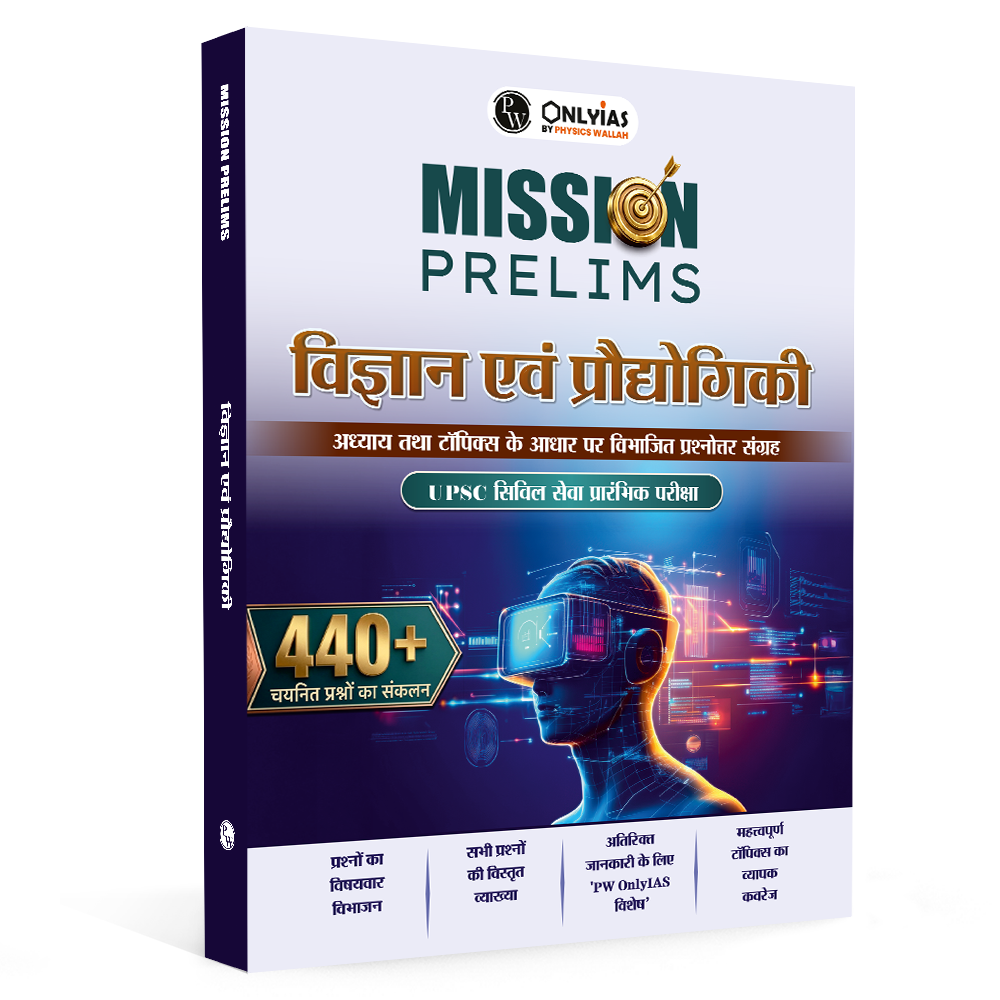
Why Science and Tech Questions Are Increasing in UPSC Prelims

There has been a clear change in the Civil Services Examination in the last few years. The science questions in the prelims are unpredictable in nature and candidates find it difficult to deal with. It is very important to understand why these topics are getting more weightage for clearing the exam. This article provides an insight into the changing trends in science and technology in UPSC and how a dedicated UPSC science and technology question bank can make your preparation easier.
How an UPSC Science and Technology Question Bank Helps with Prelims Trends
The Civil Services Preliminary examination has evolved from testing pure rote memorisation to evaluating a candidate's analytical awareness. A clear look at the recent question papers reveals that the weightage given to administrative aptitude now heavily intersects with technical knowledge.
Increase of Application-Based Testing
Today’s administration deals with complex issues of cybersecurity, public health and digital infrastructure. So the examination board really considers how a theory can be applied to daily life. The questions have moved away from a simple definition of a technology to the actual implementation of a technology and its benefits and potential risks.
Proliferation of Digital Governance Initiatives
With the government pushing for digital inclusion through various schemes, an aspiring administrator must understand the underlying systems. Questions related to automation, cloud computing, blockchain technology, and digital signatures have become regular features in the paper.
High-Weightage Topics in an UPSC Science and Technology Question Bank
To build an effective UPSC strategy, it is important to analyse the topics that consistently receive higher weightage in the examination. Over the past decade, the number of Science and Technology questions has shown a steady upward trend, making this section increasingly significant for UPSC aspirants.
To strengthen your preparation, study with UPSC Books, which provide comprehensive subject-wise theory, conceptual explanations, and exam-oriented practice aligned with the latest UPSC syllabus. Combining structured learning with a Science and Technology question bank helps build conceptual clarity and prepares you effectively for both the UPSC Prelims and Mains.
|
Exam Year |
Approximate Number of Science and Tech Questions |
Focus Area |
|
Around 2018 |
Around 10 to 12 |
Basic space tech, defence, and biotechnology |
|
Around 2021 |
Around 14 to 16 |
Emerging concepts, IT, and public health |
|
Estimated 2025 |
Around 15 to 18 |
Deep tech, artificial intelligence, and green energy |
The data indicates that science is no longer an optional section that can be skimmed through before the exam. It holds a significant share of the total marks required to clear the preliminary cutoff.
Importance of UPSC Science and Technology Question Bank for Prelims
Several global and national factors explain why technology topics dominate the preliminary question paper today.
-
Rapid Technological Advancement: Innovations like quantum computing, 5G communications, and gene editing are changing societies rapidly.
-
Global Crisis Management: Challenges such as pandemics, climate change, and environmental degradation require deeply scientific solutions.
-
Policy and Regulation Needs: As new technologies emerge, governments must formulate regulatory frameworks, making it essential for policymakers to be tech-literate.
To strengthen your preparation, practise regularly with an UPSC Question Bank, which offers topic-wise MCQs, previous year questions, and detailed explanations aligned with the latest UPSC syllabus. Consistent question practice helps improve conceptual clarity, analytical thinking, and exam readiness for both the UPSC Prelims and Mains.
How an UPSC Science and Technology Question Bank Covers Current Affairs
A significant portion of the science syllabus is inherently linked to UPSC current affairs. Static knowledge acts as the foundation, but current developments provide the context from which questions are framed.
Tracking Global Breakthroughs
When a new discovery wins a Nobel Prize or a global mission lands on a celestial body, it automatically becomes a potential topic for the exam. Candidates need to track these developments through reliable news sources, scientific journals, and official government releases.
Understanding National Missions
India’s domestic achievements in space exploration, defence modernisation, and renewable energy sectors are highly tested areas. Knowing the objectives, payloads, and significance of these indigenous missions is crucial for every serious aspirant.
How an UPSC Science and Technology Question Bank Makes Science Preparation Easy
Many aspirants from non-science backgrounds find this section intimidating due to complex terminology and vast updates. However, breaking down the preparation into manageable steps can easily mitigate this fear.
-
Understand the Basics First: Refer to standard school-level textbooks to build a strong foundation in physics, chemistry, and biology.
-
Link Static with Dynamic: Whenever you read about a new tech development in the news, look up its fundamental science principles online.
-
Focus on Vocabulary: Understand terms like 'recombinant DNA', 'quantum entanglement', or 'cryptographic keys' instead of memorising long paragraphs.
-
Regular Revision: Science concepts can fade quickly without constant review, making concise notes highly valuable.
Benefits of an UPSC Science and Technology Question Bank
Sifting through infinite resources can lead to information overload. Utilising a structured UPSC question bank combo helps candidates align their study pattern with the exact demands of the examination.
Familiarity with Exam Pattern
A high-quality question bank exposes you to the specific phrasing, traps, and statement-based structures that the exam board typically uses. Practising these questions helps reduce exam-day anxiety and improves elimination skills.
Identifying Crucial Knowledge Gaps
Self-assessment is a core pillar of a successful preparation journey. By solving targeted practice sets from an UPSC question bank, you can easily pinpoint which subjects require deeper revision, whether it is biotechnology, space sciences, or nuclear energy.
Enhancing Solving Speed and Accuracy
The preliminary exam tests your ability to think under intense time pressure. Regular practice with an authentic question bank ensures that you learn to read statements carefully, spot hidden qualifiers, and mark answers with high precision.
Important Topics Covered in an UPSC Science and Technology Question Bank
To maximize your score efficiency, focus your energy on the core areas that see repetitive questions year after year.
-
Information Technology and Electronics: Artificial intelligence, Internet of Things (IoT), blockchain, 5G technology, and web architectures.
-
Biotechnology and Health: Gene editing tools like CRISPR-Cas9, vaccine types, stem cell research, and rare diseases.
-
Space Technology: Satellite launch vehicles, orbital mechanics, deep space exploration missions, and space telescopes.
-
Defence Technology: Missile defence systems, stealth technologies, aircraft carriers, and drones.
-
Nuclear Energy and Nanotechnology: Nuclear reactors, fuel cycles, nanomaterials, and their industrial applications.
To understand how these topics are actually tested, complement your preparation with UPSC PYQ book. Analysing previous year questions helps identify recurring themes, understand the level of conceptual depth expected, and improve your ability to apply scientific concepts in an exam-oriented manner for both the UPSC Prelims and Mains.
How to Use an UPSC Science and Technology Question Bank for Prelims
Balancing science with conventional subjects like history and polity is the hallmark of a balanced study routine.
-
Allocate Dedicated Time: Dedicate fixed hours every week to catch up on technological updates.
-
Solve Previous Years Questions: Analyze past papers to understand how simple news items are converted into complex multiple-choice items.
-
Incorporate Active Testing: Do not just read answers passively; actively solve problems from your chosen question bank before reading the solutions.
Read More: UPSC Prelims Subject-wise Weightage Syllabus and Strategy
UPSC Science and Technology Question Bank FAQs
Why are prelims science questions becoming more difficult every year?
The questions are shifting from direct theoretical facts to complex, application-based scenarios. This change reflects the need for modern administrators to understand how emerging innovations impact governance, policy-making, and public welfare.
How can a candidate from a non-science background manage science preparation effectively?
Candidates can manage this by focusing on basic conceptual clarity through school textbooks and then linking those concepts to everyday applications. Supplementing this study with a dedicated question bank ensures that they learn the exact testing patterns.
How much weightage should I give to UPSC current affairs when studying technology?
An estimated 70% to 80% of science questions are inspired by recent news. However, candidates must always study the underlying static concepts behind those news events to answer the statement-based questions accurately.
What is the best way to utilize an UPSC question bank?
The best approach is to solve questions topically after finishing a specific theme like space tech or biotechnology. Analyze the explanations thoroughly, note down your mistakes, and re-attempt the incorrect questions after a few weeks to measure improvement.
Which technology topics are currently considered high-yield for the exam?
Themes showing strong science and technology UPSC trends include artificial intelligence, quantum computing, biotechnology developments like gene editing, public health initiatives, and national space exploration projects.