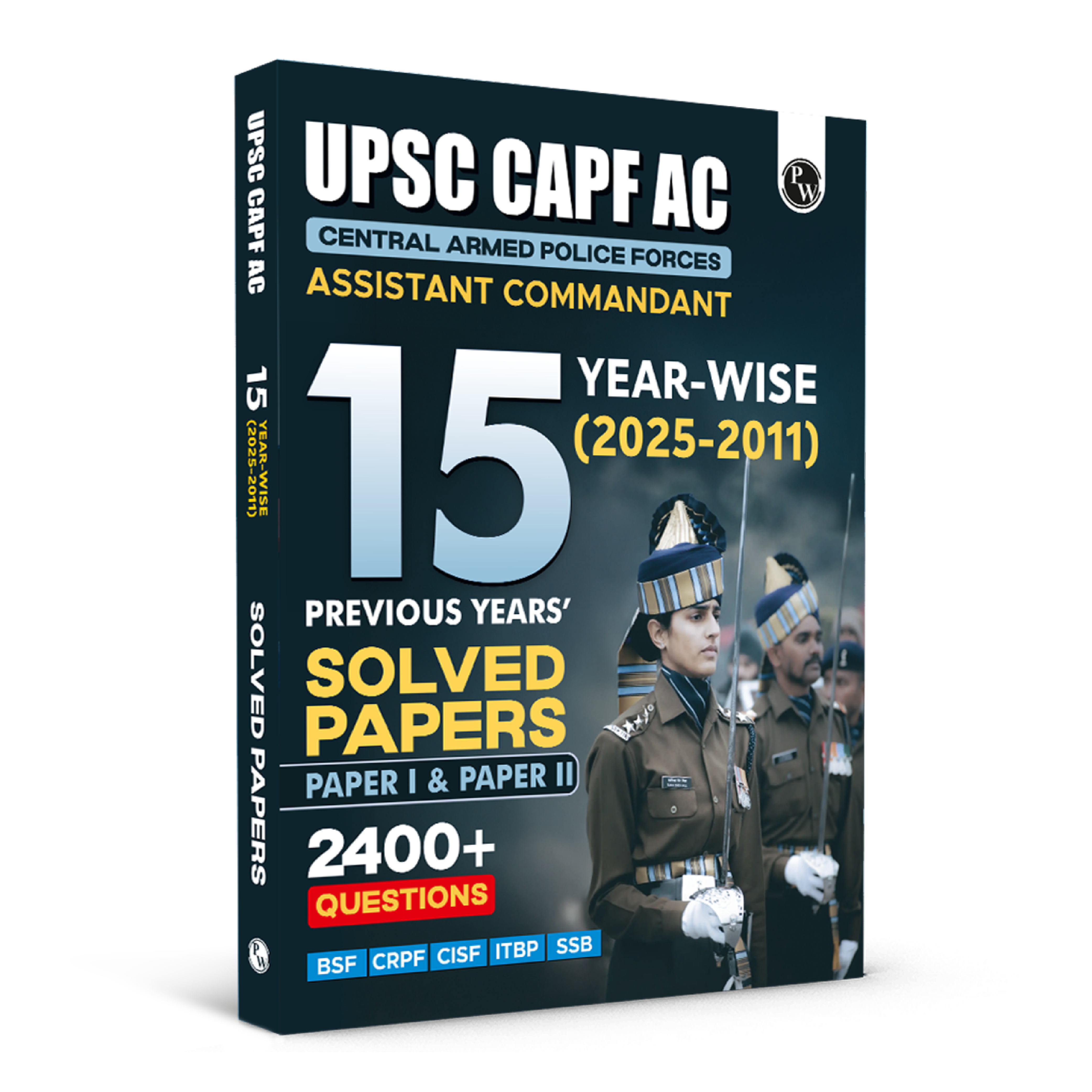
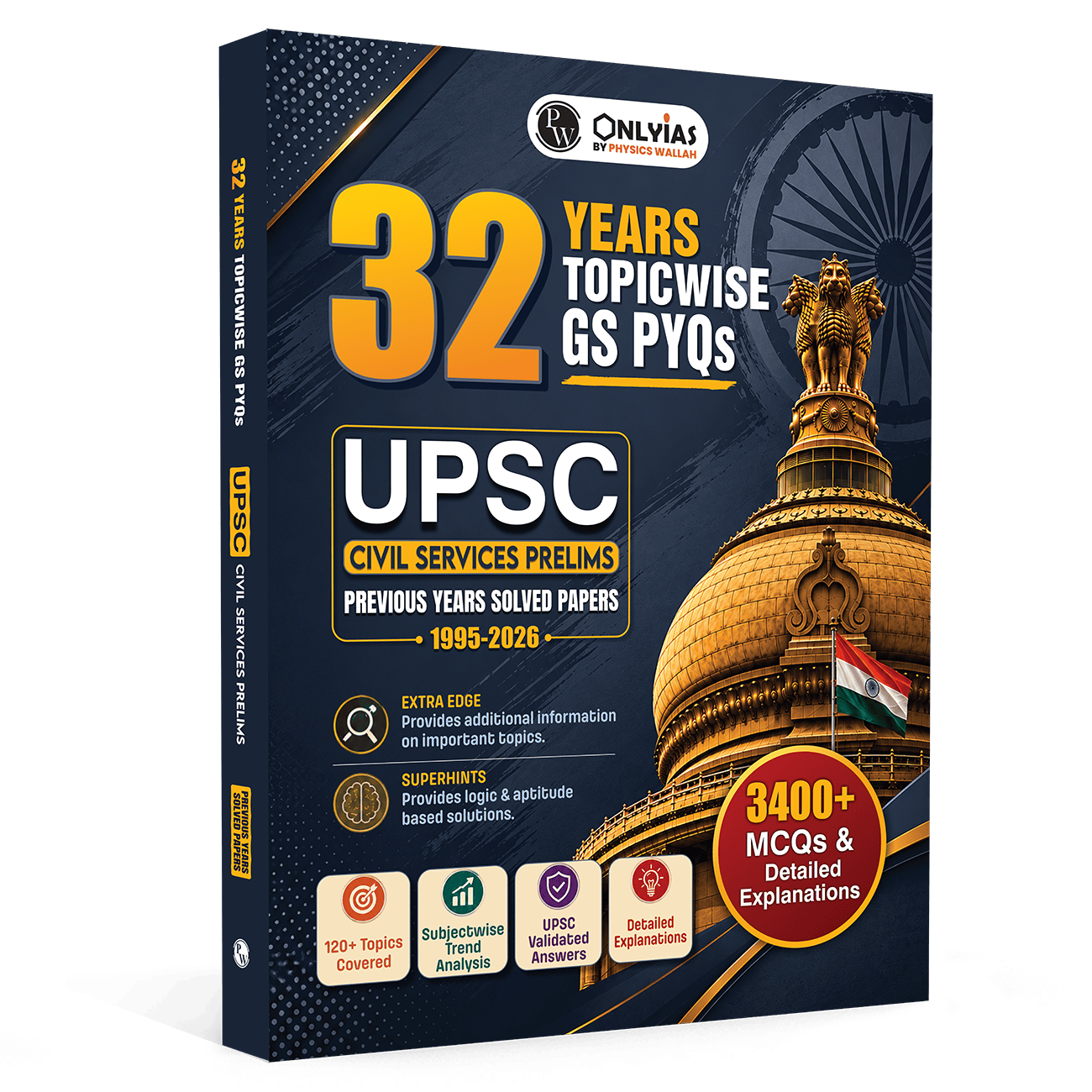
Why CAPF Aspirants need a Dedicated PYQ Book Separate from UPSC CSE Material

A common mistake among Central Armed Police Forces candidates is using Civil Services Examination resources for their preparation. While both tests are conducted by the Union Public Service Commission, their requirements, question styles, and evaluation standards differ significantly.
Relying solely on CSE question banks leaves massive gaps, particularly in specific subjects and descriptive writing. Utilizing a dedicated UPSC CAPF PYQ resource ensures that your practice aligns perfectly with the actual exam expectations, helping you understand the unique trends and difficulty levels required to clear the cutoff.
What Is UPSC CAPF PYQ?
A UPSC CAPF PYQ refers to the collection of previous year questions from the Central Armed Police Forces Assistant Commandant examination. This exam comprises two distinct sections: Paper I, which focuses on General Ability and Intelligence through objective multiple-choice questions, and Paper II, which evaluates descriptive language skills through essays, arguments, reports, and grammar.
A dedicated UPSC CAPF PYQ book compiles these past papers systematically, providing detailed solutions and explanations tailored specifically to the structural demands of this security-focused recruitment test.
Rather than shuffling through general civil services questions, a dedicated CAPF previous year question paper book isolates the exact trends, subject weights, and recurring themes that candidates encounter on the actual exam day.
Why is UPSC CAPF PYQ Different from UPSC CSE PYQs?
Many candidates assume that because both exams share a similar general studies syllabus, the questions must be interchangeable. However, analyzing a UPSC CAPF PYQ reveals stark structural differences that make CSE study material insufficient for dedicated preparation.
-
Factual vs. Analytical Focus: UPSC CSE questions focus heavily on deep analytical reasoning, conceptual connections, and multi-statement elimination techniques. In contrast, the objective questions in the CAPF exam lean toward direct, factual, and application-based knowledge.
-
The Role of General Science: Civil Services papers usually feature a small number of science questions, often focused on high-level technology and current scientific developments. The CAPF exam dedicates a massive portion of Paper I to core science topics up to the matriculation level, requiring a completely different style of revision.
-
Distinct Descriptive Formats: The Civil Services main exam requires long-form general studies answers across multiple papers. The CAPF Paper II consists of a single descriptive paper containing essays, argument writing, report writing, and precise reading comprehension, alongside a targeted English grammar section.
-
Time Allocation Demands: Solving Paper I requires a rapid recollection of facts across 125 questions in two hours, whereas CSE allows the same amount of time for only 100 questions. Practicing with dedicated papers builds the specific speed required for this tighter timeline.
Benefits of UPSC CAPF PYQ
Investing your energy into targeted past papers brings clear advantages that general civil services materials cannot replicate. Using a specialized CAPF AC PYQ collection streamlines your study routine in several distinct ways.
-
Direct Target Alignment
Practicing with the exact past papers keeps your preparation grounded in reality. You learn the precise depth required for topics like geography, history, and defense-related current affairs without over-studying or under-studying.
-
Comprehensive Paper II Practice
A comprehensive UPSC CAPF PYQ book provides structured, expert-level descriptive solutions written according to the official format. This allows candidates to see how successful answers are formatted within the tight prescribed word limits.
-
Better Conceptual Clarity
Detailed, step-by-step explanations for objective questions build strong analytical abilities. Instead of just learning the correct option, candidates understand the underlying concept, making it easier to solve similar questions in the future.
-
Realistic Self-Assessment
Working through authentic past papers serves as an excellent performance evaluation tool. It helps you identify weak subject areas, measure your factual retention, and adjust your preparation timeline before the final exam.
Along with this, practicing UPSC Previous Year Papers helps candidates understand the changing exam pattern, identify frequently asked topics, and improve question-solving strategies. Instead of relying only on broad preparation, previous year papers allow you to focus on concepts that carry higher relevance in the actual examination.
How UPSC CAPF PYQ Helps Understand the CAPF Exam Pattern?
Succeeding in this competitive exam requires more than just memorizing facts; it demands a thorough understanding of the exam blueprint. Regular interaction with a UPSC CAPF PYQ breaks down the structural mechanics of the test.
|
Feature |
Paper I (General Ability & Intelligence) |
Paper II (General Studies & Descriptive) |
|
Question Type |
Objective Multiple Choice Questions (MCQs) |
Descriptive (Essays, Arguments, Reports, Grammar) |
|
Total Questions |
125 Questions |
6 Compulsory Questions (with sub-parts) |
|
Total Marks |
250 Marks |
200 Marks |
|
Key Focus Areas |
Science, Polity, History, Economy, Reasoning |
Content Organization, Presentation, Language Skills |
How to Use UPSC CAPF PYQ?
Simply reading through past questions like a textbook will not yield the best results. To get the maximum value from your UPSC CAPF PYQ resource, you must adopt a systematic approach to your practice sessions.
-
Isolate Topic-Wise Trends: Begin by sorting past questions based on specific subjects. When you finish studying a topic like Indian Polity or Ancient History, immediately solve the corresponding questions from the past fifteen years to verify your understanding.
-
Analyse the Explanations: Do not just look at whether your answer was right or wrong. Read the detailed explanations provided in UPSC Revision Books to understand why other options were incorrect, as UPSC frequently creates new questions from old answer options.
-
Deconstruct the Descriptive Solutions: For Paper II, pay close attention to the structure of model essays and reports. Note how arguments are balanced between the "for" and "against" sides, and practice reproducing that clean layout.
-
Replicate Exam Conditions: Sit in a quiet room, set a timer for the exact duration of the exam, and solve a complete past paper without any external help to build physical and mental endurance.
When to Start Practicing UPSC CAPF PYQ?
Timing your practice correctly prevents you from burning through valuable questions before you are ready to benefit from them. Integrating the UPSC CAPF PYQ into your routine should happen in clear phases.
-
The Initial Stage: Look through past papers right at the beginning of your preparation journey. Spending a few hours studying the question formats before touching your standard textbooks gives you a clear sense of what details to look out for while reading.
-
The Middle Stage: Use the questions continuously as a revision tool during your core preparation. Once you finish a major block of the syllabus, use the past papers to test your factual recall and conceptual understanding.
-
The Final Stage: Dedicate the last two months before the examination entirely to solving full-length past papers under strict exam conditions to perfect your speed and stress management.
Study Plan for Using UPSC CAPF PYQ
To turn past papers into a tool for scoring high marks, you need a structured study routine that balances both objective and descriptive practice.
Step 1: Establish Your Conceptual Base
Begin by reading standard reference books for general studies and basic mathematics. Ensure your fundamentals in general science are secure, as this section carries significant weight in Paper I.
Step 2: Conduct Focused Sectional Practice
After completing a subject, solve the past questions related to it. Mark the questions you answered incorrectly or guessed blindly, creating a personalized list of difficult areas that require a second look.
Step 3: Develop Your Essay and Argument Writing
Regularly practice writing out answers from a CAPF AC paper 2 previous year question paper. Focus on organizing your thoughts quickly, maintaining clean handwriting, and adhering strictly to the word limits. Compare your drafts against the expert-level structured solutions in your preparation book to improve your presentation.
Step 4: Simulate Full-Length Test Days
As the examination date approaches, dedicate specific days to writing both Paper I and Paper II back-to-back, mimicking the exact schedule of the official exam day to build the necessary stamina for long hours of concentration.
Read More: UPSC Previous Year Question Papers for General Studies
UPSC CAPF PYQ FAQs
Can I clear the exam by only practicing the UPSC CAPF PYQ?
No, past papers are meant for understanding trends, revising concepts, and assessing your preparation. You must first build a strong foundational knowledge using standard textbooks before practicing these papers to score well.
How many years of past papers should I cover in a UPSC CAPF PYQ book?
Covering at least 15 years of year-wise solved papers provides a comprehensive view of the evolving difficulty levels, shifting subject weights, and changing question patterns.
Why is a separate UPSC CAPF PYQ book needed for Paper II?
Civil Services material does not feature the specific argument and report writing formats required in this exam. A dedicated book provides structured, format-compliant solutions that match the precise word limits and evaluation guidelines.