Why UPSC Prelims Test Series must be Calibrated to Actual Difficulty — and what that means

Many candidates study diligently for hours, but struggle during the actual exam day because their practice materials fail to match the unpredictable nature of the papers. Choosing an uncalibrated UPSC prelims test series often leads to false confidence or unnecessary panic.
Aspirants face the critical challenge of finding resources that replicate both the conceptual depth and tactical difficulty of the real exam. This article examines how evaluating the right difficulty level ensures your revision remains practical, focused, and highly effective.
What Is a UPSC Prelims Test Series?
A standard UPSC prelims test series acts as a structured, formal simulation framework designed to mimic the exact environment of the Preliminary stage of the Civil Services Examination. It comprises a sequence of mock papers distributed across the general studies and aptitude parameters.
These resource sets provide aspirants with an operational runway to evaluate their static knowledge base and current affairs grasp under strict, timed conditions.
Beyond simple question delivery, a comprehensive UPSC test series book compiles simulated exams covering foundational topics, intermediate modules, and full-length syllabus overviews.
These printed or digital booklets help students familiarise themselves with the mechanical aspects of the examination, such as shifting between different subject matters rapidly. They convert raw theoretical preparation into structured, test-ready performance metrics.
Why UPSC Prelims Test Series Difficulty Level Matters?
The exact calibration of difficulty within your chosen mock framework directly governs how you develop critical thinking under stress. If a mock test is structured too simply, it promotes superficial learning and creates an artificial safety bubble. Conversely, if the questions are unnecessarily complex or focus on obscure, irrelevant facts, they can shatter a student’s confidence and distort their main preparation strategy.
An accurately calibrated evaluation tool reflects the following essential parameters:
-
True Exam Simulation: Replicates the balanced mix of straightforward, analytical, and highly complex questions found in recent exam cycles.
-
Balanced Risk Assessment: Teaches students how many questions to attempt when facing varying levels of paper difficulty.
-
Accurate Performance Benchmarking: Provides a realistic view of where an aspirant stands relative to the actual changing cut-off trends.
When UPSC test series match actual exam trends, candidates learn to identify which questions to attempt and which obscure ones to skip entirely. This specific skill prevents heavy negative marking on exam day. Proper difficulty calibration bridges the gap between theoretical knowledge and practical application.
Benefits of UPSC Prelims Test Series
Engaging systematically with a calibrated mock routine offers clear structural advantages that significantly boost an aspirant's qualification chances. Rather than testing simple memory recall, it develops tactical endurance and enhances cognitive flexibility.
Enhanced Real-Time Simulation
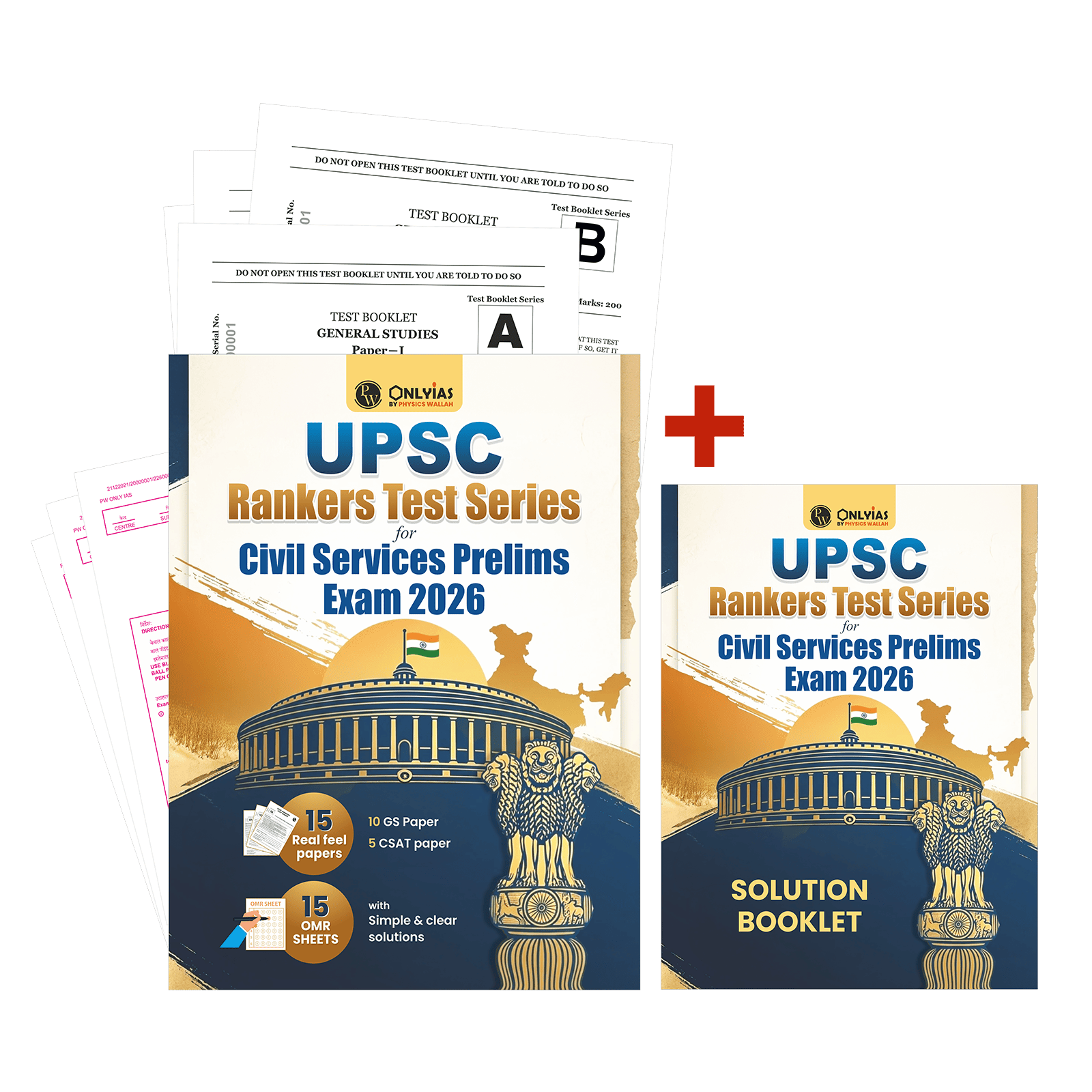
Practicing with realistic materials introduces candidates to the physical and mental demands of the actual exam day. Utilizing dedicated tools, like the 15 OMR sheets ensures that students master the physical mechanics of marking answers accurately under strict time pressure.
This targeted practice drastically reduces accidental bubbling mistakes during the high-stress environment of the actual exam.
Strategic Speed and Analytical Accuracy
Regular practice with a balanced UPSC prelims mock test helps candidates systematically allocate their 120 minutes across different question types.
-
The first hour focuses on high-confidence questions.
-
The second hour focuses on logical elimination and calculated risks.
This consistent routine turns chaotic time management into a predictable, highly organized process.
Targeted Diagnostic Feedback
Excellent mock resources do not merely score your paper; they highlight distinct structural gaps in your revision framework. Reviewing comprehensive solutions lets you trace errors back to specific issues, such as reading questions too quickly, experiencing conceptual confusion, or using flawed elimination logic.
This detailed feedback loop ensures that your revision hours remain highly productive and directly address your weak areas.
When to Start a UPSC Prelims Test Series During Preparation?
Timing your entry into mock testing determines how well you retain information and build exam confidence. Starting full-length tests before completing the core static syllabus often leads to unnecessary confusion and low motivation. Conversely, waiting until the final weeks leaves insufficient time to correct deep-seated analytical mistakes.
An ideal timeline breaks down into the following structured phases:
-
The Foundational Phase: Focus entirely on finishing standard textbooks alongside topical question banks to cement basic concepts.
-
The Intermediate Phase: Start integrated subject-wise sectional tests to verify your understanding of specific syllabus areas.
-
The Advanced Phase: Dedicate the final months completely to full-length simulations using an updated UPSC prelims test series 2026 to build peak mental endurance.
Beginning sectional evaluations alongside your second textbook revision ensures that you catch contextual gaps early. This method allows you to fix weak areas before they turn into permanent habits.
Check Out: UPSC Revision Books
Study Strategy with UPSC Prelims Test Series
To get the most value out of a test series for UPSC, you must treat every mock exam as an active learning tool rather than a simple metric for tracking scores. The real growth occurs during the deep, systematic analysis you perform after finishing the test.
|
Strategy Stage |
Operational Steps |
Expected Outcome |
|
Pre-Test Execution |
Revise core notes; set a strict two-hour countdown; remove all external distractions. |
Creates an authentic exam environment. |
|
Post-Test Evaluation |
Categorise errors into conceptual gaps, silly mistakes, or wrong guesses. |
Identifies specific areas needing urgent revision. |
|
Documenting Insights |
Extract unique facts and explanation steps into a dedicated mistake journal. |
Creates a highly customized resource for final revision. |
Always allocate twice the exam duration to reviewing the answer keys. Understanding why alternative options are incorrect is just as important as knowing why the correct answer is right. This thorough approach builds the sharp analytical mindset needed to navigate complex questions successfully.
Common Mistakes to Avoid While Using a UPSC Prelims Test Series
Many candidates fail to see score improvements because they fall into predictable tactical traps during their mock test routines. Recognizing these errors early can save months of wasted effort.
-
Obsessing Over Mock Scores: Treating mock percentages as absolute indicators of success rather than diagnostic tools can cause unnecessary stress or false confidence.
-
Neglecting Detailed Solution Analysis: Skipping the answer explanations and moving directly to the next test leaves uncorrected conceptual gaps.
-
Failing to Replicate Exam Conditions: Taking tests in broken segments or open-book environments defeats the purpose of time-bound simulation.
-
Ignoring the CSAT Paper: Focusing exclusively on General Studies while neglecting basic aptitude practice can lead to unexpected failure on exam day.
Using a comprehensive UPSC mock test solely to accumulate scores without changing your daily study habits turns a strategic tool into a passive exercise. True progress comes from systematically identifying your errors and fixing them through targeted revision.
Read More: What Are UPSC PYQs and Why Are They Important?
UPSC Prelims Test Series FAQs
How does an authentic UPSC prelims test series help manage negative marks?
An authentic paper helps you practice logical elimination and calculate your optimal attempt threshold across easy, moderate, and difficult question sets.
Can I rely only on a UPSC test series book for my complete revision?
A workbook is excellent for practicing questions and analyzing errors, but it must be paired with standard textbooks to build a strong foundational knowledge base.
What makes a UPSC prelims mock test genuinely exam-aligned?
Alignment depends on a balanced question distribution that matches current trends, features multi-statement analytical questions, and avoids irrelevant, overly obscure facts.
How many full-length exams should be practiced within a test series for UPSC?
Aspirants should aim to complete between 30 and 40 full-length papers to build sufficient mental endurance and test different exam-day strategies.