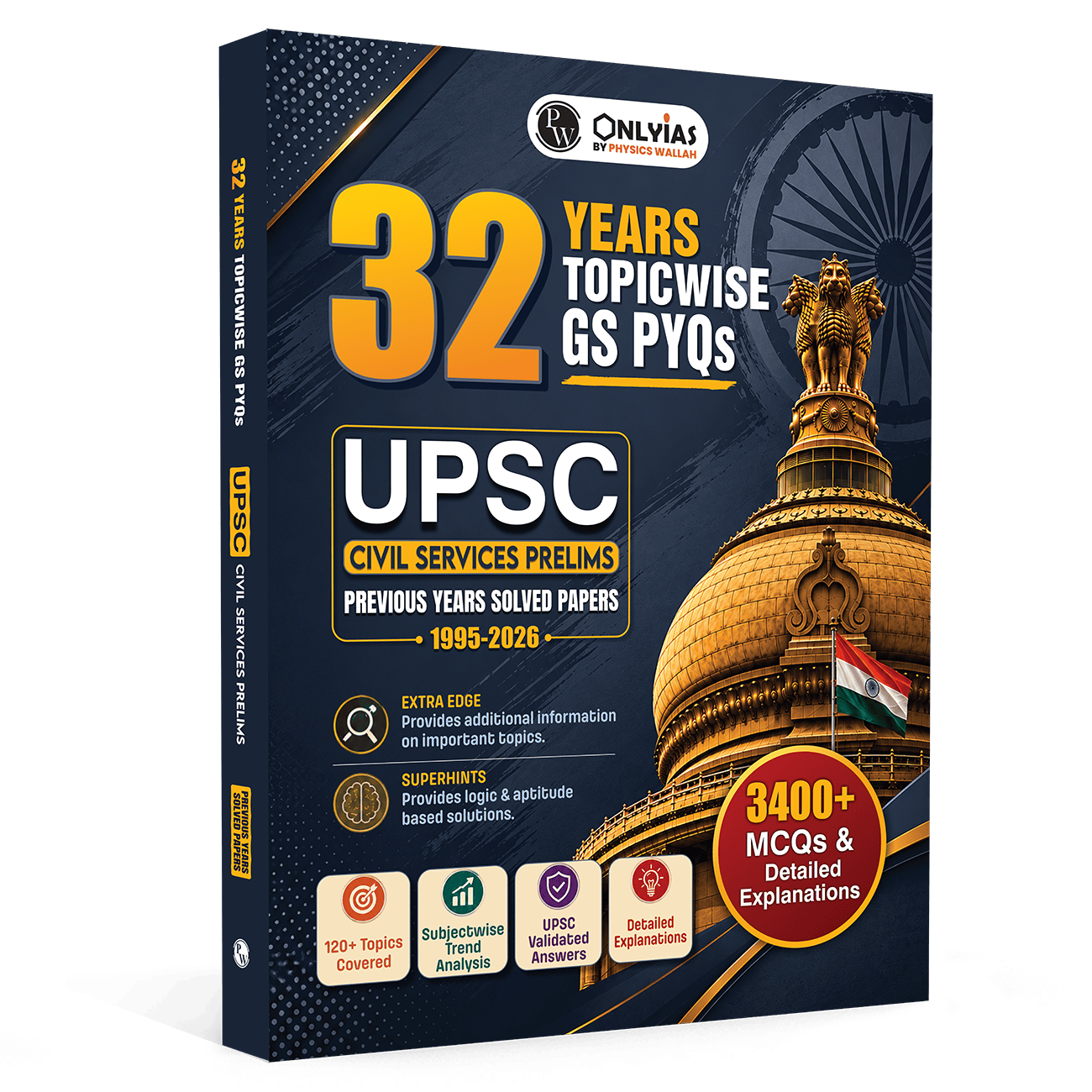
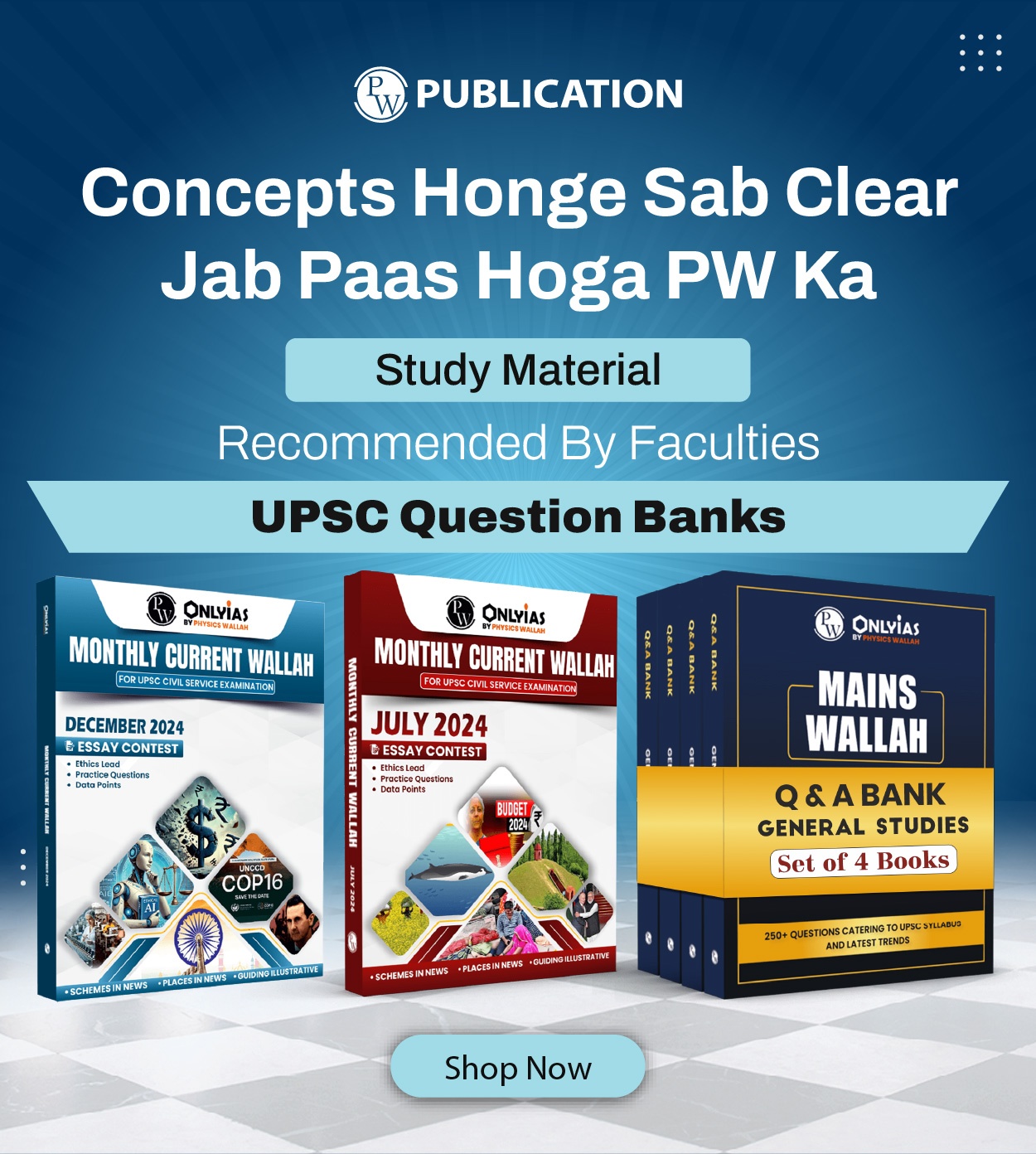
Why UPSC Question Banks are Better Than Random MCQ Tests for Serious Prelims Prep

A massive problem for learners is spending endless hours solving random online multiple-choice questions that do not match the strict standards of the exam. This unstructured practice creates a false sense of security while leaving major conceptual gaps unfilled.
Relying on unverified questions can easily distort your understanding of the syllabus and lead to poor time management on exam day. A dedicated UPSC question bank solves this issue by offering balanced, chapter-wise questions that directly mirror actual exam trends.
Overview of a UPSC Question Bank
An authentic UPSC question bank serves as a complete study repository tailored to the exact requirements of the Union Public Service Commission. Rather than throwing disconnected problems at you, it systematically covers the entire syllabus.
It divides broad subject areas like History, Indian Polity, Geography, Economy, and Science into specific, manageable chapters. This structure helps you transition seamlessly from reading theory to testing your active recall.
These question sets provide a realistic preview of the exam environment. They incorporate various question formats, including single-statement facts, complex multi-statement problems, and assertion-reason pairings. This careful design ensures that you spend your valuable preparation hours on questions that directly improve your analytical skills.
Features of a UPSC Question Bank
Choosing a well-structured print resource over chaotic digital mock tests gives you access to specific, high-yield tools built for serious preparation.
A standard IAS question bank provides several essential features designed to streamline your daily study routine:
-
Chapter-Wise Segregation: Questions are organized systematically to follow standard reference textbooks, ensuring you can test your knowledge immediately after studying a topic.
-
Expert Explanations: Every single question is accompanied by a well-researched, detailed explanation to clarify core concepts and correct misunderstandings immediately.
-
Trend Alignment: The structural design focuses heavily on modern exam trends, including new analytical patterns and recent conceptual developments.
-
Subject-Wise Balance: Volumes are distributed evenly across General Studies papers and CSAT, maintaining the exact weightage required for the actual preliminary test.
Benefits of Using UPSC Question Bank
Incorporating a dedicated IAS prelims question bank into your daily schedule turns passive reading into an active, high-yield learning experience. This approach provides clear benefits that directly impact your final score:
1. Accurate Self-Assessment and Progress Tracking
-
It allows you to monitor your improvement across specific subtopics, making it easy to identify hidden weak spots.
-
You get immediate feedback through printed answer keys, eliminating the guesswork associated with unverified online answers.
-
Regular chapter-wise testing builds steady momentum, helping to lower stress and reduce exam-day anxiety.
2. Time Management and Analytical Speed
-
Working with realistic question formats helps you develop a reliable testing pace for the real exam.
-
You learn to quickly scan lengthy, multi-statement options to eliminate incorrect choices efficiently.
-
It teaches you how to balance your limited time between straightforward factual questions and complex, time-consuming problems.
Study Strategy Plan for Using a UPSC Question Bank
To get the best results from your prep books, you need to follow a deliberate, step-by-step routine instead of solving questions at random.
Phase 1: Topic Consolidation
Begin your day by reading a specific topic from your standard reference materials. Immediately after finishing, open your IAS Prelims question bank and solve the matching chapter-wise questions. This immediate testing locks the information into your long-term memory.
Phase 2: Error Analysis and Review
Do not just look at your final score. Spend time reading the expert explanations for every question you got wrong, as well as the ones you guessed correctly. Use this extra context to update your core study notes with missing facts.
Phase 3: Integrating the Mains Syllabus
A high-scoring strategy requires balancing both stages of the exam. Using an IAS mains question bank alongside your prelims practice helps you build deeper analytical arguments. This integrated approach ensures you develop strong answer-writing perspectives while memorising facts for the prelims.
Phase 4: Language-Specific Revision
If you are preparing in the Hindi medium, using an authentic IAS question bank in Hindi is crucial. Use a reference to get used to official technical terms. Along with this, practicing with UPSC Previous Year Papers helps candidates understand the actual language style, question framing, and recurring themes asked in the exam. Regular practice with language-specific books prevents confusing translation errors during the high-pressure environment of the actual exam.
Why a UPSC Question Bank is Better Than Random MCQ Tests?
Many candidates fall into the trap of thinking that any question practice is good practice. However, random online quizzes often do more harm than good.
A dedicated UPSC question bank offers a professional level of quality control that random internet sources simply cannot match.
|
Feature Comparison |
Structured UPSC Question Bank |
Random Online MCQ Tests |
|
Syllabus Mapping |
Strictly aligned with the official Civil Services curriculum and core themes. |
Often features irrelevant, out-of-syllabus, or poorly framed questions. |
|
Explanation Depth |
Offers detailed, multi-dimensional answers to clear up conceptual doubts. |
Provides brief, one-word answers or completely lacks explanations. |
|
Difficulty Scaling |
Features structured tiers ranging from basic principles to advanced problems. |
Inconsistent difficulty that is either far too easy or needlessly complex. |
|
Focus Retention |
Keeps your attention anchored on a single subject or chapter at a time. |
Causes confusion by jumping randomly between unrelated topics. |
Who Can Use a UPSC Question Bank?
These structured practice books are flexible tools designed to assist candidates at any stage of their preparation journey. Along with preparation resources, a UPSC Mains Question Bank can help aspirants strengthen answer-writing skills, improve analytical thinking, and align practice with actual examination standards.
1. Beginner Aspirants Building Fundamentals
-
Concept Verification: Beginners can use chapter-wise questions to check if they have understood basic textbook chapters correctly.
-
Pattern Familiarisation: It helps new students get used to the complex wording and style used in Civil Services questions.
2. Advanced Candidates Aiming for High Scores
-
Targeted Revision: Experienced aspirants can use specific volumes to strengthen their weak areas without re-reading entire textbooks.
-
Elimination Practice: It serves as an excellent tool for perfecting elimination techniques on tricky multi-statement options.
Read More: UPSC Indian Economy Previous Year Papers with Downloaded PDF
UPSC Question Bank FAQs
Q1. How does a structured UPSC question bank improve my accuracy?
A structured book set organizes questions by chapter, allowing you to master one topic at a time. This targeted practice helps you identify subtle traps in phrasing, which prevents silly mistakes on exam day.
Q2. Can an IAS prelims question bank help me clear the CSAT paper?
Yes, high-quality question books include dedicated volumes or sections for CSAT. They provide structured practice for math, logical reasoning, and reading comprehension to match the latest exam trends.
Q3. Is it useful to study an IAS mains question bank before clearing the prelims?
Using an IAS mains question bank during your regular study routine builds deep conceptual clarity. The analytical explanations help you understand the background reasons behind facts, which makes it much easier to solve tricky prelims questions.
Q4. Why should Hindi medium students use a dedicated IAS question bank in Hindi?
Using a dedicated Hindi edition helps you get used to the exact terminology used in the official exam papers. This consistent practice ensures you do not waste time or get confused by awkward translations during the test.
Q5. How often should I use an IAS question bank during my weekly study routine?
You should use it every day right after your textbook reading sessions. Testing yourself immediately ensures that your passive reading turns into active learning, helping you retain important facts much longer.