How to Prepare for AE JE Civil Engineering Exam?
You might find yourself buried under massive textbooks, struggling to figure out which topics actually matter for the exam. Many students spend months reading theory but feel completely lost when they face the actual question paper.
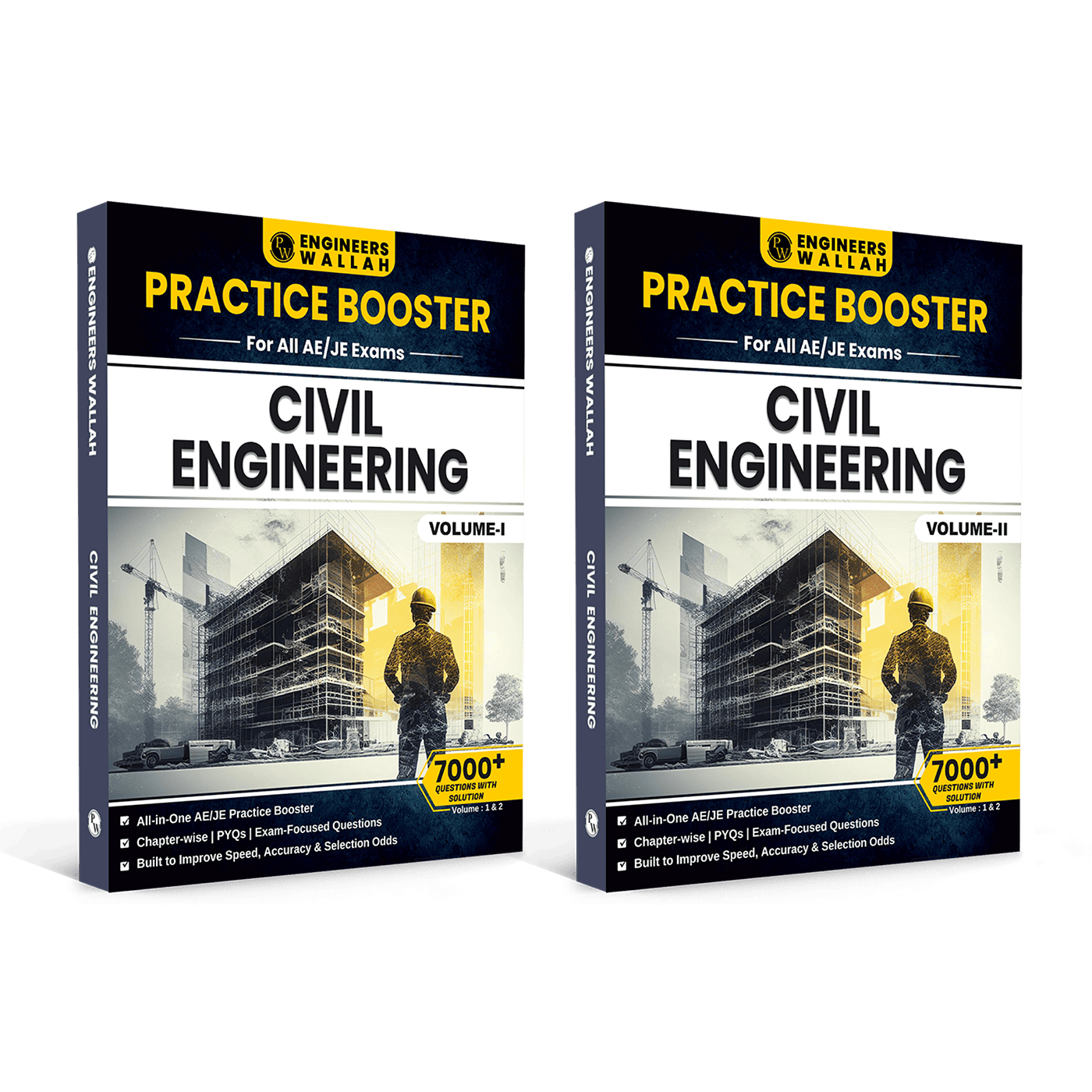
This gap between knowing a concept and solving a technical problem is where most aspirants lose their way. You need a structured approach and a reliable AE JE civil engineering PYQ book to understand the specific patterns of these competitive exams.
Importance of Using an AE JE Civil Engineering PYQ Book
When you start your preparation, you quickly realise that Civil Engineering is a vast field. You cannot master every single detail. This is why looking at previous years is vital. A high-quality PYQ book acts as a roadmap, showing you exactly where to focus your energy.
1. Understanding Exam Patterns
Every board, whether it is SSC JE, State PSCs, or RRB, has a specific style of asking questions. Some focus more on theoretical definitions, while others lean heavily toward numerical problems in Soil Mechanics or RCC. By using an AE JE PYQ civil engineering resource, you identify these trends early. You learn which chapters carry the most weight and which ones you can afford to skim.
2. Benchmarking Your Level
How do you know if your preparation is on the right track? Solving questions from an AE JE civil PYQ collection gives you a reality check. If you can solve questions from the last five years, your confidence grows. If you struggle, you know exactly which subject needs a second round of revision. It moves your study process from "guessing" to "knowing."
How to Use an AE JE Civil Engineering PYQ Book?
Simply owning a AE JE book is not enough; you must know how to extract value from it. Many students make the mistake of reading the solutions before even attempting the questions. This stops the brain from developing problem-solving skills.
-
Step-by-Step Practice
Start by picking a specific topic, such as Fluid Mechanics. After reading your notes, open your AE JE civil engineering PYQ book and attempt at least 50 to 100 questions. Do not look at the answers immediately. Mark the ones you get wrong and try to figure out why. Was it a calculation error, or did you forget the formula?
-
Level-Based Learning
A good preparation strategy involves tackling different levels of difficulty. JE exams often focus on direct applications of formulas and basic concepts. AE exams, however, might require deeper conceptual clarity and multi-step calculations. Using an AE JE civil engineering PYQ book that categorises questions by exam level allows you to build your skills progressively. You start with the basics and move to the advanced problems as you get more comfortable.
Study Plan for AE JE Civil Engineering PYQ Book
Success in AE and JE exams is less about how many hours you sit at your desk and more about how you use that time. A scattered approach leads to burnout, while a structured plan leads to a selection.
1. Focus on Core Subjects
Subjects like Environmental Engineering, Strength of Materials, and Building Materials are the pillars of these exams. You should dedicate the first half of your preparation to mastering these. Use an AE JE previous year paper to see how these subjects are tested. You will notice that certain codes and specifications are asked repeatedly.
2. Create Short Revision Notes
As you go through your PYQ book, keep a small notebook handy. Every time you find a formula or a fact that you keep forgetting, write it down. These "formula sheets" are gold during the final two weeks before the exam. Instead of flipping through a 500-page textbook, you can revise your entire syllabus in a few hours.
3. Timing Your Practice
Knowledge is useless if you cannot apply it within the time limit. When practising with an AE JE PYQ, set a timer. Try to solve 100 questions in 90 minutes. This builds the mental stamina required for the actual exam day. It also helps you identify "trap questions"—those long numericals that look easy but eat up ten minutes of your time.
Benefits of Using AE JE Civil Engineering PYQ Book
Using a dedicated practice set offers several advantages that a standard textbook cannot provide. It prepares your mind for the exam's specific "language".
-
Improved Accuracy
The more you practice with an AE JE civil engineering PYQ book, the fewer silly mistakes you make. You become familiar with common "distractors" in multiple-choice questions. You start noticing words like "except," "not," or "incorrect," which students often miss in a hurry.
-
Speed and Confidence
There is a massive difference between knowing a formula and applying it under pressure. Regular practice with an AE JE previous year paper helps you automate your responses. When you see a familiar question type on exam day, your hands move faster, and your heart rate stays steady. This confidence is what separates toppers from the rest.
-
Detailed Concept Clarity
The right GATE Combos books do not just give you the answer (A, B, C, or D). They provide a step-by-step explanation. Reading these explanations is like having a teacher guide you through the problem. It reinforces what you learned in class and clarifies any lingering doubts.
Mistakes to Avoid in AE JE Civil Engineering PYQ Book
Even the most hardworking students can fail if they fall into common traps. Avoiding these mistakes can save you months of wasted effort.
-
Ignoring Non-Technical Sections: Many Civil Engineering students focus only on technical subjects and ignore General Awareness or Reasoning. In many JE exams, these sections carry enough weight to decide your final rank.
-
Collecting Too Many Resources: Do not buy ten different books for the same subject. It leads to confusion. Stick to one comprehensive PYQ and master it completely.
-
Skipping Solutions: Sometimes, you get an answer right by pure luck or elimination. Always read the detailed solutions in your AE JE civil engineering PYQ book to ensure your logic was correct.
-
Lack of Consistency: Studying for 15 hours one day and then taking three days off does not work. Aim for a steady 6 to 8 hours every day.
Read More: How to Prepare for AE/JE Electrical Engineering Exam?
AE JE Civil Engineering PYQ Book FAQs
1. Why is an AE JE civil engineering PYQ book essential?
It helps you identify high-weightage topics and understand the difficulty level of the exam. Practising previous questions ensures you are familiar with the exam format and improves your time management.
2. Can I clear the exam by only solving an AE JE PYQ?
While practising questions is crucial, you must first have a basic understanding of concepts. Use the PYQ alongside your notes to ensure you can apply the theory to solve problems effectively.
3. How many years of AE JE civil PYQ should I solve?
Ideally, you should solve the last 5 to 10 years of papers. This gives you a broad view of how the syllabus has evolved and which topics are currently trending in the exams.
4. Is there a difference between the AE JE previous year paper and mock tests?
Yes, an AE JE previous-year paper consists of actual questions from past exams, reflecting real trends. Mock tests are practice papers designed by experts to simulate the exam environment and test your current readiness.