How to Prepare for AE JE Electrical Engineering Exam?
Many students feel overwhelmed by the vast syllabus and the sheer pressure of competing for limited seats. You might find yourself staring at complex circuit diagrams or power system equations, wondering if you are studying the right material.
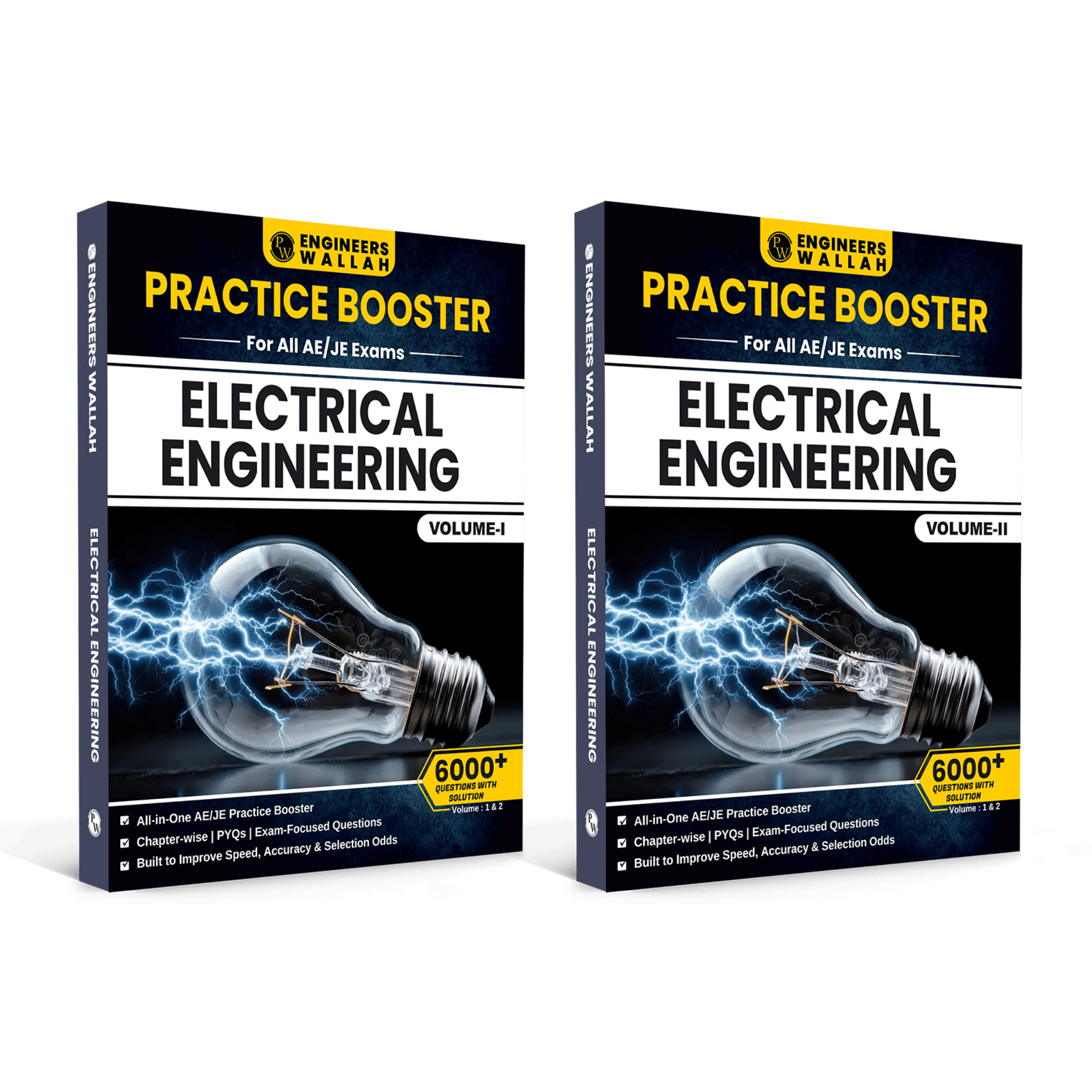
The biggest hurdle isn't just learning the concepts; it is knowing how to apply them under exam conditions. This is where a dedicated AE JE electrical engineering PYQ book becomes your most valuable asset. By focusing on previous patterns, you can turn your confusion into a structured roadmap for success.
Overview of AE JE Electrical Engineering PYQ Book
Cracking technical exams requires more than just theoretical knowledge. You need to understand the "language" of the examiners. Every year, thousands of aspirants prepare for state and central-level exams, but previous papers play a major role in improving exam readiness.
Using a PYQ book helps you identify which topics carry the most weight. Instead of reading every chapter with the same intensity, you can prioritise high-yield subjects like Electrical Machines, Power Systems, and Basic Electronics.
Most competitive exams for engineers follow a specific trend. Whether it is SSC JE, RRB JE, or State PSC exams, certain concepts appear more frequently than others.
When you consistently practice from an AE JE electrical engineering PYQ book, you become more familiar with recurring question patterns. This familiarity can help students feel more confident during exams and help them manage their time more effectively during the actual test.
Features of the AE JE Electrical Engineering PYQ Book
When selecting study material, quality matters more than quantity. A well-structured AE JE PYQ book should offer more than just a list of questions. It should act as a comprehensive guide that bridges the gap between theory and practice.
-
Chapter-wise Segregation: Instead of a random mix of questions, the book organises problems by subject and chapter. This allows you to practice specific topics immediately after studying the theory.
-
Detailed Explanations: Every question comes with a step-by-step solution. This is crucial for understanding the "why" behind an answer, especially in numerical problems involving KVL, KCL, or machine torque equations.
-
Difficulty Level Categorisation: Questions are often grouped based on their complexity. This helps you progress from basic foundational problems to advanced-level engineering challenges.
-
Coverage of Multiple Exams: A good AE JE electrical engineering PYQ book includes papers from various boards like SSC, DMRC, UPPCL, and various State AE/JE levels.
-
Error-Free Content: Accuracy is vital. Trustworthy books ensure that the keys and solutions are verified by subject matter experts to prevent any confusion during self-study.
When to Start Using the AE JE Electrical Engineering PYQ Book?
Timing is everything in competitive exam preparation. Ideally, you should introduce the PYQ book into your routine from day one. Many students make the mistake of waiting until they finish the entire syllabus before touching previous papers. This is a flawed strategy because you might spend weeks on a topic that is rarely asked.
In the initial phase of your preparation, use the AE JE PYQ to understand the depth required for each subject. For example, you might find that while the syllabus for "Measurements" is vast, the exam mostly focuses on bridges and error analysis.
In the mid-term phase, use the book to maintain a balance between learning new topics and revising old ones. In the final month before the exam, the AE JE previous year paper should become your primary focus, serving as full-length mock tests.
How to Use AE JE Electrical Engineering PYQ Book
Simply owning a book is not enough; you must use it strategically to see a real difference in your mock test scores. To maximise the utility of your PYQ book, follow a systematic approach. Start by solving questions without looking at the solutions. Give yourself a fixed time per question to simulate the pressure of a real exam.
Once you finish a set of AE JE EE previous year paper questions, spend time analysing your mistakes. If you find that you are consistently failing in "Magnetic Circuits," go back to your notes, revise the theory, and then return to the PYQ section. This feedback loop can help identify and improve weak areas effectively.
-
Step 1: Complete a theoretical topic from your standard textbooks.
-
Step 2: Open the book and solve all questions related to that topic.
-
Step 3: Highlight the questions you got wrong or those that took too much time.
-
Step 4: Re-attempt those highlighted questions after a week to ensure retention.
Study Plan for AE JE Electrical Engineering PYQ Book
To cover the vast syllabus effectively, you need a disciplined schedule. Here is a sample plan that integrates theory with an PYQ book:
|
Phase |
Focus Area |
Activity |
|
Month 1-2 |
Foundational Subjects |
Basic Electricity, Network Theory, and Magnetic Circuits. Solve 20-30 PYQ daily. |
|
Month 3-4 |
Core Engineering |
Electrical Machines, Power Systems, and Control Systems. Focus on PYQ numericals. |
|
Month 5 |
Allied Subjects |
Digital Electronics, Microprocessors, and Measurements. Use AE JE PYQ sets for quick revision. |
|
Month 6 |
Full Revision |
Solve one AE JE previous year paper every day in a timed environment. |
Consistency is the secret ingredient. Even on days when you don't feel like studying a new chapter, commit to solving at least 10 questions from your AE JE electrical engineering PYQ book. This keeps your mind sharp and ensures you don't lose touch with the exam format.
To strengthen preparation further, students can combine daily PYQ practice with GATE Combos Books for broader concept coverage, structured revision, and additional technical practice across important electrical engineering topics
Benefits of AE JE Electrical Engineering PYQ Book
The primary goal of any aspirant is to improve their accuracy and speed. A PYQ book serves as a mirror, reflecting your strengths and weaknesses. By solving PYQ sets, you can pinpoint exactly where you lose marks, whether it is a silly calculation mistake or a fundamental misunderstanding of a concept.
Another major benefit is the boost in confidence. When you solve a question that actually appeared in a previous year's paper, you realise that the exam is winnable. It shifts your mindset from "this is too hard" to "I have seen this before.
Furthermore, repeated practice of AE JE EE PYQ questions helps in memorising important formulas and constants that are frequently asked in the technical section.
Read More: How to Prepare for AE/JE Mechanical Engineering Exam?
AE JE Electrical Engineering PYQ Book
Q1: Is solving an AE JE electrical engineering PYQ book enough to pass the exam?
While it is a critical component, you should use it alongside standard textbooks for conceptual clarity. The PYQ helps you understand the application, while textbooks provide the foundation.
Q2: How many years of AE JE PYQ electrical engineering papers should I cover?
It is highly recommended to solve at least the last 10 to 12 years of PYQ to get a clear sense of the evolving trend and difficulty levels.
Q3: Does the AE JE electrical engineering PYQ book include state-level exams?
Yes, a comprehensive book covers a wide range of exams including SSC JE, RRB JE, and various State Power Corporation exams like UPPCL or PSPCL.
Q4: How can I improve my speed using the AE JE EE previous year paper?
Set a timer while solving each AE JE previous year paper. Try to finish the technical section 10 minutes earlier than the allotted time to leave room for review.
Q5: Should I memorise the answers in the AE JE electrical engineering PYQ book?
No, you should never memorise answers. Instead, understand the method used in the PYQ solutions so you can solve similar problems with different numerical values in the actual exam.