Crack Banking Exams Like a Topper with KYC Quant PYQ

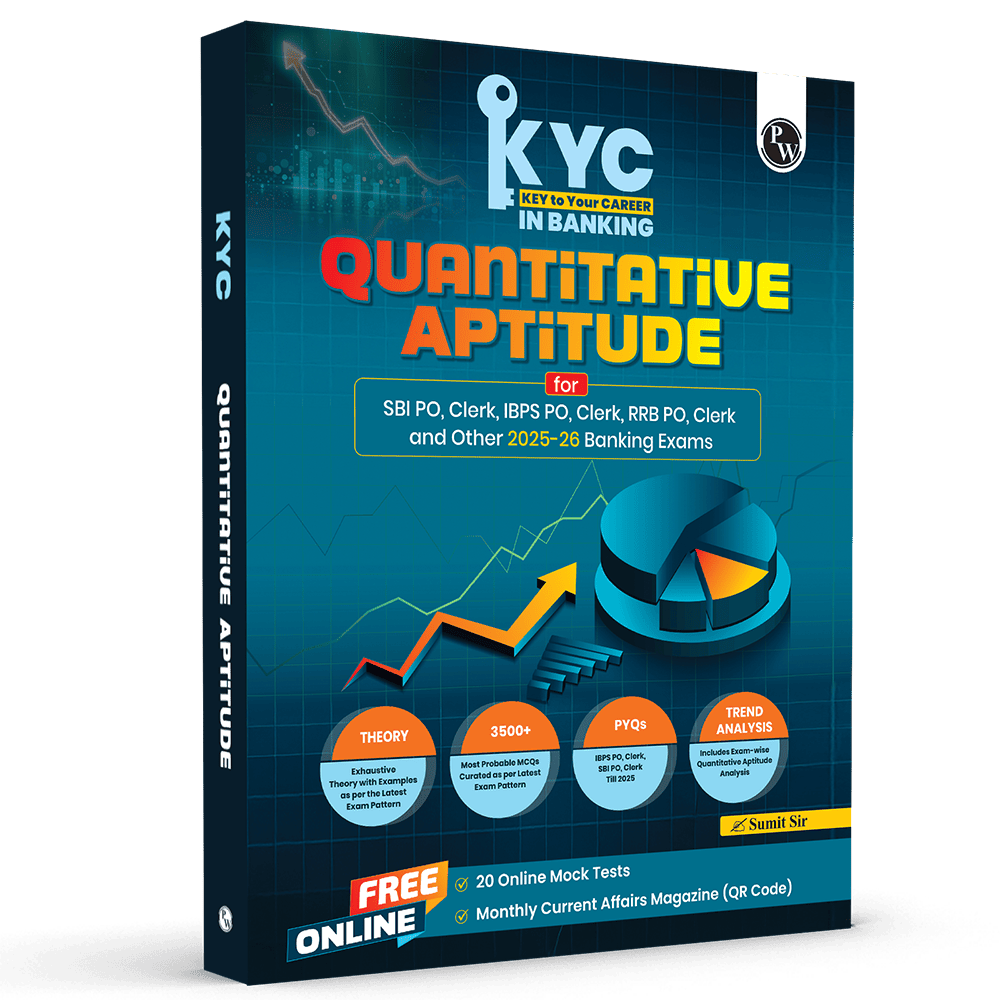
Preparing for competitive exams requires a structured approach, especially when tackling the mathematical section. Many candidates struggle to manage their time and speed during the main exam. Investing in a dedicated KYC Quantitative Aptitude Book helps you understand the core patterns and helps you solve problems quickly and accurately.
Check Out: Banking Books
Importance of KYC Quantitative Aptitude Book
The numerical ability section frequently stands as the primary barrier between a candidate and their selection. Aspiring students often spend months memorising formulas, yet they struggle to perform well during the actual test. This issue usually occurs because standard practice exercises fail to mimic the exact structural complexity of real competitive tests.
When you prioritise actual past papers, you get a genuine feel for the examiner's mindset. You start to notice recurring themes in data interpretation and arithmetic application problems. This familiarity helps you immediately recognise the difficulty level of a question on your screen. Consequently, you can make smarter choices about which problems to solve immediately and which ones to skip for later.
Features of KYC Quantitative Aptitude Book
A reliable banking Quantitative Aptitude book must serve as a comprehensive preparation manual rather than a random collection of mathematical formulas. It should support both self-taught students and those taking regular coaching classes by breaking down complex ideas into simple steps.
An elite training guide should include the following structural elements:
-
Topic-Wise Distributions: Dividing chapters into separate sub-topics ensures that you master basic calculations before tackling advanced corporate word problems.
-
Step-by-Step Solutions: Detailed explanations help you track your errors and understand the underlying logic of a solution instead of blindly memorising steps.
-
Alternative Shortcuts: Traditional algebraic methods are far too slow for competitive environments; your book must provide faster Vedic math and elimination tricks.
-
Graded Difficulty Ranges: Questions must progress smoothly from basic foundational drills up to high-level mains exam scenarios.
Important Topics Covered in the KYC Quantitative Aptitude Book
The Quantitative section tests how quickly you can process numerical data without making careless mistakes. Relying on an authentic KYC Quantitative Aptitude book for banking exam allows you to break down a massive syllabus into achievable weekly milestones.
The comprehensive syllabus for major banking sector exams generally features these primary modules:
Speed Maths Basics
This segment acts as the ultimate score-booster in preliminary tests. It includes simplification, approximation, linear quadratic equations, and missing or wrong number series. Scoring well here creates a solid buffer for tougher sections.
Arithmetic Word Problems
Arithmetic forms the structural spine of both prelims and mains papers. You must develop deep conceptual clarity in percentages, profit and loss statements, simple and compound interest, ratio and proportion, and time-management problems.
Data Interpretation and Sufficiency
Modern bank exams lean heavily toward analytical data parsing. You will routinely encounter bar charts, broken line graphs, pie diagrams, caselet narrative paragraphs, and multi-statement data sufficiency challenges.
Marks-Weightage in KYC Quantitative Aptitude Book
To plan your study schedule intelligently, you need to understand how marks are distributed across different exam segments. The table below outlines the general distribution you can expect during standard banking preliminary rounds:
|
Mathematical Topic Area |
Specific Question Sub-Types Included |
Approximate Number of Questions |
Estimated Time Allocation |
|
Fast Calculations |
Approximations, Simplifications, Number Strings |
Around 10 to 15 Questions |
Around 4 to 5 Minutes |
|
Analytical Charts |
Tables, Pie Diagrams, Line Graphs, Caselets |
Around 10 to 15 Questions |
Around 7 to 8 Minutes |
|
Arithmetic Applications |
Profit, Percentages, Ratios, Time, Age Problems |
Around 10 Questions |
Around 7 Minutes |
|
Data Evaluation |
Two-statement Sufficiency, Quantity Comparisons |
Around 5 Questions |
Around 3 Minutes |
How to Use KYC Quantitative Aptitude Book
Simply owning a textbook will not improve your scorecard. You must implement a deliberate, multi-tiered practice strategy to get the maximum return on your investment.
Step 1: Establish Conceptual Clarity
Avoid jumping straight into solving past papers. Spend your initial week studying core properties, decimal-to-fraction conversions, and basic algebraic identities.
Step 2: Practise Without Time Boundaries
When opening a new chapter in your Quantitative Aptitude book, leave your stopwatch turned off. Focus entirely on finding the correct answer using systematic steps. Read through the provided explanations to see if your logical path matches the author's approach.
Step 3: Integrate Sectional Timers
Once you can solve eight out of ten questions correctly on a specific topic, introduce a timer. Try to complete easy approximations in under thirty seconds, leaving more time for tricky word problems.
Step 4: Keep an Error Log Book
Maintain a separate notebook dedicated to your mistakes. Copy down every question that took you over two minutes to solve or resulted in a wrong calculation, and review them every weekend.
Tips for KYC Quantitative Aptitude Book
The final challenge in clearing sectional cut-offs is managing your time effectively under pressure. Even with an excellent Quantitative Aptitude book, your final score depends on how smoothly you execute your strategy during those intense twenty minutes.
-
The Initial Scan: Spend your first minute identifying and answering easy speed math questions to build your confidence early on.
-
Skip Time Traps: If a word problem takes more than fifty seconds to decode, mark it for review and move on to the next one.
-
Check Chart Details Carefully: In data interpretation sets, missing a small detail in a graph footnote can lead to multiple wrong answers. Always double-check your initial data readings.
-
Morning Math Warmups: Spend fifteen minutes every morning practising mental addition, multiplication tables up to thirty, and square roots.
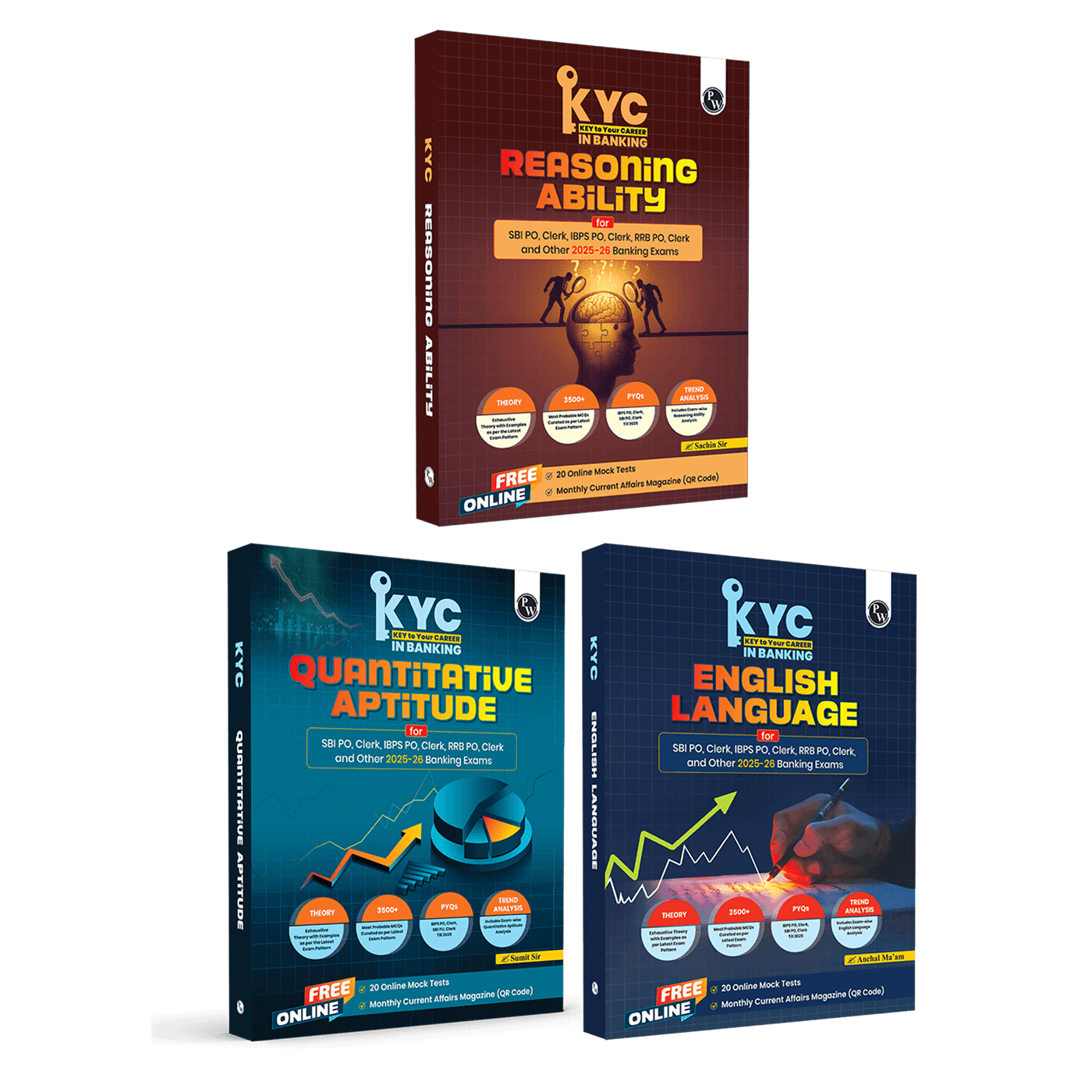
Check Out: KYC Quantitative Aptitude, Reasoning Ability and English Language Combo Set of 3 Books
How to Choose Right KYC Quantitative Aptitude Book
Many modern learners prefer keeping a mix of physical and digital study materials handy. Searching for a reliable PW KYC Quantitative Aptitude PDF gives you a convenient way to practice math problems on your smartphone or tablet during your daily commute.
Digital books are incredibly useful for quick revision sessions between your main study hours. Even so, balancing digital PDFs with a physical copy helps you maintain the deep focus required during long, gruelling exam sessions.
Common Mistakes to Avoid While Using KYC Quantitative Aptitude Book
Many candidates repeat the same easily avoidable mistakes year after year, which can delay their selection by months. Knowing these traps beforehand helps you adjust your study plan and save valuable time:
-
Over-relying on Tricks: Memorising shortcuts without understanding the underlying concepts backfires when the exam features slightly tweaked question patterns.
-
Neglecting Weak Chapters: Skipping hard topics like permutations or probability can cost you crucial marks if the data interpretation section is based on them.
-
Skipping Mock Test Reviews: Spending two hours taking a mock test without spending an hour reviewing your mistakes makes the practice session far less effective.
-
Poor Scratchpad Habits: Writing your calculations messily on rough sheets makes it easy to misread your own handwriting, leading to avoidable errors.
Keep your rough notes organised during your daily study sessions. This simple habit makes it much easier to spot calculation errors quickly and systematically.
Read More: How KYC Reasoning Ability Helps in Banking Exam Preparation
KYC Quantitative Aptitude Bank FAQs
-
Which is the Right book for the KYC Quantitative Aptitude bank exams?
An ideal textbook must offer topic-wise previous year questions paired with clear, shortcut-based solutions, and a comprehensive collection of questions.
-
How can I improve my speed in the bank exam Quantitative Aptitude section?
You can build excellent speed by mastering mental calculation techniques, memorising standard fractional percentages, and practising consistently with a reliable study material.
-
Is the KYC Quantitative Book helpful for beginner students?
The resource is highly beneficial for beginners because it organises math problems by difficulty level. New students can master basic concepts first before moving on to complex data interpretation challenges from past papers.
-
Where can I get the PW KYC Quantitative Aptitude PDF or a hard copy?
You can find authentic banking preparation materials and purchase the complete physical book by visiting the official online store.
-
What topics should I focus on first in an Aptitude book for banking?
You should prioritise speed math topics like simplifications, quadratic equations, and number series. These chapters help you build momentum and carry significant weight in preliminary rounds.