Why IBPS Clerk Prelims PYQs Are Essential for Beginners
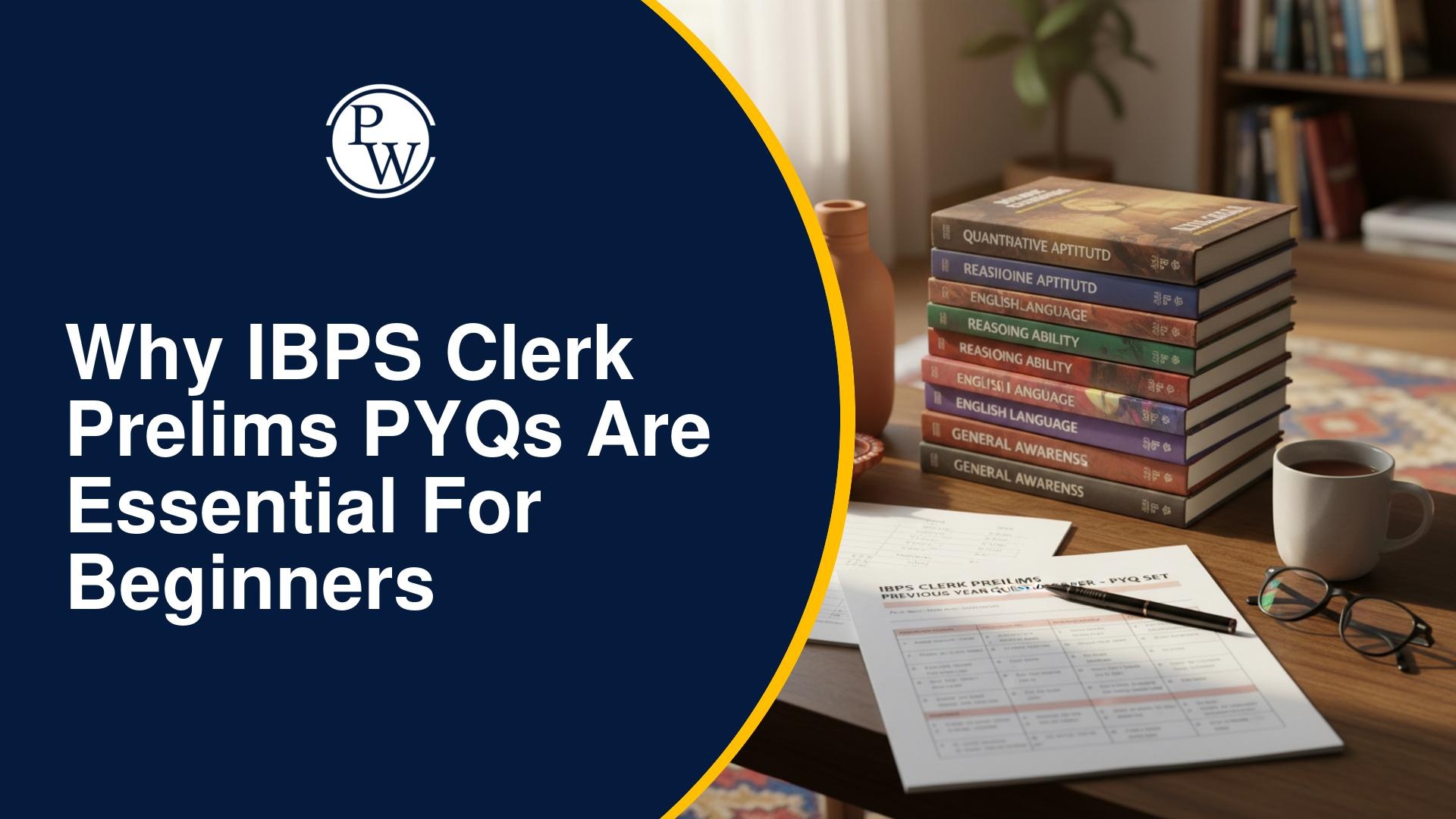
Regular practice utilizing an IBPS Clerk Prelims PYQ book makes the beginning of IBPS Clerk preparation easy. Previous-year papers help candidates understand the latest exam format, identify high-weightage topics, improve speed and accuracy, and enhance time management. Practicing real questions also increases confidence, lowers exam anxiety, and prepares beginners to tackle sectional and overall cut-offs efficiently.
Importance of IBPS Clerk Prelims PYQ for Beginners
For a newcomer, the preliminary examination is primarily a test of speed, accuracy, and quick decision-making rather than deep theoretical knowledge. You need to solve 100 questions across three distinct sections within just 60 minutes.
|
Section |
Number of Questions |
Maximum Marks |
Duration |
|
English Language |
30 |
30 |
20 Minutes |
|
Quantitative Aptitude |
35 |
35 |
20 Minutes |
|
Reasoning Ability |
35 |
35 |
20 Minutes |
|
Total |
100 |
100 |
60 Minutes |
You cannot handle 36 seconds per question without having seen real test papers beforehand. By looking at former exams, the precise distribution of questions is found out, and this helps applicants to set reasonable targets for each 20-minute sectional slot.
Deciphering the Prelims Exam Pattern and Difficulty Level
Understanding the difference between the Preliminary and Main examinations is vital for setting up an efficient study schedule.
-
Prelims Exam: Focuses strictly on speed, basic arithmetic, elementary reasoning, and basic English comprehension.
-
Mains Exam: Tests deep analytical ability, complex data interpretation, critical reasoning, and general banking awareness.
When beginners start with previous papers, they avoid wasting time studying overly complex Mains-level questions during their initial preparation stage.
Realising Speed and Accuracy Requirements
If the overall attempts are below the average cut-off scores, then accuracy alone will not get you selected.
-
Target Speed: Candidates should average 35 to 40 seconds per question in all parts.
-
Accuracy Threshold: You must be above 90% accuracy to get normalization marks.
-
Question Selection: Past papers assist students in identifying questions to attempt immediately and questions to leave that could lead to bad marking.
How to Analyze IBPS Clerk Prelims PYQ to Improve Score?
Doing Banking previous year papers and looking at your total is not enough. To maximize your prior year sets, you should use a methodical three-step analysis framework.
Step 1: Initial Untimed Solving for Conceptual Gaps
When taking your first few past papers, turn off the timer completely. Focus solely on whether you understand the fundamental concepts required to solve each problem.
-
Goal: Distinguish conceptual ignorance from time pressure errors.
-
Action: Circle questions you were unclear about the formula, shortcut, or grammar rule.
-
Result: Produce a personalized list of weak chapters that require urgent theoretical study.
Step 2: Timed Practice and Sectional Speed Building
Once you’ve got your concepts down, shift to timed practice sessions, with a hard 20-minute limit for each segment.
-
Set Clear Limits: Follow the stated 20-minute sectional cut-off strictly.
-
Track tries: Total questions attempted and wrong tries.
-
Selection of Monitors: Select inquiries that took over 90 seconds and did not find a response.
Step 3: Deep Error Analysis and Formula Revision
The post-test review is where the true progress takes place. Spend at least twice as much time reviewing your performance as you spent on the test.
-
Complete Timed PYQ Practice Set
Attempt a full past-year question paper under strict timer conditions to simulate real exam pressure.
-
Categorise Incorrect Answers
Group every wrong question or skipped item into specific error types to identify your main bottlenecks.
-
Execute Targeted Action Plan
For Conceptual Mistakes:
-
Re-read Theory: Go back to core notes and study materials for missing concepts.
-
Solve Basic Examples: Work through standard practice questions to rebuild fundamental understanding.
For Calculation & Time Management Errors:
-
Practice Speed Math: Focus on quick mental calculations and shortcut techniques.
-
Refine Skip Logic: Sharpen your decision-making on which questions to bypass immediately.
Reviewing high-quality solved papers ensures you understand the fastest, error-free method for every problem type.
Benefits of Practicing IBPS Clerk Prelims PYQ Early
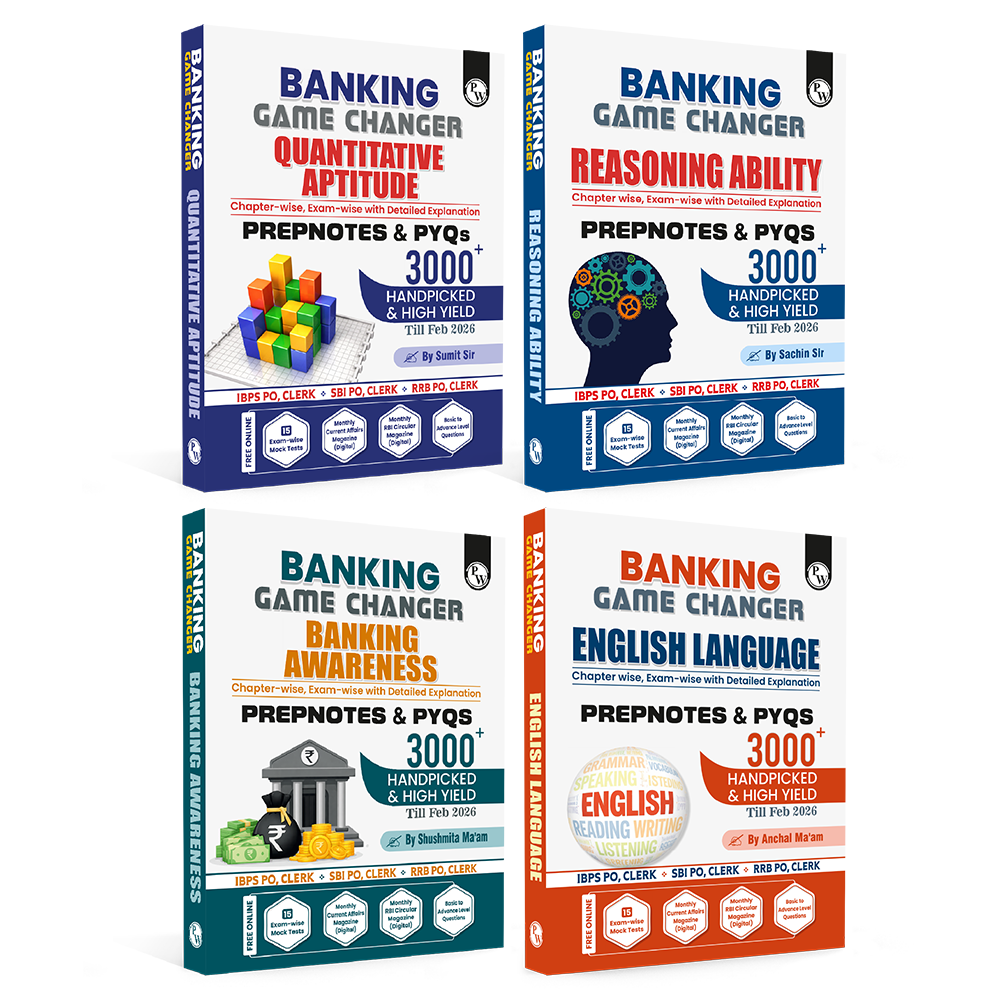
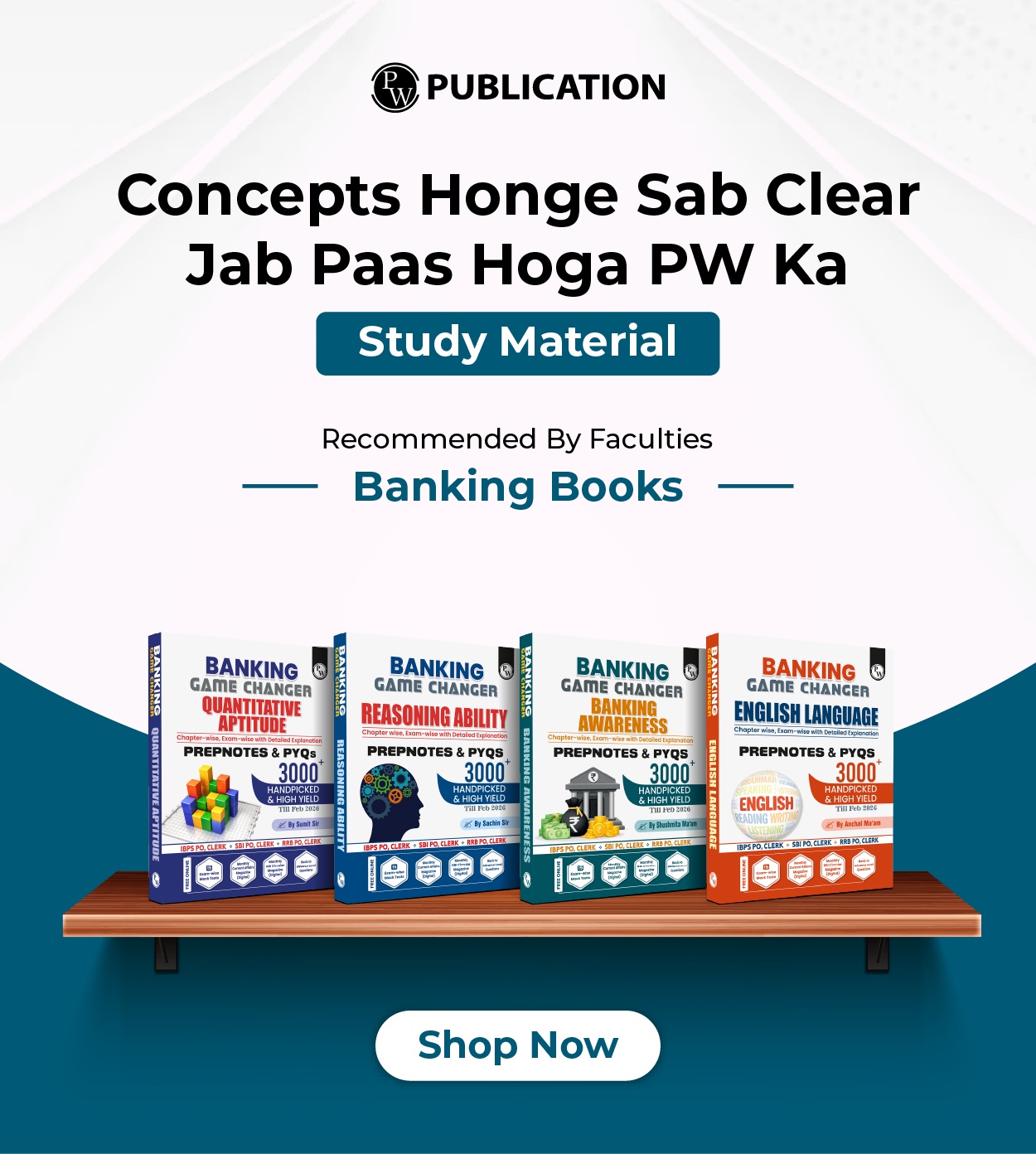
Starting your study regimen with previous year papers provides important strategic advantages over relying solely on chapter-wise activities. Alongside PYQ practice, Banking Books can help strengthen core concepts, provide structured chapter-wise practice, and improve your understanding of important topics for Banking examinations.
Identifying High-Weightage Topics Through Trend Analysis
Analyzing recent paper trends helps candidates focus their energy on topics that carry the maximum mark weightage every year.
-
Quantitative Aptitude: Simplification, Approximation, Data Interpretation (DI), and Number Series consistently account for 20 to 25 out of 35 marks.
-
Reasoning Ability: Puzzles and Seating Arrangements regularly contribute 15 to 20 marks per shift.
-
English Language: Reading Comprehension, Cloze Test, and Error Detection form the core of the 30-mark section.
By prioritizing these high-yield topics early in your IBPS Clerk preparation, you establish a strong foundation that quickly translates into higher mock test scores.
Eliminating Exam Anxiety and Building Mock Confidence
Familiarity reduces stress. When candidates practice authentic IBPS Clerk previous year questions, the real exam environment feels familiar rather than intimidating.
-
Reduced Surprises: Exposure to standard phrasing prevents panic during the actual exam.
-
Refined Attempt Strategy: Candidates develop a personalized strategy regarding which sub-sections to attempt first.
-
Pacing Mastery: Repeated practice trains your internal clock to recognize when a puzzle or calculation is taking too long.
Spotting Repeating Question Templates Across Sections
While exact numerical values change every year, the underlying logic, grammar rules, and puzzle arrangements remain remarkably consistent across banking exams.
|
Section |
Recurring Question Template |
Core Skill Tested |
|
Quantitative Aptitude |
Table/Line Graph Data Interpretation |
Fast Ratio and Percentage Calculations |
|
Reasoning Ability |
Linear / Circular Seating Layouts |
Systematic Variable Elimination |
|
English Language |
Contextual Error Spotting |
Subject-Verb Agreement Rules |
Learning these core templates through structured practice questions gives candidates a distinct speed advantage over competitors who encounter these formats for the first time in the exam hall.
Tips For Using IBPS Clerk Prelims PYQ
Each of the three prelims sections requires a tailored approach to maximize scores within the strict 20-minute limit.
Quantitative Aptitude Speed Optimization
Quantitative Aptitude can be a major differentiator between successful and unsuccessful candidates. Speed math techniques are essential here.
-
Speed Math Priority: Memorize tables up to 30, squares up to 50, cubes up to 20, and standard fraction-to-percentage conversions.
-
First Phase (0–8 Minutes): Target high-speed topics first—Simplification, Approximation, Quadratic Equations, and Number Series.
-
Second Phase (8–15 Minutes): Solve straightforward Data Interpretation sets.
-
Final Phase (15–20 Minutes): Pick 4 to 6 easy arithmetic word problems from strong areas like Ages, Partnerships, or Averages.
Practising targeted IBPS Clerk practice questions regularly helps automate these mental math steps, saving valuable seconds per question.
Reasoning Ability Puzzle and Seating Plan Mastery
Reasoning Ability is frequently a max-scoring portion for highly prepared applicants, assuming they manage problem risks well enough.
-
Non-Puzzle Questions First: Begin with Syllogisms, Inequalities, Coding-Decoding, and Alphanumeric Series. You can secure 15 to 18 marks within 7 to 9 minutes here.
-
Evaluate Puzzles Carefully: Scan puzzle conditions quickly before committing. Avoid starting complex floor-based or multi-variable puzzles in the final two minutes.
-
Maintain Parallel Possibilities: Draw two parallel cases simultaneously when solving seating arrangements to eliminate wrong combinations quickly.
English Language Grammar and Reading Precision
The English section offers the highest mark-to-time ratio if approached with clarity and restraint.
-
Error Spotting & Phrase Replacement: Tackle grammar-based questions first to secure quick, high-confidence marks.
-
Cloze Test & Fillers: Focus on context, tone, and vocabulary usage rather than guessing blindly.
-
Reading Comprehension: Read the questions first before scanning the passage for specific keywords, synonyms, and main ideas.
Also check - PW KYC Combo Set of 3 Books
Common Mistakes Beginners Make with IBPS Clerk Prelims PYQ
Avoiding common preparation pitfalls can save months of effort and prevent unnecessary score plateaus.
Memorising Answers Instead of Core Concepts
Past papers should be used to understand underlying logic, not to memorize specific answers.
-
Wrong Approach: Remembering that a particular puzzle configuration resulted in a specific seating order.
-
Right Approach: Learning how to systematically analyze clue conditions, construct elimination tables, and handle edge cases.
Ignoring Sectional Timers During Initial Practice
Solving questions in an untimed environment for too long creates a false sense of security that breaks down under actual test conditions.
-
The Trap: Spending 4 minutes on a single arithmetic problem at home feels fine, but it leads to incomplete attempts during the real exam.
-
The Solution: Introduce timed practice sessions within two weeks of starting your preparation.
Practising Without Verified Detailed Solutions
Attempting questions without access to verified, step-by-step solutions limits your learning potential.
-
Without detailed step-by-step methods, you miss out on shorter alternative techniques.
-
Unverified solution keys can teach incorrect concepts, leading to negative marks on exam day.
Read More: IBPS Clerk Preparation Tips for Upcoming Exams
IBPS Clerk Prelims PYQ FAQs
Why is solving an IBPS Clerk prelims PYQ recommended for beginners?
Solving an IBPS Clerk prelims PYQ helps beginners understand the actual exam pattern, question difficulty, sectional time constraints, and topic-wise mark distribution right at the start of their preparation.
How many years of IBPS Clerk previous year questions should I practice?
Candidates should solve at least 5 to 10 years of previous year questions to gain a complete understanding of recurring question templates and recent pattern shifts.
Where can I find accurate solved papers for the IBPS Clerk with detailed solutions?
Reliable IBPS Clerk solved papers with verified explanations are available in dedicated prep guides.
How do IBPS Clerk practice questions help in improving exam speed?
Regularly practicing practice questions builds pattern recognition, sharpens speed-math techniques, and helps you learn which long questions to skip during timed sectional rounds.
What makes the PW IBPS Clerk PYQ book ideal for 2026-27 exam preparation?
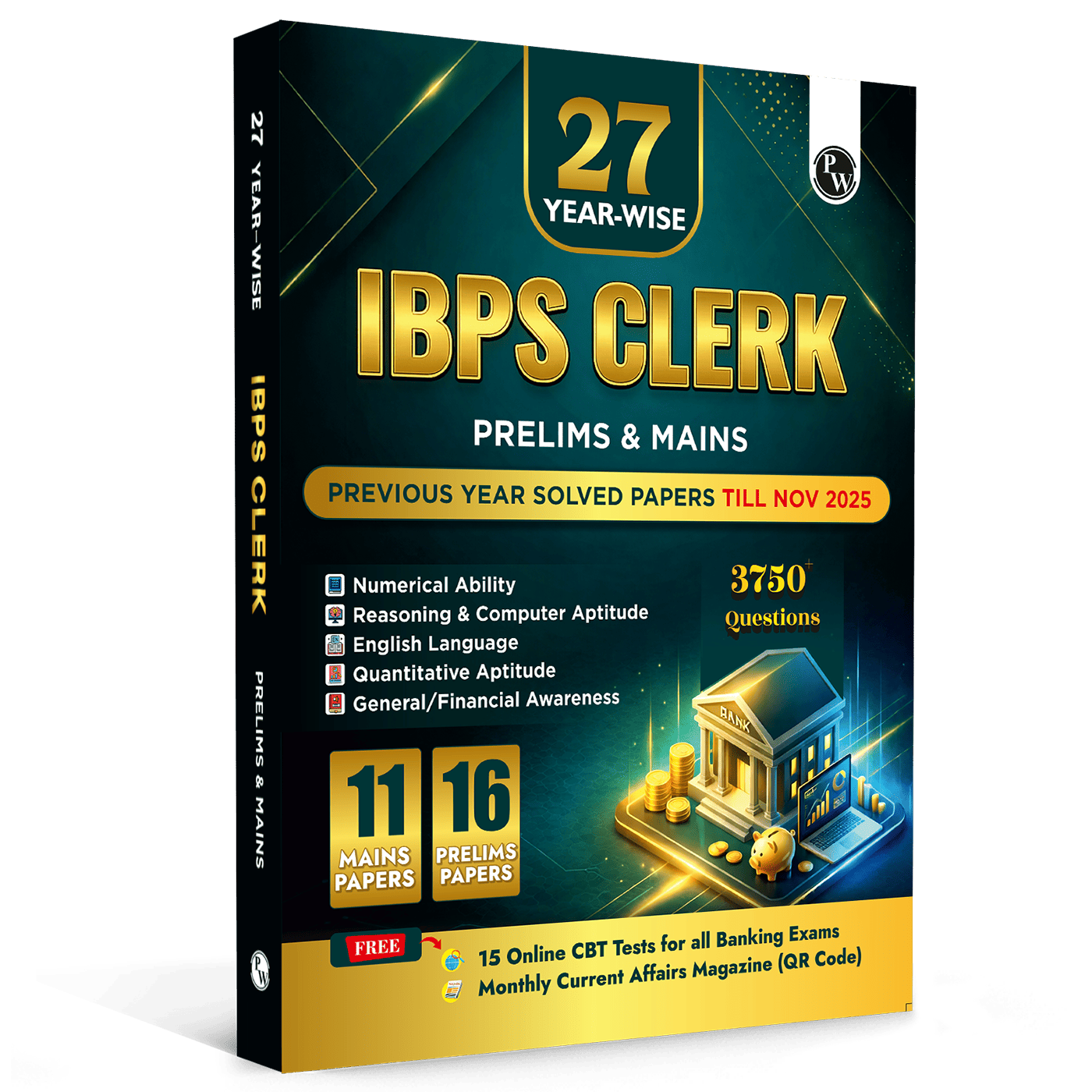
This book features 27 year-wise solved papers up to November 2025, 3750+ questions, a 5-year trend analysis, verified step-by-step solutions, and 15 online CBT mock tests.