CAT Verbal Ability & Reading Comprehension Preparation: Important Topics & PYQs
Strong CAT verbal ability & reading comprehension preparation needs regular reading, smart practice, and a clear plan. Many students find it difficult to understand long passages, manage time, and choose between close answer options.
The best approach is to first build basic reading and verbal skills and then improve speed through regular CAT-level practice. Using well-planned study material can also help students cover important topics without wasting time.
Overview of CAT Verbal Ability & Reading Comprehension Preparation
CAT verbal ability & reading comprehension preparation focuses on improving reading skills, understanding passages, and solving different Verbal Ability question types. Students should practise areas such as Reading Comprehension, Para Summary, Paragraph Jumbles, and Odd-One-Out questions.
Regular reading, CAT-level practice, PYQs, and mistake analysis can help improve accuracy, speed, and confidence. A clear study plan also helps students manage time and focus more on the topics where they need improvement.
Features of Books for CAT Verbal Ability & Reading Comprehension Preparation
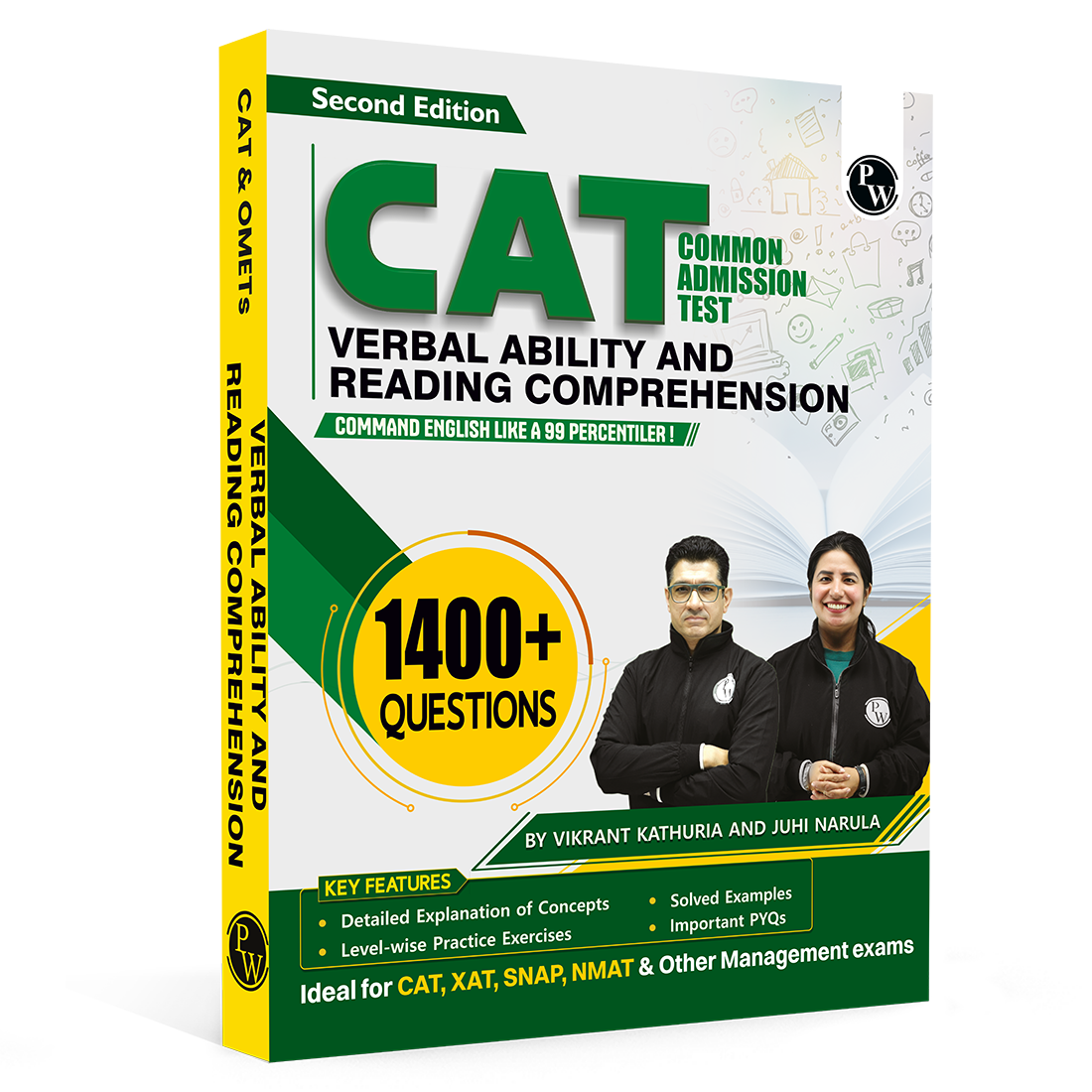
Improve your English skills with focused reading and question practice. The CAT Verbal Ability & Reading Comprehension book helps aspirants understand key topics, develop better comprehension, and prepare for management entrance exams.
-
1400+ Questions for Practice: Solve 1400+ questions covering Verbal Ability and Reading Comprehension to build stronger exam skills.
-
Easy-to-Understand Concepts: Learn important verbal topics through detailed explanations that make the basics easier to follow.
-
Learn With Solved Examples: Go through solved examples to understand useful approaches for tackling different types of questions.
-
Difficulty-Based Exercises: Practise questions in different levels and gradually become comfortable with more challenging problems.
-
Practice With Important PYQs: Solve selected Previous Year Questions to understand actual exam patterns and the types of questions commonly asked.
-
Made for Management Entrance Exams: Prepare for CAT, XAT, SNAP, NMAT & Other Management Exams with dedicated Verbal Ability and RC practice.
How to Start CAT Verbal Ability & Reading Comprehension Preparation?
Before solving difficult questions, understand what the VARC section tests. Most questions check how well you understand an idea, connect information, and identify the author's meaning. Your preparation should therefore focus on both Reading Comprehension and Verbal Ability.
-
Reading Comprehension (RC): Read passages from areas such as history, science, economics, philosophy, and social issues. Focus on the main idea, author's view, tone, and supporting points.
-
Para Summary: Learn to find the main message of a paragraph and remove details that are not important.
-
Paragraph Jumbles: Practise finding the correct order of sentences by looking for links, pronouns, connectors, and ideas.
-
Odd-One-Out: Find the sentence that does not match the main idea of the other sentences.
A good study plan should give more time to RC because it usually forms the largest part of the VARC section.
What Are the Important Topics for CAT Verbal Ability & Reading Comprehension Preparation?
Knowing the major CAT VARC topics helps you plan your preparation in the right order. Instead of trying to study everything at once, begin with the areas that need the most practice.
For Reading Comprehension, focus on:
-
Main idea and central theme
-
Inference-based questions
-
Author's tone and purpose
-
Fact-based questions
-
Application-based questions
-
Meaning of a word or phrase from context
-
Comparing ideas given in a passage
For Verbal Ability, focus on:
-
Para Summary
-
Paragraph Jumbles
-
Odd-One-Out
-
Sentence arrangement
-
Logical flow between ideas
The goal is not only to solve more questions but also to understand why an option is correct or incorrect.
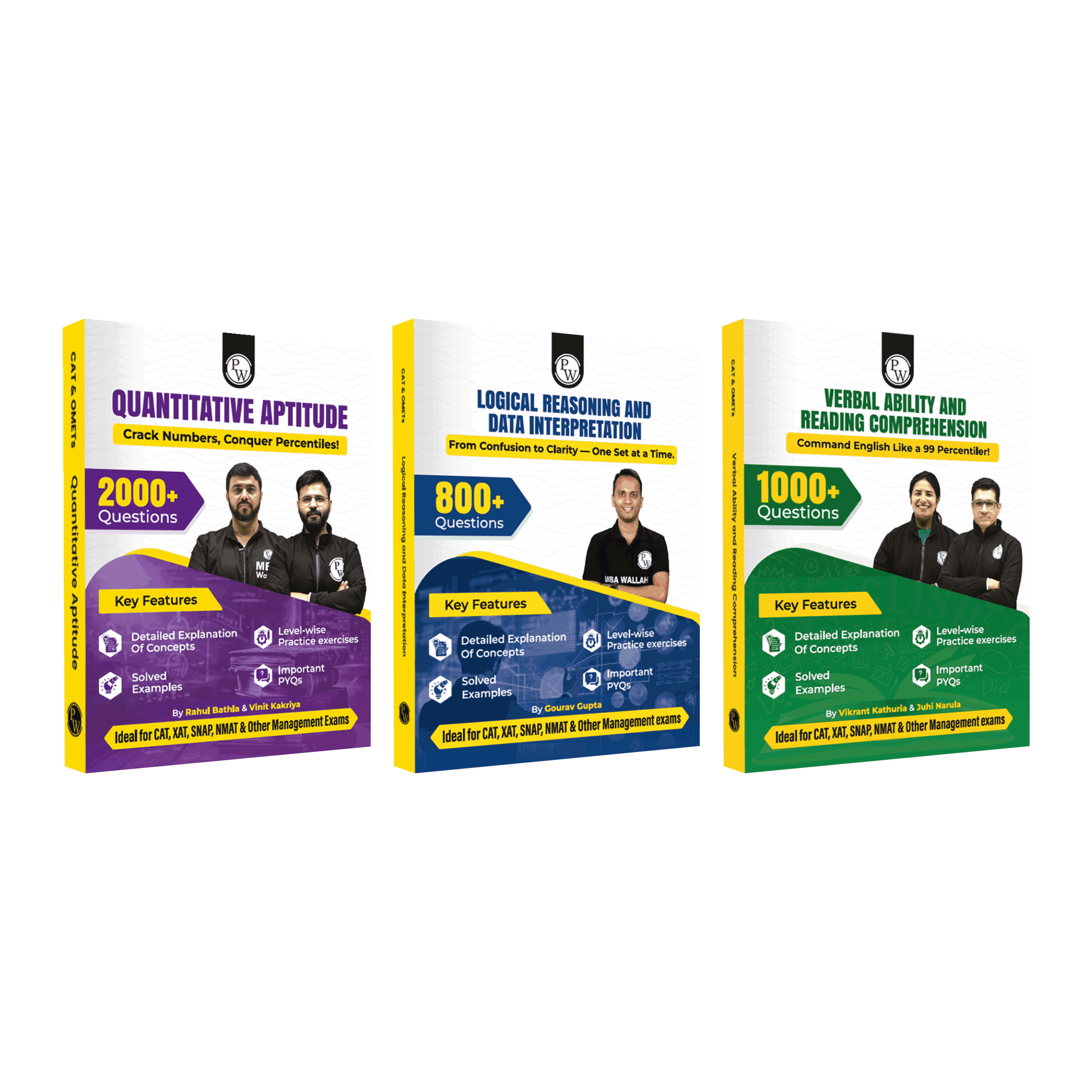
Explore MBA books for entrance exams and management preparation, covering Quant, VARC, DILR, reasoning, and practice questions to strengthen your preparation.
How to Improve CAT Verbal Ability & Reading Comprehension Preparation?
Good CAT verbal ability preparation is based more on understanding than memorising grammar rules or vocabulary lists. CAT questions often test how ideas connect with each other.
Start by reading for 20–30 minutes every day. You can read newspapers, magazines, essays, or articles from different subjects. After reading, try to explain the main idea in your own words.
You should also practise verbal questions regularly. Begin with untimed practice so that you can understand the question type. Once you become comfortable, add a time limit.
Keep an error notebook where you write down:
-
Questions you answered incorrectly
-
Why your answer was wrong
-
Why the correct option works
-
The type of mistake you made
This simple habit can help you avoid repeating the same mistakes.
How to Improve Reading Comprehension for CAT Verbal Ability & Reading Comprehension Preparation?
Effective CAT reading comprehension preparation requires both reading ability and question-solving skills. Simply reading many passages is not enough. You need to understand how the passage is built.
While reading a passage, identify:
-
The main topic
-
The author's main argument
-
The purpose of each paragraph
-
Important changes in the author's argument
-
Examples used to support an idea
-
The final conclusion
Do not try to remember every sentence. Instead, understand the overall flow of the passage.
When solving questions, avoid selecting an option just because it contains words from the passage. An answer can use the same words but still change the meaning. Always check whether the option matches the exact idea given by the author.
Read More - CAT Important Topics for Preparation
Which Important Topics Should You Revise for CAT Verbal Ability & Reading Comprehension Preparation?
During the final stage, students should spend more time revising their weak areas instead of starting completely new topics. The important CAT VARC topics include both RC and Verbal Ability question types.
For RC, revise:
-
Inference questions
-
Main idea questions
-
Tone and purpose
-
Author's argument
-
Application-based questions
For Verbal Ability, revise:
-
Para Summary
-
Paragraph Jumbles
-
Odd-One-Out
-
Logical sentence connections
Also review questions that you got wrong in earlier tests. Your mistakes can show whether your main problem is reading speed, understanding, option selection, or time management.
How to Use PYQs for Better CAT Verbal Ability & Reading Comprehension Preparation?
Solving CAT VARC PYQs is one of the best ways to understand the real level and style of CAT questions. PYQs show how questions are framed and help you become familiar with the type of thinking required.
Do not solve PYQs only to count your correct answers. After every practice session, check:
-
Why was the correct option right?
-
Why were the other options wrong?
-
Did you misunderstand the passage?
-
Did you miss an important word?
-
Did you choose an extreme option?
-
Did you spend too much time on one question?
This analysis is often more useful than simply solving another set of questions.
How to Solve Previous Year Questions for Better CAT Verbal Ability & Reading Comprehension Preparation?
CAT previous year questions should be treated as serious practice material. Start by solving a few questions without looking at the solutions. Once you finish, check your answers and study every mistake.
A useful method is to divide your PYQ practice into three stages:
-
First stage: Solve the questions and understand the basic pattern.
-
Second stage: Solve them with a time limit to improve speed.
-
Third stage: Revisit difficult questions after some time and try them again without checking the solution.
You can also maintain a simple record of your accuracy in different question types. This will help you find which areas need more work before the exam.
How Can Working Professionals Manage CAT Verbal Ability & Reading Comprehension Preparation?
Working professionals do not need to study for many hours every day. A fixed and realistic routine can be more useful.
For example, weekdays can be used for reading and short verbal practice, while weekends can be used for longer RC sets and sectional tests.
A simple routine can include:
-
20 minutes of reading
-
20–30 minutes of VARC practice
-
One RC passage on busy days
-
Longer practice sessions on weekends
-
Weekly review of mistakes
The key is consistency. Missing a day is not a major problem, but stopping preparation for several days can make it harder to maintain reading speed and accuracy.
How to Track CAT Verbal Ability & Reading Comprehension Preparation Progress?
Your preparation should be measured by more than the number of questions you solve. Track accuracy, time, and the type of mistakes you make.
|
Area |
What to Track |
|
Reading Comprehension |
Accuracy and time per passage |
|
Para Summary |
Correct option selection |
|
Paragraph Jumbles |
Accuracy and solving time |
|
Odd-One-Out |
Accuracy |
|
Sectional Tests |
Overall score and time management |
|
PYQs |
Accuracy across different years |
If your accuracy is improving but your speed is low, focus on timed practice. If your speed is good but accuracy is poor, slow down and work on understanding the passage and answer choices.
FAQs
What are the main areas in CAT verbal ability & reading comprehension preparation?
The main areas are Reading Comprehension, Para Summary, Paragraph Jumbles, and Odd-One-Out questions. RC requires strong reading and inference skills, while Verbal Ability questions focus more on understanding the logical flow of ideas.
Which CAT VARC topics should I study first?
Start with Reading Comprehension because it usually takes up a large part of the VARC section. Then practise Para Summary, Paragraph Jumbles, and Odd-One-Out questions. Focus more on the areas where your accuracy is low.
How can I improve my CAT verbal ability preparation as a working professional?
Use short daily study sessions instead of waiting for long free hours. Reading daily, solving a few VARC questions, and using weekends for sectional tests can help working professionals maintain steady preparation.
Why are CAT VARC PYQs important?
CAT VARC PYQs help you understand the actual question style and level of the exam. They also help you identify common traps and improve your ability to select the best option.
How do CAT previous year questions improve accuracy?
CAT previous year questions give you realistic practice. When you review both correct and incorrect answers, you learn how to understand passages, remove wrong options, and avoid repeating the same mistakes.